
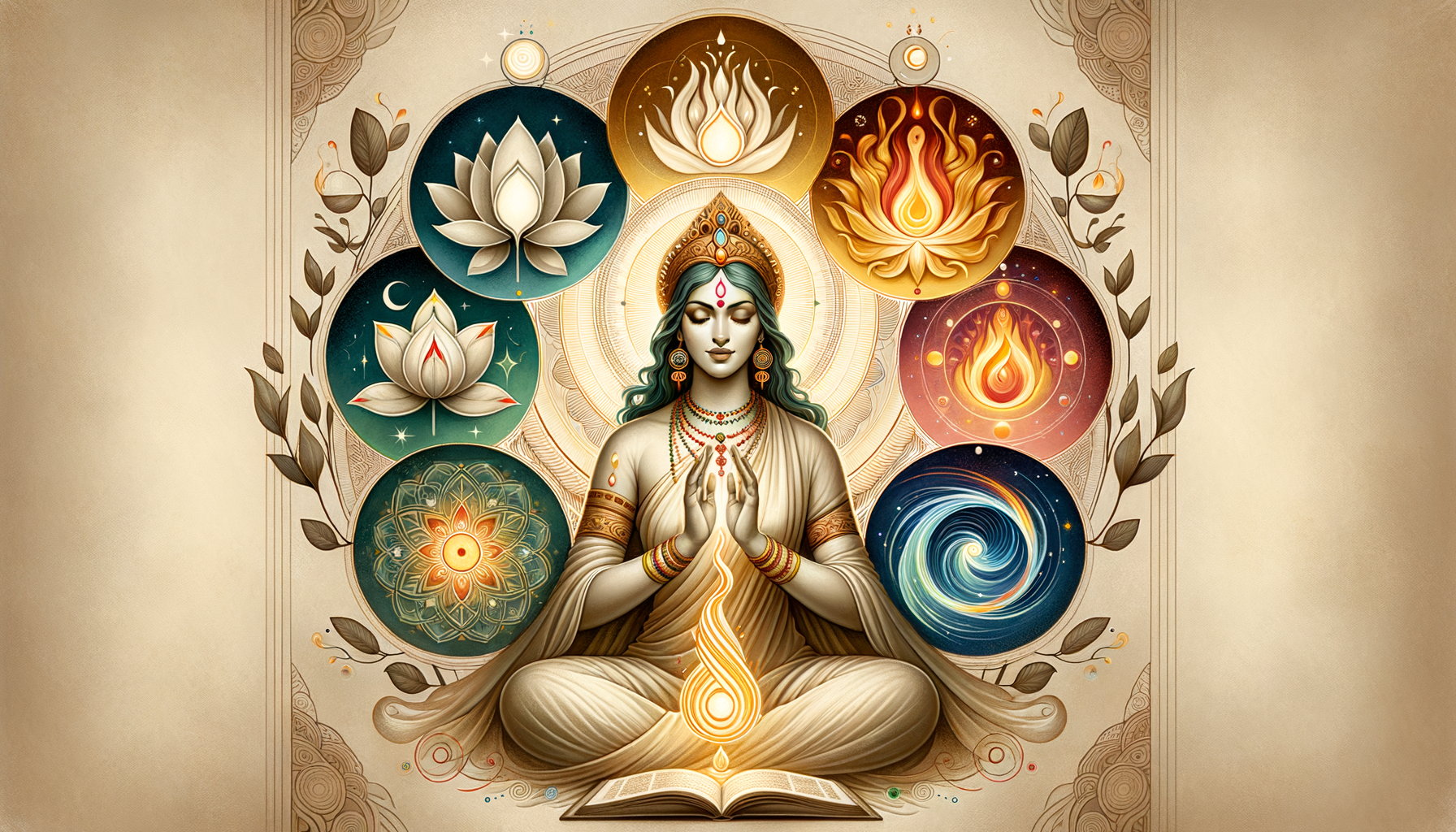
Goddess Gayatri, revered as Veda Mata and the embodiment of Brahma Shakti, stands at the heart of Sanatan Dharma as a guiding light for seekers across traditions. The icon of Panchamukhi GayatriGayatri with five faces (often depicted in five distinct colours)is a profound synthesis of Vedic symbolism, contemplative psychology, and spiritual practice. This academic overview interprets the fivefold form as a complete map of knowledge (vidyā), energy (shakti), and ethics (dharma), contextualized within the wider dharmic family that includes Hinduism, Buddhism, Jainism, and Sikhism.
Classical iconography presents the five faces of Gayatri as a multidimensional schema. Traditional exegesis often links them to the four VedasRig, Yajur, Sama, and Atharvawith the fifth, upward-facing principle associated with Om (Praṇava) or supreme knowledge. Read this way, Panchamukhi Gayatri visually encodes the idea that revelation (śruti), contemplation, and realization form a seamless continuum, guiding the devotee from study to insight to transformative action.
Across lineages, the colours of Gayatri’s five faces vary, yet their functions converge. Many traditions interpret the palette as an allegory of the guṇas and the five elements (pañca-bhūta), expressing the movement from the tangible to the subtle. Common readings include white for purity and sattva, red for transformative energy and agni, yellow or golden for clarity of buddhi and illumination, green for vitality and balanced prāṇa, and blue for the infinitude of ākāśa (space) and the depth of meditative awareness. While specific attributions differ among sampradāyas, the pedagogical aim remains consistent: to harmonize knowledge, devotion, and disciplined action.
In philosophical terms, the five faces are frequently correlated with five inner architectures of the person: the pañca-kośa (sheaths) from annamaya to ānandamaya, the five principal prāṇas (prāṇa, apāna, vyāna, udāna, samāna), and the five jñānendriyas (senses of knowledge). Such correlations position Gayatri not merely as an object of worship but as a living pedagogy: the icon becomes a meditative framework for aligning body, breath, senses, mind, and awareness with dharmic living.
In practice, the Gayatri Mantra serves as the sonic counterpart to this visual theology. Devotees often align breath and attention with the five prāṇas while contemplating the five faces, allowing the mantra’s cadence to “illumine the intellect” (dhiyo yo naḥ pracodayāt). This contemplative method encourages ethical clarity, grounded presence, and a steady movement toward inner stillness. The emotional resonance of the imageserene, protective, and compassionatesupports the aspirant’s resolve to act with wisdom in everyday life.
The fivefold symbolism also speaks to unity in diversity across dharmic traditions. Buddhism’s pañca-varṇa (five colours) in prayer flags and mandalas, Jainism’s five-coloured flag that honours the pañca-parameṣṭhī, and Sikh teachings that cultivate virtues while overcoming the “five thieves” are parallel pedagogies aiming at ethical refinement and inner freedom. These convergences do not collapse differences; rather, they highlight a shared civilizational insight: disciplined attention, right conduct, and compassionate wisdom are essential and universal aspirations.
For students of Hindu philosophy, Panchamukhi Gayatri offers a complete syllabus. The faces symbolize the comprehensive scope of Vedic inquiry; the colours map the spectrum from material embodiment to subtle awareness; the mantra integrates study with lived practice. Such an integrated vision fosters resilience, steadiness of mind, and ethical responsivenessqualities indispensable for contemporary life.
Devotees and scholars alike note that contemplation on the five-coloured faces can be personalized without departing from core principles. One may meditate on white to cultivate purity and truthfulness, red to energize purposeful action, yellow to clarify discernment, green to replenish vitality and compassion, and blue to stabilize expansive awareness. This flexible pedagogy honours diverse dispositions (adhikāra) while remaining faithful to the Vedic spirit.
Viewed in this light, Goddess Gayatri is not only the Mother of the Vedas but also a unifying emblem for dharmic harmony. Her five faces invite practitioners to integrate knowledge with devotion, contemplation with service, and personal transformation with social responsibility. The icon’s enduring appeal lies in its proven capacity to transform attention into insight and insight into compassionate action.
