Manifestation of Maa Lakshmi, as preserved in the Brahma Purana, unfolds through a concise dialogue in which Bhishma seeks understanding and Pulastya offers a measured response. The narrative situates the origins of auspiciousness (Śrī) and prosperity within the broader tapestry of the Puranas, inviting careful reflection on how divine grace, ethical effort, and collective responsibility converge.
According to this account, the devas, having been defeated by the asuras, approach Lord Vishnu for guidance. Vishnu counsels a path of disciplined cooperation: gather the requisite herbs and resources and undertake the churning of the Kshira Sagara. This counsel, remembered across Hindu scriptures, emphasizes that restoration of balance (dharma) emerges through patience, shared endeavor, and adherence to righteous means.
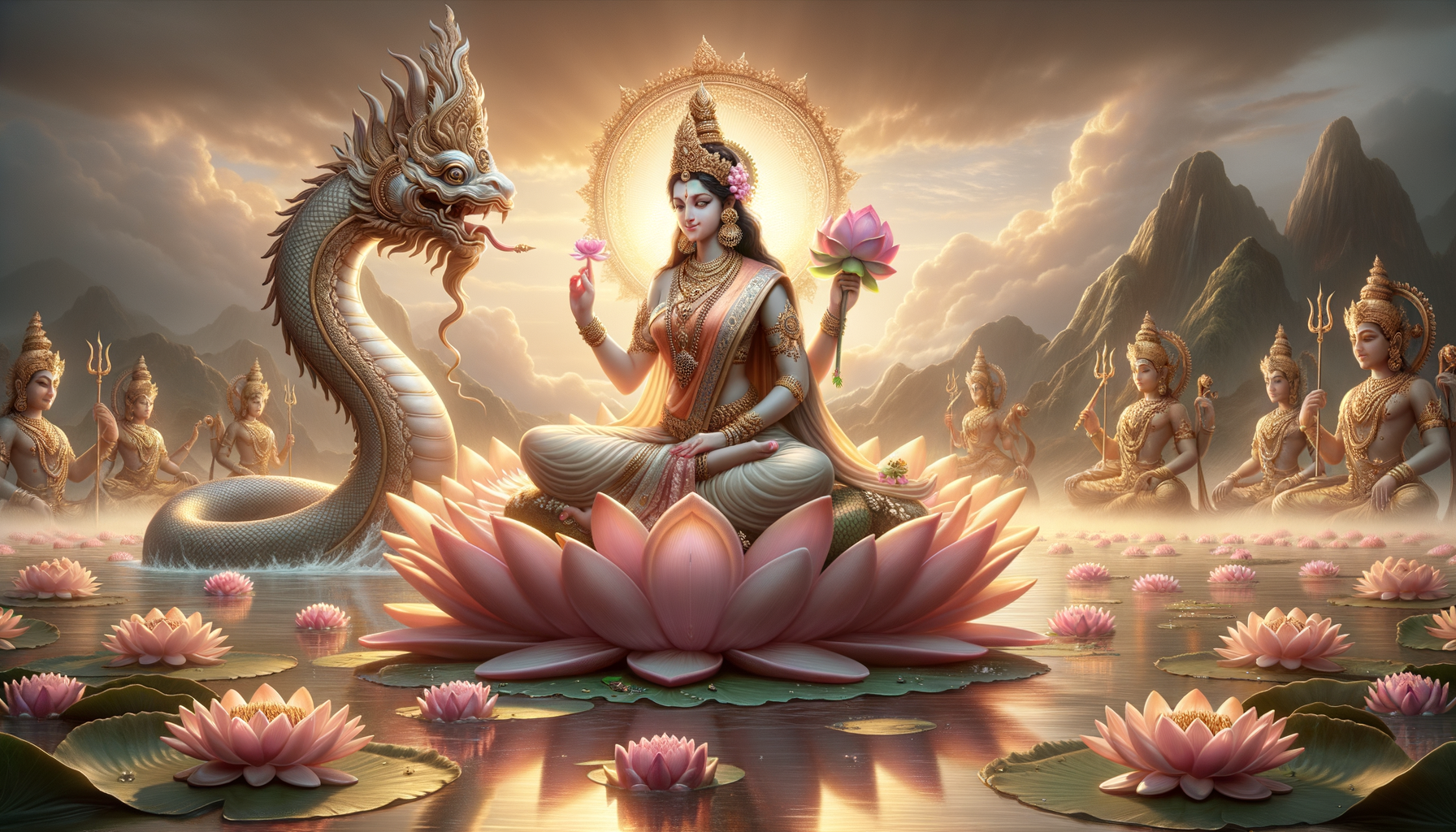
In the celebrated Samudra Manthan, devas and asuras agree to collaborate, using a mountain as the churning rod and a serpent as the rope. Through sustained effort, the ocean yields manifold treasures. Among these, Maa Lakshmi manifests, radiantly seated upon a lotus, symbolizing purity, abundance, and the harmonizing power of order. Choosing Vishnu, she affirms the alignment of prosperity with protection, wisdom, and cosmic stability.
Theologically and philosophically, the Lakshmi Janma Katha illustrates a central insight of Hindu Dharma: genuine wealth is inseparable from ethical conduct, devotion (bhakti), and the steady cultivation of inner virtues. The churning itself operates as a living metaphor for sādhanatransforming agitation into clarity through discipline, resilience, and right intention.
In lived tradition, devotees recognize that prosperity endures when anchored in gratitude, dana, and responsible stewardship. Households recalling Deepavali and other sacred observances often connect Lakshmi’s blessings with daily choiceshonest livelihood, reverence for knowledge, and care for community. These values echo across dharmic traditionsHinduism, Buddhism, Jainism, and Sikhismwhere diligence, ethical restraint, and seva are honored as pathways to inner and outer harmony.
As a scriptural guidepost, this Purana narrative offers a framework for contemporary life: collaborate across differences, direct collective energy toward constructive aims, and align material aspirations with spiritual insight. In doing so, the tale of Lakshmi’s manifestation becomes more than ancient memory; it becomes practical wisdominviting communities to “churn” their own oceans of uncertainty into clarity, compassion, and sustainable well-being.
Read with an academic lens and a devotional heart, the Brahma Purana’s presentation of the Manifestation of Maa Lakshmi offers both a historical narrative and a perennial ethic. It teaches that true abundance is not merely acquired but realizedwhen intention, effort, and grace move together in the service of dharma.
Inspired by this post on Hindu Pad.