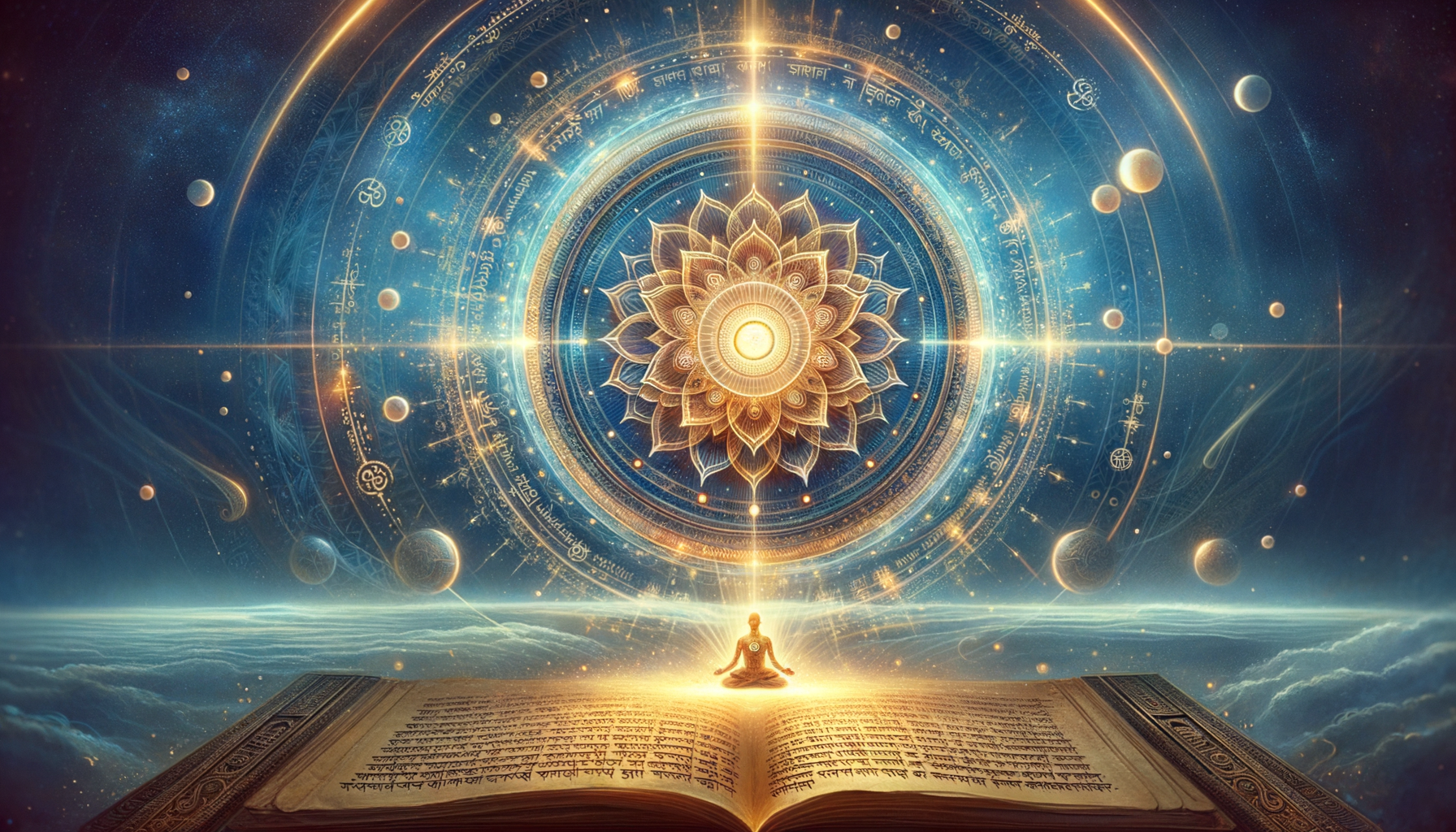
The concept of creation in Hinduism, articulated in the Rig Veda and deepened in the Upanishads, presents a sophisticated, cyclical cosmology centered on Brahmanthe Absolute that underlies all existence. Rather than a single moment of origin, creation is understood as an ongoing rhythm of emergence, sustenance, and dissolution, reflecting an eternal order that invites contemplative inquiry and ethical living.
Rig Veda hymns, especially the Nasadiya Sukta (10.129), frame creation as a mystery approached with intellectual humility. The text neither rushes to certainty nor shies from paradox; it holds open the question of origins while affirming an underlying order, or rta, that governs cosmic processes. This poetic and philosophical openness sets a foundation for later introspection on the nature of reality.
The Upanishads advance this vision by presenting Brahman as the infinite ground of being and by revealing the identity between the inner Self (Atman) and the Absolute. Chandogya Upanishad’s terse insight, “tat tvam asi,” and Taittiriya Upanishad’s characterization of Brahman as “satyam jnanam anantam brahma” offer a framework in which the universe is not separate from the sacred; rather, multiplicity emerges from, abides in, and returns to the One. Brihadaranyaka Upanishad further elaborates that all entities are expressions of the Self, calling for reflection rather than dogma.
Within this horizon, creation (srishti), maintenance (sthiti), and dissolution (laya) are not catastrophic breaks but phases of a ceaseless cycle. Time is vast, layered, and recursive, with yugas and kalpas highlighting the scale of cosmic recurrence. Such a view encourages meditative attention to change, continuity, and the subtle presence of Brahman in all phenomena.
While this cyclical model differs from linear narratives of a singular beginning, it is best understood as a complementary lensone that expands possibilities for understanding rather than competing for exclusivity. The Vedic and Upanishadic approach privileges inquiry, experience, and disciplined knowledge, allowing readers to engage diverse frameworks without diminishing any tradition’s integrity.
This inclusivity resonates across Dharmic traditions. Buddhism speaks of vast kalpas and emphasizes impermanence; Jainism maps cosmic expansions and contractions (Utsarpini and Avasarpini); Sikh thought centers on hukaman all-pervading order. Each tradition, in its own vocabulary, affirms that reality unfolds through intelligible patterns and that many authentic paths lead toward truth. Such convergence aligns with the Ishta ideal in Hinduism, which honors diverse approaches to the Absolute while sustaining unity in spiritual plurality.
For contemporary readers, this vision offers practical implications. By situating human life within an eternal rhythm, it fosters humility, non-attachment, and ethical responsibility. It supports ecological stewardship, non-violence (ahimsa), and mindful action, while also providing a contemplative framework for navigating change with clarity and compassion. Many find the imagery of waves and ocean apt: forms arise and subside, yet waterlike Brahmanremains.
Together, the Rig Veda and the Upanishads invite a rigorous yet open-ended pursuit of knowledge. They encourage study, meditation, and dialogue across Hinduism, Buddhism, Jainism, and Sikhism, strengthening a shared civilizational commitment to inquiry, harmony, and unity in diversity.
Inspired by this post on Hindu Blog.