Many readers approach the Mahabharata with hesitation, assuming that its intense portrayals of conflict, betrayal, and moral ambiguity might disturb everyday life. In practice, engagement with this epic clarifies rather than confuses; it illuminates dharma and adharma through nuanced characters such as the Kauravas and the Pandavas, while the presence of Sri Krishna anchors ethical discernment. Those who read it attentively often report a deepened calm and clarity in decision-making, not turmoil.
As a foundational text of Sanatana Dharma, the Mahabharata extends ethical insights relevant across the broader dharmic family, including Hinduism, Buddhism, Jainism, and Sikhism. Its reflections on duty, compassion, non-attachment, and truth resonate with ahimsa, seva, and inner discipline that these traditions honor. Readers from diverse paths frequently find shared values that foster unity rather than division.
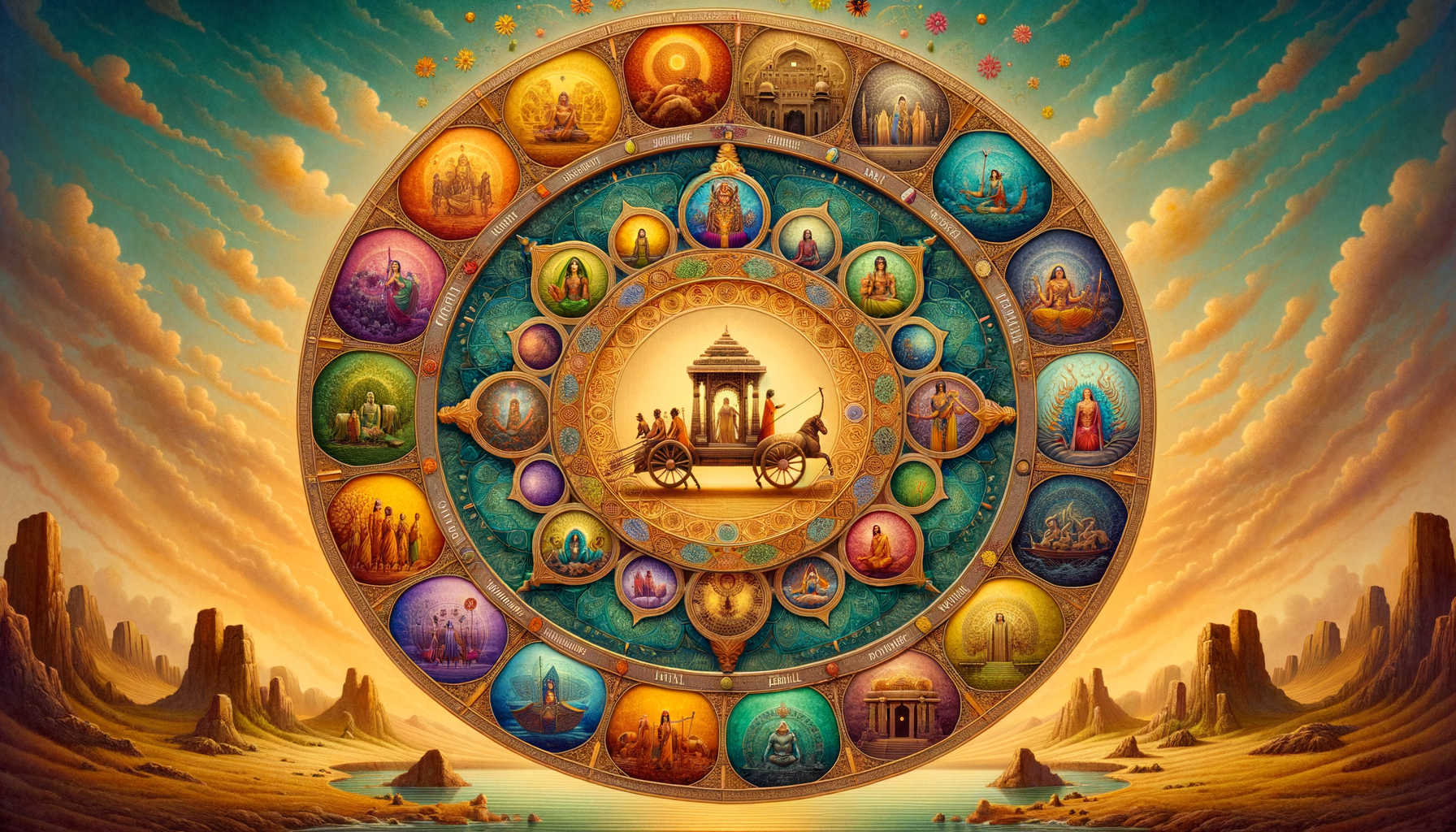
Structured into 18 Parvas and traditionally attributed to Veda Vyasa, the Mahabharata spans more than 100,000 verses and integrates history, philosophy, statecraft, and spiritual inquiry. The epic’s design is pedagogical: it moves from origins and family dynamics to ethical crises, war, sorrow, and finally renunciation and transcendence. Within this arc, the Bhagavad Gita, Vidura-niti, and Shanti–Anushasana teachings offer timeless frameworks for personal and social ethics.
Adi Parva: Introduces the lineage of the Bharatas, the birth of the Pandavas and Kauravas, and the early seeds of conflict. It establishes core themes of destiny, free will, and the formative power of guidance, exemplified in the roles of Bhishma and Drona.
Sabha Parva: Describes the construction of the majestic assembly hall and the Rajasuya sacrifice. The dice game and Draupadi’s humiliation bring ethical failure to the forefront, demonstrating how adharma advances through pride, envy, and unchecked desire.
Vana (Aranyaka) Parva: Chronicles the Pandavas’ exile and their encounters with sages and celestial beings. Through tales and dialogues, the Parva frames suffering as a catalyst for wisdom and inner strength.
Virata Parva: Narrates the thirteenth year of incognito life in King Virata’s court. It highlights restraint, skill, and the quiet readiness for righteous actionvirtues admired across dharmic traditions.
Udyoga Parva: Presents preparations for war and profound counsel on diplomacy and duty. Vidura-niti provides a concise code of governance and personal ethics, emphasizing prudence, truthfulness, and compassion.
Bhishma Parva: Covers the opening phase of the Kurukshetra War and contains the Bhagavad Gita, where Sri Krishna teaches karma-yoga, bhakti, and jnana. This synthesis of action, devotion, and knowledge remains central to spiritual practice.
Drona Parva: Depicts fierce battles under Dronacharya’s command. The tragic death of Abhimanyu exemplifies courage and the human cost of war, urging sober reflection on necessity and proportionality.
Karna Parva: Focuses on Karna’s leadership and complex loyalty. His struggle between gratitude, honor, and truth underscores the layered nature of moral choice.
Shalya Parva: Relates the final engagements shaped by Shalya’s paradoxical role. Even amid strategy and fatigue, the Parva studies ego, endurance, and the limits of worldly power.
Sauptika Parva: Describes the night raid by Ashvatthama, a stark lesson in the spiral of vengeance and the ethical red lines that should not be crossed.
Stri Parva: Gives voice to the grief of women after the war. It insists on empathy and shared responsibility, reminding society of the unseen burden borne by families and communities.
Shanti Parva: Features Yudhishthira’s coronation and Bhishma’s extensive teachings on rajadharma, apaddharma, and moksha-dharma. Governance, justice, and spiritual liberation are treated as mutually reinforcing.
Anushasana Parva: Continues Bhishma’s instruction with actionable guidance on ethics, charity, conduct, and social duties. It translates ideals into daily practice for householders and leaders alike.
Ashvamedhika Parva: Follows Yudhishthira’s Ashvamedha and Arjuna’s campaigns, reflecting on restoration, reconciliation, and the judicious exercise of power after conflict.
Ashramavasika Parva: Portrays Dhritarashtra, Gandhari, and Kunti retiring to the forest. It honors renunciation, forgiveness, and the healing arc that concludes with inner peace.
Mausala Parva: Narrates the decline of the Yadavas and the withdrawal of Sri Krishna from the earthly plane. Impermanence is emphasized as an inescapable law, even for the mightiest houses.
Mahaprasthanika Parva: Depicts the Pandavas’ great journey northward, a pilgrimage of truth and detachment, where only steadfast virtue endures.
Svargarohana Parva: Concludes with the ascent to higher realms and the final reconciliation of all acts within cosmic justice. It affirms that dharma, pursued sincerely, culminates in clarity and grace.
Readers who approach the 18 Parvas of Mahabharata as a mirror of human experience often report a practical transformation: better judgment, deeper compassion, and a steadier mind. The epic neither glorifies conflict nor shies away from it; instead, it reveals how discipline, self-knowledge, and devotion to truth guide individuals and societies through crisis to renewala message that harmonizes naturally with the ethical cores of Hinduism, Buddhism, Jainism, and Sikhism.
In contemporary life, these teachings translate into mindful leadership, responsible speech, and service-oriented action. Whether engaged as scripture, philosophy, or civilizational history, the Mahabharata offers a comprehensive pathfrom confusion to clarity, from division to unitygrounded in dharma and accessible to all seekers.
Inspired by this post on Hindu Pad.