
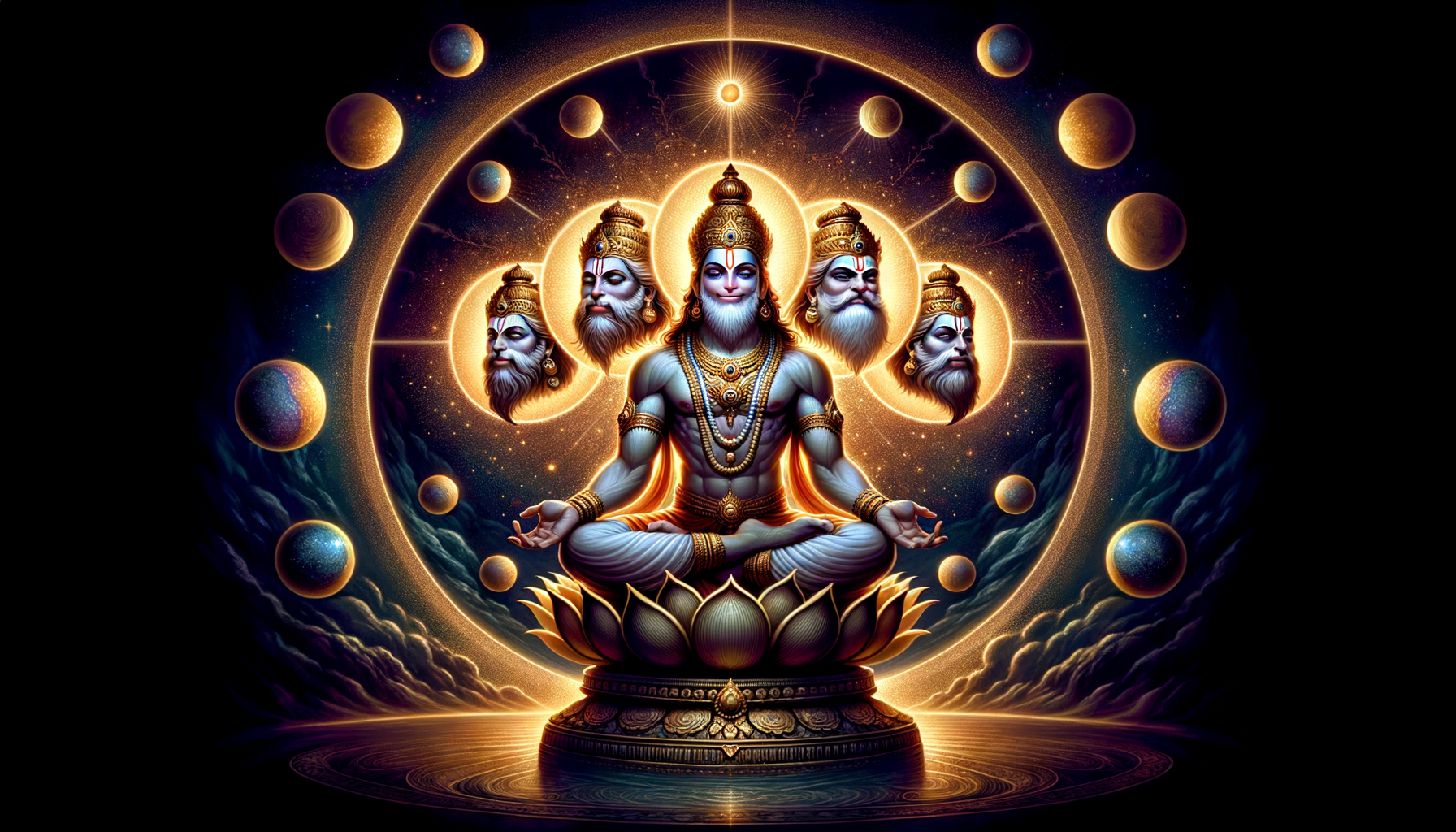
Panchamukhi HanumanHanuman with five facesoccupies a distinctive place in Hindu iconography as a symbol of vigilance, protection, and cosmic balance. The form resonates with the Panchamahabhuta (five elements: prithvi, apas, agni, vayu, akasha), suggesting a sacred template for harmonizing body, mind, and environment. While devotional narratives emphasize his protective power, philosophical readings reveal an integrated vision of dharmic cosmology, spiritual practice, and ethical living.
In classical representations, the five faces are typically Hanuman (east), Narasimha (south), Garuda (west), Varaha (north), and Hayagriva (upward/skyward). Each face signifies a guardian force, direction, and functional quality of consciousness. Textual lineages and regional traditions differ in their details, yet converge on the overarching insight: Panchamukhi Hanuman synthesizes multiple divine energies into a single, vigilant presence that safeguards the devotee and stabilizes the inner world.
Associations between the five faces and the five elements vary across schools, so precise mappings are best approached as symbolic rather than dogmatic. A commonly cited interpretive schema relates Varaha with prithvi (earth and steadfastness), Narasimha with agni (transformative courage), Hanuman with vayu (prana, breath, and disciplined movement), Garuda with akasha or vayu (sky-like awareness or swift clarity), and Hayagriva with the subtlety of sound and mantra often linked to akasha. The diversity of these readings underscores a key dharmic principle: symbolism is a doorway to contemplation, not a closed doctrine.
Devotional lore situates the five-faced form in the episode of rescuing Rama and Lakshmana from Mahiravana, where Hanuman simultaneously extinguishes five lamps in different directions. Beyond the miraculous motif, the narrative encodes vigilance of the five senses, mastery of elemental energies, and unwavering commitment to dharma. In practice, Panchamukhi Hanuman becomes a meditative archetype for aligning intention (sankalpa) with courageous action (parakrama).
The Panchamahabhuta framework is shared across dharmic traditions, reinforcing unity rather than separation. Hindu yoga, Buddhist Abhidharma, Jain analyses of pudgala, and Sikh scriptural reflections all honor elemental principles as foundations of embodied life and ethical awareness. The Sikh formulation “Pavan Guru Pani Pita, Mata Dharat Mahat” poetically affirms a common insight: breath (air), water, and earth are sacred teachers guiding responsible living.
Viewed through this integrative lens, Panchamukhi Hanuman invites five stabilizing qualities: earth as groundedness and duty; water as adaptability and compassion; fire as moral courage and transformation; air as rhythmic breath and disciplined vitality; and ether as spacious awareness and discernment. Practitioners often report that reflecting on these qualities during japa or pranayama fosters emotional balance, mental clarity, and a deeper sense of safety.
In lived experience, the protective aura of Panchamukhi Hanuman is felt as both outer and inner guardianship. Devotees frequently describe a shift from reactivity to steadiness when facing uncertainty, aligning with the bhakti insight that devotion refines courage. This experiential dimension complements academic study: symbolism becomes a practical psychology of resilience and compassionate strength.
For contemplative practice, a simple, element-centered sequence can be meaningful: settle the body (earth), soften attention like flowing water (water), kindle focused intent (fire), harmonize breath (air), and rest awareness in open presence (ether). Integrating this with Hanuman mantra recitation situates personal discipline within a broader dharmic ethos, uniting bhakti, yoga, and ethical action.
As a cultural emblem, Panchamukhi Hanuman also bridges household devotion and civilizational memory. Temples and home shrines often place this murti at thresholds or cardinally aligned spaces to signal protection, clarity of purpose, and reverence for cosmic order. Such practices align with Vedic and post-Vedic currents where directionality, mantra, and elemental harmony converge in everyday life.
Ultimately, the five-faced form does not fragment divinity into separate parts; it unifies diverse powers into an integrative vision of dharma. By honoring the Panchamahabhuta across Hinduism, Buddhism, Jainism, and Sikhism, the symbolism of Panchamukhi Hanuman affirms a shared spiritual heritage: inner strength that safeguards life, wisdom that steadies the heart, and unity that dignifies difference.
Inspired by this post on Hindu Blog.
