-
Krishna’s Personal Descent on Earth: Scriptural Evidence, Bhakti Practice, and Dharmic Unity

This in-depth exploration examines the Vaishnava conviction that Lord Krishna personally descended to Earth, situating the claim within scriptural sources (Bhagavad Gita, Bhagavata Purana, Brahma-samhita) and the technical doctrine of avatara-tattva. It shows how Gaudiya concepts like achintya-bheda-abheda map divine unity and plurality, while the yuga-dharma of nama-sankirtana translates theology into transformative practice. Using the…
-
CC Madhya 4.112–123: Madhavendra Puri, Kshirachora Gopinatha, and the Power of Devotional Humility

This analysis distills the core teachings of CC Madhya 4.112–123 as presented at ISKCON New Govardhana Temple on Sat 09 May 2026 by HG Aniruddha das. It explains how the Kshirachora Gopinatha narrative reveals the Lord’s intimate reciprocity with Madhavendra Puri while modeling uncompromising humility. The piece clarifies key Gaudiya Vaishnava doctrines—archa-vigraha, prasada-tattva, and the…
-
HG Daivi Shakti Mataji on Srila Prabhupada Lilamrita: Unveiling a Transformative Gaudiya Legacy

This analysis situates HG Daivi Shakti Mataji’s focus on Srila Prabhupada Lilamrita within a rigorous, source-aware approach to Gaudiya Vaishnavism. It explains how the biography blends archival research, oral histories, and textual study to illuminate Srila Prabhupada’s life, teachings, and institution-building. Readers gain a clear framework for study—triangulating letters, interviews, and BBT records while appreciating…
-
Dasavatara Jayanti 2026–2027: Authoritative Guide to Dates, Rituals, and the Ten Avatars of Vishnu

This authoritative guide to Dasavatara Jayanti 2026–2027 explains the ten incarnations of Lord Vishnu, the classical tithi framework for each Jayanti, and how to align observances with regional Panchang traditions. It clarifies Amanta vs Purnimanta month systems, sunrise-based tithi boundaries, and sampradaya-specific rules (e.g., Janmashtami midnight and Rama Navami midday). Each avatara’s theological meaning and…
-
Kerala Vishu Poster Furor: Chicken Mandi Before Shri Krishna Spurs Arrest, Harmony Lessons

A Vishu greeting poster from a Kerala restaurant that placed chicken mandi before an image of Shri Krishna triggered public outcry and a police arrest, spotlighting the high sensitivity of sacred symbols in India. The analysis explains why Vishukkani Darshan, vegetarian naivedya, and South Asian visual grammar made the imagery read as an offering, not…
-
Balarāma’s Poised Silence: Unpacking Śrīmad-Bhāgavatam 10.16 and Kṛṣṇa’s Saving Power

Śrīmad-Bhāgavatam 10.16.1–16 frames the Kāliya episode through Balarāma’s calm smile and eloquent silence, signaling realized trust in Kṛṣṇa’s saving power. The narrative contrasts the Vrajavāsīs’ anxiety with Balarāma’s stabilizing presence, revealing guru-tattva and the supportive role of Saṅkarṣaṇa. Read alongside Gauḍīya Vaiṣṇava commentaries, the passage shows how silence can be genuine instruction (māuna-upadeśa), cultivating communal…
-
Chandidasa’s Sri Krishna Kirtana: A Luminous 15th-Century Bengali Masterpiece of Bhakti Rasa

Chandidasa, a seminal 15th-century Middle Bengali poet, helped crystallize the language and performance of Krishna Bhakti through Sri Krishna Kirtana. Set within medieval India’s vibrant vernacular renaissance, the poem fuses theology and rasa aesthetics, elevating Radha-Krishna love into a disciplined pathway of devotion. Its Middle Bengali diction, prosodic simplicity, and singable refrains enabled congregational kirtan…
-
Ram Navami 2026 Live Darshan: Profound Rituals and Memories at Sri Sri Krishna Balram Mandir

Observed on 27 March 2026 (Chaitra Shukla Navami), this Ram Navami Live Darshan feature explains the tithi-based timing, outlines key temple rituals, and preserves memories from the grand opening of Sri Sri Krishna Balram Mandir. Readers gain a clear, Panchang-grounded understanding of Madhyahna observances, abhishekam, aarti, and kirtan within Gaudiya Vaishnavism and the wider Bhakti…
-
Controversial Claims on Shri Ram and Shri Krishna: Evidence-Based Review and Dharmic Unity

A viral controversy over alleged disparaging remarks about Shri Ram and Shri Krishna has spotlighted the need for evidence-based reading of Hindu scriptures. This analysis explains how to verify claims using critical editions, Sanskrit philology, and respected commentaries. It clarifies commonly misread episodes from the Ramayana, Bhagavad Gita, and Bhagavata Purana without inflaming tensions. Readers…
-
From Fearlessness to Surrender: Prabhupada’s Doctrine of Divine Protection at ISKCON Mombasa

This reflection from ISKCON Mombasa distills how A. C. Bhaktivedanta Swami Prabhupada’s life fuses bold action with śaraṇāgati to reveal the true meaning of divine protection. It clarifies Gita-based principles (18.66, 9.22, 9.31) and the six limbs of surrender, showing that protection preserves and deepens bhakti rather than promising a risk-free life. Scriptural exemplars like…
-
Sri Siksastakam Unveiled: How Krishna Sankirtana Cleanses the Heart and Heals Suffering

An in-depth ISKCON Hong Kong seminar led by HG Bhurijana Prabhu unpacked the first verse of Sri Siksastakam with philological precision and practical guidance. The discussion mapped the verse’s eightfold arc—from cleansing the mirror of consciousness to bathing the entire self—showing how sankirtana systematically heals inner turbulence. By contextualizing Sri Caitanya Mahaprabhu’s theology of the…
-
Mayapur as a Living Dham: A Sadhu’s Lens on Navadvipa, Bhakti, and Sacred Geography

This long-form exploration presents Mayapur as a living dham, observed through the disciplined perspective of a sadhu. It situates Mayapur within the fluvial geography of the Bhagirathi-Ganga and Jalangi rivers and recounts its historic role in Gaudiya Vaishnavism and the saṅkīrtana movement of Śrī Caitanya Mahāprabhu. The sacred mapping of Navadvipa’s nine islands is explained…
-
Krishna as Purna Purusha: Revealing the Feminine Divine That Completes the Supreme Being

This long-form exploration presents Sri Krishna as Purna Purusha—the Complete Being—who integrates both masculine and feminine dimensions without contradiction. Drawing on the Bhagavad Gita, the Bhagavata Purana, and Vaishnava theology, it explains how Radha as Hladini Shakti reveals the feminine divine at the very heart of Krishna’s identity. The article situates Mohini within Vaishnava-Puranic tradition,…
-
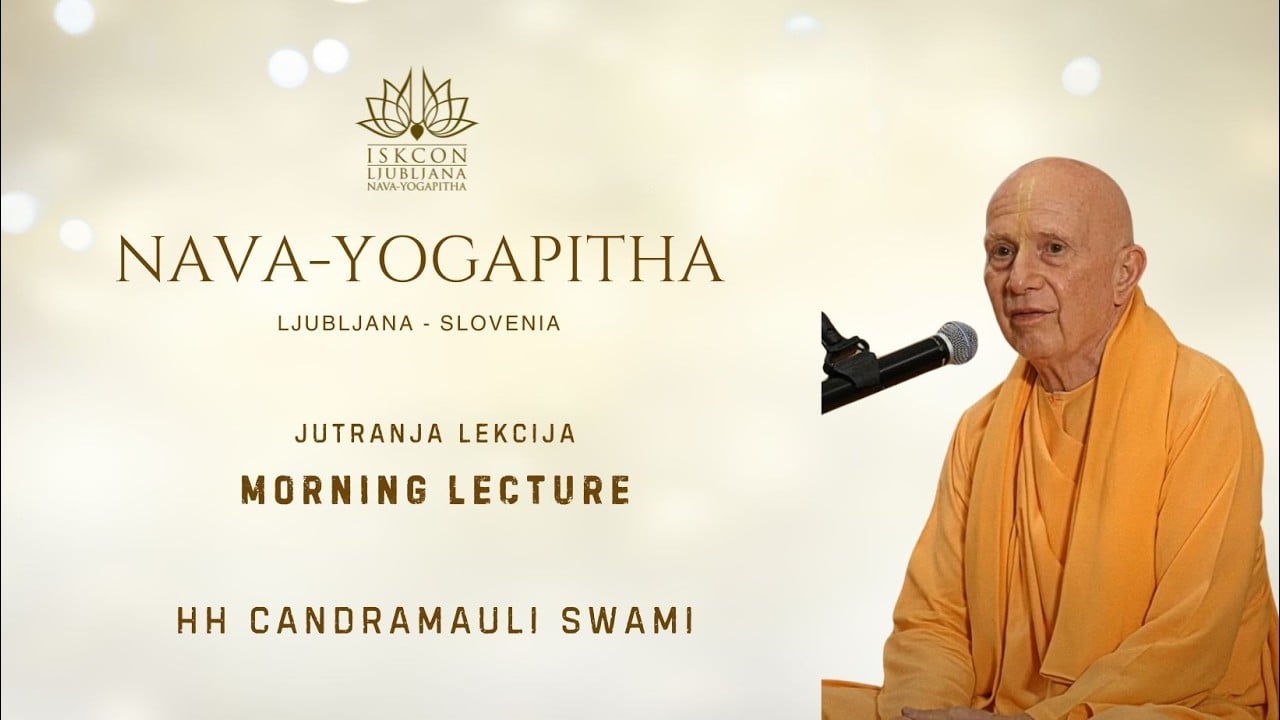
Gaura Purnima 2026: Gaura‑lila, Nama‑sankirtana, and ISKCON Ljubljana’s Living Legacy

Sri Gaura Purnima 2026 at ISKCON Ljubljana brings the golden legacy of Sri Chaitanya Mahaprabhu (Gaura‑lila) into vivid focus through nama‑sankirtana, study, and service. Grounded in Gaudiya Vaishnava scriptures, the festival highlights acintya‑bhedabheda‑tattva and the transformative power of the Hare Krishna maha‑mantra. Reflections inspired by teachers such as HH Candramauli Swami underline sadhana, sadhu‑sanga, and…
-
When Krishna Lifts Govardhan: Tribhanga Beauty, Bhakti-Rasa, and the Ease Found in Surrender

This essay offers a close reading of Krsna’s tribhanga posture amid the Govardhana-dhara-lila, highlighting how visual detail, poetic mood, and theology interlock to transform crisis into joy. It explains how the left foot ‘kissing’ the earth and the effortlessly raised arm express immanence and transcendence in one gesture. Drawing from Srimad-Bhagavatam and Sanskrit aesthetics, it…
-
Sri Navadvipa-dhama Virtual Parikrama: Immersive, Scriptural, QR‑Guided Pilgrimage Anywhere

Sri Navadvipa-dhama Virtual Parikrama makes the sacred geography of Gaura-mandala-bhumi accessible worldwide through a multilingual, mobile-first platform. Rooted in Srila Bhaktivinoda Thakura’s vision and continued by ISKCON Mayapur, it integrates scriptural citations, curated media, and Google-guided routing. On-site QR codes unlock place-specific teachings, balancing convenience with devotional focus. The route aligns each of the nine…
-
Rang Teras 2026 (Rang Trayodashi): Date, Significance, and Vibrant Krishna Celebrations

Rang Teras (Rang Trayodashi) in 2026 falls on 16 March, aligning with the Trayodashi tithi of the bright fortnight of Chaitra. Celebrated widely across Rajasthan, Gujarat, Uttar Pradesh, Madhya Pradesh, Bihar, and Himachal Pradesh, the festival centers on devotion to Sri Krishna and community harmony. Sri Krishna temples and ISKCON centers host special darshan, kirtan,…
-
Vrindavan’s Enchanted Forest: A Contemplative Journey into Radha-Krsna’s Divine Love

This contemplative essay presents Vrindavan as a sacred forest where devotion, beauty, and wisdom converge in the Bhakti Tradition. It clarifies classic images of Radha and Krsna with an academic, inclusive reading that honors multiple devotional rasas. The discussion reframes a traditional exclusivist claim as a metaphor for diverse spiritual moods, supporting unity across Hindu,…
-
Timeless Guidance from Srila Bhaktisiddhanta on Devotion, Tolerance, and United Dharma

Srila Bhaktisiddhanta Sarasvati Thakura’s guidance centers on “param vijayate Sri-Krishna -Sankirtanam,” presenting chanting as a shared Dharmic bridge to inner clarity and social harmony. The teachings encourage humility, tolerance, and one-pointed devotion, while affirming unity in spiritual diversity across Hindu, Buddhist, Jain, and Sikh traditions. Scattered religiosity is reframed as a call for coherent purpose,…
-
Sri Ramanujacharya’s Magnificence: How Bhakti Masters Illuminate Kali‑yuga and Inspire Unity

This reflection situates Sri Ramanujacharya within a Gaudiya Vaishnava narrative that honors multiple bhakti masters sent to uplift Kali-yuga. It presents Sri Krishna Caitanya’s descent to Gauda-bhumi as a devotional-theological perspective, while highlighting Ramanuja’s enduring contributions to compassionate, rigorous practice. Readers gain a clear, accessible context for the Bhakti and Vedic Traditions and their relevance…