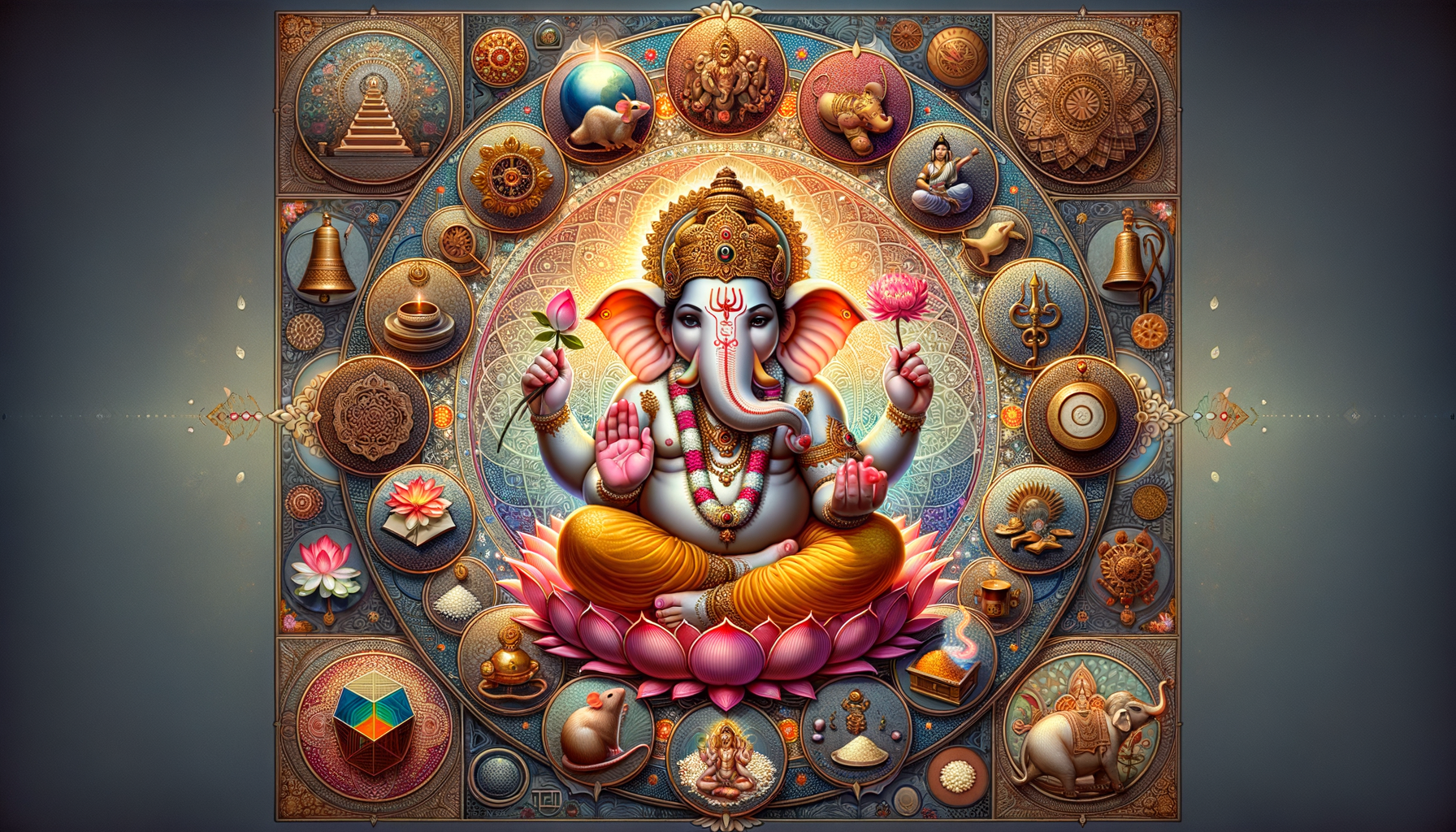
The twelve incarnations of Ganesha, preserved in the Mudgala Purana and the Ganesha Purana, are revered as sacred manifestations of Ganapati’s wisdom, compassion, and protective power. Within the broader Puranic tradition, these narratives illuminate how divine presence responds to specific challenges across cosmic cycles, offering guidance that continues to inspire ethical reflection and spiritual resilience.
Read in an academic light, the avatars present layered meanings that operate simultaneously as history-telling, theology, and allegory. Their recurring motifsremoval of obstacles, restoration of balance, and triumph of dharmaresonate across dharmic traditions, affirming a shared commitment to inner clarity, non-harm, and upright action. This shared moral imagination supports unity among Hinduism, Buddhism, Jainism, and Sikhism through the virtues these stories elevate, even while each tradition retains its distinct practices and insights.
Mahotkata Vinayaka – The Vanquisher of Devantaka and Narantaka: In the Satya Yuga, Ganesha is described as manifesting in a ten-armed, red-complexioned form to subdue the demons Devantaka and Narantaka. The account emphasizes the remarkable means of victory: they were destroyed instantly by the simple scattering of grains of food. This concise episode underscores the Puranic insight that nourishment, order, and righteous sustenance can disperse chaos more effectively than brute force. Symbolically, Mahotkata Vinayaka represents the restoration of abundance and the effortless supremacy of dharma when rightly invoked.
Mayureshwara – The Slayer of … : The source excerpt acknowledges this incarnation but preserves only the beginning of its title; further details are not transmitted in the provided text. In keeping with responsible engagement with Hindu scriptures, the narrative remains open here, inviting continued study of the Mudgala Purana and the Ganesha Purana for the complete account without resorting to speculation.
Together, the twelve incarnations of Ganesha chart a spiritual cartography in which divine presence meets worldly disorder with discernment and compassion. For many devotees and readers of Hindu scriptures, these stories foster an emotional connection to Ganapati as the remover of obstacles and patron of auspicious beginnings. Their ethical themesself-restraint, generosity, steadiness of mindare as relevant to personal practice today as they were in classical times, encouraging a balanced path that honors plurality and shared values within the larger dharmic family.
As a study in symbolism and scripture, this overview highlights what the excerpt securely preservesthe Mahotkata Vinayaka episodewhile situating the wider tradition of the twelve incarnations of Ganesha (the sacred avatars of Ganapati) within the Puranic canon. By engaging the Mudgala Purana and the Ganesha Purana with care, readers can deepen both textual literacy and contemplative insight, uniting rigorous understanding with living devotion.
Inspired by this post on Hindu Blog.