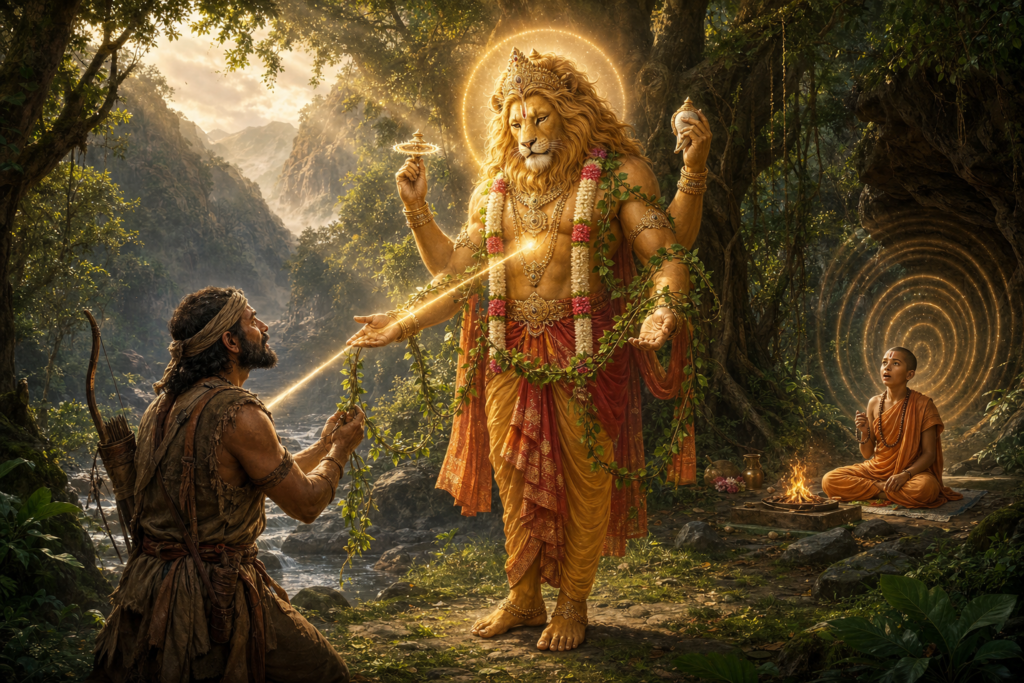
The concept of the avatar in Hinduism articulates a profound metaphysical insight: the eternal, formless Supreme Reality manifests within time and history to guide beings toward their highest good. In this vision of Sanatana Dharma, transcendence and immanence meettimeless wisdom appearing in temporal form to restore dharma, illuminate ethical clarity, and awaken the possibility of moksha. Far from myth alone, the avatar principle functions as a theological key for understanding how the infinite relates meaningfully to the finite.
Etymologically, avatar (ava + trī) signifies “descent,” framing manifestation not as limitation but as compassionate accessibility. Hindu philosophyacross Advaita, Viśiṣṭādvaita, and Dvaitatreats this accessibility in nuanced ways, contemplating the relationship between Nirguṇa Brahman (the quality-less Absolute) and Saguna forms (the personable, worshipful divine). This plurality of perspectives reflects Hinduism’s intellectual breadth and its embrace of unity in spiritual diversity.
Scriptural foundations are clear and consistent. The Bhagavad Gita (4.7–8) describes divine manifestation whenever righteousness declines and suffering increases, affirming a cyclical restoration of order. Puranic literature deepens this vision through narratives such as Vishnu’s Dashavatara, while Shaiva and Shakta traditions present complementary understandings of divine descent through Śiva and Devi. Together, these strands offer a coherent theological tapestry: avatars communicate timeless truth through culturally resonant, ethically compelling forms.
Philosophically, avatars serve three interlinked functions: safeguarding dharma, transforming collective karma, and educating through lived example. Epics and Puranas demonstrate how forms like Rāma and Kṛṣṇa do not merely teachthey embody a pedagogy of presence. Readers repeatedly report that these narratives, encountered in childhood or revisited in crisis, become ethical anchors, shaping conscience and cultivating resilience in daily life.
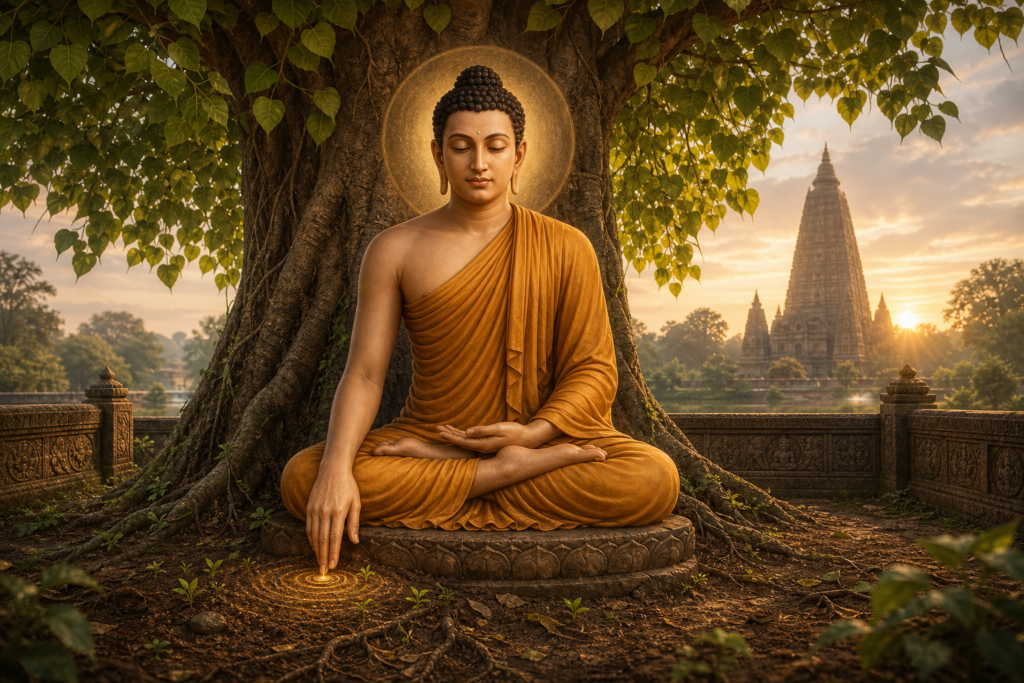
The avatar principle also resonates with parallel intuitions across the broader dharmic family. In Buddhism, the bodhisattva ideal expresses compassionate descent for the welfare of all beings; in Jainism, the Tīrthaṅkaras appear in time as way-makers who rearticulate timeless dharma; in Sikhism, the Gurus illuminate the path to the One formless reality through lived wisdom and song. Without collapsing distinctions, these affinities highlight a shared civilizational ethos: compassion, responsibility, and guidance as sacred duties in history.
Metaphysically, avatars reveal how the “timeless appearing in time” preserves transcendence while engaging immanence. The Upanishadic insight of the antaryāminthe indwelling guidesuggests an inward dimension to this descent: divine instruction does not only arrive through historical figures but also awakens as a voice of discernment within. Thus, the avatar principle bridges cosmology and interiority, aligning public ethics with inner realization.
In contemporary life, this framework encourages an inclusive spirituality that honors many valid paths of devotion and practice. By integrating insights from the Bhagavad Gita, the Puranas, and the living traditions of worship, seekers can cultivate humility, courage, and compassion without insisting on a single expression of truth. This harmonizes with India’s long-held ideal of unity in spiritual diversity, where differing forms, names, and practices converge upon shared values of dharma, service, and inner freedom.
Ultimately, avatars present a practical philosophy: truth accommodates human limitation without surrendering its infinitude. As time moves through cycles, the divine responds not with abstraction alone but with presencemeeting communities where they are, speaking in the language of their age, and illuminating the road to liberation. In honoring avatars across Hindu traditions, and recognizing resonances across Buddhism, Jainism, and Sikhism, a broader civilizational unity emergesone that strengthens ethical life, deepens devotion, and reaffirms the possibility of inner and collective transformation.
Inspired by this post on Hindu Blog.