Daily puja in the Hindu way of life functions as an integrative discipline that unites cosmology and cognition. Beyond outward observance, it deliberately synchronizes the five elements, or Pancha Mahabhuta, with the five senses, or Pancha Indriya, so that the macrocosm of nature and the microcosm of human perception move in a shared rhythm. In this view, every offering is a precise gesture of awareness that shapes attention, refines emotion, and orients life toward dharma.
Classical sources ground this vision with conceptual clarity. The Bhagavad Gita 7.4 enumerates the elemental matrix as bhumi, ap, agni, vayu, and akashaearth, water, fire, air, and spacejoined with mind, intellect, and ego as the field of experience. The Upanishads and allied traditions explain how perceptionthrough shabda, sparsha, rupa, rasa, and gandha (sound, touch, form, taste, and smell)arises in concert with this elemental field. Puja thus becomes a pedagogy of perception: it educates the senses, steadies the mind, and orients consciousness toward the sacred.
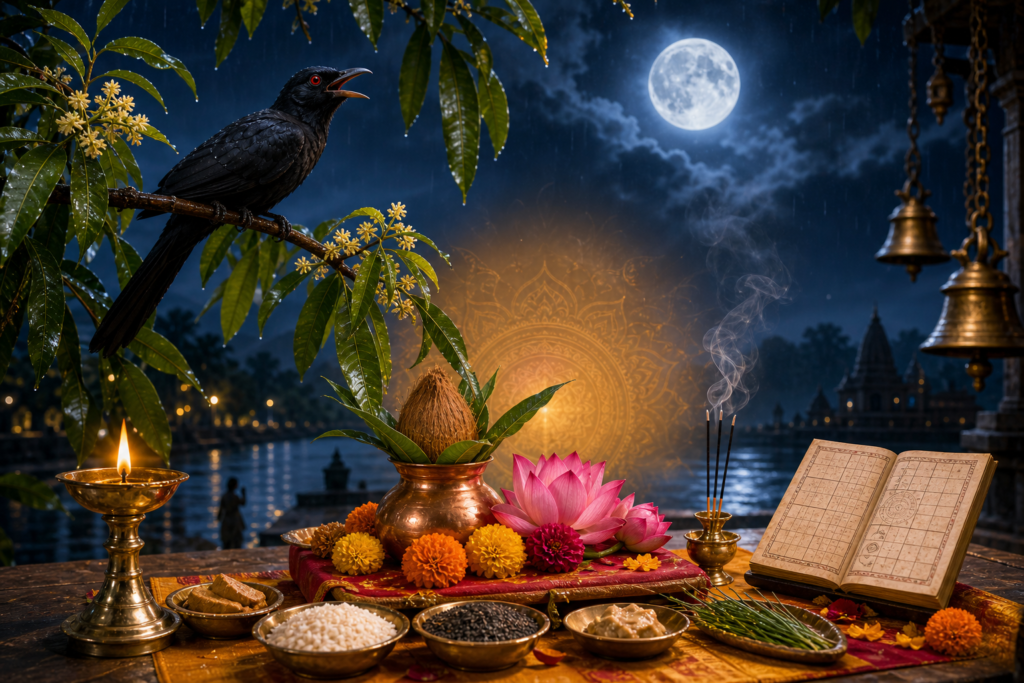
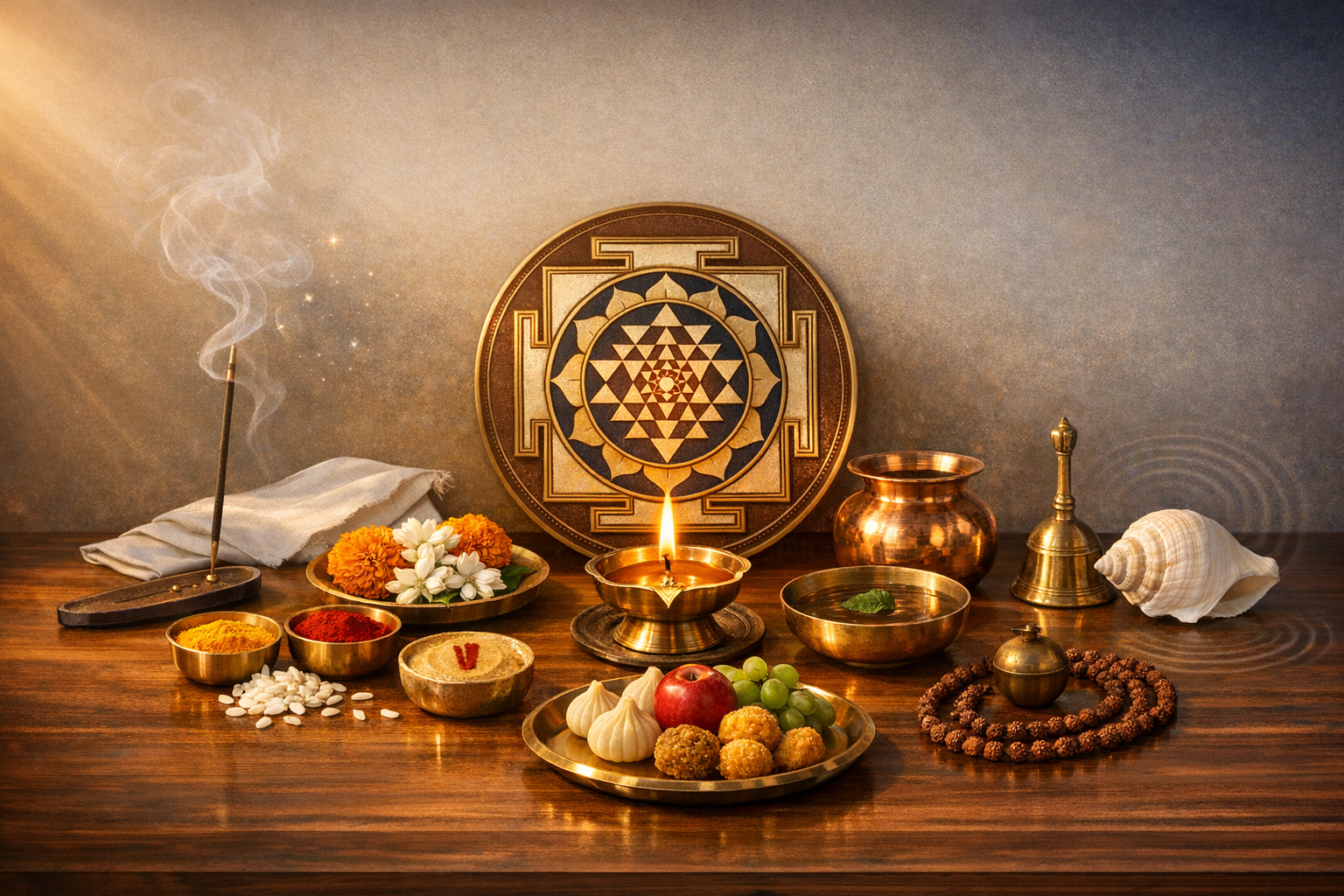
Ritual grammar provides the operational backbone for this pedagogy. Many households follow Panchopachara, a fivefold worship, while temples often employ Shodasha Upachara, a sixteenfold sequence. Across both, key offeringsgandha (sandal paste), pushpa (flowers), dhupa (incense), deepa (lamp), and naivedya (food)map intuitively to the five senses and the five elements. Variations across sampradayas and regions are expected and welcome; the shared logic rests in harmonizing element and sense through a mindful series of acts.
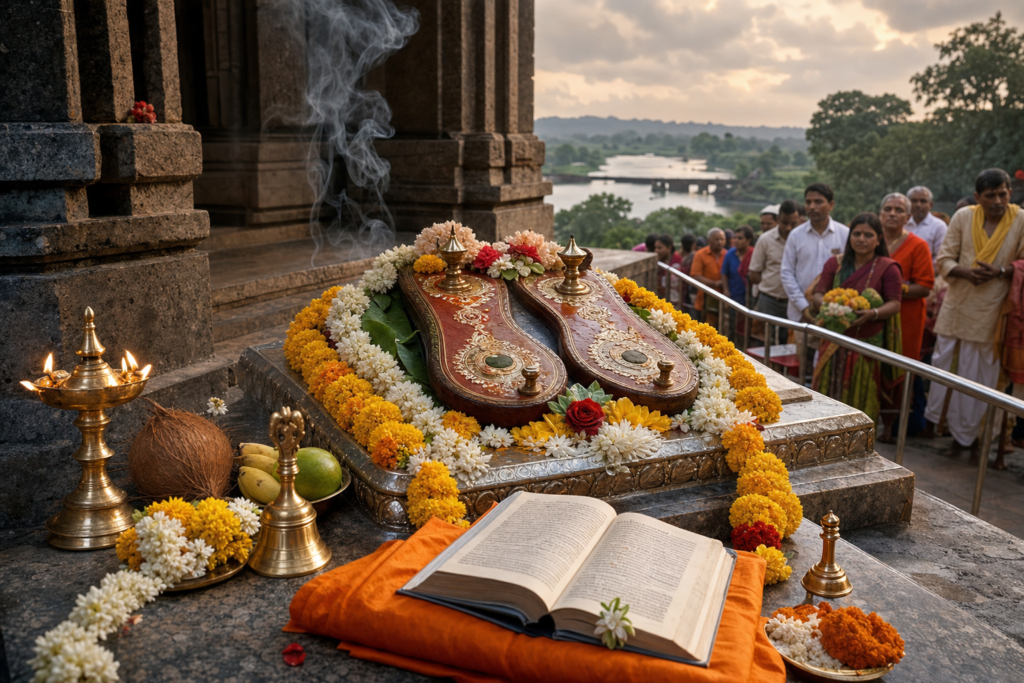
Earth, or prithvi, appears wherever stability, nourishment, and tangible form are invoked. The murti or saligrama provides a focal embodiment, while flowers, leaves, turmeric, kumkum, akshata (unbroken rice), and naivedya anchor worship in the textures and fragrances of earth. Devotees often note how the cool touch of sandal paste, the grainy feel of rice, and the vivid colors of garlands converge to settle the nervous system and cultivate steadiness.
Water, or ap, purifies and rejuvenates. Achamana, prokshana, and abhisheka cleanse the altar and refresh the senses through tactile coolness and gentle sound. Charanamrita integrates touch and taste with sanctity, reminding that purification is both symbolic and somatic. Comparable water-based offerings in Buddhist and Jain traditions similarly emphasize clarity, humility, and renewal, demonstrating a dharmic consensus about water’s sacred utility.
Fire, or agni, illumines and transforms. Deepa aradhana suffuses the visual field with soft, rhythmic light, while homa or havan, where appropriate, carries offerings through flame as intentions refine into prayer. Agni remains the timeless messenger that bridges seen and unseen. In many Buddhist contexts, butter lamps glow with the same impulse to dispel inner obscuration; across traditions, luminous offerings converge on clarity and insight.
Air, or vayu, infuses movement and fragrance. The curling ascent of incense smoke, the wafting of the chamara, and the cadence of breath during mantra recitation reveal how vayu mediates both prana and subtle mood. The olfactory signature of dhupasandal, frankincense, or natural resinsworks with breath to entrain calm attention. Jain and Buddhist rituals likewise honor incense as a purifier of space and intention, echoing a shared grammar of sanctification.
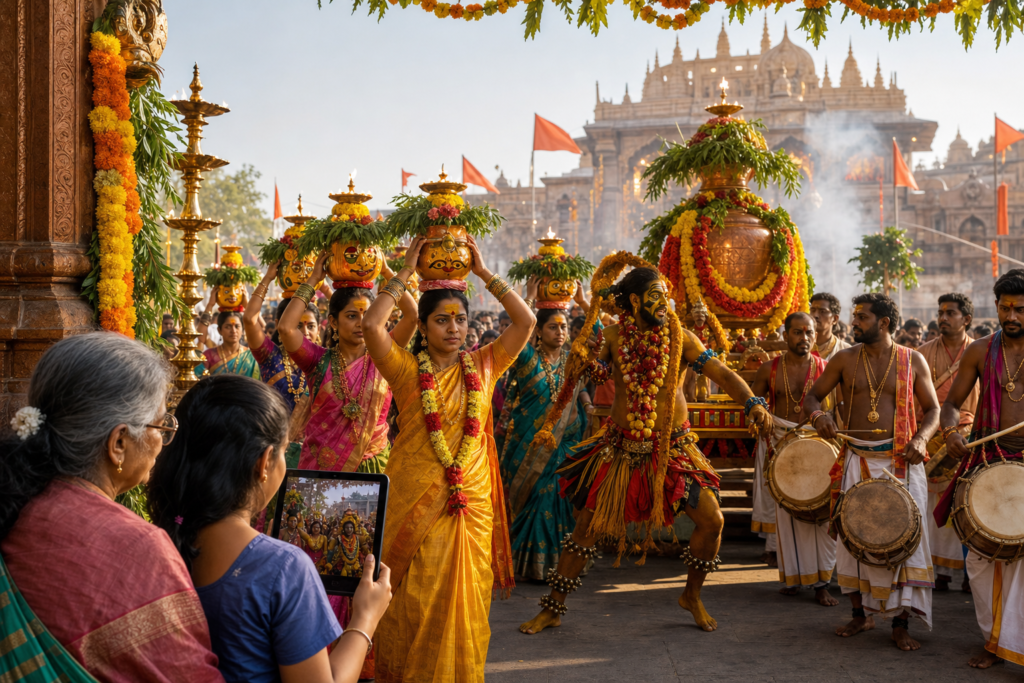
Space, or akasha, completes the matrix as the field in which sound and presence resonate. The bell’s ring, the conch’s call, and the measured cadence of mantra articulate sacred space, guiding attention inward. Temple acoustics are traditionally designed to carry vibration without harshness, enabling shabda to refine thought and feeling. In Sikh gurdwaras, the central place of shabad-kirtan immerses the heart in a different yet resonant acoustic sanctity, revealing how sound-centered practice unites communities in remembrance and devotion.
When viewed through the senses, puja reads as a curriculum of perception. Smell is honored through gandha and dhupa; taste through naivedya and prasada; sight through darshana and deepa; touch through abhisheka, tilaka, and garlanding; and sound through bell, shankha, archana, and kirtan. Each sensory channel is refined rather than overwhelmed, transforming ordinary sensation into contemplative attention, and anchoring the mind in sattvic steadiness.
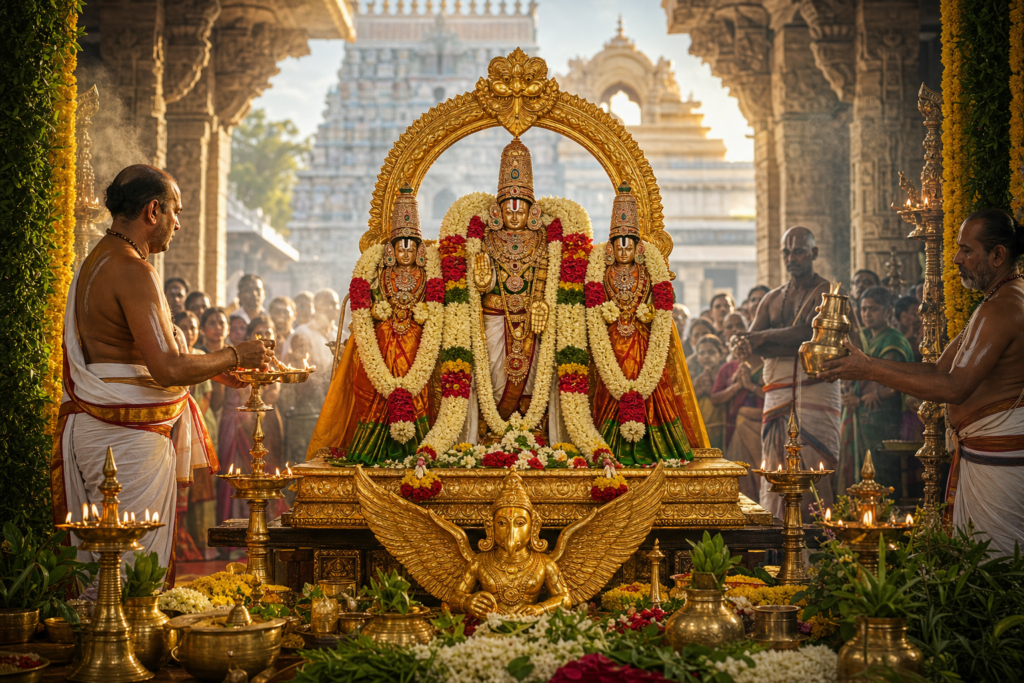
The murti functions as a contemplative interface rather than an end in itself. Through prana-pratishtha in temple settings, and through mindful invocation at home, the image becomes a focus for single-pointed awareness. This focus, combined with sequential offerings, reduces cognitive scatter and fosters what many practitioners describe as a serene, relational presence. Darshana is therefore not only seeing the divine but also allowing oneself to be seen, reconfiguring identity around humility and gratitude.
In household practice, Panchopachara offers a concise yet complete arc: applying sandal paste with reverence, offering fresh flowers, kindling incense, waving a lamp, and serving naivedya that later becomes prasada. Each act engages a distinct sense while echoing an element, and the entire sequence can be completed with simple, natural materials. Many families observe that children intuitively absorb this grammar of reverence, learning through touch, scent, and light how to attend, participate, and care.
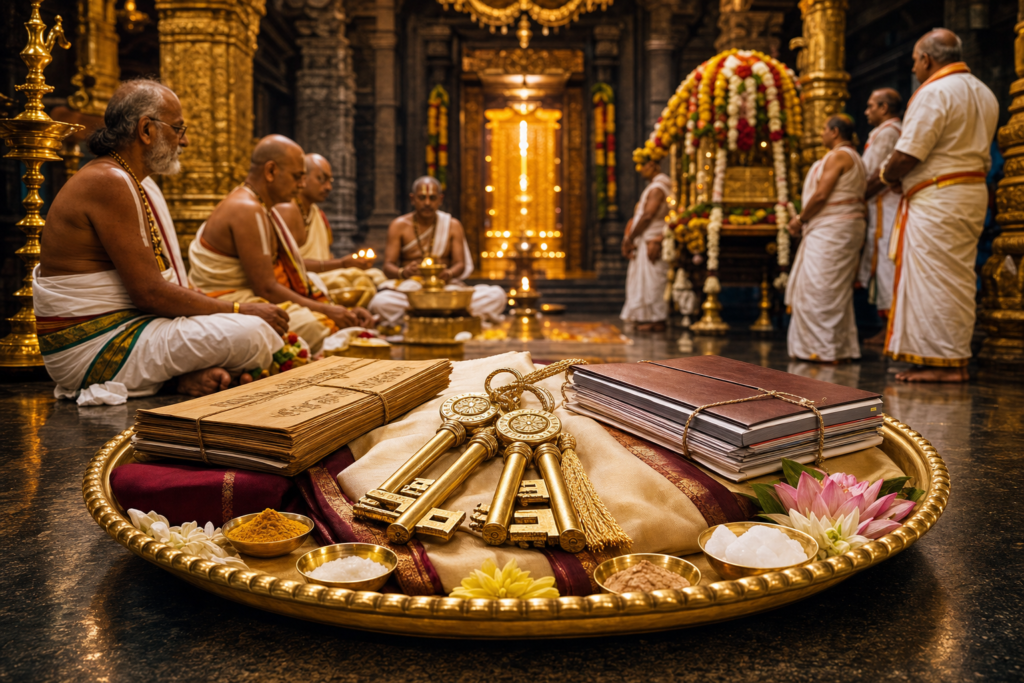
Temple worship often expands into Shodasha Upachara, beginning with avahana (invocation) and extending through asana, padya, arghya, acamaniya, snana, vastra, gandha, pushpa, archana, dhupa, deepa, naivedya, tambula, pradakshina, and visarjana. The extended sequence deepens the sensory and elemental dialogue through hospitality, cleanliness, beauty, illumination, nourishment, and auspicious closure. While the dravya and order may vary by Agama and sampradaya, the shared intention is coherent: consciously guide the body-mind from dispersion to centeredness, and from habit to sanctity.
Across dharmic traditions, an inclusive unity becomes evident. Buddhist puja with water bowls, incense, and lamps; Jain Ashta Prakari Puja with dravya such as jala, chandan, pushpa, dhoop, deepak, akshat, naivedya, and phal; and Sikh devotion centered on shabad-kirtan, ardas, and the grace of langar all engage the senses and elements to cultivate humility, compassion, and remembrance. Differences in form are honored, yet the underlying aspirationto align perception, intention, and conduct with truthbinds these traditions in a shared ethos.
Modern insights from psychology and contemplative science help clarify the efficacy of this ritual design. The gentle ring of the bell and slow mantra modulate breath and heart rate, likely enhancing vagal tone and stabilizing attention. The warm spectrum of lamp light supports visual calm, while natural incense, used judiciously in well-ventilated spaces, anchors memory and mood. The rhythmic progression of actions provides a predictable structure that many devotees experience as quietly therapeutic, particularly when practiced at dawn or dusk in harmony with circadian rhythms.
Ethical and ecological considerations are intrinsic to puja’s spirit. Natural, plant-based incense and oils, reusable brass or copper utensils, local flowers, and modest quantities of sattvic naivedya express ahimsa and stewardship. Many households now adopt smokeless lamps where needed, ventilate spaces during dhupa, and compost spent offeringsall practical ways to align sacred intention with environmental responsibility.
Over time, the daily discipline of elemental and sensory alignment reshapes conduct beyond the altar. The clarity cultivated through deepa encourages lucidity in speech; the purity symbolized by water inclines one toward honest dealings; the groundedness of earth supports reliability; the freshness of air invites spontaneous kindness; and the open field of space suggests intellectual humility and listening. Many practitioners observe that this continuity between altar and action is the most reliable mark of spiritual progress.
Ultimately, puja educates perception so that the senses become allies rather than distractions. When the five elements and five senses are harmonized through Panchopachara or Shodasha Upachara, ordinary life discloses extraordinary coherence. In this shared dharmic horizonhonoring Hinduism, Buddhism, Jainism, and Sikhismdevotional structure and contemplative insight reinforce each other, uniting communities in a quiet, resilient, and compassionate way of being.
Inspired by this post on Hindu Blog.