
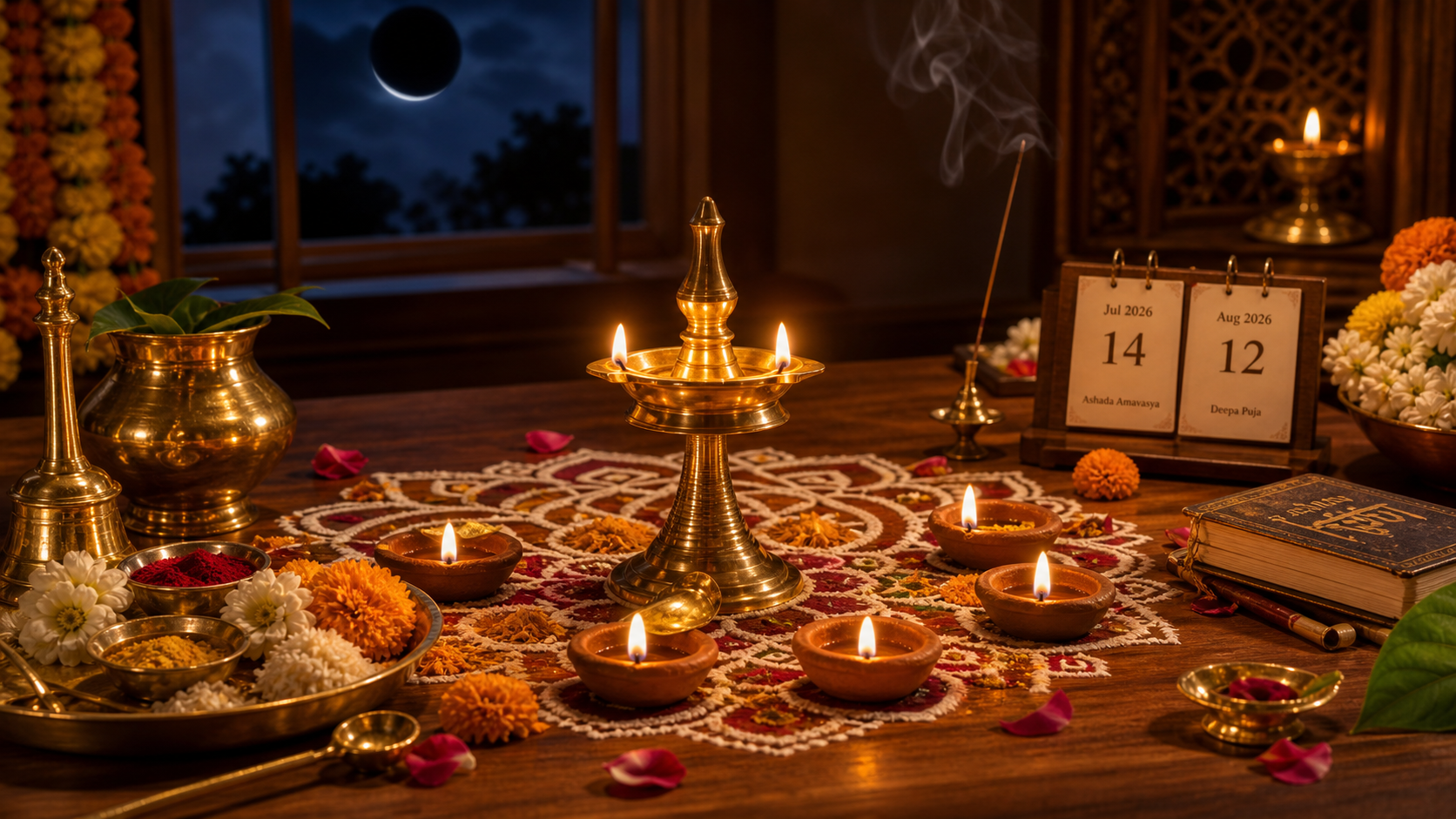
Deepa Puja, also called Deep Pujan, Diya Puja, or Deepa Pooja in different regional usages, is an auspicious lamp-centered observance associated with Ashada Amavasya, the new moon day of the Ashadha month. In 2026, the observance is listed as August 12 in Marathi, Gujarati, Kannada, and Telugu calendar traditions, while the North Indian Hindu calendar places Ashada Amavasya Deepa Puja on July 14. This difference is not a contradiction; it reflects the way Hindu lunar months are counted in different regional panchang systems.
At its simplest level, Deepa Puja is the worship of the sacred flame. At a deeper ritual and philosophical level, it is a domestic act of purification, gratitude, remembrance, and renewal. The lamp becomes a visible symbol of consciousness, dharma, prosperity, and protection. In a household setting, the lighting of diyas turns an ordinary evening into a disciplined spiritual moment, where physical cleaning, ritual order, and inward reflection come together.
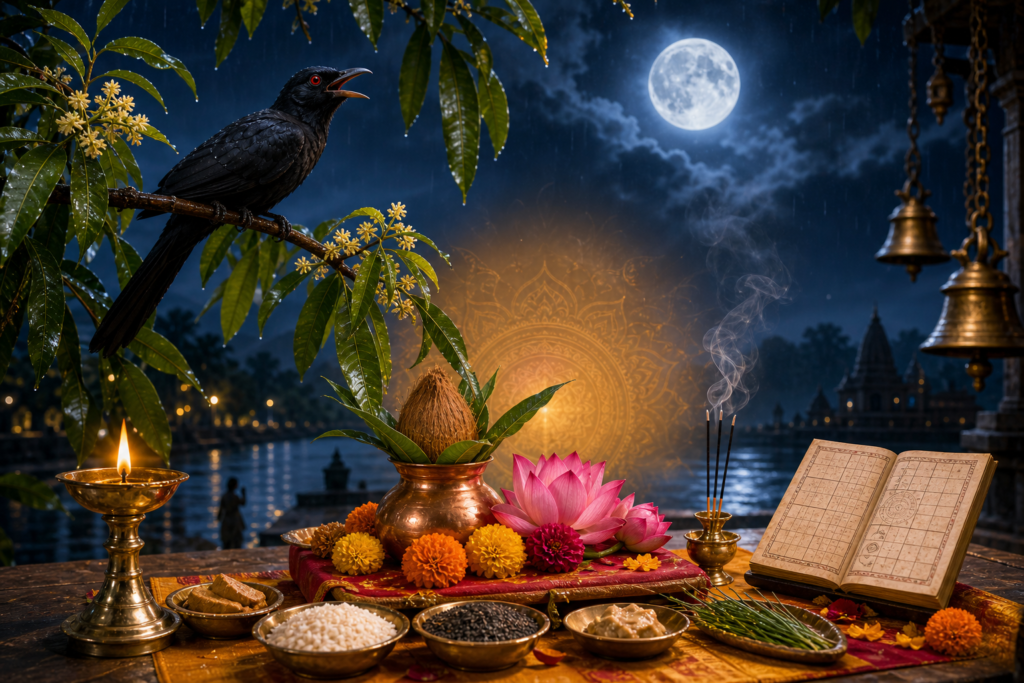
Ashada Amavasya itself occupies an important place in the Hindu calendar because Amavasya marks the lunar phase when the moon is not visible from Earth. This dark lunar interval is traditionally treated as a time for introspection, ancestral remembrance, prayer, fasting, charity, and renewed spiritual focus. Deepa Puja adds the element of light to that darkness, making the ritual especially rich in symbolism: the devotee does not deny darkness but responds to it through sacred illumination.
The regional date variation needs careful attention. North Indian calendars commonly follow the purnimanta system, in which the lunar month ends with Purnima, the full moon. Many western and southern regional traditions follow the amanta system, in which the lunar month ends with Amavasya, the new moon. Because the dark fortnight may be assigned differently in these systems, the same named observance can appear on different Gregorian dates. For this reason, families usually confirm the final date through their local panchang, temple calendar, or family tradition.
In 2026, therefore, a devotee following a North Indian purnimanta calendar would observe Ashada Amavasya Deepa Puja on July 14, while many households following Marathi, Gujarati, Kannada, and Telugu calendar reckoning would observe it on August 12. This calendrical precision matters because Hindu ritual time is not merely a civil date; it is tied to tithi, sunrise rules, regional practice, and inherited sampradaya. The academically sound approach is to recognize the legitimacy of regional reckoning rather than flattening all observances into a single date.
The usual preparation begins with cleaning the home. This is not just housekeeping before a festival; it is a symbolic act of removing disorder before invoking auspiciousness. Floors are swept and washed, the puja area is arranged, lamps are gathered, and old wicks, soot, dust, and oil residue are removed. Many households experience this part of the ritual as a quiet discipline, because the act of cleaning the lamp also becomes a way of preparing the mind for worship.
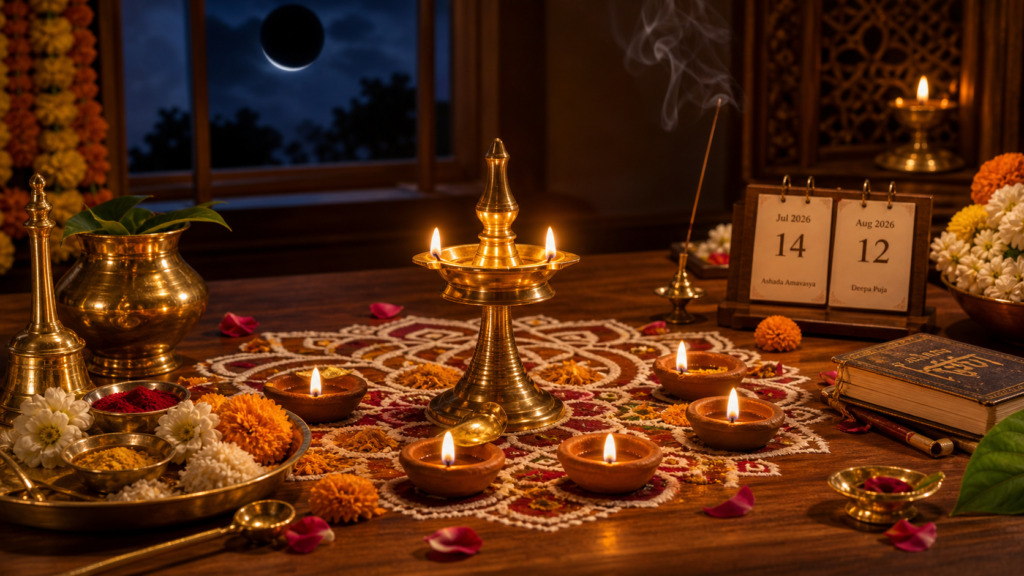
The diyas or deepas are then cleaned carefully and decorated. In some homes they are colored, arranged with flowers, or placed on a sanctified table. The ritual surface may be adorned with rangoli or kolam designs, depending on regional custom. These geometric and floral patterns do more than beautify the space; they create a boundary of sacred attention, marking the place where ordinary domestic space becomes a temporary altar.
The lamps are usually arranged on a clean table, wooden plank, or puja platform. Oil or ghee is poured into each diya, and cotton wicks are placed with care. The choice of oil, the number of lamps, and the exact arrangement may vary by region and family. Some families light a single central lamp, while others light many diyas together. The essential principle remains the same: the flame is honored as Deepa Jyothi, the sacred light.
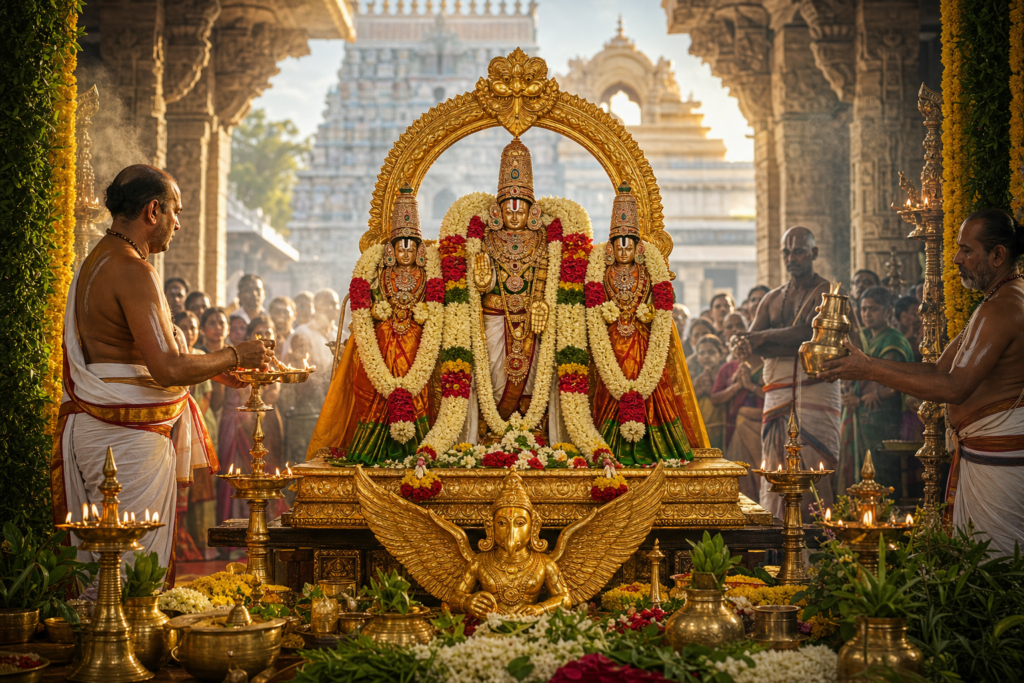
Deepa Puja is often dedicated to one’s Ishta Devata, the chosen or beloved form of the Divine. This detail is important for understanding the inclusive character of Hindu worship. The ritual does not demand a single uniform deity focus for every home. A Shaiva household may offer the puja in relation to Lord Shiva or Goddess Parvati; a Vaishnava household may center the devotion on Lord Vishnu, Lakshmi, or Krishna; a Shakta household may direct the worship toward Devi. The lamp functions as a shared symbol that accommodates devotional diversity.
The observance is also associated with Pancha Bhootas, the five primordial elements: Air, Water, Fire, Sky, and Earth. In this framework, the diya is not only an object of worship but a miniature cosmological model. The clay or metal body of the lamp represents material form, the oil represents sustaining nourishment, the wick represents the embodied channel, the flame represents fire and transformation, and the surrounding space allows the light to radiate. The act of lighting a lamp therefore becomes a condensed meditation on the relationship between body, nature, and consciousness.
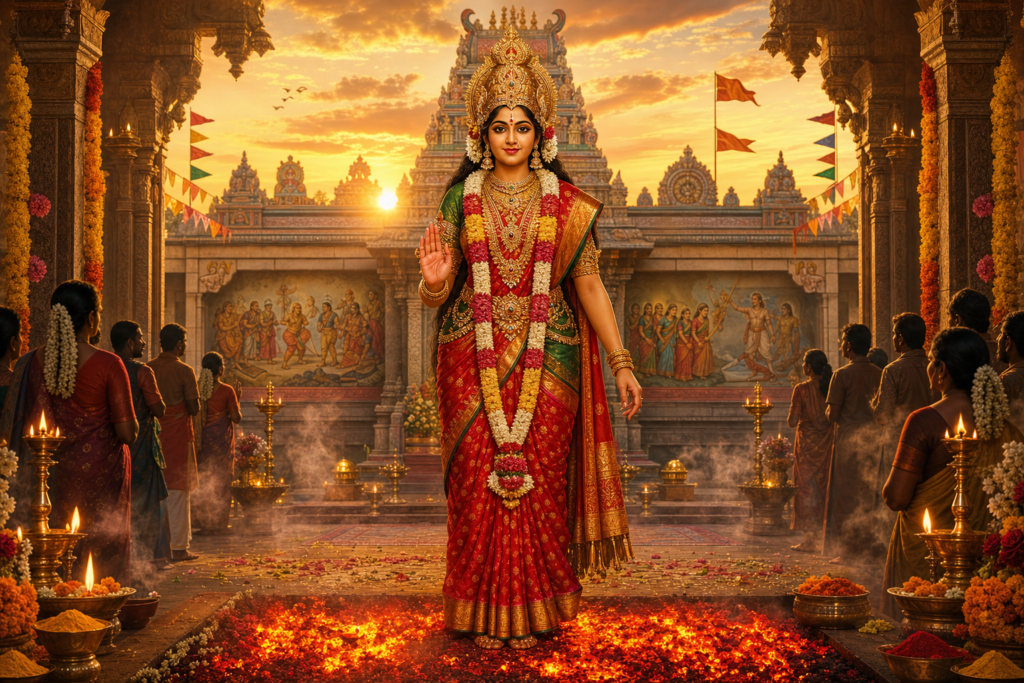
Many devotees dedicate Deepa Puja to the Mother Goddesses, especially Goddess Lakshmi, Goddess Parvati, and Goddess Saraswati. This triadic devotional association is meaningful. Lakshmi is connected with prosperity, grace, abundance, and auspicious household life. Parvati represents strength, devotion, protection, and sacred domesticity. Saraswati embodies knowledge, refinement, learning, and clarity. When the lamp is offered to these goddesses, the household symbolically invites wealth, strength, and wisdom to coexist.
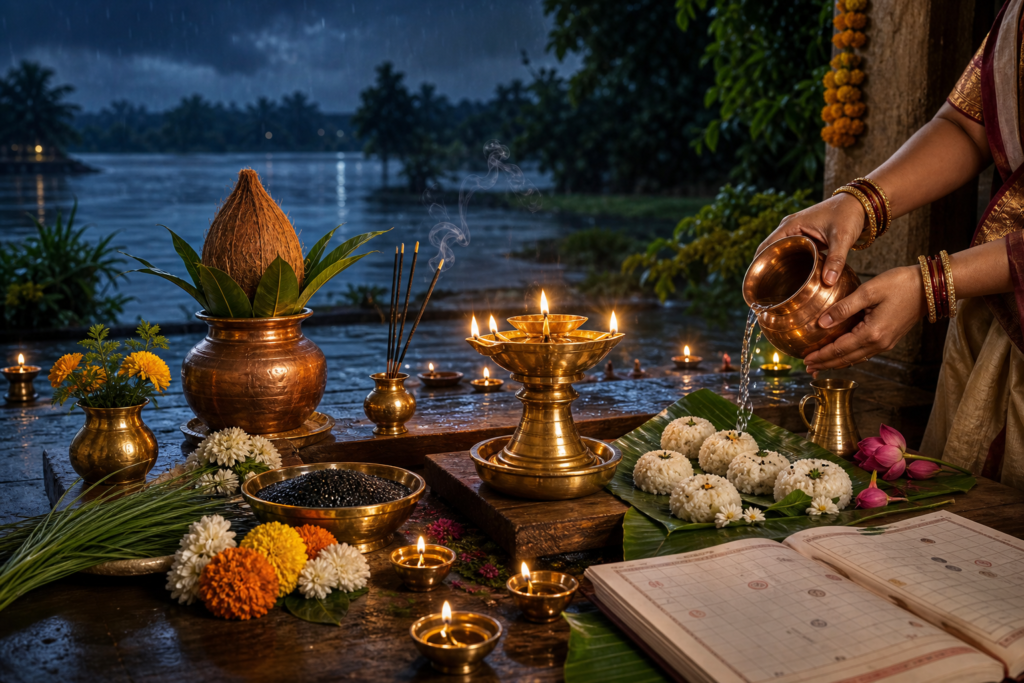
The puja itself may include lighting the lamps, offering flowers, applying kumkum or turmeric where appropriate, waving incense, reciting prayers, and performing a simple arati. Some families chant familiar lamp prayers, while others recite the names of their chosen deity. In many homes the ritual is intentionally simple, because the central act is the lighting and reverential honoring of the lamp. The spiritual value lies not in complexity but in attention, purity, and devotion.
In the evening, the diyas are lit again and placed around the house in a manner reminiscent of Deepavali. This second lighting is one of the most emotionally powerful parts of the observance. A home that was dark at sunset gradually fills with small points of light, and the household experiences a visible shift in atmosphere. The practice teaches through the senses: light changes space, and disciplined spiritual action changes the inner climate of a family.
Traditional belief holds that the sparkling light of the diyas removes negative forces and welcomes new brightness into life. In academic language, this belief can be understood as both ritual theology and cultural psychology. The lamp is treated as a protective presence, but it also trains the mind to associate spiritual practice with hope, order, warmth, and moral clarity. The household does not merely wish for renewal; it enacts renewal through embodied ritual.
Deepa Puja is also associated with the blessing of Asta Aishwaryas, the eight forms of wealth. These are often understood broadly, not only as money or material prosperity. In the wider Hindu imagination, wealth can include health, knowledge, courage, family harmony, reputation, food security, spiritual merit, and inner contentment. This broader understanding prevents the ritual from being reduced to material gain. The lamp asks the household to consider what true abundance means.
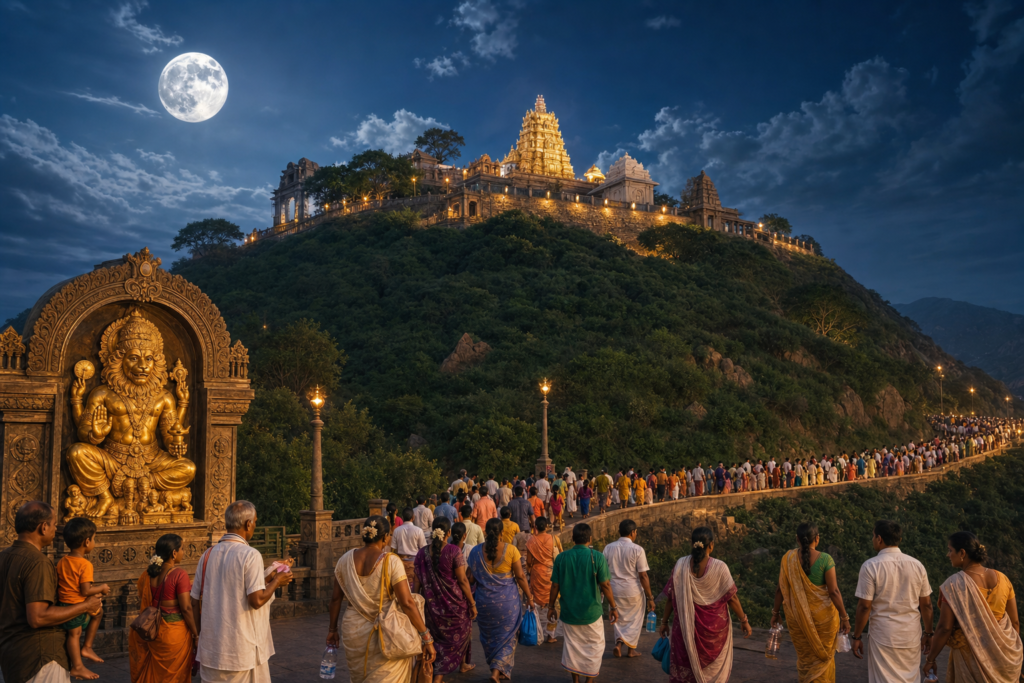
The timing of Deepa Puja immediately before the beginning of Shravan month adds another layer of significance. Shravan is widely regarded as a sacred period for worship, fasting, pilgrimage, Shiva puja, vrata, and disciplined devotion. Deepa Puja on Ashada Amavasya can therefore be seen as a threshold ritual. It closes one lunar phase and prepares the household for a more intensive devotional season. The flame becomes a bridge from the inward silence of Amavasya to the devotional energy of Shravan.
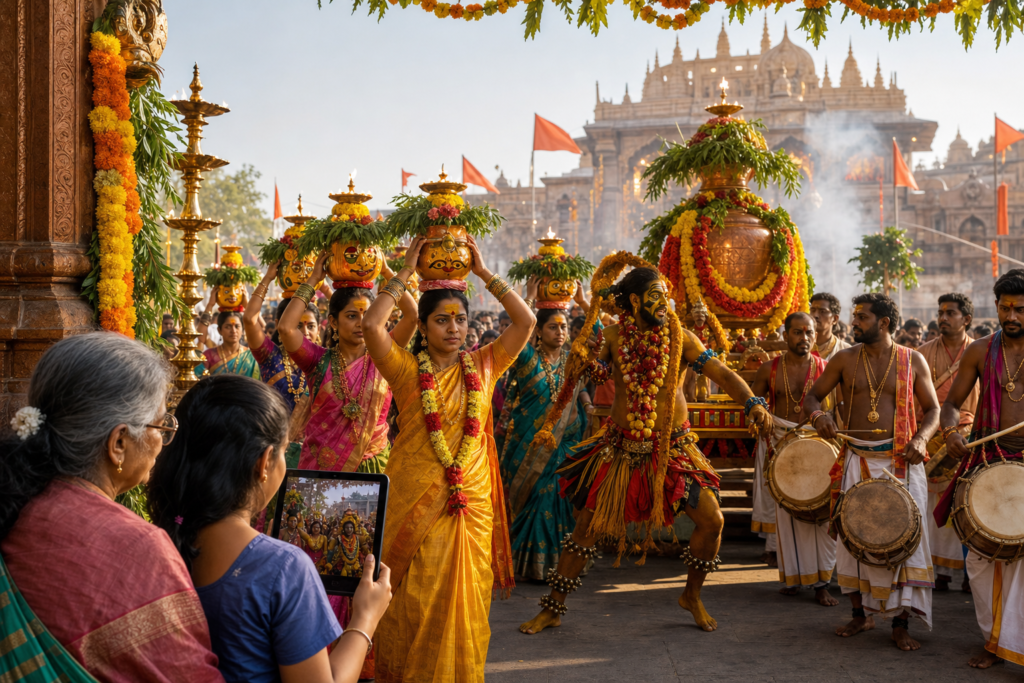
For Marathi, Gujarati, Kannada, and Telugu households, the observance often carries regional textures that should be respected. The language of the ritual, the style of rangoli or kolam, the oil used in the lamp, the deity invoked, and the sequence of offerings may differ. Such differences are not signs of inconsistency. They are examples of Hindu cultural continuity working through local memory. A tradition remains alive precisely because it can be carried in many regional forms without losing its core meaning.
From a technical ritual perspective, the lamp has several important components. The vessel holds the offering, the oil or ghee sustains the flame, and the cotton wick mediates between fuel and fire. If the wick is too dry, the flame becomes unstable. If the oil is insufficient, the lamp dies quickly. This practical detail has a spiritual resonance: devotion also requires a vessel, nourishment, and continuity. Ritual makes philosophy tangible through ordinary materials.
Fire occupies a central place in Vedic and post-Vedic ritual culture. Agni is the carrier of offerings, the witness of vows, and the purifier of sacrificial space. The domestic diya is smaller than the Vedic altar fire, but it participates in the same broad symbolic world. It gives light, consumes fuel, purifies atmosphere, and marks the presence of sacred attention. Deepa Puja thus links household worship with a much older Indic reverence for fire as a mediator between the human and the divine.
The connection with Amavasya also makes Deepa Puja inwardly contemplative. New moon nights naturally evoke stillness. The absence of moonlight can suggest uncertainty, grief, fatigue, or the unseen dimensions of life. Lighting a lamp on such a night becomes a ritual statement that clarity can be cultivated even when external light is absent. The symbolism remains accessible across generations because every person understands the emotional difference between a dark room and a lamp-lit room.
In many families, children first encounter Hindu ritual not through abstract theology but through practices like Deepa Puja. They help clean lamps, arrange flowers, hold a plate during arati, or watch elders place diyas near thresholds and windows. These memories often become lasting forms of cultural education. A child may not immediately understand Pancha Bhootas, tithi, or Ishta Devata, but the association between light, reverence, family, and sacred time becomes deeply embedded.
This is one reason Deepa Puja remains relevant in modern urban life. Even in apartments, diaspora homes, and fast-paced professional households, the ritual can be performed with modest materials and sincere attention. A small clean space, a lamp, oil or ghee, a wick, flowers, and a few minutes of focused prayer are sufficient. The observance does not require spectacle. Its strength lies in disciplined simplicity.
Safety should also be part of responsible observance. Lamps should be placed on stable, heat-resistant surfaces away from curtains, paper decorations, synthetic fabric, and unattended children or pets. If many lamps are lit, ventilation and supervision are important. Ritual care and practical care are not separate. A dharmic household honors sacred fire by treating it with reverence, attention, and responsibility.
Deepa Puja also offers a meaningful point of unity among dharmic traditions. While the specific ritual belongs to Hindu practice, the symbolism of light as wisdom, awareness, ethical clarity, and liberation resonates widely across Hinduism, Buddhism, Jainism, and Sikhism. Dharmic traditions often differ in metaphysics and ritual form, yet they share a reverence for the movement from ignorance to knowledge and from confusion to disciplined awareness. The lamp can therefore be appreciated as a cultural symbol of inner illumination without erasing the distinctiveness of each tradition.
In Hindu practice, the lighting of the lamp is not merely decorative. It invites the devotee to become inwardly alert. A lamp can be admired passively, but puja asks for participation: the hands clean, the eyes focus, the voice prays, the body sits or stands with attention, and the mind gathers itself. This embodied quality explains why domestic rituals remain powerful even when they appear simple from the outside.
The association with Goddess Lakshmi also gives the ritual an ethical dimension. Prosperity in Hindu thought is most meaningful when aligned with dharma. Wealth without restraint, generosity, gratitude, and self-discipline becomes unstable. By lighting a diya for Lakshmi, the household symbolically invites prosperity that is clean, sattvic, and beneficial. The lamp reminds devotees that abundance should illuminate life rather than inflame greed.
The association with Goddess Saraswati brings attention to knowledge. A flame is a natural metaphor for learning because it dispels obscurity without violence. One lamp can light another without diminishing itself, just as knowledge can be shared without being lost. In this sense, Deepa Puja becomes a domestic affirmation of education, discernment, and intellectual humility.
The association with Goddess Parvati emphasizes strength, steadiness, and sacred family life. Parvati is often understood as the force of devotion, tapas, protection, and nurturing power. When the household lamp is offered to her, the ritual acknowledges that family harmony is not accidental. It must be tended, protected, and renewed, much like a flame that requires both fuel and shelter.
Deepa Puja is therefore not only a festival marker but a compact theology of the home. It joins cleanliness, beauty, devotion, cosmology, feminine divinity, elemental reverence, and calendrical awareness. It also expresses a distinctively Hindu way of sacralizing daily life: the home becomes a mandala, the table becomes an altar, the lamp becomes a teacher, and the evening becomes a moment of renewal.
The observance should not be confused with Deepavali, although the evening placement of diyas around the house resembles Deepavali practice. Deepavali is a major pan-Indian festival with its own calendar position, narratives, and regional forms. Deepa Puja on Ashada Amavasya is more specific and usually quieter. Its focus is not public celebration but domestic purification and devotional preparation before Shravan.
For those observing in 2026, the most practical approach is to first identify the family calendar tradition. If the household follows a North Indian purnimanta panchang, July 14, 2026 is the relevant date for Ashada Amavasya Deepa Puja. If the household follows Marathi, Gujarati, Kannada, or Telugu regional reckoning, August 12, 2026 is the date given for Deepa Puja or Diya Pooja. Local temple guidance remains useful because tithi timing can vary by location and sunrise rule.
A simple observance may be performed by cleaning the puja area, washing and drying the lamps, decorating the altar with rangoli or kolam, placing flowers, filling the diyas with oil or ghee, lighting the wicks, invoking the chosen deity, offering prayers, and performing arati. In the evening, the lamps may be lit again and placed respectfully around the home. The ritual can be brief, but it should not be careless. Its dignity comes from attention.
Ultimately, Deepa Puja on Ashada Amavasya is a reminder that sacred traditions often preserve profound insights through ordinary actions. A cleaned lamp, a cotton wick, a small flame, and a quiet prayer can carry an entire philosophy of renewal. The ritual teaches that darkness is not final, that prosperity must be aligned with wisdom, and that the home itself can become a place where dharma is practiced with beauty, discipline, and devotion.
Inspired by this post on Hindu Pad.


Leave a Reply
You must be logged in to post a comment.