
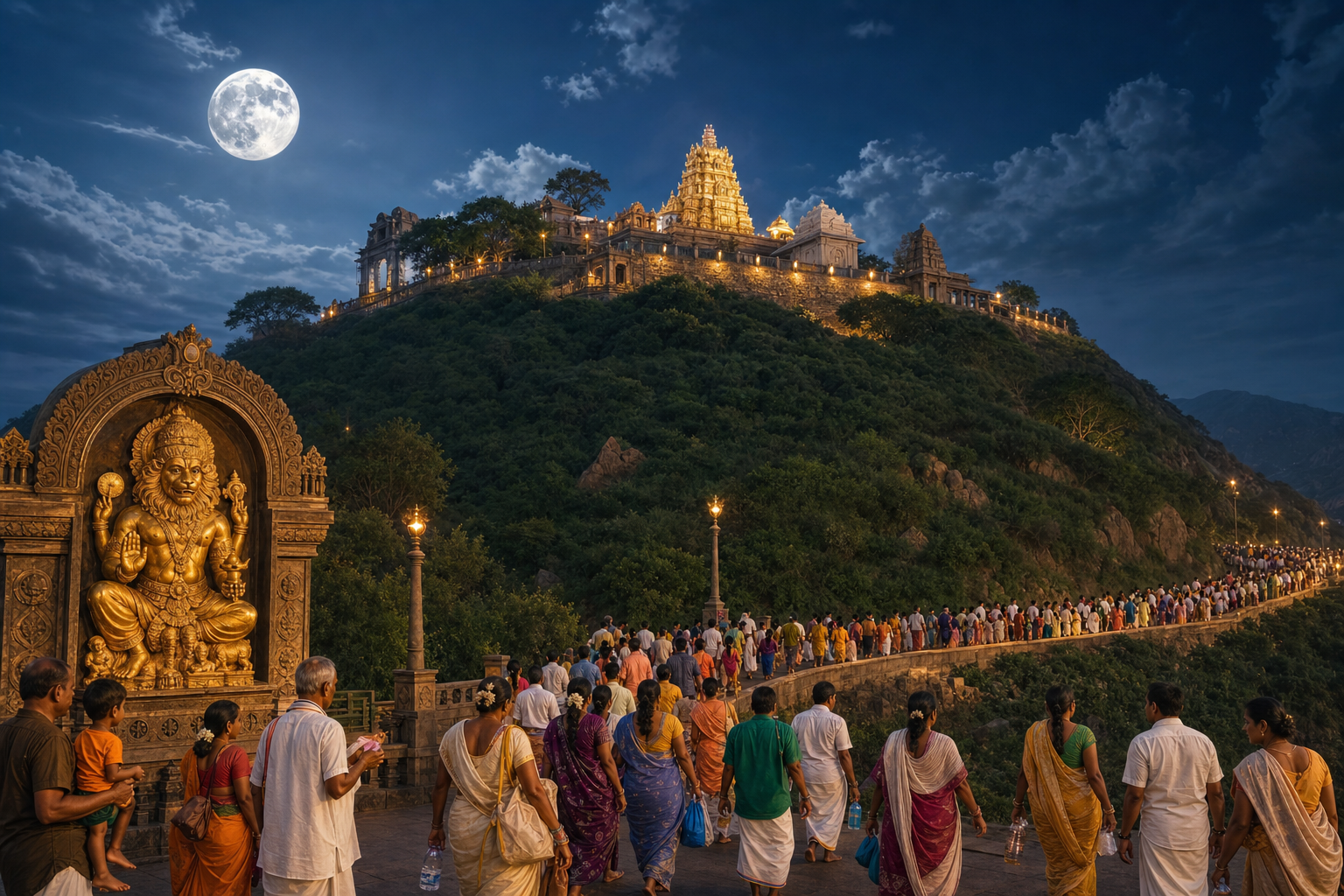
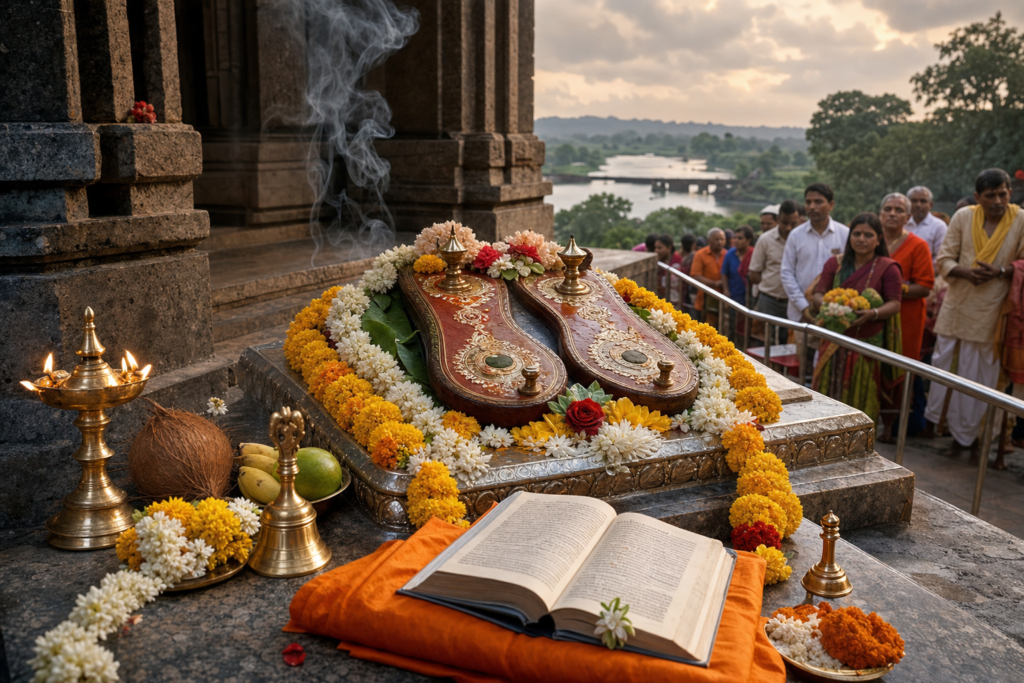
Giri Pradakshina at the Sri Varaha Lakshmi Narasimha Swamy Temple in Simhachalam is one of the most deeply felt pilgrimage traditions of coastal Andhra Pradesh. Observed around Ashada Pournami, the full moon day of Ashada masam, it draws devotees into a demanding circumambulation of Simhagiri, the sacred hill on which Lord Narasimha is worshipped in the combined form of Varaha Narasimha. The ritual is not merely a long walk around a hill; it is a disciplined act of devotion, endurance, memory, and communal participation.
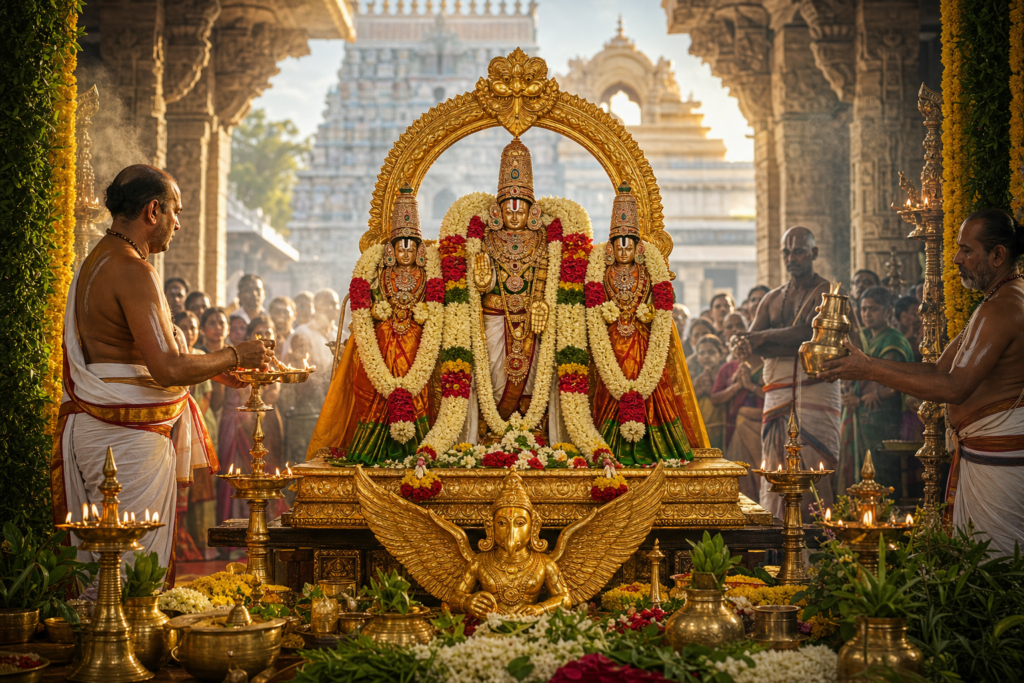
The Simhachalam temple is situated in Visakhapatnam, Andhra Pradesh, and is dedicated to Sri Varaha Lakshmi Narasimha Swamy, a form of Lord Vishnu associated with the protection of Prahlada and the restoration of dharma. In temple tradition, the deity unites two powerful Vishnu avatara motifs: Varaha, the boar manifestation who rescues the earth, and Narasimha, the man-lion manifestation who protects the devotee against tyranny. This theological combination gives Simhachalam a distinctive place among South Indian Vaishnava temples.
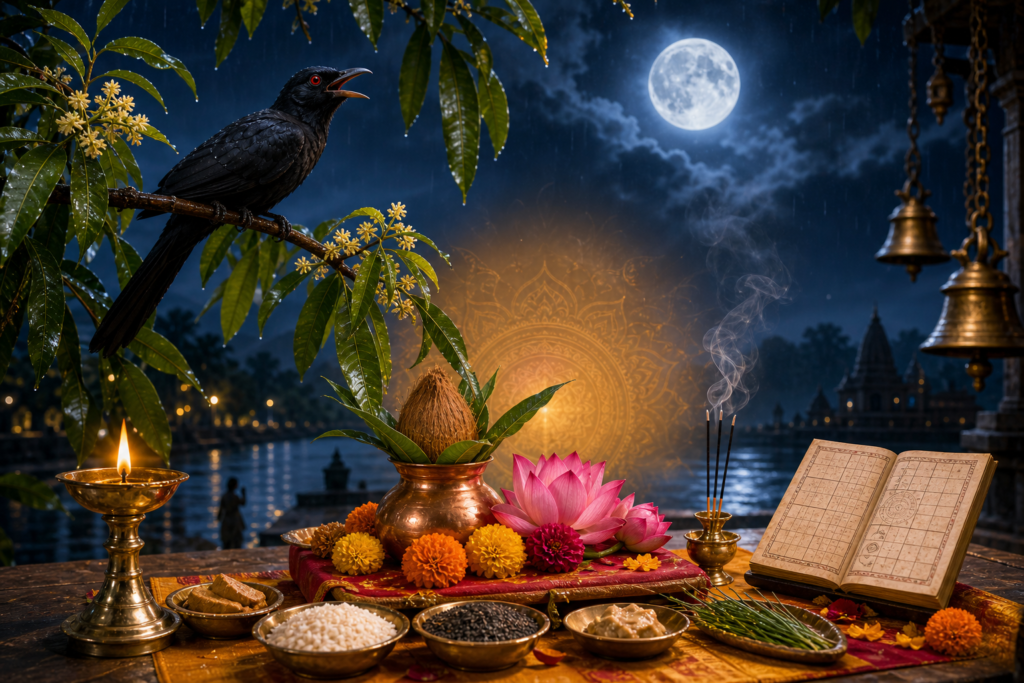
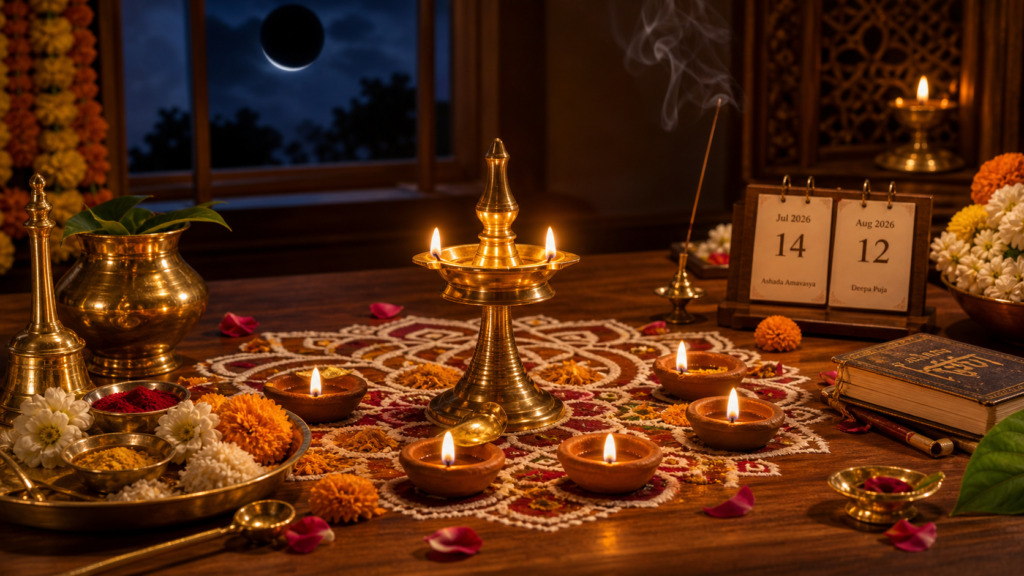
Ashada Pournami, also widely associated with Guru Purnima and Vyasa Purnima, gives the observance an additional layer of meaning. The full moon is traditionally linked with reverence for teachers, scripture, lineage, and spiritual discipline. When Giri Pradakshina is performed during this period, the journey becomes both an offering to Lord Narasimha and a reminder that dharmic life is sustained through guidance, humility, and steady practice.
The term Giri Pradakshina means circumambulation of a hill. In Hindu ritual language, pradakshina is performed by moving around a sacred presence in a clockwise direction, keeping the sacred center to one’s right. At Simhachalam, the sacred center is not only the sanctum of the temple but the entire hill itself. The hill becomes a living mandala, and the devotee’s body traces a devotional circle through the landscape.
The journey of Simhagiri Pradakshina covers more than 30 kilometers, with recent accounts commonly describing the route as approximately 32 kilometers. The route begins near the foothills of Simhachalam and passes through important localities of Visakhapatnam before returning toward the temple. Devotees may move through areas such as Adavivaram, Hanumanthawaka, Jodugullapalem, Appughar, Venkojipalem, HB Colony, Muralinagar, Madhavadhara, and other connecting stretches, depending on the arrangements made for that year.
The walk is physically demanding. It can take many hours, especially when large crowds gather and movement slows. Many devotees begin in the evening or night, often after offering prayers or naivedyam. Some undertake the pradakshina while fasting, and many complete the walk before proceeding for darshan of Sri Varaha Lakshmi Narasimha Swamy. The discipline of walking, waiting, chanting, and enduring discomfort becomes part of the offering.
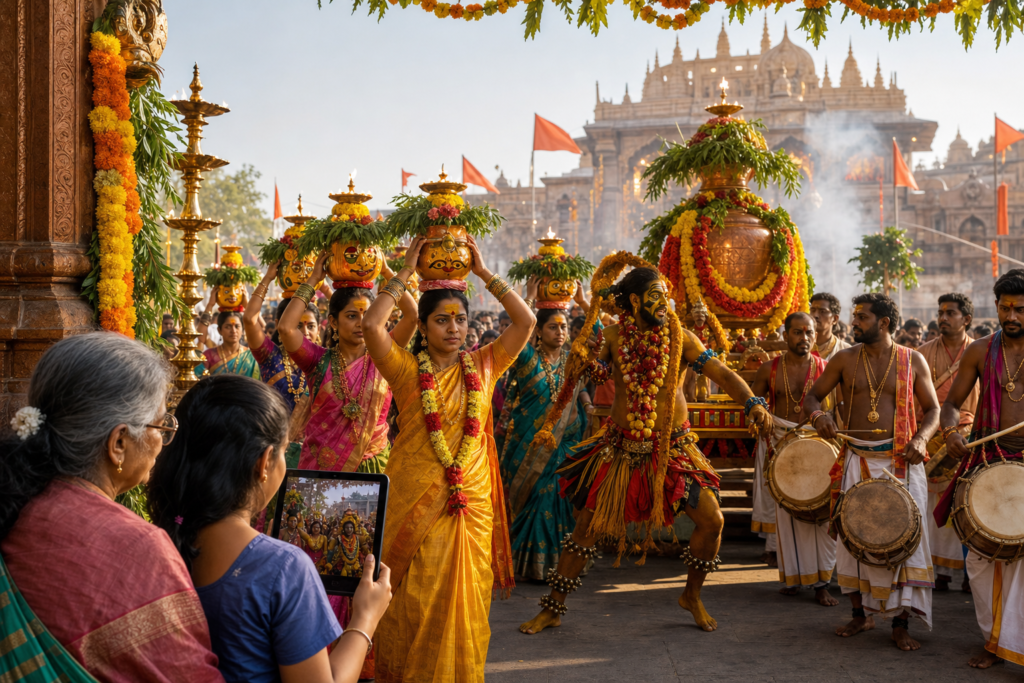
For devotees, the emotional power of the pilgrimage often lies in its simplicity. Families walk together, elderly pilgrims move with measured determination, young people support relatives, and groups chant the names of the deity as the route unfolds through the city. The experience reveals how a temple festival can extend beyond the temple walls and temporarily transform an urban landscape into a sacred pathway.
Simhachalam Giri Pradakshina is counted among the major observances associated with the temple, along with Chandanotsavam and Kalyanotsavam. Chandanotsavam is especially famous because the presiding deity, who is usually covered with sandalwood paste, is revealed for nijaroopa darshan on Akshaya Tritiya. Giri Pradakshina, by contrast, emphasizes movement, tapas, and the relationship between the devotee and the sacred hill.
The historical depth of Simhachalam strengthens the significance of the observance. The temple has a long inscriptional and architectural history, with patronage associated with dynasties such as the Eastern Gangas, the Cholas, the Gajapatis, and the Vijayanagara rulers. Its architectural form reflects a meeting of Kalinga, Chalukya, Chola, and Dravidian influences, making it a major example of cultural continuity in eastern and southern India.
The temple’s sacred geography is also important. Simhachalam literally evokes the idea of the lion hill, and the hill is treated as inseparable from the deity. In many Hindu pilgrimage traditions, mountains and hills are not passive settings; they are embodiments of divine presence. Circumambulating such a hill becomes a way of honoring the deity in expansive form, beyond the limits of the sanctum.
From a ritual perspective, the clockwise movement of pradakshina expresses alignment. The devotee does not stand at the center; the sacred occupies the center. This reversal of ordinary ego-centered movement is central to the spiritual discipline of the practice. By walking around Simhagiri, devotees symbolically reorganize their inner world around dharma, devotion, and surrender.
Those unable to complete the full hill circumambulation may offer pradakshina within the temple precincts. Traditional accounts note that some devotees perform 108 circumambulations inside the temple when the longer route is not possible. This reflects a practical and compassionate dimension of temple practice: devotion is not reduced to physical capacity alone, and alternative forms of participation remain meaningful.
The number 108 has broad significance in Hindu spiritual practice, appearing in japa, mala beads, temple circumambulation, and ritual counting. In this context, 108 pradakshinas offer a concentrated substitute for the full giri route. The emphasis is on bhava, or devotional intention, supported by disciplined repetition.
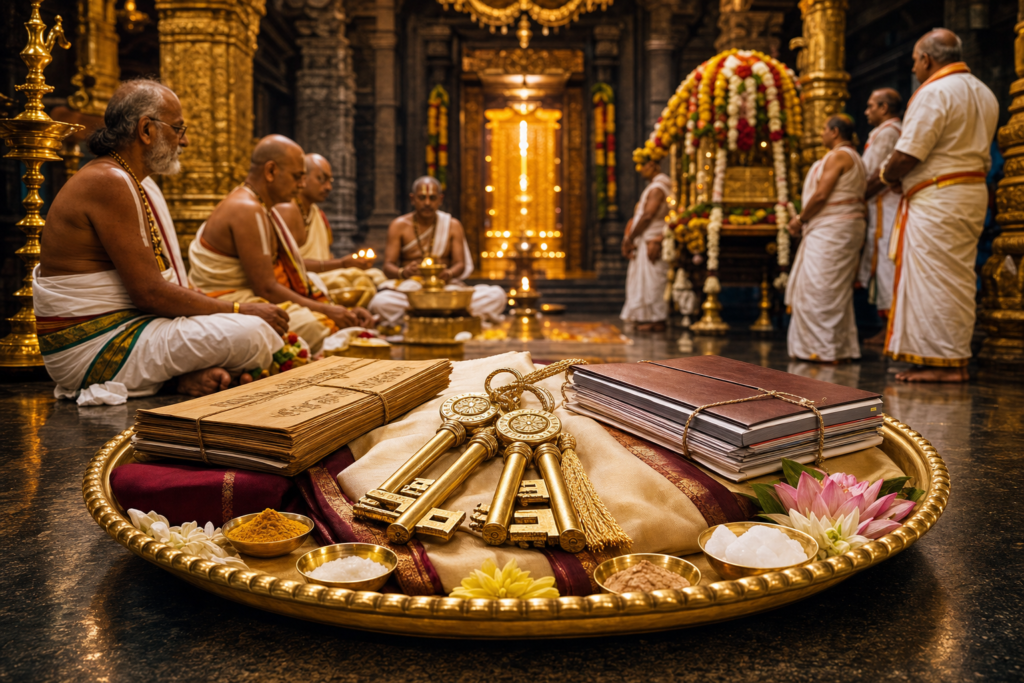
The observance also displays the social dimension of dharmic festivals. Large-scale Giri Pradakshina requires coordination among temple authorities, civic bodies, police, medical teams, volunteers, donors, and local communities. Water distribution, first-aid centers, crowd control, traffic diversions, lighting, sanitation, and emergency planning become part of the devotional infrastructure. The sacred event depends on both faith and careful public organization.
Recent celebrations have shown the scale of participation. Reports from 2025 described lakhs of devotees participating in the Simhachalam Giri Pradakshina, with extended darshan hours and additional safety arrangements. Crowd management measures, route planning, medical support, and digital services have become increasingly important as the pilgrimage grows in visibility and attendance.
Yet the essence of the pilgrimage remains older than modern crowd systems. A devotee walking barefoot or slowly through the night is participating in a form of embodied prayer that belongs to a much older civilizational grammar. The feet become instruments of worship. The route becomes a scripture written on the ground. The hill becomes the deity’s visible body.
Giri Pradakshina also connects with a wider dharmic understanding shared across Hindu, Buddhist, Jain, and Sikh civilizational spaces: sacred movement matters. Circumambulation, parikrama, yatra, and pilgrimage routes have long helped communities remember that spiritual knowledge is not only read or heard but also walked, practiced, and carried through the body. While each tradition preserves its own theology and ritual grammar, the reverence for sacred space and disciplined movement remains a unifying cultural theme.
At Simhachalam, this unity is visible in the way the festival welcomes people across age, region, language, and social background. Devotees from Andhra Pradesh and neighboring regions participate with shared reverence. Telugu devotional culture, Vaishnava theology, temple architecture, urban participation, and local service networks come together in a single annual observance.
The presence of Lord Narasimha at the heart of the observance gives the pilgrimage a particular emotional force. Narasimha is worshipped as the protector of Prahlada, the defender of devotion, and the fierce guardian of righteousness. For many devotees, walking around Simhagiri becomes a way of seeking protection, courage, relief from fear, and the strength to remain anchored in dharma during difficult circumstances.
The Varaha aspect deepens the symbolism further. Varaha represents rescue, upliftment, and the restoration of balance. In the combined form of Varaha Narasimha, the deity is not merely a figure of fierce intervention but also of cosmic stabilization. This makes the pilgrimage meaningful not only as an individual vow but also as a prayer for collective well-being.
The experience of Ashada Pournami contributes to the atmosphere. The full moon has long been associated with completeness, reflection, and spiritual illumination. Under the Ashada full moon, the long circumambulation around Simhachalam becomes a journey from effort toward clarity. The devotee begins with intention, moves through fatigue, and returns with a sense of completion.
From a practical standpoint, Giri Pradakshina requires preparation. Devotees generally need comfortable clothing, adequate hydration, simple food if not fasting, attention to health limitations, and awareness of official route instructions. Elderly devotees, children, and those with medical conditions should participate in a manner suited to their capacity. The devotional value of the observance is strengthened, not diminished, by responsible preparation.
Environmental sensitivity is also essential. A pilgrimage around a sacred hill should preserve the dignity of the route. Avoiding litter, respecting public spaces, using designated facilities, and supporting clean-up efforts are all part of dharmic conduct. Sacred geography is honored not only through prayer but also through stewardship.
The ritual also invites reflection on the meaning of endurance. Modern life often treats discomfort as something to be avoided immediately. Pilgrimage traditions offer a different perspective. They suggest that voluntary discipline, when undertaken with devotion and wisdom, can soften arrogance, deepen gratitude, and create a sense of solidarity with others on the same path.
Giri Pradakshina is therefore not a spectacle alone. It is a layered religious practice involving theology, sacred geography, public culture, and personal transformation. The long route around Simhachalam teaches that devotion is not always quick or convenient. Sometimes it is circular, slow, crowded, tiring, and yet profoundly meaningful.
In the end, the Simhachalam Giri Pradakshina on Ashada Pournami stands as a powerful expression of Hindu pilgrimage tradition. It honors Sri Varaha Lakshmi Narasimha Swamy, preserves a living temple custom, strengthens community bonds, and reminds devotees that the path around the hill can also become a path inward. The sacred circle closes at the temple, but its meaning continues in the life of the devotee long after the walk is complete.
Inspired by this post on Hindu Pad.


Leave a Reply
You must be logged in to post a comment.