
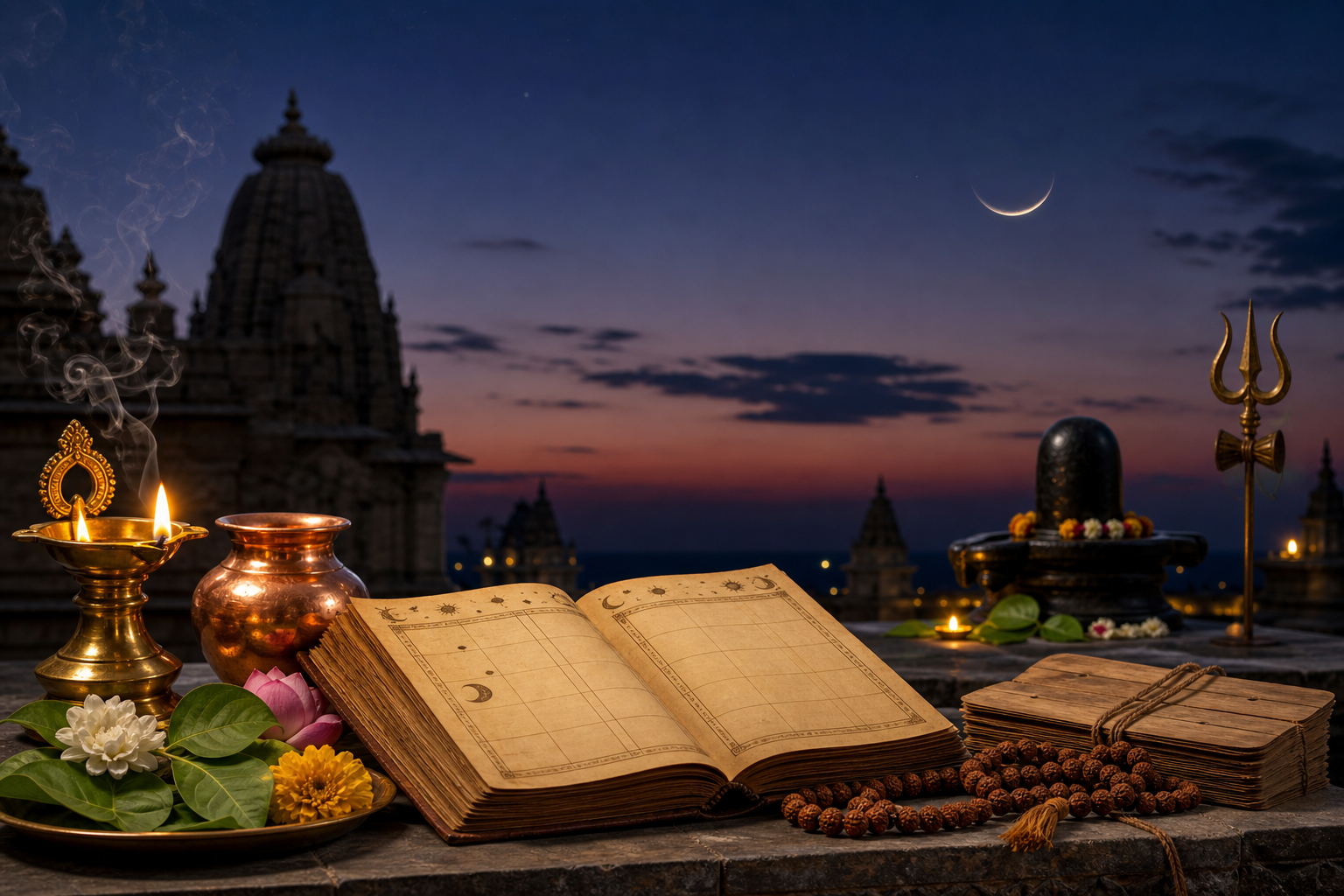
Monday, July 13, 2026, occupies a deeply reflective place in the Hindu calendar because the day falls primarily under Krishna Paksha Chaturdashi, the fourteenth tithi of the waning lunar fortnight. In the Panchang tradition followed in most regions, Krishna Paksha Chaturdashi continues until 6:01 PM on July 13. After that, Amavasya tithi, the no-moon day, begins and continues until 3:37 PM on July 14, where this Panchang timing applies.
This makes July 13 a transitional day. It begins with the inward, austere, and cleansing quality of Chaturdashi and then moves toward the stillness of Amavasya. Such a shift is not merely a technical calendar detail. In Hindu timekeeping, a tithi is understood through the angular relationship between the Sun and Moon, and each tithi carries a distinct spiritual and ritual mood. Krishna Paksha Chaturdashi, coming just before Amavasya, is often associated with completion, restraint, introspection, and the quiet removal of inner heaviness.
The word Krishna Paksha refers to the dark or waning phase of the Moon, when the lunar disc gradually decreases in visibility. This phase is traditionally read as a time for simplifying, letting go, remembering ancestors, refining conduct, and turning the mind away from excess. Chaturdashi means the fourteenth lunar day. Since it appears immediately before Amavasya, it has the psychological texture of a threshold: one cycle is almost complete, yet the new beginning has not visibly emerged.
For many households, this is the value of consulting the Panchang. It does not treat time as a blank sequence of hours. It reads the day through five classical limbs: tithi, vara, nakshatra, yoga, and karana. These elements together form a practical sacred calendar used for vrata, puja, travel decisions, samskara planning, temple observances, and ordinary household discipline. Even when one does not follow every detail ritually, the Panchang offers a framework for living with attention.
On July 13, 2026, the central tithi message is clear: Krishna Paksha Chaturdashi dominates the day until evening, and Amavasya begins after 6:01 PM. This timing matters because many observances are decided by the tithi prevailing at sunrise, while some rituals depend on the tithi active during a particular part of the day or night. Therefore, the same civil date may carry different ritual implications depending on the region, sunrise, local longitude, and the tradition being followed.
Krishna Paksha Chaturdashi is especially suitable for inward disciplines rather than outward display. A measured day of japa, Shiva worship, quiet reading of sacred texts, prayer for family harmony, and reflection on personal conduct fits the temperament of the tithi. In many Hindu homes, the day before Amavasya is approached with seriousness because the mind is believed to be more sensitive as the lunar light reaches its minimum. This does not require fear. It calls for steadiness, humility, and self-observation.
The transition to Amavasya after 6:01 PM adds another layer. Amavasya is the no-moon tithi, traditionally associated with Pitru remembrance, tarpan, charity, silence, meditation, and ancestral gratitude. In dharmic practice, the ancestors are not treated as distant abstractions. They are remembered as part of the living moral fabric of family and society. The movement from Chaturdashi into Amavasya therefore invites a person to close the day with reverence rather than distraction.
A practical way to understand this Panchang is to divide the day into two broad moods. Until 6:01 PM, Krishna Paksha Chaturdashi supports completion-oriented work, spiritual discipline, restraint, and the clearing of pending duties. After 6:01 PM, Amavasya begins, and the atmosphere becomes more suited to prayer, remembrance, simplicity, and preparing for Amavasya observances on July 14. This is especially relevant for those who observe monthly Amavasya rituals according to family tradition.
The phrase “good time” in a daily Panchang should be understood carefully. A day is not simply good or bad in an absolute sense. Hindu astrology and calendar practice distinguish between the nature of the activity and the nature of the time. A period may be unsuitable for weddings or new financial beginnings, yet very suitable for sadhana, fasting, repentance, study, seva, and ancestral observances. July 13, 2026 is best read in that more nuanced way.
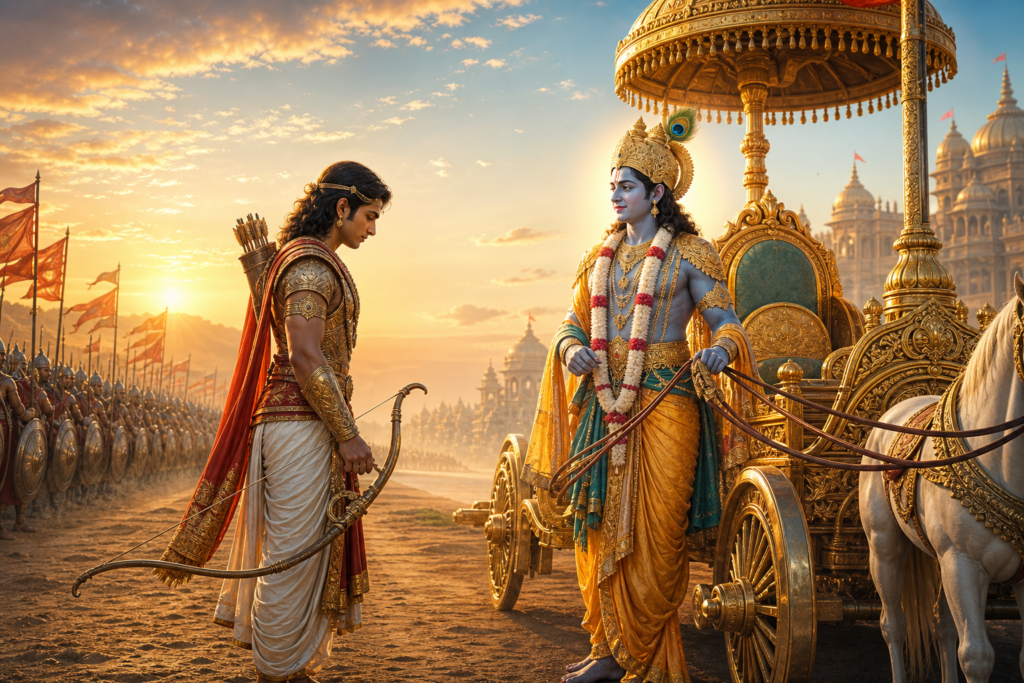
For major auspicious beginnings, such as marriage, housewarming, large investments, or ceremonial launches, Krishna Paksha Chaturdashi and Amavasya are generally approached with caution unless a specific family priest, temple calendar, or regional Panchang gives a clear exception. For spiritual repair, however, the same day can be meaningful. Lighting a lamp, offering water with devotion, chanting a chosen mantra, reading from the Bhagavad Gita, Ramayana, Upanishads, Jain scriptures, Buddhist teachings, or Sikh bani, and practicing compassion in speech can make the day quietly powerful.
This approach also supports the wider unity of dharmic traditions. Hinduism, Buddhism, Jainism, and Sikhism each preserve distinct teachings, lineages, and practices, yet they share a civilizational respect for discipline, self-mastery, truthfulness, compassion, and liberation from ego-centered living. A waning-moon day such as Krishna Paksha Chaturdashi naturally lends itself to these shared values. It asks the individual to reduce inner noise and return to what is essential.
From a technical perspective, the tithi is not the same as the date on the Gregorian calendar. A Gregorian date runs from midnight to midnight by civil convention. A tithi is based on the relative motion of the Sun and Moon and can begin or end at any time during the civil day. That is why July 13, 2026 contains Krishna Paksha Chaturdashi until 6:01 PM and then Amavasya afterward. This distinction is one of the reasons Panchang reading remains important for ritual accuracy.
Nakshatra and Rashi details should always be checked in the local Panchang for the place of observance, because the Moon’s position is calculated against the sidereal zodiac and the exact local timing can affect ritual interpretation. In general, Nakshatra refers to the lunar mansion through which the Moon is moving, while Rashi refers to the zodiac sign occupied by the Moon. Together, they help refine the day’s character beyond the tithi alone. However, the tithi remains the primary focus of this July 13 Panchang note.
Rahu Kaal, Yamaganda, Gulika Kaal, Abhijit Muhurat, and other daily time windows are also location-dependent. A person using this July 13, 2026 Panchang for practical planning should therefore confirm sunrise-based timings for the specific city or region. This is especially important for travel, business openings, temple rituals, and formal ceremonies. The broad tithi sequence remains useful, but precise muhurat selection requires local calculation.
For ordinary household life, the most useful guidance is simple. The day is suitable for completing unfinished tasks, reducing clutter, speaking less harshly, avoiding unnecessary conflict, remembering elders, offering food or help where possible, and preparing the mind for Amavasya. If fasting is observed, it should be done according to health, family custom, and guidance from elders. Dharmic discipline is strongest when it is joined with wisdom rather than mechanical rigidity.
Many people experience the waning Moon as a reminder that not every sacred act must be public, elaborate, or expensive. Some of the most meaningful observances are quiet: a short prayer before sunrise, a sincere apology, a lamp lit in the evening, a few minutes of mantra japa, a respectful remembrance of ancestors, or a conscious decision to avoid gossip and anger. Krishna Paksha Chaturdashi before Amavasya is well suited to this kind of inner housekeeping.
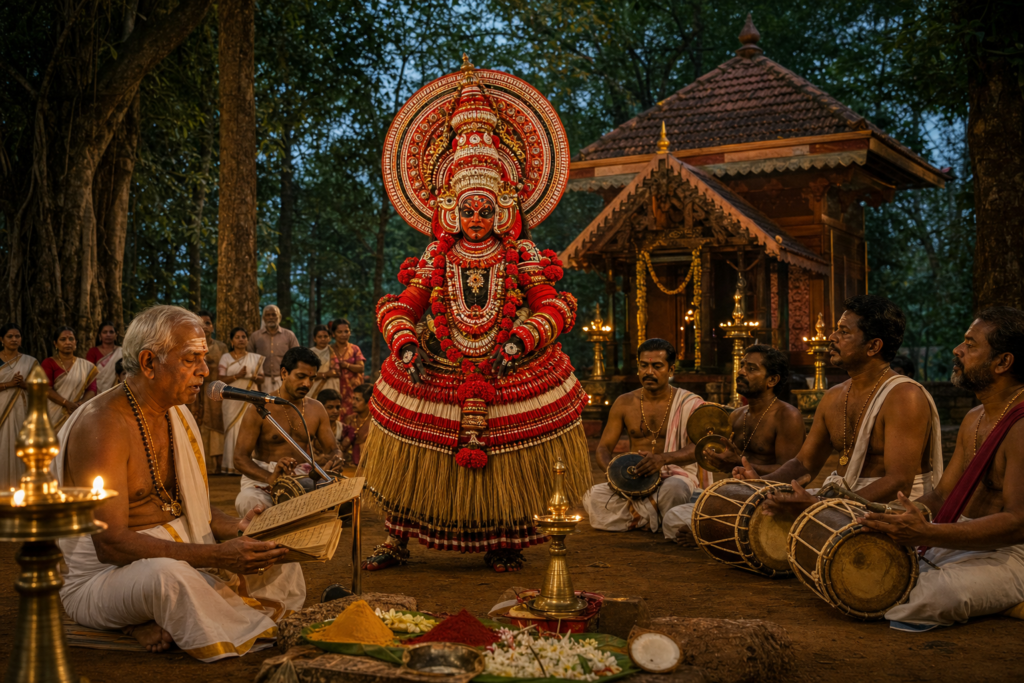
In Shaiva practice, Chaturdashi has a special resonance because the fourteenth lunar day is often linked with worship of Lord Shiva, especially in monthly Shivaratri observances when applicable according to the local calendar. Even when no formal vrata is undertaken, offering water, bilva leaves where available, or a simple mental prayer to Shiva can express the tithi’s deeper meaning: dissolving pride, fear, and accumulated negativity.
In Vaishnava homes, the same day may be approached through remembrance of Lord Vishnu, Sri Krishna, or the family’s chosen form of the Divine, with emphasis on nama japa, sattvik food, and devotional reading. In Shakta traditions, the waning lunar phase may be treated as a period of inner strength, protection, and purification. These differences should not be seen as contradictions. They show the breadth of Sanatana Dharma and its capacity to guide different temperaments toward spiritual maturity.
For those who follow Jain, Buddhist, or Sikh disciplines alongside the wider dharmic calendar culture, the day can be used for ahimsa, meditation, scriptural recitation, seva, and ethical restraint. The shared lesson is practical: reduce harm, steady the mind, remember one’s duties, and act with compassion. This is why a Panchang entry, though brief, can become a doorway into a more integrated way of living.
July 13, 2026 should therefore be read as a day of transition from Krishna Paksha Chaturdashi to Amavasya. The technical detail is concise, but its meaning is rich. Chaturdashi continues until 6:01 PM, after which Amavasya begins and lasts until 3:37 PM on July 14 in the referenced Panchang tradition. The wise use of the day is to complete, simplify, purify, remember, and prepare.
Anyone using this Panchang for observance should remember that regional calendars may differ slightly due to location and calculation method. For exact nakshatra, rashi, rahu kaal, sunrise, sunset, and local muhurat, the city-specific Panchang should be consulted. Still, the core spiritual message of the day remains steady: the waning Moon invites inwardness, and the approach of Amavasya invites reverence, gratitude, and renewal.
Inspired by this post on Hindu Blog.





Leave a Reply
You must be logged in to post a comment.