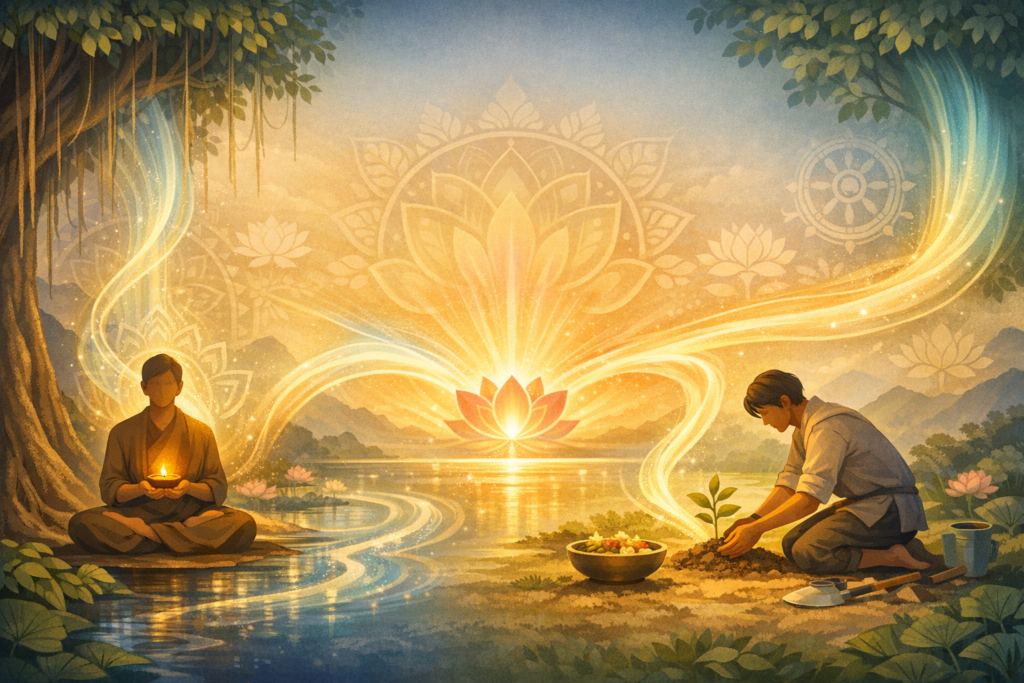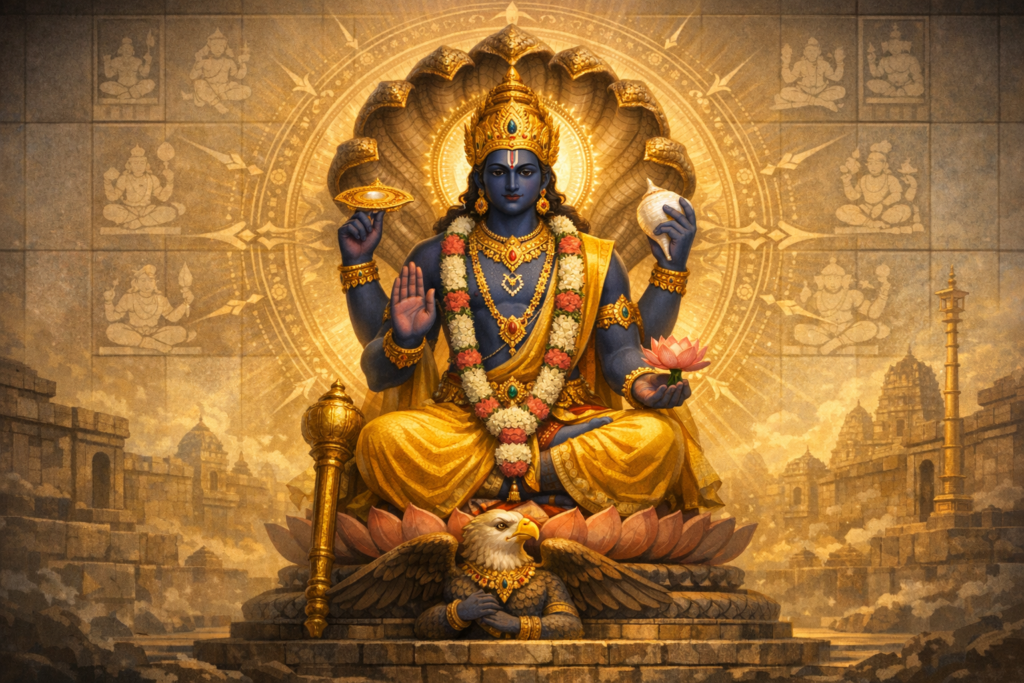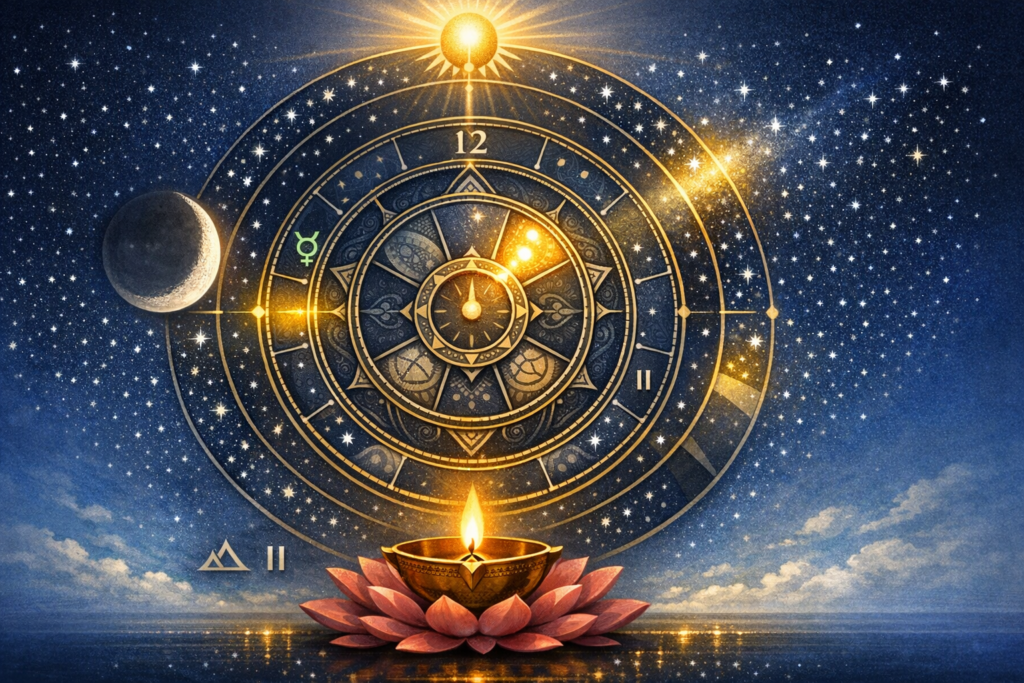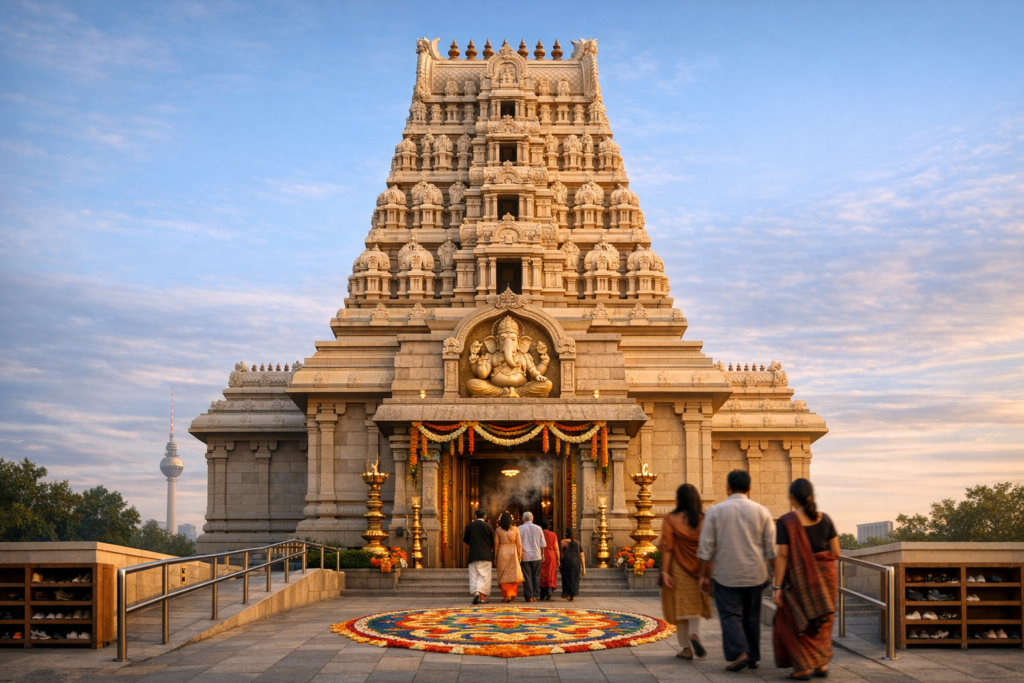
One river, many banks—this image captures the relationship between the Vedic and Tantric streams within Hinduism, and by extension the Dharmic family. Sectarian pride sometimes disguises itself as orthodoxy: a Vaidika may suspect Kaula practices of excess, while a Tantrika may dismiss Vedic ritual as distant formalism. Yet both are oriented toward the same truth, and each completes what the other appears to lack. When approached with shraddha (reverence) and viveka (discernment), they reveal themselves as complementary paths rather than competing ideologies.
A precise starting point is the Vedic declaration, ekam sat vipra bahudha vadanti—“Truth is one, the wise speak of it in many ways.” The Vedic lens prioritizes shruti (revealed knowledge), cosmic order (rita), and liberation through insight into Atman–Brahman as articulated in the Upanishads. Tantra, especially in its Kaula and Shakta expressions, emphasizes immediacy of experience, the sanctity of embodiment, and the pragmatic science of ritual energy—mantra, yantra, and mudra—guided by initiation (diksha) in a living lineage. Read together, these frames widen the horizon of Dharma rather than fracture it.
Historically, the two currents are deeply interwoven. Post-Vedic developments include the vast Agamic literature—Shaiva, Shakta, and Vaishnava (notably Pancharatra)—that shaped temple architecture, consecration (prana-pratishtha), daily puja, and festival cycles across India. While Nigama typically refers to Vedic revelation, Agama denotes the revelatory corpus foundational to living ritual systems. Many Tantric texts self-situate within the Vedic universe of meaning, frequently synthesizing Upanishadic metaphysics with applied ritual technologies. In practice, much of what is today called “Hindu worship” is Agamic-Tantric in form, while its metaphysical backbone remains unmistakably Vedic and Vedantic.
Canonical and philosophical bridges abound. Sri Vaishnava tradition, following Ramanuja, defends the Pancharatra Agamas as consistent with the Brahma-sutra and the Vedas. Shankara’s nondual exegesis of the Upanishads coexists—within later Smarta practice—with Shakta devotion and stotras, reflecting a refined elasticity that honors both contemplative insight and devotional embodiment. Abhinavagupta’s Pratyabhijna (Kashmir Shaivism) harmonizes rigorous nonduality with Tantric sadhana, demonstrating how realization and ritual can converge without contradiction.
Philosophically, Vedic and Tantric orientations align more than they diverge. Vedanta expounds Brahman as the nondual ground of reality; Shakta Tantra articulates Shiva–Shakti nonduality, where consciousness and power are inseparable. Vaishnava Pancharatra frames the One as the source of manifold energies (shaktis) and emanations, without compromising unity. These are not rival cosmologies but parallel articulations of presence, potency, and participation in the sacred.
Methodologically, each tradition contributes something indispensable. The Vedic way excels at establishing right vision through sravana, manana, and nididhyasana—listening, reflection, and contemplative absorption—under the authority of shruti. Tantra refines the operational grammar of transformation: mantra as calibrated sound, yantra as geometry of consciousness, mudra as psychophysical seal, nyasa as sacralization of the body, and chakra-oriented Kundalini sadhana as inner ascent. When integrated, realization is both seen and felt; truth becomes lived, not merely declared.
Temple practice makes this synergy visible. Daily archana, alankara, and naivedya are choreographed by Agamic prescriptions, yet the theological rationale often quotes the Upanishads and Puranas. The same household that lights a Vedic agnihotra may participate in a Tantric chandi homa, intuitively recognizing that both sustain order—cosmic and communal—through offerings of breath, sound, and intention.
Eligibility (adhikara) and ethics anchor both streams. Vedic and Yogic yamas–niyamas are echoed in Tantric prerequisites: truthfulness, non-harm, purity of diet and conduct, steadiness of mind, and devotion to the guru–shishya parampara. Where texts describe transgressive rites (panchamakara), responsible lineages either confine them to highly qualified adepts or teach symbolic substitutions that preserve the inner alchemy without violating dharmic ethics. Across authentic traditions, diksha is never a license for excess; it is a covenant of responsibility.
Common misunderstandings are best addressed by reading contexts carefully. “Transgression” in Tantra is a controlled strategy to de-condition rigidity, not an endorsement of hedonism. Its real measure is internal de-knotting: dissolution of fear, aversion, and egoic fixation. Conversely, Vedic orthopraxy is not empty formalism when animated by insight; it becomes the architecture through which insight stabilizes and community flourishes.
Textual interdependence further dismantles rivalry. Vedic hymns such as the Rudra and Devi Sukta infuse Tantric liturgies, while Shakta traditions like Sri Vidya deeply engage the Sri Sukta and Upanishadic affirmations of nonduality. The Puranas—standing between Vedic revelation and Tantric praxis—teach devotion, cosmology, and ethics in a narrative idiom accessible to households and monastics alike. The result is a single civilizational fabric woven of shruti, smriti, itihasa, purana, and agama.
Practitioners routinely report that encountering both modalities dissolves inherited bias. Exposure to a meticulously performed Vedic yajna can kindle awe for the precision by which order is invoked; participation in a Tantric puja can awaken the visceral tenderness of Shakti’s presence. Over time, many come to see that clarity without embodiment can turn arid, and embodiment without clarity can drift—together, they steady one another.
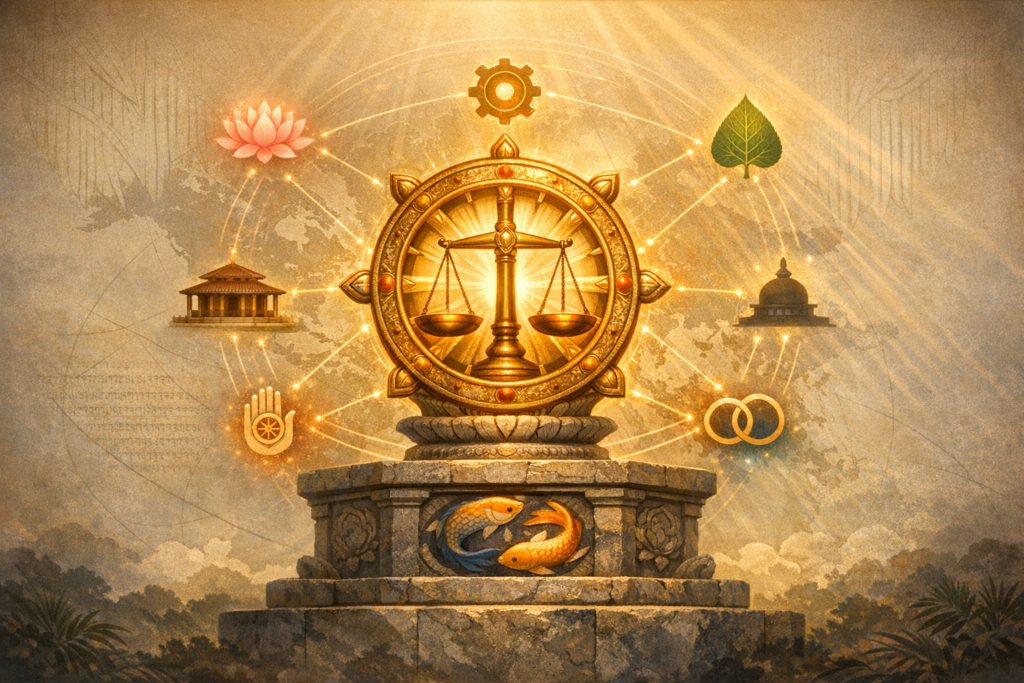
This integrative stance resonates with the wider Dharmic family. Vajrayana Buddhism developed within the Indian matrix that also nourished Shaiva–Shakta Tantra; Jain traditions preserve rigorous ethics and meditative technologies; Sikh practice centers the transformative power of Shabad and simran. Without collapsing distinctions, these lineages affirm a shared grammar: disciplined mind, sanctified speech, compassionate action, and respect for multiple skillful means (upaya). Honoring this kinship advances interfaith harmony within the Dharmic spectrum.
A mature hermeneutic treats Ishta devata as a principle of pluralism, not tribalism. By recognizing that temperament, capacity, and stage of life shape spiritual need, Dharma protects freedom of worship while maintaining philosophical depth. This insight guards against missionary-style uniformity and equally against sectarian gatekeeping. Unity in spiritual diversity is thus not a slogan but a civilizational design.
For seekers and communities, several practical syntheses follow naturally. Daily Vedic recitation (e.g., Gayatri or Upanishadic passages) can coexist with Tantric japa of a bijamantra, aligned with ethical yamas–niyamas. Meditative self-inquiry may be paired with nyasa and breath discipline to anchor realization in the body. Temple worship guided by Agamas can culminate in contemplative silence that honors Vedantic nonduality. Eligibility and guidance from a competent guru remain essential throughout.
Discourse about these traditions benefits from shared norms: cite sources accurately; distinguish lineage teaching from anecdote; avoid sensationalism; and favor sauharda (warmth) over point-scoring. When doubts arise, return to first principles—compassion, truthfulness, non-injury, and the welfare of all beings. These are the touchstones by which Vedic and Tantric authenticity can be discerned.
Ultimately, a true Vaidika does not criticize Tantra, and a true Tantrika does not belittle the Vedas. Each honors the other as a necessary mode of access to the Real. By recognizing both the transcendental insight of the Upanishads and the transformational precision of Tantric sadhana, seekers gain a path that is as clear as it is kind, as rigorous as it is intimate. Such reconciliation strengthens not only Hinduism but the broader Dharmic vision of a world where many banks meet the same river of truth.
Inspired by this post on Hindu Blog.