
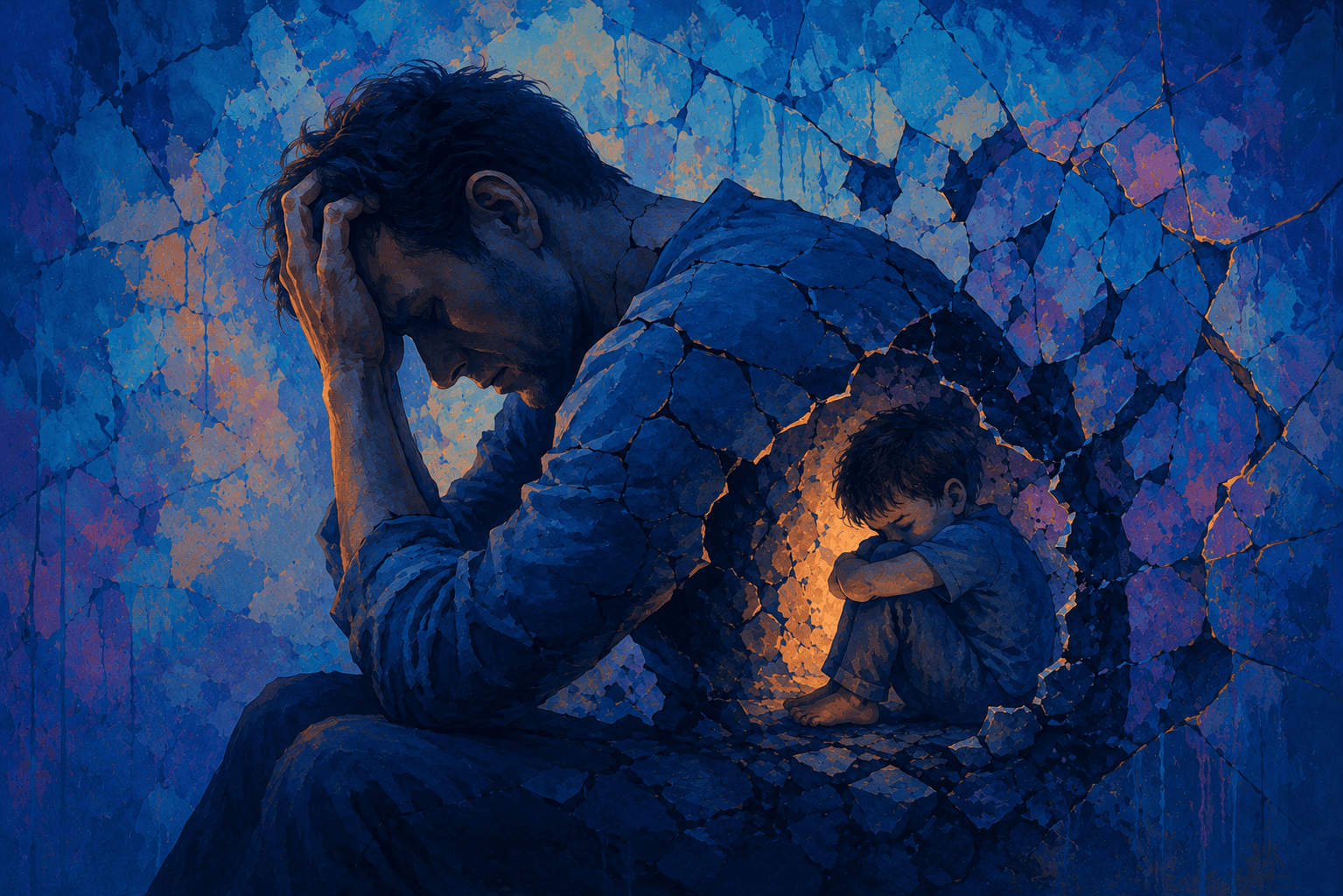
“The wound is the place where the light enters you.” ~Rumi
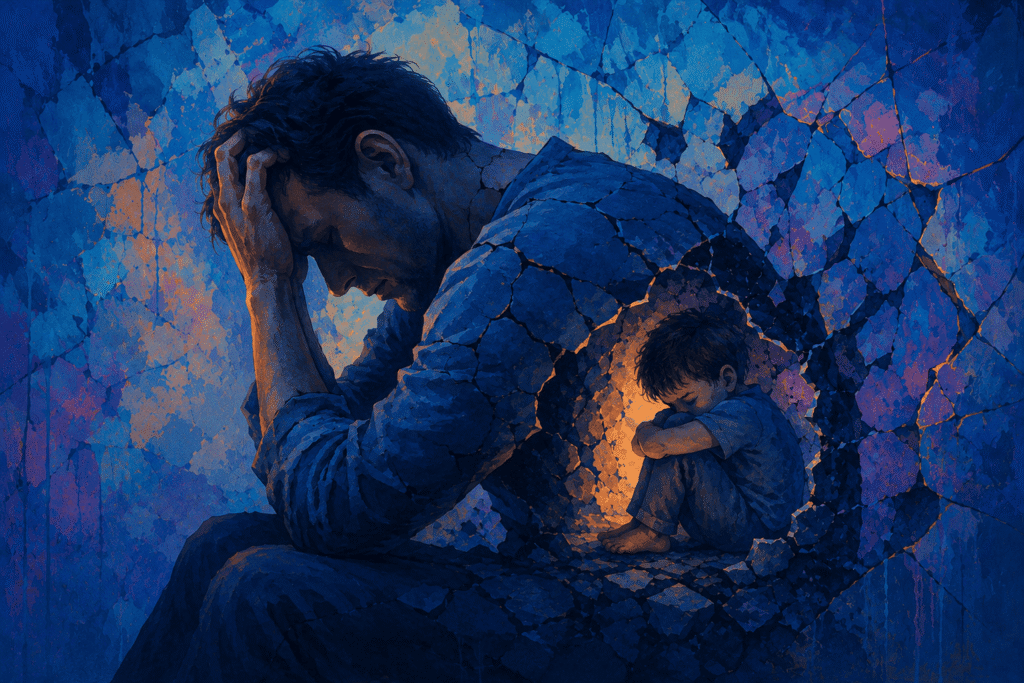
This narrative traces a life shaped by childhood trauma and later transformed by insight into nervous system regulation, trauma-informed healing, and compassionate self-understanding. It demonstrates how experiences often mistaken for personal brokenness are, in fact, adaptive survival patterns—physiological and psychological strategies the body employs to endure and persist.
In the 1970s, in a council house where children were expected to be seen but not heard, outward normality masked a reality of persistent fear. Behind closed doors, daily life became a lesson in vigilance. Even in the absence of visible danger, the body braced for impact.
At six, the rupture of parental separation reorganized the child’s world overnight. A parent’s declaration that self-harm would follow if the child left created an unbearable bind—an early and profound form of emotional coercion that fused attachment with responsibility and fear. Such messages imprint as truth in a young nervous system, compelling a child to protect rather than to be protected.
In the ensuing years, a caregiver’s despair expressed itself as volatility, heavy drinking, and sustained unemployment. Anger became the prevailing weather system. Physical punishment for minor or imagined transgressions installed hypervigilance as a daily operating mode: scan, anticipate, minimize risk, repeat. When minor lateness could trigger harm, “safety” became synonymous with perfectionism, people-pleasing, and invisibility.
Environmental deprivation compounded relational danger. Excluded from communal spaces in the home and confined to a bedroom, the child learned to retreat into fantasy. Imagination served as an early dissociative strategy—an internal world built to counter the unpredictability of the external one. Shame surfaced somatically at night; bedwetting persisted into early adolescence, a common but stigmatized sign of stress and autonomic dysregulation.
By eleven or twelve, inhalants offered the first reliable state shift. Butane, glue, and petrol preceded cannabis and amphetamines by fourteen. The aim was not sensation-seeking; it was anesthesia—numbing overwhelming internal signals. This progression aligns with the self-medication hypothesis: when the nervous system is locked in chronic threat states, exogenous chemicals can appear to be the only accessible regulators.
Across the next twenty-five years, substances scaled from coping tools to central organizing forces. Friendships attenuated, direction blurred, and identity narrowed to the next escape. Yet, paradoxically, a sense of belonging emerged within the subculture of use. In that environment, acceptance carried few conditions. The relief of being understood—even briefly—made departure feel like social amputation.
The late 1980s introduced ecstasy. Neurochemically, MDMA elevates serotonin, dopamine, norepinephrine, and oxytocin, which collectively intensify prosocial feelings, empathy, and connection. Social touch becomes less threatening; openness feels possible. For someone whose nervous system has equated closeness with danger, the experience can be revelatory—what feels like love on tap. The effect is beautiful, powerful, and, understandably, reinforcing.
Yet this chemistry-driven intimacy is time-limited and context-dependent. When the neurochemical tide recedes, the nervous system often rebounds to its baseline: emptiness, vigilance, or collapse. Once a nervous system has sampled connection, the return to isolation can feel intolerable—further entrenching cycles of use.
Change did not arrive as a single awakening. It expanded gradually, as small discrepancies accumulated between the life being lived and the life that seemed faintly possible. The body noticed micro-moments of safety—what trauma clinicians sometimes call “glimmers”—that contradicted a long-held expectation of threat. Attuning to those glimmers created the first footholds for reorganization.
Stepping away from the subculture of use was among the most demanding undertakings. The challenge was not merely biochemical; it was relational and existential. Leaving meant losing a community that had offered a rough form of co-regulation. It also required sitting with loneliness, acknowledging harm done to others, and confronting the grief of lost years without collapsing into shame.
Crucially, progress accelerated when the lens shifted from moral judgment to adaptive function. Anxiety, withdrawal, dissociation, and compulsive use began to make sense as intelligent, if costly, strategies that had once kept danger at bay. The insight was simple and transformative: the body had been protecting itself all along.
Understanding this through the framework of polyvagal theory clarified the picture. In chronic threat, the autonomic nervous system cycles among mobilization (fight/flight), social engagement (if faintly available), and shutdown (freeze/collapse), constantly seeking a livable equilibrium. Hypervigilance, perfectionism, and people-pleasing (the “fawn” response) were not defects but relational safety strategies acquired early and practiced often.
Attachment science adds context: when caregivers are frightening or inconsistently available, the developing nervous system learns that closeness is risky. Proximity then triggers protective responses—avoidance, appeasement, or numbing. Addiction can become an improvised form of regulation when safe co-regulation is unavailable.
The Adverse Childhood Experiences (ACE) literature corroborates these links. Higher ACE exposure correlates with increased risk of substance use disorders, mental health challenges, and chronic disease. Risk, however, is not destiny. Neuroplasticity enables the nervous system to learn safety, especially through repeated experiences of predictable, supportive connection and somatic regulation.
By midlife—fifty-six—life on the surface bore little resemblance to the earlier decades. Geographically distant from the original environment and embedded in a stable family system, daily experience included something previously elusive: a growing sense of internal safety. Perfection was never the objective; integration was. Old patterns still appeared, but recognition transformed response. Instead of escalating or numbing, there was space to regulate.
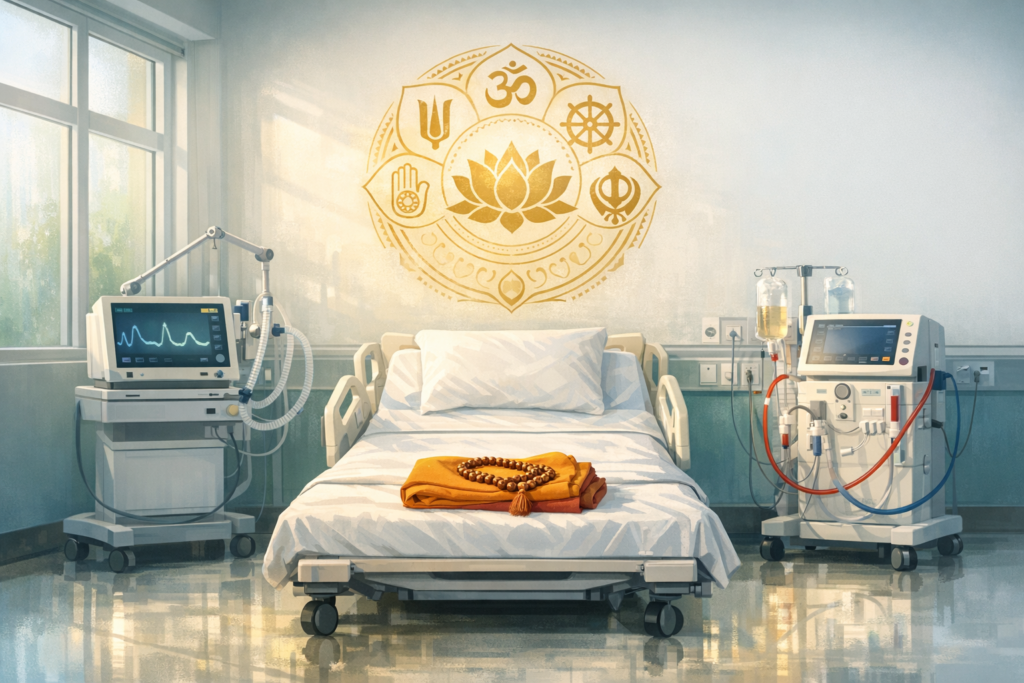
In practical terms, healing rested on several trauma-informed pillars that align with dharmic wisdom traditions (Hinduism, Buddhism, Jainism, and Sikhism) emphasizing karuṇā (compassion), ahiṁsā (non-harm), mindful awareness, and community support.
First, safety before insight. Cognitive reframing has limited traction in a dysregulated body. Somatic practices that widen the “window of tolerance” become foundational. Gentle orienting to the room, feeling the ground through the feet, and tracking breath sensations re-anchor attention in the present.
Second, breathwork and vagal toning. Slow, nasal breathing with a longer exhale (for example, inhaling for four counts and exhaling for six to eight) can increase parasympathetic activity and signal safety. Humming, chanting, or soft mantra recitation engages vagal pathways through vocalization. Across dharmic lineages, japa, simran, and mindful chanting serve not merely as devotional practices but also as nervous system regulators.
Third, mindful movement. Simple yoga postures and mindful walking enhance interoceptive accuracy—the ability to feel internal states—and support state shifts without chemical aids. Small, repeatable sequences practiced daily help the body learn predictability.
Fourth, compassion-based practices. Loving-kindness and self-compassion exercises counter the internalized shame that often perpetuates relapse cycles. Dharmic teachings on maitri (friendliness), daya (benevolence), and seva (selfless service) normalize kindness to self and others as a disciplined way of being, not an indulgence.
Fifth, relational repair and co-regulation. Healing accelerates in community—sangha, sangat, satsang, or supportive groups—where prosocial cues are frequent and reliable. Being with regulated others teaches the nervous system that connection can be safe. In this way, belonging is rebuilt without the pharmacological bridge once required to make closeness tolerable.
Sixth, parts-informed and developmental work. “Reparenting” the inner child—approaching younger, frightened states with steadiness—translates dharmic non-harm into daily inner conduct. The task is not to banish protective parts but to integrate them, honoring the role they played and guiding them toward less costly strategies.
Seventh, values-aligned action. Purposeful routines—sleep regularity, movement, contemplative practice, creative work, service—provide structure that gently outcompetes old loops. Values act as a compass when motivation fluctuates; routines keep the compass pointing north.
These practices collectively recast symptoms as signals. Anxiety indicates mobilization energy without an outlet; collapse highlights unmet needs for rest and safety; craving reveals a search for rapid state change. With skillful attention, signals become instructions for regulation rather than reasons for self-judgment.
From this vantage point, the earlier attraction to MDMA, amphetamines, and cannabis is intelligible. Each offered a rapid route to a needed state: openness, focus, relief. Sustainable healing does not moralize those strategies; it replaces them with slower, steadier pathways that the nervous system can trust.
Importantly, this reframing serves unity among dharmic traditions by emphasizing shared principles over sectarian differences. Whether expressed through yogic breath, Buddhist mindfulness, Jain ahiṁsā toward the self, or Sikh seva in community, the underlying arc is the same: reduce harm, cultivate compassion, stabilize attention, and restore belonging.
The enduring lesson is straightforward and profound. What looks like brokenness is often adaptation. Anxiety, withdrawal, numbing, and even compulsive behaviors once played protective roles. When viewed with precision and compassion, these patterns become workable. One can collaborate with the body rather than wage war against it.
Healing is not linear, nor is it instant. It is cumulative, somatic, relational, and deeply humane. With each small act of regulation, each breath-led pause, each moment of kindness, the nervous system rewrites its expectations of the world. Over time, safety shifts from a fragile external condition to an internal capacity—portable, resilient, and real.
If life presently feels as though no path exists, consider this evidence to the contrary. Begin with the smallest available step toward nervous system regulation and compassionate awareness. Repetition will do the rest. Movement follows. Healing follows. And, gradually, life begins to feel like one’s own.
Inspired by this post on Tiny Buddha.









Leave a Reply
You must be logged in to post a comment.