Tag: vagus nerve

  • Beyond Policing: Evidence-Backed Sankirtana and Dharmic Chanting for Crime Prevention

    Beyond Policing: Evidence-Backed Sankirtana and Dharmic Chanting for Crime Prevention

    Laws deter but do not transform the inner impulses that fuel crime. Drawing on dharmic psychology and contemporary behavioral science, this article explains how Sankirtana—collective devotional chanting—directly trains attention, calms arousal via vagal pathways, and strengthens social bonds that underpin community safety. Unified across Hindu, Buddhist, Jain, and Sikh traditions, chanting circles cultivate ahimsa, empathy,…

  • Where Is Humanity Today? A Dharmic Blueprint for Compassion, Ahimsa, and Unity

    Where Is Humanity Today? A Dharmic Blueprint for Compassion, Ahimsa, and Unity

    This essay reframes “Where is humanity?” through a dharmic lens that treats compassion, ahimsa, and service as trainable capacities and civic responsibilities. It explains how Hinduism, Buddhism, Jainism, and Sikhism converge on a shared blueprint grounded in Dharma, dayā, karuṇā, aparigraha, mettā, and seva. Readers gain a research-informed view of how breathwork, meditation, and loving-kindness…

  • Sharpening the Inner Compass: Trusting Intuition on the Dharmic Path with Clarity and Courage

    Sharpening the Inner Compass: Trusting Intuition on the Dharmic Path with Clarity and Courage

    Trustworthy intuition in Hinduism is not impulse but disciplined, dharma-aligned insight that integrates perception, reason, and sacred testimony. This article clarifies how the inner compass relates to Atman, the Upanishads, and the Bhagavad Gita, while showing convergences with prajñā in Buddhism, anekāntavāda in Jainism, and hukam in Sikhism. Readers learn practical tests for discernment—ahiṃsā, satya,…

  • Trapped in a ‘Perfect’ Life: Evidence-Based Steps to Reclaim Agency, Clarity, and Joy

    Trapped in a ‘Perfect’ Life: Evidence-Based Steps to Reclaim Agency, Clarity, and Joy

    Many people feel trapped in a life that looks good on paper, yet their bodies and emotions signal misalignment. This analysis explains why such lives are hard to leave—status quo bias, loss aversion, sunk costs, and identity foreclosure—and shows how evidence-based methods can restore clarity. It integrates Self-Determination Theory, mindfulness, breath-based vagal regulation, and values-based…

  • Beyond Moving On: Evidence-Based Strategies for Trauma Integration and Nervous System Healing

    Beyond Moving On: Evidence-Based Strategies for Trauma Integration and Nervous System Healing

    Many people “move on” from painful relationships yet remain vulnerable to old triggers because the nervous system retains unintegrated memories. This evidence-based guide explains why familiar dysregulation can feel like “home,” how naming patterns such as gaslighting and trauma bonding restores clarity, and why daily regulation practices matter. Drawing on neuroscience and dharmic wisdom (yoga,…

  • Quieting an Overwhelmed Mind: Science of Sound Baths and Dharmic Wisdom for Resilience

    Quieting an Overwhelmed Mind: Science of Sound Baths and Dharmic Wisdom for Resilience

    A recent Sound as Medicine session demonstrates how contemplative sound can ease overwhelm, calm the nervous system, and restore clarity. The experience paired soothing overtones with mindful breathing and journaling, yielding a post-session state described by release, peace, spaciousness, ease, clarity, calmness, and gratitude. Emerging research suggests plausible mechanisms: HPA-axis downregulation, increased heart rate variability,…

  • From Burnout to Balance: A London Surgeon’s Evidence-Based Blueprint for Energy, Sleep, and Calm

    From Burnout to Balance: A London Surgeon’s Evidence-Based Blueprint for Energy, Sleep, and Calm

    A London-trained surgeon transitioned from heroic overwork to evidence-based self-care by treating fatigue as physiological data, not a moral failing. The narrative explains how subtle autonomic imbalance, circadian disruption, and mitochondrial stress can produce “tired but wired” states even with normal lab results. Practical changes—sleep regularity, morning light, 30 minutes of daily walking, Mediterranean-style nutrition,…

  • When Panic Feels Dangerous: Retrain the Nervous System with Breathwork, Science, and Dharma

    When Panic Feels Dangerous: Retrain the Nervous System with Breathwork, Science, and Dharma

    Panic feels dangerous because the body’s alarm system is loud, not because the body is failing. This long-form, research-informed guide explains how the autonomic nervous system creates the fight-or-flight surge and how understanding this physiology breaks the fear-of-fear loop. Readers learn a practical breathing protocol (four-six breathing), sensory grounding, and gentle exposure skills that retrain…

  • When Strength Becomes a Cage: How Letting Go of Rescuer Roles Heals Families and the Self

    When Strength Becomes a Cage: How Letting Go of Rescuer Roles Heals Families and the Self

    Strength can become a role that traps caregivers in people-pleasing, overfunctioning, and chronic hypervigilance. This narrative-case analysis traces how early parentification and attachment injuries shape adult identity, and explains why the body eventually “keeps score” through stress physiology and shutdown. Readers learn the language of trauma-informed care—polyvagal responses, window of tolerance, caregiver burden—and how these…

  • Surrendering Control: Mindfulness, Nervous System Regulation, and Restorative Sleep in Perimenopause

    Surrendering Control: Mindfulness, Nervous System Regulation, and Restorative Sleep in Perimenopause

    A midlife journey through perimenopausal insomnia reveals how control fuels hyperarousal, while mindfulness, compassion, and dharmic wisdom restore safety and sleep. The narrative integrates science—HPA-axis activation, sympathetic overdrive, and hormone-driven sleep fragmentation—with practical, evidence-informed strategies. It explains how self-compassion lowers cortisol and increases vagal tone, why clock-checking and catastrophic thinking perpetuate insomnia, and how cognitive…

  • From Numb to Whole: How Emotional Suppression Derails Hormones, Gut Health, and the Nervous System

    From Numb to Whole: How Emotional Suppression Derails Hormones, Gut Health, and the Nervous System

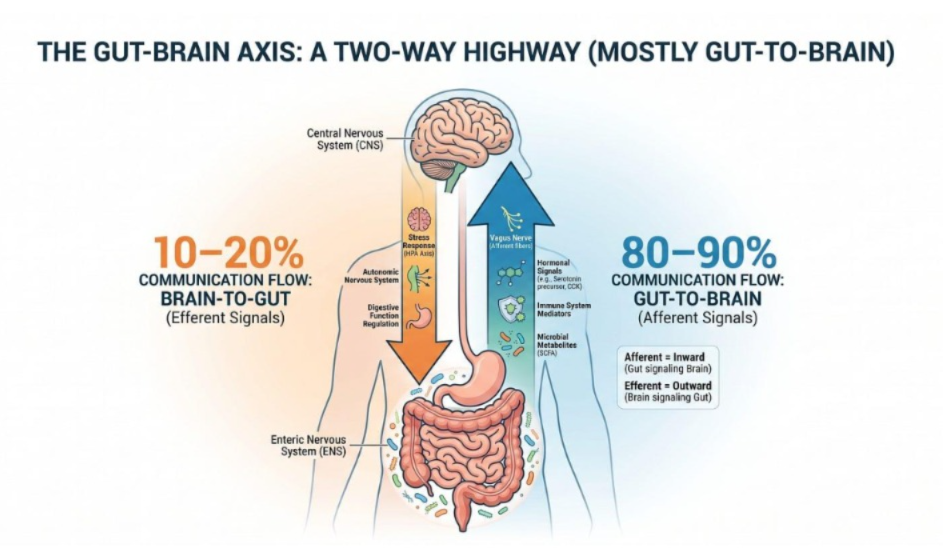
    This case study traces how lifelong emotional suppression created nervous system dysregulation, hormonal imbalance (notably PMS), and gut-brain axis disturbances—and how listening to the body reversed these trends. It explains mechanisms (polyvagal theory, HPA/HPO axes, vagus nerve, microbiome) alongside Ayurvedic concepts (vata, pitta, kapha, agni) to show why symptoms escalated with “push through” strategies. Evidence-aligned…

  • Anxiety Still Sucks: 7 Evidence-Backed Lessons That Built Presence, Resilience, and Calm

    Anxiety Still Sucks: 7 Evidence-Backed Lessons That Built Presence, Resilience, and Calm

    Anxiety remains hard, but it can still teach reliable, research-backed ways to suffer less. This long-form reflection distills seven lessons that transform spirals of worry into practical action: present-moment awareness through interoception and mindfulness; acceptance of what cannot be controlled with agency over responses; habit and boundary resets that lower allostatic load; growth via small,…

  • Evidence-Based Parenting: Letting Kids See Sadness to Build Resilience and Trust

    Evidence-Based Parenting: Letting Kids See Sadness to Build Resilience and Trust

    A mother who once hid her grief learned that children sense unspoken emotions and benefit from honest, boundaried disclosure. When she allowed her tears to be seen, her children responded with tenderness, not fear, and misattributions (“Is it my fault?”) diminished. Developmental psychology and dharmic wisdom converge here: emotion coaching, secure attachment, and co-regulation show…

  • End People‑Pleasing: Evidence‑Based Practices to Rebuild Self‑Trust and Calm Your Nervous System

    End People‑Pleasing: Evidence‑Based Practices to Rebuild Self‑Trust and Calm Your Nervous System

    This analysis explains why people-pleasing often begins as a nervous-system strategy to stay safe and how it quietly erodes self-trust, agency, and joy. It presents evidence-based practices—interoceptive scanning, breath-led regulation, and low‑stakes exposure to voicing preferences—that rebuild inner guidance without overwhelming the system. It clarifies the difference between healthy cooperation and self‑abandonment, and offers language…

  • 3 a.m. Thought Spirals, Decoded: Science-Backed Reasons for Night Anxiety and How to Reclaim Calm

    3 a.m. Thought Spirals, Decoded: Science-Backed Reasons for Night Anxiety and How to Reclaim Calm

    Night anxiety feels absolute because the brain prioritizes threat detection under low sensory input and reduced executive control. This article explains the neuroscience of 3 a.m. thought spirals—circadian influences, predictive processing, the default mode network, and hyperarousal—so the experience becomes understandable rather than shameful. It then outlines practical, evidence-based approaches that lower arousal without arguing…

  • From Turmoil to Tranquility: SB 3.28.10 on Yogic Breathing and the Power of Chanting

    From Turmoil to Tranquility: SB 3.28.10 on Yogic Breathing and the Power of Chanting

    Srimad-Bhagavatam 3.28.10 presents a precise blueprint for mental purification: disciplined attention (the fire) and regulated breath (the air) refine the mind as heat and fanning purify gold. Framed by HH Ramai Swami’s exposition, the verse aligns with modern findings on vagal tone, heart-rate variability, and the calming effects of slow, coherent breathing. Lord Caitanya’s recommendation…

  • Vulnerability Without Regret: Evidence‑Based Ways to Soothe the Post‑Sharing Hangover

    Vulnerability Without Regret: Evidence‑Based Ways to Soothe the Post‑Sharing Hangover

    Vulnerability often produces a predictable nervous-system surge after sharing—tightness, second-guessing, and the urge to retract. This evidence-based guide explains why that “vulnerability hangover” occurs and offers practical, somatic strategies to restore safety. Drawing on neurobiology, mindfulness, and shared dharmic ethics (satya, ahiṁsā, aparigraha, maitri/karuṇā), it clarifies the difference between oversharing and conscious sharing. Two orienting…

  • From Survival Mode to Flourishing: Evidence‑Based Healing After Family Abandonment

    From Survival Mode to Flourishing: Evidence‑Based Healing After Family Abandonment

    This long-form analysis follows one person’s progression from childhood abandonment and emotional neglect to adult flourishing, detailing how survival mode forms and how it can be updated. It explains why disclosure felt unsafe, how chosen family efforts initially replicated trauma patterns, and why grief for the family that never existed must be named rather than…

  • Surrender Made Practical: Sharanagati, Inner Resilience, and Divine Help in Daily Life

    Surrender Made Practical: Sharanagati, Inner Resilience, and Divine Help in Daily Life

    Surrender (sharanagati) is presented here as a rigorous, actionable discipline within Sanatana Dharma, grounded in a widely cited Back to Godhead teaching attributed to Srila Prabhupada and centered on a simple, sincere prayer to Krsna. The article clarifies that surrender is not passivity but intelligent consent to higher wisdom, consistent with the Bhagavad Gita’s call…

  • Dry January, APOE Risk, and Midlife Brain Health: Surprising, Evidence-Based Gains in Sleep and Focus

    Dry January, APOE Risk, and Midlife Brain Health: Surprising, Evidence-Based Gains in Sleep and Focus

    A month without alcohol became a practical case study in midlife brain health, shaped by family history and an APOE-linked elevation in Alzheimer’s risk. Choosing a clear, all-or-nothing boundary reduced decision fatigue and revealed how quickly the reward system shifts to alternative stimuli, notably sugar. Despite brief weight gain and a transient flare of hormonal…