
TTD has announced elaborate arrangements for the 20th Annual Brahmotsavams of Sri Venkateswara Swamy Temple, Himayat Nagar, Hyderabad, scheduled from 19 to 24 June 2026. The festivities begin with Ankurarpanam on 19 June and unfold through a sequence of sacred observances, Vahana Sevas, and special pujas. In line with TTD practice, Dhwajarohanam ceremonially marks the commencement of the festival period, while the celebrations culminate on 24 June with Chakrasnanam, Pushpayagam, and Dhwajavarohanam.
Located in central Hyderabad, the Himayat Nagar Sri Venkateswara Swamy Temple functions under the aegis of Tirumala Tirupati Devasthanams (TTD) and is a vibrant hub for devotees across the city. Marking its second decade, this annual Brahmotsavam has steadily become a signature cultural and spiritual event, bringing together families, students, professionals, and elders in a shared experience of darshan, seva, and community harmony.
In the Vaishnava temple tradition guided by the Vaikhanasa Agama, a Brahmotsavam is a multi-day celebration centered on the Utsava Murti of Sri Venkateswara Swamy. Its liturgical arc moves from ritual consecration and invocation to public processions and communal blessings, reflecting a theology of grace (anugraha) extended from the sanctum to the streets. The festival’s cadence sustains bhakti through sound (mantra, bhajan), sight (alankara, vahana-darshan), touch (teertham, prasadam), and service (seva).
Ankurarpanam, literally the sowing of auspicious seeds, initiates the utsavam by invoking growth, auspiciousness, and inner renewal. Priests perform sankalpa and sow nine grains, symbolically consecrating the space and time of the festival to dharma, prosperity, and collective well-being. In many devotees’ recollections, Ankurarpanam sets a contemplative tone—quiet, precise, and deeply moving—before the more public grandeur of processions begins.
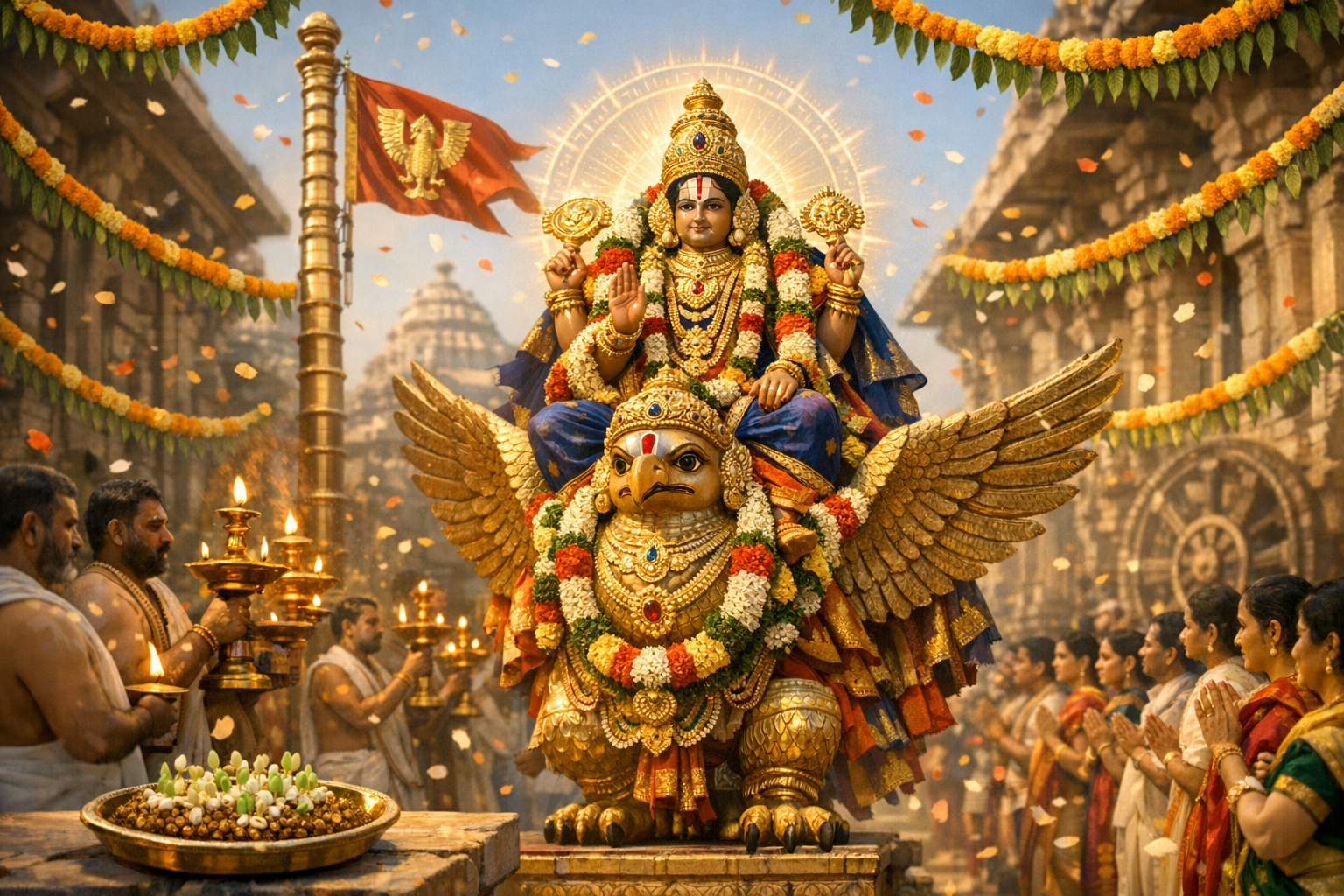
Dhwajarohanam, the hoisting of the sacred flag (traditionally bearing Garuda’s emblem) on the Dhwajasthambha, proclaims the formal opening of Brahmotsavam. Agamic texts describe this rite as establishing divine protection (raksha) and inviting devas to preside over the celebrations. The moment the flag ascends is often described by devotees as a palpable surge of devotion, aligning individual intention with collective worship.
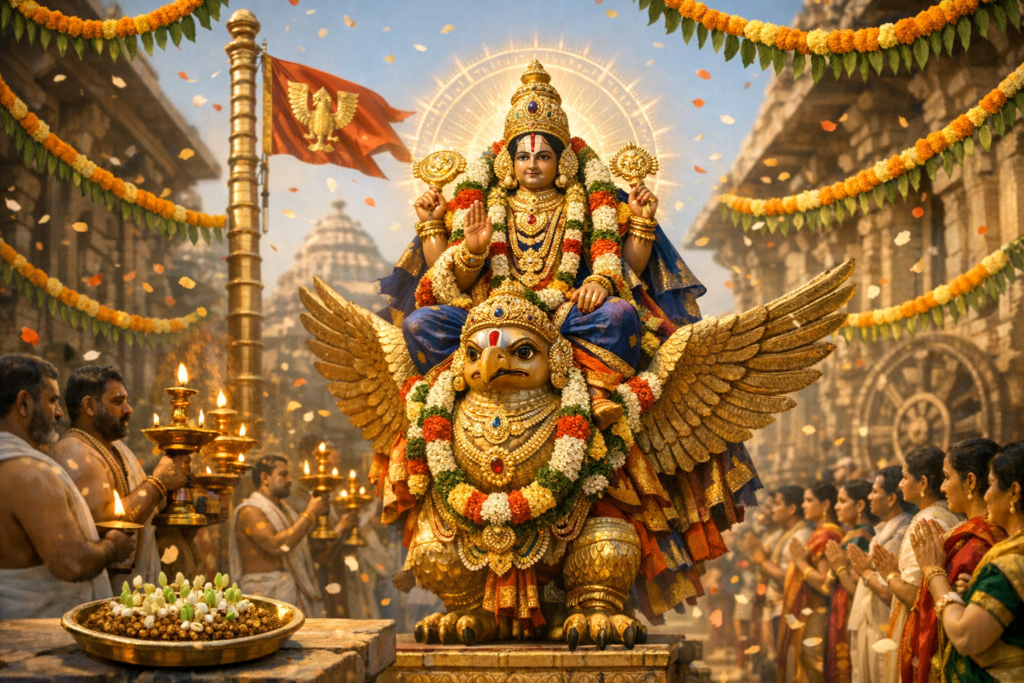
Vahana Sevas are the festival’s most accessible and celebratory moments, when Sri Venkateswara Swamy’s Utsava Murti proceeds in elaborate alankara on different vahanams. Each vahana symbolizes a philosophical quality—majesty, compassion, courage, or wisdom—offering a didactic layer to the visual spectacle. As in other TTD-led utsavams, the series typically features beloved processions such as the ever-popular Garuda Seva, though exact scheduling is issued by the temple and should be confirmed closer to the dates.
Sri Vari Shanti Kalyanam is performed for the pacification and harmonious balance of cosmic and communal forces. Through mantras such as Purusha Sukta and sanctifying homas, the rite seeks shanti—peace and equipoise—for households, the city, and the wider community. Many families resonate with this observance as a prayer for domestic harmony, ethical prosperity, and clarity of purpose.
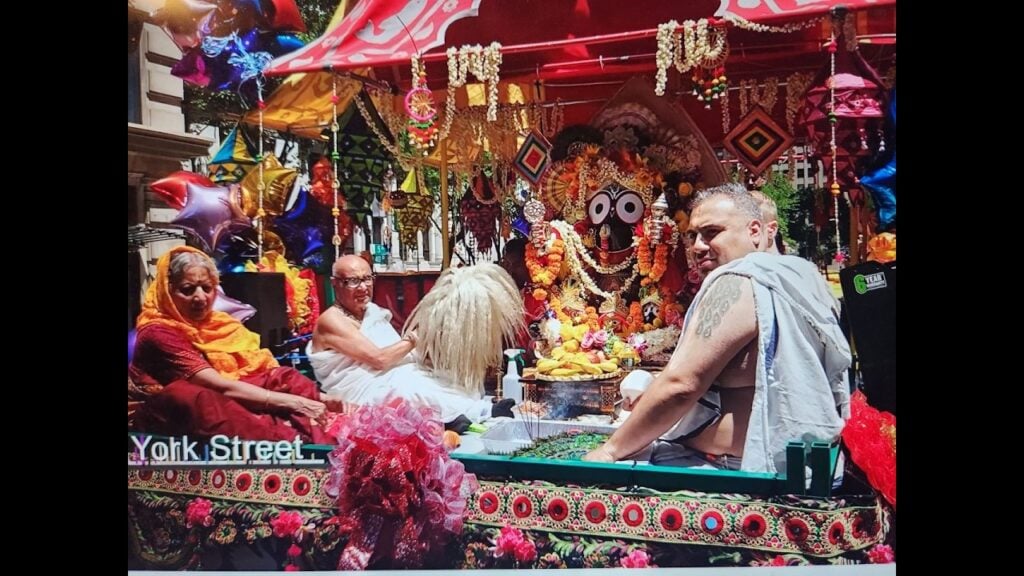
Rathotsavam, the chariot festival, extends the sanctum’s grace into the public realm. The ratha draws devotees into shared motion and mutual care, embodying the principle that dharma advances when borne together. Theologically, the ratha becomes a moving mandala; socially, it is a reminder of interdependence, where each hand helps steady the journey.
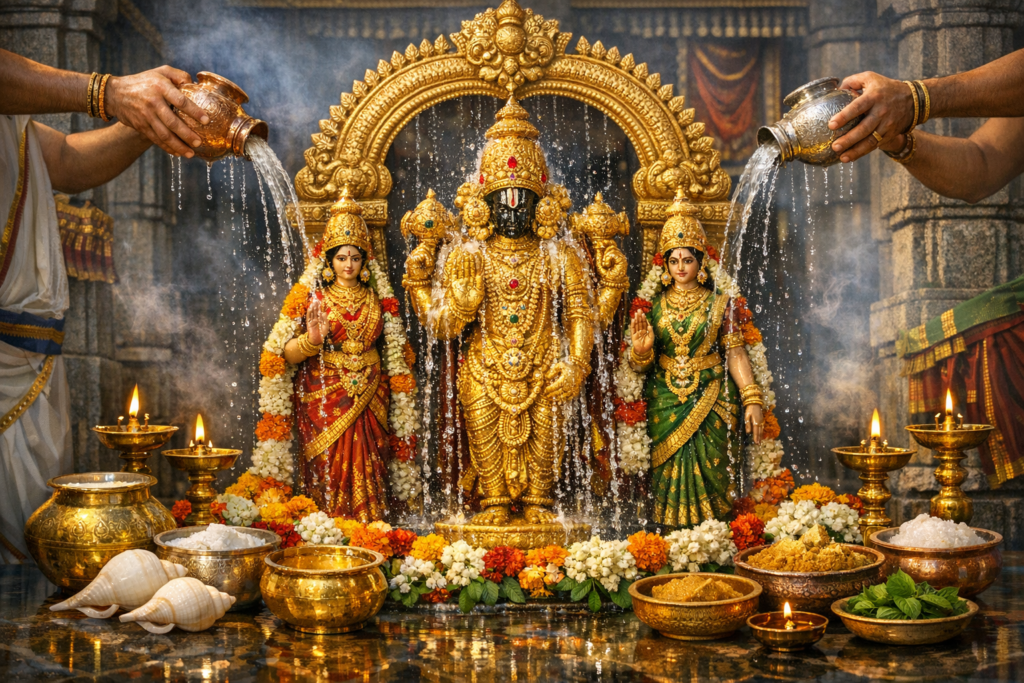
Snapana Tirumanjanam is an abhisheka infused with panchamrita and aromatic dravyas, offering both ritual purification and rejuvenation of the Utsava Murti. The practice reflects a refined understanding of worship as seva that is attentive, methodical, and affectionate—sacred care rendered with precision.
Chakrasnanam, the ceremonial immersion of the Sudarshana Chakra in sanctified waters, traditionally concludes a cycle of utsavams in TTD practice. It signifies cosmic purification and the reaffirmation of dharma. Devotees often speak of receiving teertham after Chakrasnanam as a moment of inner stillness and gratitude.
Pushpayagam, a floral homage, showers the Lord with an abundance of flowers selected for color, fragrance, and purity. This rite transforms the temple into an immersive garden of devotion, where ecology and spirituality meet. Many visitors find Pushpayagam uniquely contemplative: the soft cadence of petals, the scent of tulasi, and the quiet of collective prayer create a powerful devotional atmosphere.
Dhwajavarohanam, the lowering of the flag, ritually closes the Brahmotsavam and symbolically returns the deities to the temple’s intimate rhythm. In liturgical terms, the arc is complete; in lived experience, devotees carry forward a renewed commitment to seva, ahimsa, and satya in daily life.
For Hyderabad’s devotees, the Brahmotsavam at Himayat Nagar is both a personal pilgrimage and a neighborhood celebration. Many recount arriving at dawn for quieter darshan, returning with elders in the evening for alankara and Vahana Seva, and encouraging children to observe, ask questions, and participate respectfully. The festival becomes intergenerational learning, where tradition is experienced rather than merely remembered.
Practical planning enhances the experience. Early arrival improves proximity for Vahana Sevas; modest attire aligns with temple norms; and hydration, sun protection, and patience are essential during peak hours. Photography and offerings follow temple-specific guidelines, which should be observed diligently to preserve sanctity and safety.
Access is convenient given the temple’s central location in Hyderabad. Public transport links and ride-share options reduce congestion near the temple zone, while short walks from drop-off points typically ensure smoother entry. Visitors with elders or young children may prefer mid-morning or late-evening windows, avoiding midday heat during June.
Devotional etiquette sustains the festival’s spiritual core. A calm queue discipline, mindful use of mobile devices, and deference to volunteers and archakas help maintain sanctity. Annadanam and community service opportunities, when available, reflect the TTD ethos of seva; participation should follow the temple’s issued instructions and schedules.
The Brahmotsavam’s spirit resonates widely across dharmic traditions. Values of compassion, service, restraint, and inner discipline that guide Hindu worship also find echoes in the contemplative paths of Buddhism, the ethical rigor of Jainism, and the seva-centered practice seen in Sikh traditions. The festival thus fosters unity in diversity, inviting all to appreciate shared civilizational virtues while honoring distinct liturgical forms.
Environmentally considerate participation is encouraged. Devotees increasingly adopt reusable water bottles, avoid plastic carry items, and dispose of waste responsibly. During Pushpayagam and other flower-intensive rites, mindful sourcing and post-rite composting principles—where implemented—underscore a stewardship ethic that aligns spiritual beauty with ecological care.
For accurate micro-schedules and any late updates, devotees should refer to official communications released by the Himayat Nagar Sri Venkateswara Swamy Temple under TTD. With dates now set for 19–24 June 2026, the event promises an uplifting sequence: Ankurarpanam and Dhwajarohanam at the outset; Vahana Sevas, Sri Vari Shanti Kalyanam, Rathotsavam, and Snapana Tirumanjanam through the festival days; and the concluding sanctities of Chakrasnanam, Pushpayagam, and Dhwajavarohanam on 24 June.
In summary, the 2026 Brahmotsavams in Hyderabad offer an academically rich and experientially profound window into Vaishnava ritual life under TTD guidance. The schedule balances solemnity and celebration; the rites illuminate theology through practice; and the shared experience nurtures civic harmony. For many, the festival becomes a living classroom—where devotion is learned by witnessing, seva is learned by doing, and unity is learned by belonging.
Inspired by this post on Hindu Pad.





Leave a Reply
You must be logged in to post a comment.