
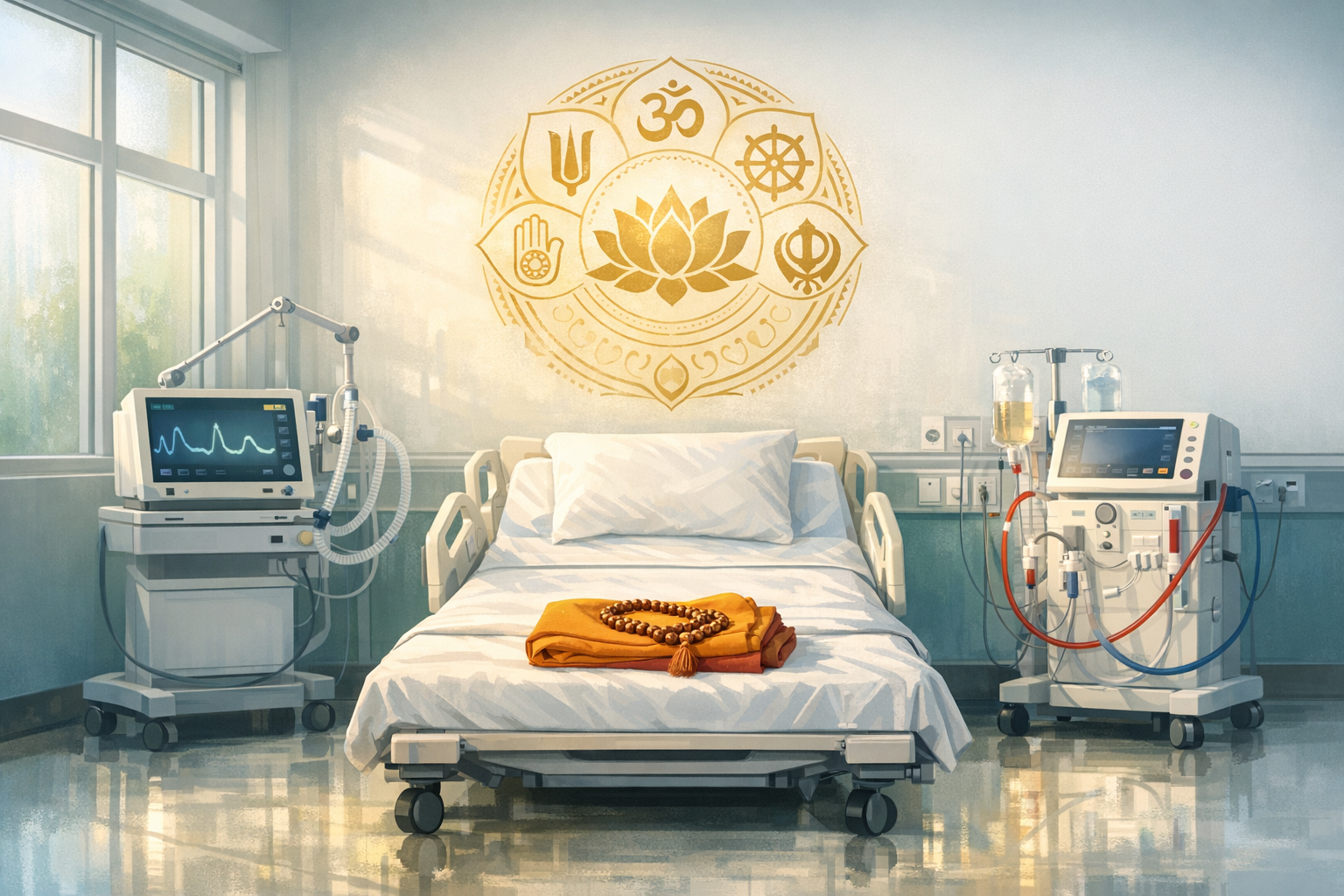
HH Jayapataka Swami, a senior leader of ISKCON (International Society For Krishna Consciousness) and a widely revered Gaudiya Vaishnava teacher, has been hospitalized in an intensive care unit in the United States while on a service itinerary. According to community communications, the clinical picture currently involves a delicate condition requiring respiratory support and specialized dialysis, indicating a level of critical care that is typically reserved for complex, multi‑system needs.
As one of the foremost disciples of A. C. Bhaktivedanta Swami Srila Prabhupada and a long‑standing figure in ISKCON’s global leadership, Jayapataka Swami has guided generations of Hare Krishna devotees through teachings rooted in Gaudiya Vaishnavism. The customary offering “All glories to Srila Prabhupada” encapsulates the mood of gratitude that surrounds his lifelong service, outreach, and institution‑building across South Asia and the global diaspora.
In critical care medicine, “respiratory support” spans evidence‑based modalities that range from supplemental oxygen and high‑flow nasal cannula to non‑invasive ventilation (e.g., bilevel positive airway pressure) and, when necessary, invasive mechanical ventilation. Selection depends on oxygenation metrics (such as SpO₂ and PaO₂/FiO₂ ratios), work of breathing, airway protection, hemodynamic stability, and the underlying etiology (for example, cardiopulmonary compromise, infection, or fluid overload). Clinicians often pair ventilatory strategies with lung‑protective parameters, judicious sedation, and early mobilization protocols to balance oxygen delivery with the risks of deconditioning.
“Specialized dialysis” in an ICU commonly refers to tailored renal replacement therapy chosen for fragile patients. Approaches such as continuous renal replacement therapy (CRRT) or sustained low‑efficiency dialysis (SLED) are preferred when blood‑pressure stability is a priority, allowing gentler fluid removal and meticulous correction of electrolytes and acid–base status. These modalities support patients experiencing acute kidney injury, fluid imbalance, or toxin accumulation, and they are frequently integrated with infection control, anticoagulation protocols, and close hemodynamic monitoring to stabilize multiple organ systems concurrently.
When respiratory compromise and renal support coincide, care teams typically coordinate across pulmonology, nephrology, critical care, and infectious disease to manage interdependent physiology. In older adults and those with complex medical histories, travel‑related stressors, latent comorbidities, and immune vulnerabilities can increase clinical complexity; hence the emphasis on protocol‑driven monitoring, prevention of secondary complications, and early rehabilitation planning once stabilization is achieved. No specific diagnosis should be inferred from limited public updates; rather, these medical markers simply denote the high acuity of care currently being provided.
While prognostic details have not been publicly released, ICU trajectories are commonly tracked using objective measures such as oxygenation indices, fluid balance, renal function trends (creatinine, urine output), inflammatory markers, and composite scores like SOFA or APACHE II. Progress often involves incremental milestones: improved gas exchange, reduced vasopressor need, successful ventilator weaning trials, and transition from CRRT or SLED toward intermittent hemodialysis or native renal recovery. Such parameters help guide timing of step‑down care and rehabilitation planning.
For devotee communities and well‑wishers across Hinduism, Buddhism, Jainism, and Sikhism, times of uncertainty around a revered spiritual leader often prompt quiet reflection grounded in shared dharmic values. Principles such as karuṇā (compassion), maitrī (loving‑friendship), ahiṃsā (non‑harm), and seva (selfless service) provide a common ethical language for expressing concern while honoring dignity and privacy. In Sikh tradition, chardi kala (resilient optimism) helps frame hope responsibly; in Buddhist and Jain practices, mindfulness and equanimity cultivate steadiness; in the Hare Krishna movement, kīrtana and japa are time‑tested means of inner composure. These parallel pathways exemplify unity in spiritual diversity without privileging a single mode of practice.
Responsible communication during a health crisis benefits the entire community. Clear, measured language that avoids speculation; reliance on verified updates from recognized institutional channels; and sensitivity to family and care‑team boundaries uphold both transparency and confidentiality. This ethical posture aligns with the wider ideal of vasudhaiva kutumbakam, ensuring that concern for one individual radiates as care for the collective while preserving respect for clinical processes.
Institutions such as ISKCON typically plan for leadership continuity and service resilience during medical contingencies. Distributed governance, collaborative decision‑making, and documented procedures enable essential initiatives—from congregational support to educational and humanitarian programs—to continue uninterrupted. This organizational steadiness reflects a dharmic approach to stewardship: personal veneration coexists with systems that protect the mission and safeguard community welfare.
Jayapataka Swami’s decades of service include sustained teaching on bhakti‑yoga, mentorship of congregations, and encouragement of cultural outreach associated with the Hare Krishna movement. Emphasis on Vaishnava etiquette, inclusive participation, and the chanting of the holy names has helped anchor communities in shared practice while welcoming diverse cultural expressions. The broader Dharmic message—honoring multiple paths while deepening one’s chosen sādhanā—has found practical expression in intercommunity dialogue and cooperative service.
The present update situates the known facts—ICU admission, respiratory support, and specialized dialysis—within a clinical and communal frame. It also affirms a unifying ethos across Dharmic traditions: empathy, steadiness, and mutual respect. As medical teams pursue the best available care, communities can remain anchored in compassion and truthfulness, allowing attention to rest on healing, dignity, and the shared aspiration for the well‑being of all.
Inspired by this post on Dandavats.









Leave a Reply
You must be logged in to post a comment.