-
The Hidden Cost of Being Easy: Fawning, Safety, and Reclaiming the Self

Fawning is a subtle trauma response in which a person seeks safety through accommodation, people-pleasing, and self-suppression. This article examines how being “the easy one” can appear compassionate while quietly weakening self-awareness, boundaries, and authentic connection. It explains the nervous system dynamics behind fawning, why speaking up can feel physically threatening, and how resentment, anxiety,…
-
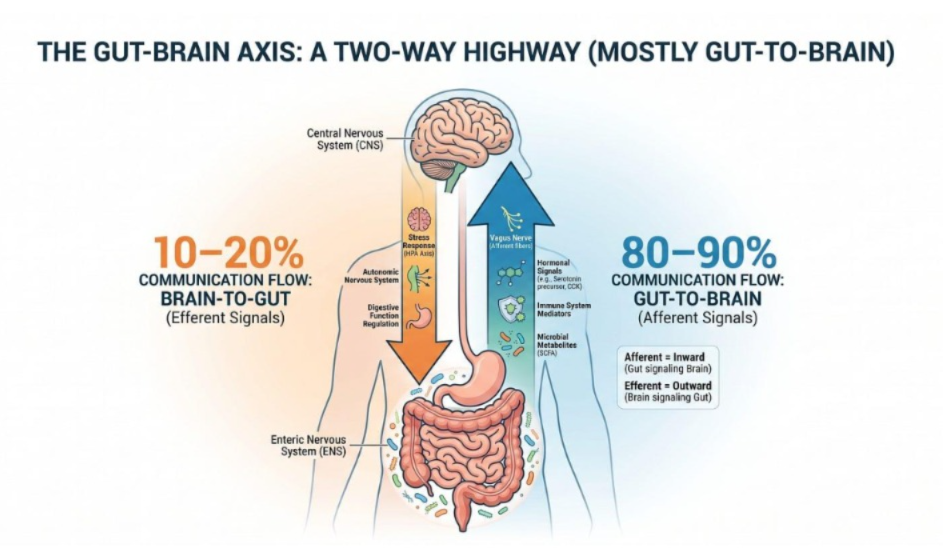
The Gut-Brain Axis: Powerful Agni Wisdom and the Science Behind Intuition

The gut-brain axis reveals that digestion, emotion, immunity, and mental clarity are deeply interconnected. Modern neuroscience shows that the gut communicates continuously with the brain through the enteric nervous system, vagus nerve, hormones, immune signals, and microbiota. Ayurveda and Siddha traditions expressed a related insight through Agni, Shareeram, Kāya, and the importance of eating only…
-
Hidden Strength: How Childhood Cleaning Rituals Became a Powerful Path to Calm

This long-form reflection explores how a childhood habit of cleaning can become a powerful coping mechanism rooted in the need for safety, control, and emotional stability. It explains how children in unpredictable homes often develop heightened awareness and practical routines to regulate stress. The piece connects cleaning, order, nervous system regulation, childhood trauma, and self-compassion…
-
From ‘Laziness’ to Nervous System Regulation: Trauma, Dopamine, and Dharmic Paths to Change

Many people who call themselves lazy are living with nervous systems tuned by early unpredictability, not moral failings. This article reframes apathy and inconsistency through neurosciencehighlighting neuroplasticity, allostasis, dopamine dynamics, executive function, and polyvagal theory. It explains why high-pressure contexts can boost performance while calm routines feel draining, and how this is a state-dependent pattern…
-
The Silent Wound: How Being Ignored Rewires the Brain and How to Heal with Dharmic Wisdom

Ignoring is not a minor slight; it is relational trauma that imprints on the nervous system and identity. Research shows social rejection activates brain regions involved in physical pain, explaining why stonewalling and ostracism feel catastrophic. Developmental science adds that chronic emotional neglect reshapes brain architecture, biasing expectations toward silence. Evolutionarily, exclusion signaled danger, which…
-
Hidden Survival Patterns: How Childhood Trauma Rewires Safetyand How to Heal

This trauma-informed narrative illustrates how childhood adversity wires the nervous system for hypervigilance, dissociation, and substance-based copingand how those patterns are adaptive rather than evidence of personal failure. It explains the physiology of survival through polyvagal theory, the self-medication hypothesis, and attachment science, then shows how neuroplasticity supports recovery. Readers learn concrete tools for nervous…
-
When Love Means Letting Go: Grief, Life‑Support Ethics, and Dharmic Wisdom for Healing

A daughter’s final exchange with her intubated father becomes a clear lens on grief, end-of-life decision-making, and the difference between love and attachment. The narrative traces how withdrawal of life support can embody compassion when clinical burdens outweigh benefits, drawing on ethical principles from palliative care. It integrates research on bereavementdual process coping, continuing bonds,…
-
From Empath Burnout to Authentic Calm: Ending People-Pleasing with Nervous System Science

This research-informed guide reframes “empath burnout” as a trainable appeasing (fawn) response within the autonomic nervous system. It explains why avoidance strategies rarely work in close relationships and shows how awareness, interoception, and bottom-up somatic tools restore agency. A step-by-step orienting practice teaches the body real-time safety, while boundary scripts and a deliberate pause prevent…
-
Reclaiming Voice from Shame: Trauma‑Informed Assertiveness Guided by Dharmic Principles

Many adults taught that their feelings did not matter struggle to speak up, not because they lack maturity, but because their nervous systems learned that silence equals safety. This article reframes learned silence as an adaptive response and outlines a trauma-informed path to assertiveness grounded in nervous system regulation, emotional literacy, and boundary setting. It…
-
Beyond Moving On: Evidence-Based Strategies for Trauma Integration and Nervous System Healing

Many people “move on” from painful relationships yet remain vulnerable to old triggers because the nervous system retains unintegrated memories. This evidence-based guide explains why familiar dysregulation can feel like “home,” how naming patterns such as gaslighting and trauma bonding restores clarity, and why daily regulation practices matter. Drawing on neuroscience and dharmic wisdom (yoga,…
-
Quieting an Overwhelmed Mind: Science of Sound Baths and Dharmic Wisdom for Resilience

A recent Sound as Medicine session demonstrates how contemplative sound can ease overwhelm, calm the nervous system, and restore clarity. The experience paired soothing overtones with mindful breathing and journaling, yielding a post-session state described by release, peace, spaciousness, ease, clarity, calmness, and gratitude. Emerging research suggests plausible mechanisms: HPA-axis downregulation, increased heart rate variability,…
-
Stop People-Pleasing for Good: Neuroscience-Based Boundaries, Healing, and Dharmic Wisdom

People-pleasing is less a personality trait than a trauma-shaped survival response that the nervous system automates to keep relationships feeling safe. This article reframes people-pleasing through neuroscience and dharmic ethics, explaining how unconscious patterns become entrenched “brain ruts” and why willpower alone rarely works. A practical, four-step protocol combines self-regulation, targeted visualization, consistent repetition, and…
-
When Panic Feels Dangerous: Retrain the Nervous System with Breathwork, Science, and Dharma

Panic feels dangerous because the body’s alarm system is loud, not because the body is failing. This long-form, research-informed guide explains how the autonomic nervous system creates the fight-or-flight surge and how understanding this physiology breaks the fear-of-fear loop. Readers learn a practical breathing protocol (four-six breathing), sensory grounding, and gentle exposure skills that retrain…
-
Surrendering Control: Mindfulness, Nervous System Regulation, and Restorative Sleep in Perimenopause

A midlife journey through perimenopausal insomnia reveals how control fuels hyperarousal, while mindfulness, compassion, and dharmic wisdom restore safety and sleep. The narrative integrates scienceHPA-axis activation, sympathetic overdrive, and hormone-driven sleep fragmentationwith practical, evidence-informed strategies. It explains how self-compassion lowers cortisol and increases vagal tone, why clock-checking and catastrophic thinking perpetuate insomnia, and how cognitive…
-
From Shame to Self-Compassion: Overcoming Erythrophobia with Science and Dharmic Wisdom

Erythrophobiathe fear of blushingoften arises not from physiology itself but from shame-based interpretations that amplify anxiety and avoidance. This comprehensive guide integrates clinical psychology, neurophysiology, and dharmic wisdom to reframe sensitivity as attunement rather than defect. Readers learn how cognitive and attentional biases sustain the fear cycle and how psychoeducation, attentional retraining, and graded behavioral…
-
From Numb to Whole: How Emotional Suppression Derails Hormones, Gut Health, and the Nervous System

This case study traces how lifelong emotional suppression created nervous system dysregulation, hormonal imbalance (notably PMS), and gut-brain axis disturbancesand how listening to the body reversed these trends. It explains mechanisms (polyvagal theory, HPA/HPO axes, vagus nerve, microbiome) alongside Ayurvedic concepts (vata, pitta, kapha, agni) to show why symptoms escalated with “push through” strategies. Evidence-aligned…
-
Anxiety Still Sucks: 7 Evidence-Backed Lessons That Built Presence, Resilience, and Calm

Anxiety remains hard, but it can still teach reliable, research-backed ways to suffer less. This long-form reflection distills seven lessons that transform spirals of worry into practical action: present-moment awareness through interoception and mindfulness; acceptance of what cannot be controlled with agency over responses; habit and boundary resets that lower allostatic load; growth via small,…
-
End People‑Pleasing: Evidence‑Based Practices to Rebuild Self‑Trust and Calm Your Nervous System

This analysis explains why people-pleasing often begins as a nervous-system strategy to stay safe and how it quietly erodes self-trust, agency, and joy. It presents evidence-based practicesinteroceptive scanning, breath-led regulation, and low‑stakes exposure to voicing preferencesthat rebuild inner guidance without overwhelming the system. It clarifies the difference between healthy cooperation and self‑abandonment, and offers language…
-
3 a.m. Thought Spirals, Decoded: Science-Backed Reasons for Night Anxiety and How to Reclaim Calm

Night anxiety feels absolute because the brain prioritizes threat detection under low sensory input and reduced executive control. This article explains the neuroscience of 3 a.m. thought spiralscircadian influences, predictive processing, the default mode network, and hyperarousalso the experience becomes understandable rather than shameful. It then outlines practical, evidence-based approaches that lower arousal without arguing…
-
From Turmoil to Tranquility: SB 3.28.10 on Yogic Breathing and the Power of Chanting

Srimad-Bhagavatam 3.28.10 presents a precise blueprint for mental purification: disciplined attention (the fire) and regulated breath (the air) refine the mind as heat and fanning purify gold. Framed by HH Ramai Swami’s exposition, the verse aligns with modern findings on vagal tone, heart-rate variability, and the calming effects of slow, coherent breathing. Lord Caitanya’s recommendation…