
You may be looking at a clipped speech, a protest call from Vijayapura, or a family argument over whether Lingayat and Veerashaiva are one community. The immediate temptation is to choose a label and defend it. That choice is too crude for the question in front of you.
Reconciliation does not require anyone to surrender a sincerely held identity. It requires a reliable way to distinguish spiritual practice, historical interpretation, institutional authority, and civic conduct. That distinction is how a community can defend truth without allowing a seer-related dispute or protest threat to become a lasting social fracture.
Key takeaways
- Begin with kinship, but do not demand a verdict that Lingayat and Veerashaiva are identical before dialogue can begin.
- Classify every dispute as theological, historical, institutional, or civic. Different questions require different decision-makers.
- When an inflammatory statement circulates, publish a documented status update within 24 hours, even if the final interpretation remains unsettled.
- Pair every serious public disagreement with a jointly governed seva activity within seven days so that ordinary families see cooperation, not only elite negotiation.
- If a protest proceeds, insist on an agreed route, time window, trained marshals, non-provocative signage, an official liaison, and a clear remedy that could end the protest.
Start with kinship, not a verdict on sameness
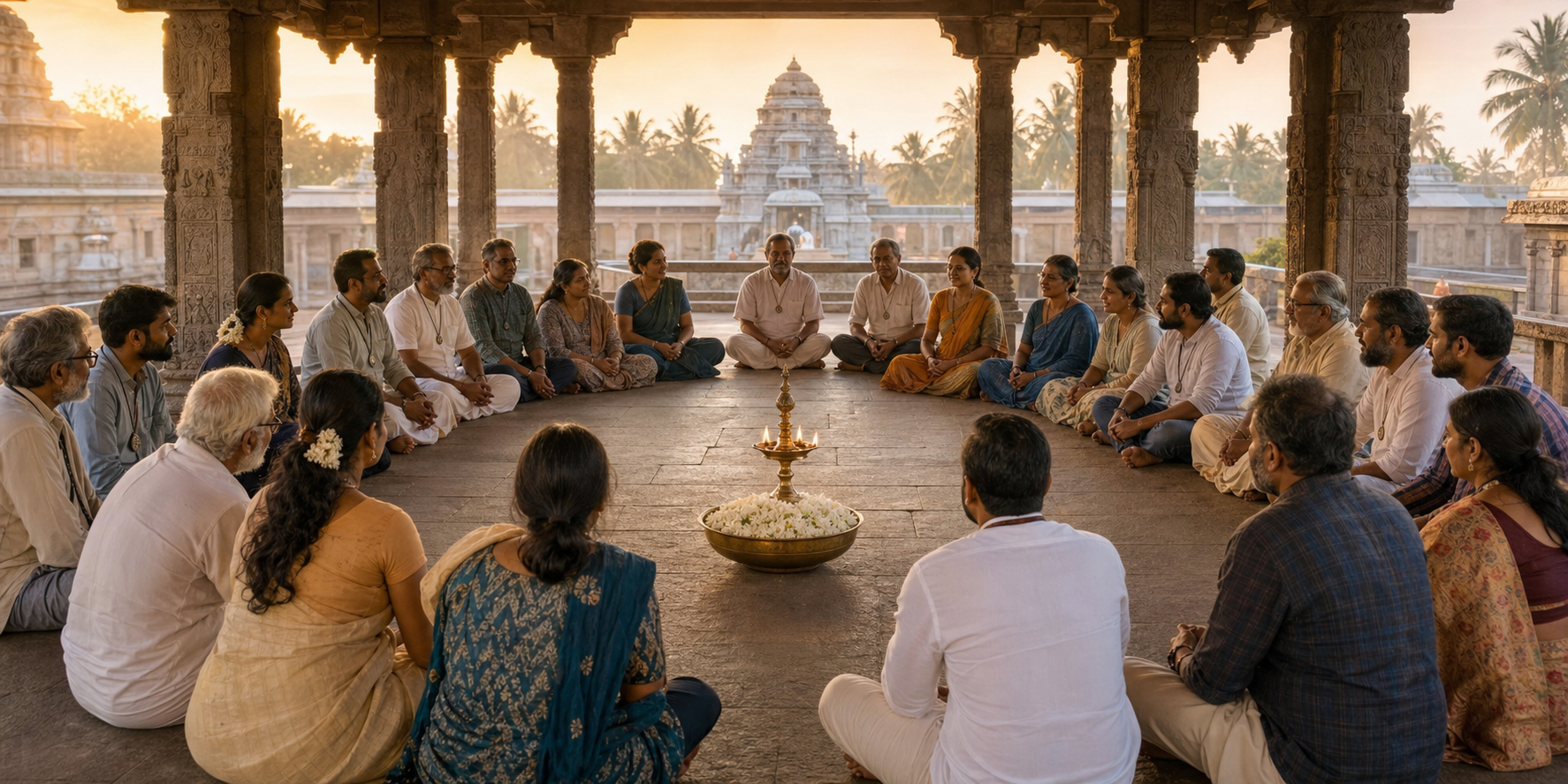
The strongest basis for reconciliation is kinship without forced equivalence. Across much of the Lingayat and Veerashaiva spectrum, devotion to Shiva, the centrality of the linga, ethical self-discipline, and sustained sadhana form a shared spiritual grammar. The 12th-century Basava movement at Kalyana gave powerful expression to equality, work as an ethical calling, vernacular spirituality through the vachanas, and the wearing of the Ishtalinga.
Substantial common ground does not eliminate real differences of emphasis. Some lineages give formative weight to vachana-centred practice and the sharanas. Others draw heavily on Veerashaiva Shaiva-siddhanta, Siddhanta Shikhamani, and the Shatsthala path. Terms such as Ishtalinga, Shatsthala, and ashtavarana should therefore open a conversation about practice and interpretation; they should not be used as passwords for deciding who deserves social respect.
Basavanna, Allama Prabhu, Akka Mahadevi, and the wider company of sharanas and jangamas can be honoured as shared civilisational luminaries without pretending that every lineage tells their history in the same way. Hindu unity is weakened, not strengthened, when a contested interpretation is imposed as the price of cooperation. A durable dharmic unity must be able to contain serious internal debate.
| Kind of disagreement | The question being asked | The proper forum |
|---|---|---|
| Spiritual practice | How is the linga understood and how is a discipline lived? | Practitioners and recognised spiritual teachers from the relevant lineages |
| Historical or doctrinal interpretation | How should the relationship among texts, teachers, and traditions be narrated? | Scholars of vachana literature, Shaiva-siddhanta, and Karnataka history alongside lineage representatives |
| Institutional authority | Who may speak for a matha, organisation, or named body? | The institution’s documented process and designated representatives |
| Civic conduct | How should a protest, clarification, or public event proceed safely? | Organisers, community mediators, civil-society representatives, and the local administration |
Do not use one answer for all four questions. A historian cannot assign a person’s identity by academic vote. A seer cannot decide a police route through theological authority. The administration cannot settle doctrine. Once each question goes to the forum competent to answer it, much of the heat stops masquerading as substance.
Language should reflect the same discipline. Use Lingayat-Veerashaiva parampara when you genuinely need an inclusive umbrella. When referring to a person or institution, use the name that person or institution uses. Describe disputed claims as disputed. Do not call every distinction a schism, and do not treat every appeal to unity as proof that differences are imaginary.
Verify a provocation before the crowd decides its meaning
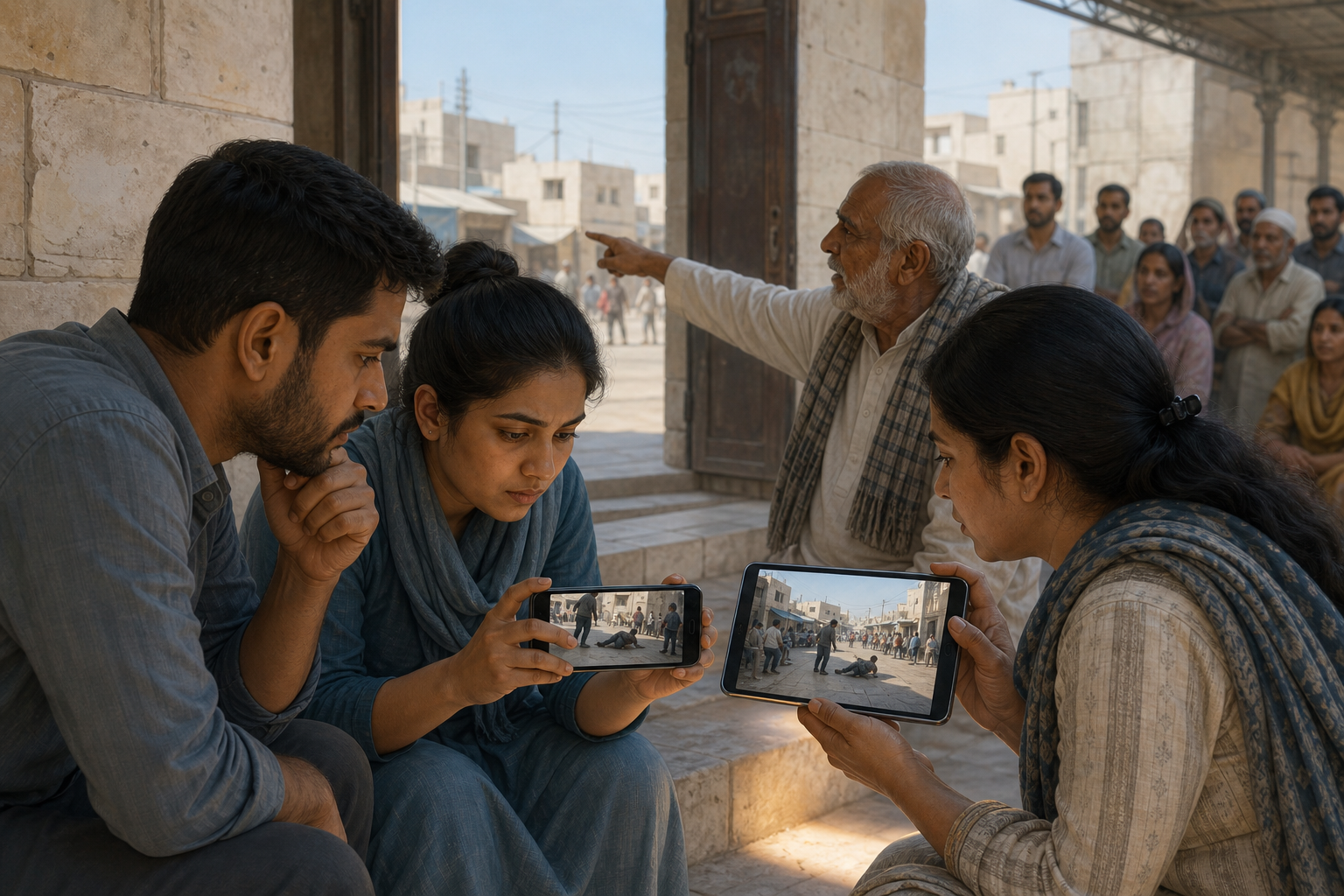
A short video can collapse a long argument into a few angry seconds. The first interpretation then spreads through family groups, local pages, and public speeches before an authorised clarification appears. By that point, people are responding not only to what was said but also to captions, edits, and claims about what was supposedly intended.
The practical answer is a misinformation response process with a 24-hour window. Twenty-four hours need not produce a final theological judgement. It should produce a documented status: what is verified, what remains missing, who is authorised to clarify it, and when the next update will appear.
- Preserve the original link or recording. Do not begin with a re-edited clip carrying a partisan caption.
- Locate the full speech, authorised transcript, or official channel. If none is available, label the claim unverified rather than filling the gap with inference.
- Write down the exact proposition causing the dispute. A complaint such as someone insulted our tradition is too vague to verify.
- Classify the proposition: doctrine, historical lineage, institutional jurisdiction, nomenclature, or a personal allegation. This determines who can answer it.
- Request separate clarifications from designated representatives. Do not treat an anonymous supporter or an unauthorised social-media page as the voice of a matha.
- Publish the result through the same groups and channels that carried the allegation. A correction hidden on a different page will not reach the people who saw the original claim.
A community-page administrator can use a simple notice while verification is under way:
- Status: unverified or partially verified.
- Available material: the full recording, transcript, or official statement currently in hand.
- Missing material: the context or authorised clarification still being requested.
- Next action: a documented update from the named spokesperson within the response window.
This is not censorship. People remain free to disagree once the words and context are known. The purpose is to prevent a caption writer from becoming the accidental authority on doctrine, history, and public action.
Give every disagreement a trusted place to go
Calls for calm fail when calm merely means waiting while the same dispute returns. Reconciliation needs an institution that can receive a grievance, identify the responsible forum, publish what has been established, and keep unresolved questions from spilling repeatedly into the street.
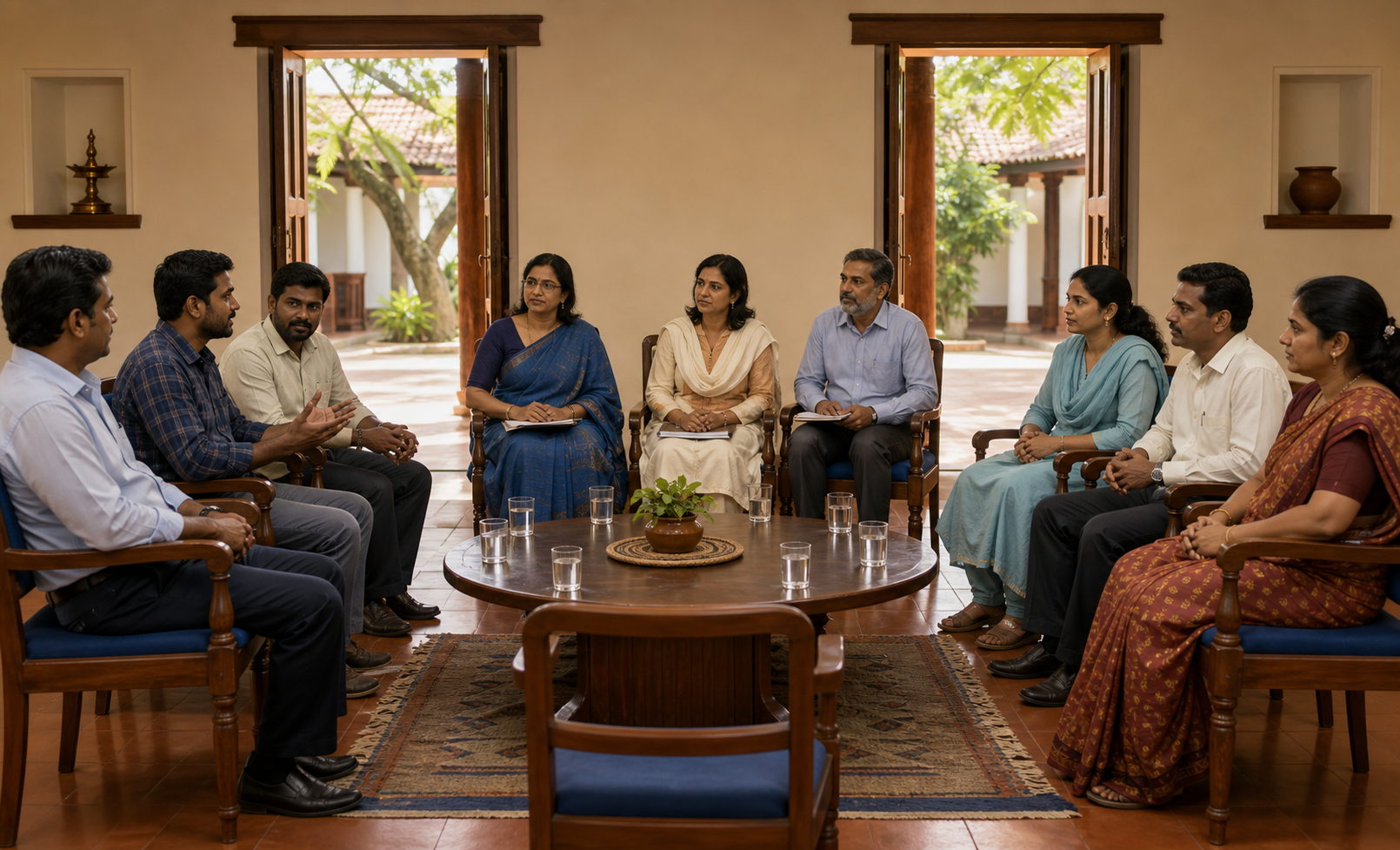
A Lingayat-Veerashaiva Reconciliation Council can do this through three distinct chambers:
- A spiritual and matha chamber to protect religious dignity, explain practices, and maintain communication among institutions.
- An academic chamber bringing together specialists in vachana literature, Shaiva-siddhanta, and Karnataka social history. Its task is to map genuine continuity, genuine divergence, and claims for which the record remains contested.
- A civil-society and seva chamber representing educators, health workers, youth volunteers, artisans, and community organisations affected by public escalation.
The chambers should not compete for control. Each grievance should be sent to the chamber competent to handle it, with a joint panel used only when the question crosses boundaries. Participation should reach beyond formal elites. Women scholars, young organisers, artisans, and front-line seva volunteers often see the consequences of conflict first in classrooms, hostels, hospitals, markets, and transport hubs.
Major centres across different lineages should be invited into the process, including Rambhapuri, Suttur, Tontadarya, Kudalasangama, and other relevant mathas. Regional coordination matters because a statement made in one district can cross institutional boundaries before its context follows it. Each participating institution should name an official spokesperson and a backup contact rather than leaving followers to guess which online account is authoritative.
Anubhava Mantapa-style forums can then be held in Vijayapura, Belagavi, Dharwad, Gadag, and other district centres. The point is not to recreate a historical institution ceremonially. It is to recover a method: open questioning, disciplined listening, reasoned disagreement, and moral accountability. Jain, Buddhist, and Sikh representatives may be invited as dharmic dialogue partners, but they should not be asked to adjudicate an internal Lingayat-Veerashaiva doctrinal question.
Every formal session should end with a short public record containing:
- The exact question considered.
- The points on which participants agree.
- The points that remain disputed and the positions actually represented.
- The evidence or texts still requiring examination.
- The temporary communication rule to be followed while the question remains open.
- The responsible chamber, spokesperson, and next procedural step.
That record is more honest than a ceremonial declaration of total consensus. It also prevents every unresolved detail from being presented later as proof that dialogue failed.
The council’s first common statement should be narrow enough to command genuine assent: mutual dignity, non-violence, truthful representation of another lineage, and due process for institutional disputes. Agreement on those rules can precede agreement on history. That is not evasion; it is the foundation that makes historical disagreement safe enough to examine.
Put unity where people can see and measure it
Lingayat and Veerashaiva institutions contribute through schools, colleges, hostels, hospitals, scholarships, health work, and anna-dasoha. When relations deteriorate, the damage does not remain inside seminar halls or matha offices. It reaches students, patients, workers, traders, and families whose daily lives depend on stable community institutions.
Use a Seva First response
For every public disagreement that escalates, participating institutions should begin a joint service activity within seven days. Suitable projects include a blood-donation drive, student mentorship camp, health camp, scholarship initiative, hostel-support programme, or skills event. The activity should be jointly selected, jointly delivered, and open according to need rather than factional identity.
Seva is not a payment that excuses inflammatory conduct. It changes the incentives surrounding disagreement. Leaders who know they must work together the following week have a reason to preserve a minimum of trust today. Volunteers who serve side by side also acquire relationships that make caricatures harder to sustain.
Education should reinforce the same habit. A Vachana-Siddhanta reading series in colleges, industrial training institutes, and community libraries can pair vachanas with selections from Shaiva-siddhanta traditions. Each session should identify a shared ethical concern, a real interpretive difference, and the civic conduct that allows both to be discussed without hostility. The objective is not to manufacture agreement but to teach young people how to read across a boundary without turning difference into contempt.
When a protest is already planned
Peace does not require communities to abandon public assembly. It requires organisers to know what remedy they seek and what conduct they will accept responsibility for. Before you join or endorse a protest, ask for the following:
- A written statement of the disputed act and the remedy being demanded.
- A route and time window agreed with the local administration.
- Named marshals responsible for de-escalation within the gathering.
- Signage that states the grievance without insulting an entire lineage or its adherents.
- A designated liaison who can communicate immediately with police and community representatives.
- An official spokesperson authorised to correct rumours during the event.
- A clear off-ramp explaining what clarification, apology, or procedural commitment would resolve the protest.
If organisers cannot state what would resolve the event, participants are being asked to display anger rather than secure an outcome. If routes, marshals, and liaison contacts are absent, postponement is the responsible choice because an avoidable confrontation can endanger bystanders and deepen the very injury the protest claims to address.
Publish a quarterly Ekata Scorecard
Unity should be evaluated by conduct, not by the size of a banner. A simple public scorecard can track joint events, joint statements, completed seva projects and their outcomes, documented corrections, grievances moved into mediation, and the tone of community media. Publish it quarterly and keep district-level results comparable.
Do not treat silence as the only measure of peace. A community can be quiet while grievances harden underground. Better indicators are whether people used the agreed process, whether institutions corrected false claims promptly, whether joint commitments were completed, and whether unresolved differences were represented accurately.
An annual Ekata Utsava in Vijayapura can make that work culturally visible through vachana recitation, classical and folk performance, inter-matha discussion, and shared anna-dasoha. It should display the relationships built during the year, not substitute one festive day for the harder work of verification, dialogue, and service.
Your next action depends on your role. If you receive a provocative clip, stop its unverified circulation. If you administer a community group, adopt the 24-hour status notice. If you teach, host a paired Vachana-Siddhanta reading. If you organise public action, insist on the de-escalation checklist. If you serve a matha or association, ask for a named spokesperson and a seat at a structured reconciliation council.
The first convincing success will not be a declaration that every historical question has vanished. It will be the next disputed statement travelling through verification, dialogue, and accountable action instead of becoming another rupture in the street. That is a form of unity you can help build now.
References
