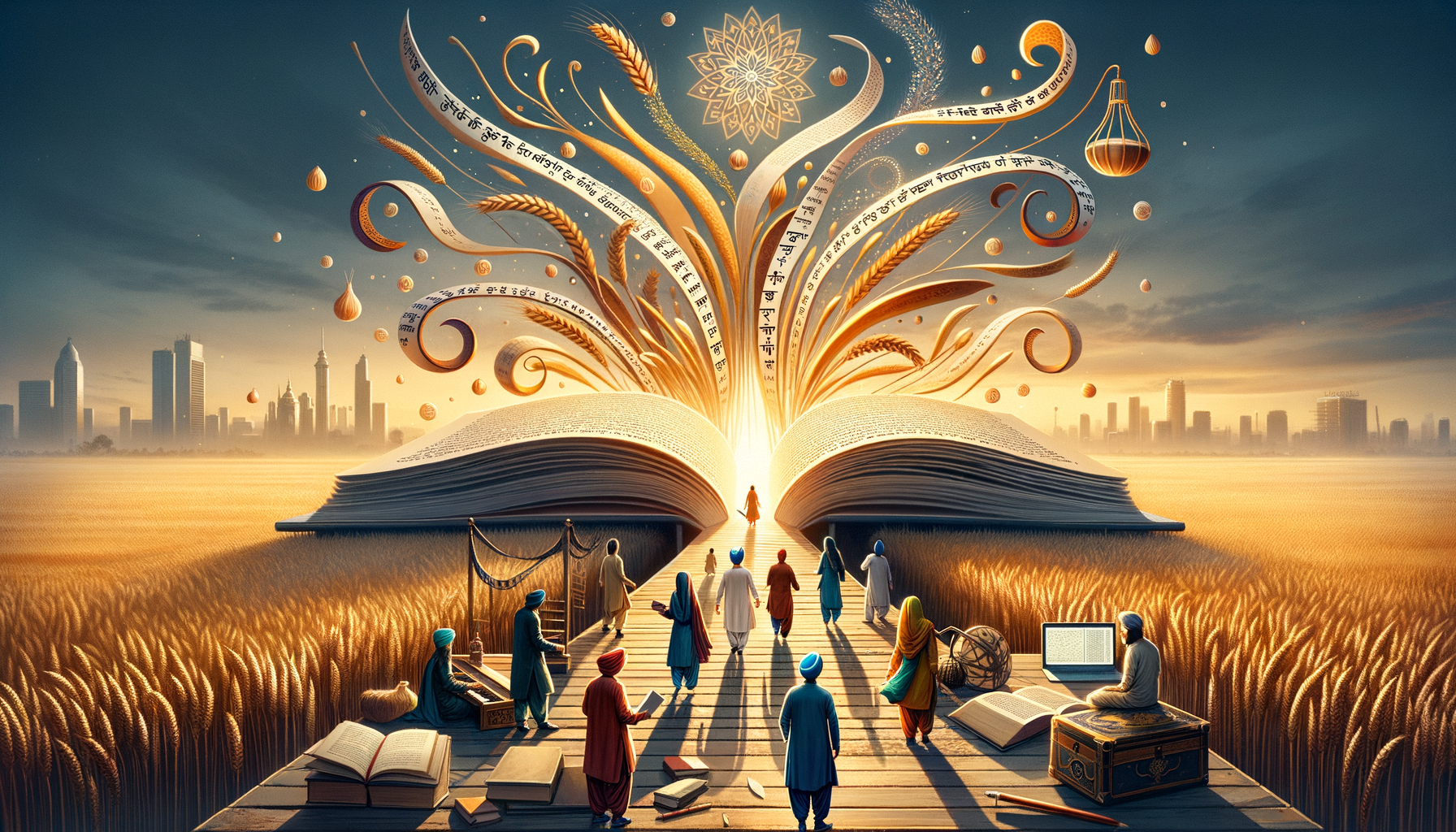
Punjabi literature increasingly speaks with a transnational voice, where scholarship and creative praxis converge to illuminate a shared cultural heritage across Punjab and its expansive Indian diaspora. This transnational frame strengthens a living archive that holds together memory, migration, and meaning, while advancing rigorous academic studies alongside innovative forms of expression. Positioned at the crossroads of Bhakti and Sufi literature, Sikh Community histories, and broader dharmic traditions, this field presents an inclusive, dialogic vision anchored in Interfaith Dialogue and Unity in Diversity.
Historically, Punjabi letters have flourished through a plural ethos. The Guru Granth Sahib enshrines the poetry of diverse bhaktas and Sufi mystics, affirming the dignity of multiple spiritual paths. Figures such as Bulleh Shah and Waris Shah exemplify a literary current that dissolves hard boundaries between communities while safeguarding Cultural Heritage. These inheritances continue to inform contemporary writing and research, encouraging a mode of reading that values spiritual consonance over sectarian difference and celebrates religious pluralism in India.
Transnational circulation has widened both audience and influence. From Amritsar to London, Toronto, and California, community spaces host kirtan, qissa recitations, and poetry slams that bind generations through shared aesthetics and ethical imagination. Many readers and listeners recognize their own journeys in these gatherings: intergenerational conversations, the emotional cadence of shabad, and the subtle negotiation of language between Punjabi, English, and other tongues. Such experiences make Punjabi literature an accessible bridge for diaspora youth, transforming Cultural Insights into living practice and sustaining belonging across borders.
Scholarship mirrors this creative reach. Critical editions, translation projects, and comparative studies of Gurmukhi and Shahmukhi texts have expanded the field’s methodological tools. Researchers now map manuscript lineages, oral performance traditions, and digital archives, while situating Punjabi literature within global literary networks. This academic lens clarifies how transnational mobility reshapes genre, metaphor, and voice, and why cross-communal aestheticsrooted in dharmic values of compassion, seva, and dialogueremain vital to literary interpretation.
Creative praxis thrives through experimentation. Writers and performers blend vars, katha, and contemporary spoken word; musicians fuse classical ragas with modern beats; and playwrights recast epic motifs for new audiences. Translators foreground form alongside meaningretaining rhythm, refrain, and idiomso that Punjabi poetics travel without losing their ethical and emotional charge. These craft choices amplify underheard voices, deepen Cultural Exchange, and cultivate empathetic reading across communities.
At its core, the transnational turn reinforces unity among dharmic traditions by renewing a vocabulary of shared virtueskaruna, ahimsa, maitrithat resonates with Hindu, Buddhist, Jain, and Sikh lineages. Rather than flattening difference, this approach honors complexity through Interfaith Dialogue, inviting readers to encounter the other as neighbor. In classroom seminars, gurdwara libraries, and community festivals alike, Punjabi literature models how spiritual plurality can coexist with scholarly rigor and artistic excellence.
Pragmatically, this synthesis offers a roadmap: preserve archives; support bilingual and bidirectional translation (Gurmukhi–Shahmukhi–English); mentor young creators; and convene transnational reading circles that knit scholarship and art. Such practices sustain a resilient ecosystem where research informs performance, and performance prompts new research. The result is a dynamic commons in which knowledge circulates, creativity flourishes, and unity deepens.
In sum, Punjabi literature’s transnational voice is not merely a geographic fact; it is an ethical commitment. By aligning scholarship with creative praxis, the field advances Cultural Heritage while cultivating inclusive futures. Across continents and generations, its pages and performances continue to embody a thoughtful, compassionate, and intellectually vibrant Unity in Diversity.
Inspired by this post on SikhNet – News.