
Varahi Navaratri in Hyderabad: a focused guide to the sacred season
Varahi Navaratri, also known in many calendars as Ashada Navaratri or Gupta Navaratri, has moved from a relatively specialized observance into the wider devotional life of Hyderabad and Secunderabad. Public awareness has grown through temple announcements, photographs of daily alankarams, livestreams, and social-media discussions, particularly across Telangana and Andhra Pradesh. Yet the observance remains more complex than a list of popular shrines suggests. It belongs to the broad worship of Shakti, but individual temples may honor Goddess Varahi directly, celebrate another form of the Divine Mother, or simply conduct special Devi poojas during Ashada Masam.
The most important distinction is therefore practical as well as theological: not every temple recommended for Varahi Navaratri is a dedicated Varahi temple. Hyderabad has a notable Varahi-associated shrine in the Kothapet–Sri Rama Krishnapuram area, while the other destinations in this guide are major Shakti temples whose Ashada observances create an appropriate setting for darshan. This distinction prevents a common misunderstanding and allows each institution to be approached according to its own presiding deity, ritual tradition, and temple discipline.
Varahi Navaratri dates in 2026
For 2026, commonly used Indian panchanga calculations place Ashada Gupta Navaratri from Wednesday, 15 July, through Thursday, 23 July. Because a Hindu ritual day is governed by tithi and local sunrise rather than by the civil date alone, a repeated or shortened tithi can affect how a temple labels a particular day. Exact Ghatasthapana, homa, alankaram, and concluding-pooja timings must therefore be confirmed with the chosen Hyderabad temple. The annual dates are not fixed in the Gregorian calendar; the 2026 Ashadha Gupta Navratri calendar is useful for orientation, but a local temple notice remains authoritative for its own programme.
What Ashada or Gupta Navaratri means
Navaratri literally denotes a sequence of nine nights dedicated to the Divine Feminine. The best-known public cycle occurs in Ashwin during Sharad Navaratri, but traditional calendars also recognize Navaratri observances in Chaitra, Magha, and Ashada. Ashada Navaratri falls during the monsoon season, usually in June or July. The term Gupta, meaning concealed or inward, signals the comparatively private, disciplined, and lineage-based character attributed to this cycle in several Shakta traditions. It does not mean that public temple darshan is forbidden; rather, it distinguishes open devotional participation from specialized sadhana transmitted through a competent guru.
Regional practice is not uniform. Some households and temples organize the nine nights around Navadurga, some emphasize the Dasha Mahavidyas, and several South Indian communities give particular importance to Varahi. Calling the festival Varahi Navaratri is therefore meaningful within a living regional devotional context, but it should not be treated as the only pan-Indian interpretation of Ashada Navaratri. Academic accuracy requires recognition of this plurality rather than forcing every local custom into a single standardized scheme.
Who is Goddess Varahi?
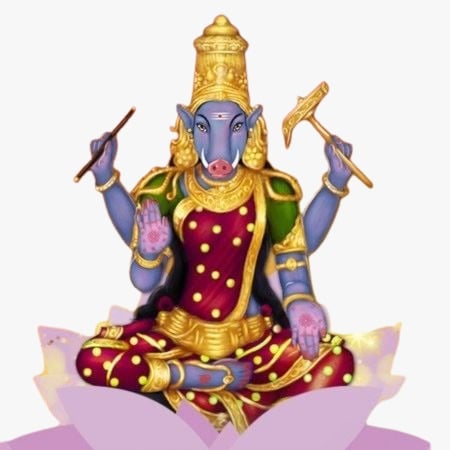
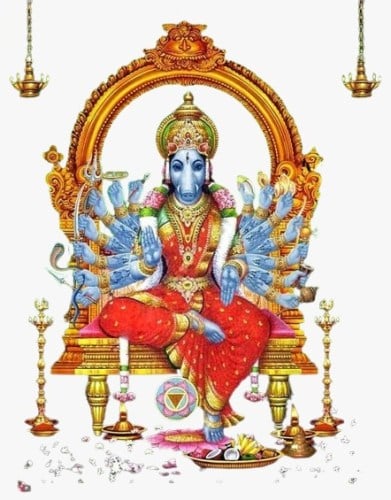
Varahi is one of the Matrikas, the powerful Mother Goddesses represented in Hindu textual and sculptural traditions. She is commonly related to Varaha, the boar manifestation of Vishnu, and is recognizable by her boar-like head or face joined to a female body. In the Devi Mahatmya tradition, the Matrikas participate in the Goddess’s battle against destructive forces. The theology is not merely martial: the same figure can embody protection, maternal power, sovereignty, disciplined intelligence, and the capacity to restore order when ordinary boundaries have failed.
Historical art demonstrates both continuity and variation. A tenth-century Saptamatrika panel catalogued by the British Museum identifies Varahi through the boar’s head, while the University of Michigan Museum of Art describes her as a member of the Seven Mothers and the female counterpart of Varaha. Such objects show that Varahi worship is not a recent social-media creation. What is recent is the scale and speed with which information about her festivals, iconography, and temple rituals now circulates among urban devotees.
Varahi’s attributes vary according to text, region, and ritual lineage. Images may include implements associated with authority, agriculture, restraint, or combat, such as a plough, pestle, staff, sword, shield, noose, or goad. Her vehicle and number of arms also vary. These differences should not be interpreted as errors automatically; iconography in Hindu traditions is often governed by distinct agamic, puranic, tantric, and local conventions. A visitor gains more by asking which tradition a particular image follows than by expecting every murti to reproduce one internet illustration.
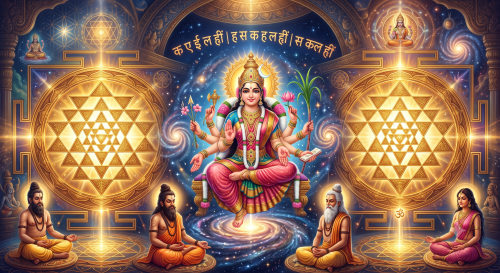
Within some Sri Vidya lineages, Varahi is revered as Dandanatha or Dandini, a commanding power associated with Lalita Tripurasundari. That identity explains why devotees may connect her with strategic clarity, protection, governance, and the disciplined removal of obstacles. It is, however, a lineage-specific theological framework rather than a universal definition accepted in identical form by every Hindu community. Likewise, popular claims that a particular ritual guarantees wealth, political success, victory in litigation, or control over others belong to devotional and commercial discourse; they should not be presented as measurable certainties.
A comparative note also supports respectful unity among dharmic traditions. The Metropolitan Museum of Art explains that the boar-associated Vajravarahi of Vajrayana Buddhism reflects the historical adaptation of imagery related to Hindu Varahi. This connection illustrates centuries of intellectual and artistic exchange across South Asia and Tibet. It does not erase the distinct scriptures, initiations, or meanings of the Hindu and Buddhist deities. Respectful comparison recognizes relationship without collapsing separate traditions into one.
Varahi Navaratri and Hyderabad’s Ashada sacred landscape
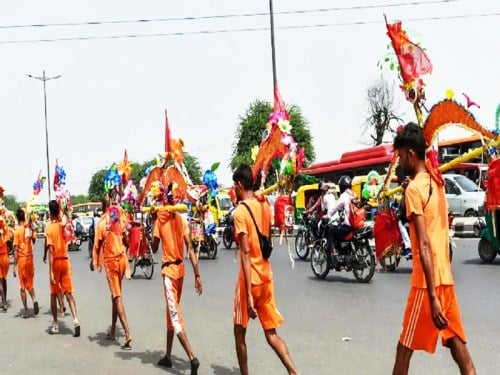
In Hyderabad, Varahi Navaratri unfolds within a much larger Ashada landscape. The same lunar month is filled with Bonalu, Yellamma worship, Mahankali jatara traditions, Shakambari celebrations, community vows, processions, and special Devi alankarams. The emotional atmosphere can be intense: temple drums, turmeric and kumkum, decorated pots, flower garlands, crowded streets, and long darshan queues turn the city into a network of neighborhood sacred centers. For many residents, the season links family memory with the contemporary metropolis, making worship both intimate and visibly public.
Bonalu and Varahi Navaratri should nevertheless not be treated as interchangeable names. The Hyderabad District administration describes Bonalu as Telangana’s annual offering-centered festival for Mahakali and her regional forms during Ashada Masam. Varahi Navaratri is a nine-night Shakti observance whose ritual content varies by lineage and temple. They overlap in calendar, geography, and devotion to the Mother Goddess, and a temple may participate in both, but each retains a distinct ritual grammar and cultural history.
The following seven temples reproduce and substantially clarify the destinations in the source guide. The sequence begins with the most directly Varahi-associated site and then moves through major Devi temples in Kothapet, Jubilee Hills, Ameerpet, Secunderabad, Balkampet, and the Old City. The list is a devotional itinerary, not a claim that every temple contains a separate Varahi sanctum or conducts the same nine-day programme every year.
1. Sri Varahi Pratyangira Devi sametha Sarabeshwara Peetam / Sri Maha Prathyangira Parameswari Devi Mandiram, Kothapet
The Kothapet–Sri Rama Krishnapuram complex is the strongest first choice for devotees specifically searching for a Varahi temple in Hyderabad. Local listings describe it as Sri Varahi Pratyangira Devi sametha Sarabeshwara Peetam and associate it with Varahi, Pratyangira, and Sharabha or Sarabeshwara worship. The temple’s own website identifies the Road No. 1 institution as Sri Maha Prathyangira Parameswari Devi Mandiram. Because online naming conventions differ, visitors should search by the full address area and verify that they have selected the intended shrine before travelling.
This temple is especially relevant because the source reports Varahi Navaratri as a major annual celebration, with special poojas and homams during the sacred period. The institution is also associated with Kurthalam Sri Siddheswari Peetham and presents shrines or representations connected with the Dasha Mahavidyas. Varahi herself is a Matrika and should not be incorrectly counted as one of the standard ten Mahavidyas; the presence of both traditions in one complex reflects a broader Shakta ritual environment rather than identity between the two classifications.
The official temple site lists daily homams for Sri Lakshmi Ganapathy, Sri Kaala Bhairava, and Sri Maha Pratyangira Devi, and it publishes split morning and evening darshan hours. Festival schedules can extend, contract, or reorganize those hours. A Varahi Navaratri visitor should therefore confirm the current day’s alankaram, homa participation rules, queue arrangements, and whether advance registration is required. Public darshan does not normally require a person to undertake private tantric practice.
The spiritual value of this stop lies in concentration. A devotee arrives not merely at a famous city temple but at a ritual setting where fierce forms of Shakti are interpreted as guardians of order. The appropriate response is disciplined attention rather than fear or sensationalism. Quiet darshan, respectful observation of the homa, and a simple prayer for clarity, courage, and ethical action remain fully meaningful even when a visitor has no formal initiation.
2. Sri Peddamma Thalli Temple, Jubilee Hills
Sri Peddamma Thalli Temple is one of Hyderabad’s most recognizable urban Shakti shrines. Peddamma is commonly understood as the great mother or mother of mothers, a title that expresses seniority, protection, and the intimate relationship between a neighborhood and its guardian goddess. The Hyderabad District administration locates the temple near Jubilee Hills Road No. 55, on the main route between the Jubilee Hills check post and the Hi-Tech City side of the city.
The temple is included in a Varahi Navaratri itinerary because Ashada worship has a strong place in its annual calendar. Local temple histories emphasize Bonalu and Shakambari Utsavam during Ashada Masam, while the source guide recommends Peddamma darshan during the nine nights. Shakambari imagery, with the Goddess associated with vegetation and nourishment, adds a monsoon-season dimension to the visit. It situates divine power not only in battle and protection but also in food, fertility, ecological renewal, and maternal care.
This is not primarily a dedicated Varahi temple, so the correct devotional approach is to honor Peddamma Thalli in her own identity. If a special Varahi alankaram or pooja is announced, it can be attended as part of that year’s temple programme; it should not be assumed in advance. Jubilee Hills can become congested on Fridays, Sundays, festival evenings, and major Ashada dates. An early visit, modest dress, minimal luggage, and careful attention to official queue signs generally make the experience calmer.
3. Sri Kanaka Durga Devi Temple, Ameerpet
Sri Kanaka Durga Devi Temple in Ameerpet provides a central-city option for devotees who cannot travel to every large shrine. Telangana Endowments records identify the institution as Sri Kanaka Durga Temple, Ameerpet, Hyderabad, confirming its formal place in the city’s temple network. The source states that Ashada Navaratri is celebrated here and recommends Kanaka Durgamma darshan during the period. Since annual details change, the precise 2026 programme should be obtained from the temple office or its current notice board.
Kanaka Durga is approached as a radiant and victorious form of the Goddess. In a carefully planned Varahi Navaratri journey, this stop broadens the theology of Shakti: Varahi’s protective and commanding symbolism is placed beside Durga’s better-known role as the power that confronts disorder and restores dharma. The connection is one of shared Shakti devotion, not a claim that Kanaka Durga and Varahi are iconographically identical.
Ameerpet is a dense commercial and transit district, so practical discipline matters. Festival visitors should expect traffic, limited stopping space, and a stronger rush around evening harati. Footwear, phones, and bags should be managed only through designated arrangements. If kumkumarchana, abhishekam, or another seva is offered, the counter should be consulted before joining a queue; names, timings, and participation rules differ from temple to temple.
4. Ashtalakshmi Devalayam, Vasavi Colony, Kothapet
Ashtalakshmi Devalayam in Vasavi Colony, Kothapet, is dedicated to eight forms of Lakshmi: Adi Lakshmi, Dhana Lakshmi, Dhanya Lakshmi, Gaja Lakshmi, Santana Lakshmi, Dhairya or Veera Lakshmi, Vijaya Lakshmi, and Vidya Lakshmi. These forms organize prosperity as a multidimensional concept that includes sustenance, courage, learning, lineage, victory, and material resources. This is a more sophisticated framework than reducing Lakshmi to money alone, and it makes the temple a valuable contemplative stop during a nine-night Shakti pilgrimage.
The temple’s South Indian architectural vocabulary, prominent gopuram, and multiple sculptural forms create a markedly different visual experience from smaller neighborhood shrines. The source also notes subsidiary worship of Ganapathi, Narayana, Navagrahas, and Garuda within the complex. Its inclusion in the itinerary expresses the breadth of Devi worship: protection and fierce energy are balanced by abundance, education, nourishment, and household well-being.
The official Ashtalakshmi Devalayam website confirms the Vasavi Colony location and publishes current split-session temple hours. Those hours are useful for planning but can be superseded by festival notices. Since the Varahi–Pratyangira complex and Ashtalakshmi Devalayam are both in the broader Kothapet area, they form the most efficient two-temple cluster in this guide. A morning visit to both can preserve the evening for a neighborhood temple closer to home.
The source describes the atmosphere here as capable of producing an Aloukik, or otherworldly, devotional feeling. In factual terms, such an experience is personal rather than measurable. Yet the spatial order of eight Lakshmi shrines can genuinely support a reflective practice: a visitor may consider which forms of prosperity are already present, which responsibilities accompany them, and how wealth can be aligned with learning, generosity, courage, and social welfare.
5. Sri Ujjaini Mahankali Temple, Secunderabad
Sri Ujjaini Mahankali Temple is the most prominent Secunderabad destination in the itinerary and one of the central institutions of the Ashada season. The Government of India’s Incredible India profile describes a sacred legacy of more than 190 years and records the temple tradition that a vow made during an epidemic at Ujjain led to the installation of Mahankali in Secunderabad in 1815. The temple also houses Manikyaladevi.
Its ritual identity is inseparable from Secunderabad Bonalu, when very large numbers of devotees arrive with offerings and participate in a major cultural gathering. The Mahankali murti is described with martial and life-sustaining attributes, an iconographic combination that resonates with the protective dimensions of Varahi. Even so, Mahankali remains the presiding Goddess, and darshan during Varahi Navaratri should honor the temple’s own theology rather than relabeling the shrine as a Varahi temple.
The most useful planning principle is to separate a quiet darshan goal from a festival-spectacle goal. A visitor seeking contemplative prayer should avoid the busiest Bonalu procession periods and verify the least crowded session. A visitor wishing to witness public tradition should prepare for barricades, altered traffic routes, security checks, and prolonged queues. The official tourism profile publishes ordinary opening sessions, but special Ashada arrangements take precedence.
Ujjaini Mahankali also reveals why Hyderabad’s Goddess traditions cannot be understood only through Sanskritic categories. Military memory, epidemic narratives, neighborhood vows, women’s offerings, public processions, and temple liturgy have all shaped the shrine’s meaning. The result is not a contradiction between local and textual Hinduism, but a layered religious institution in which regional history and wider Shakti theology continually interact.
6. Sri Yellamma Pochamma Devasthanam, Balkampet
Balkampet Yellamma Temple is dedicated to Yellamma, widely identified in regional tradition with Renuka and understood as a powerful form of the Divine Mother. Local histories describe the principal image as a bhoogarbha swayambhu vigraham situated below ground level. The complex also includes worship connected with Ganesha, Pochamma, Nagadevata, and Rajarajeshwari. These multiple presences make the site an instructive example of how a major urban temple can retain the layered structure of regional goddess worship.
Ashada Masam is especially important because Yellamma Kalyanotsavam and Bonalu are major observances at the temple. The source therefore recommends Balkampet during Varahi Navaratri, not because Yellamma is being replaced by Varahi, but because the shrine is one of Hyderabad’s most active centers of Mother-Goddess devotion during the same sacred month. The approach honors related devotional energies while preserving the names, stories, and ritual autonomy of each form.
Temple tradition regards a well associated with the shrine as sacred and treats its water as theertham. Claims that such water cures disease are statements of faith, not substitutes for medical diagnosis or treatment. Visitors should follow current temple instructions concerning access, contact, or consumption and should never assume that an older practice is permitted under present crowd-control or public-health rules. This distinction protects both devotional respect and factual responsibility.
Balkampet can become exceptionally crowded around the Kalyanotsavam and Bonalu calendar. Families with children, older adults, or anyone with limited mobility should verify entry arrangements before setting out. A quieter weekday session may offer a more attentive darshan than the most celebrated public date. The spiritual measure of the visit is not queue length or proximity to spectacle; it is the quality of reverence shown to the deity, temple staff, and fellow devotees.
7. Sri Simhavahini Mahankali or Matheswari Temple, Lal Darwaza
The final destination is the major Goddess temple at Lal Darwaza in Hyderabad’s Old City, widely associated with Sri Simhavahini Mahankali and also called the Matheswari temple in festival descriptions. The Hyderabad District account places Lal Darwaza within the citywide progression of Bonalu observances. The source guide further notes participation by Telugu-, Hindi-, Gujarati-, Rajasthani-, and Marathi-speaking devotees, making the shrine a vivid example of urban religious community across linguistic backgrounds.
This diversity is spiritually significant. A shared temple space does not require every family to abandon its inherited language, regional custom, or preferred name for the Goddess. Unity emerges through mutual reverence, orderly participation, and recognition that different devotional vocabularies can coexist around a common sacred center. That principle closely matches the larger dharmic ideal of honoring distinct paths without hostility or forced uniformity.
Lal Darwaza requires the most deliberate logistics in this itinerary. Old City traffic patterns, Bonalu processions, police diversions, and dense pedestrian movement can transform access on major festival days. Visitors should consult same-day official traffic information, carry only essential items, and avoid blocking processional routes for photography. Anyone seeking a quiet Varahi Navaratri darshan may prefer a non-procession day, while those attending the public celebration should accept that observation, waiting, and crowd discipline are part of the experience.
How to organize the seven-temple darshan
The temples fall into four practical clusters. Kothapet contains the Varahi–Pratyangira complex and Ashtalakshmi Devalayam. The western-central cluster contains Ameerpet Kanaka Durga, Balkampet Yellamma, and Jubilee Hills Peddamma. Secunderabad is centered on Ujjaini Mahankali, while Lal Darwaza forms a separate Old City visit. Attempting all seven in one festival day can reduce worship to hurried transport. A two- or three-day plan is usually more respectful and resilient to queues.
A focused first day can begin with the two Kothapet temples, giving priority to the directly Varahi-associated shrine. A second day can cover Ameerpet, Balkampet, and Jubilee Hills if local traffic permits. Ujjaini Mahankali deserves a separate Secunderabad session, especially during Bonalu, and Lal Darwaza is best treated as its own Old City pilgrimage. This route logic is geographical rather than ritual; any family may reorder it according to its kula devata, vows, health, work schedule, or temple announcements.
For devotees able to visit only one temple, the decision should follow intention. The Kothapet Varahi–Pratyangira shrine is the clearest choice for Varahi-specific darshan. Peddamma, Ujjaini Mahankali, Balkampet Yellamma, and Lal Darwaza offer the strongest encounter with Hyderabad’s Ashada Goddess culture. Ashtalakshmi is especially suitable for reflection on comprehensive well-being, and Ameerpet Kanaka Durga provides a centrally located Durga-focused option. No spiritual hierarchy can be inferred merely from fame, size, or crowd numbers.
Temple etiquette and ritual literacy
Darshan begins with ordinary disciplines: clean and modest clothing, removal of footwear in the designated area, patience in queues, and compliance with instructions at the sanctum. Photography should never be assumed to be permitted, especially during alankaram, homa, or inside a garbhagriha zone. Phones should be silenced, and live video should not obstruct worship. A visitor unfamiliar with a custom can ask a volunteer or priest quietly rather than copying another person without context.
Offerings are temple-specific. Flowers, coconuts, fruit, turmeric, kumkum, cloth, lamps, or prepared naivedya may be accepted in one institution and restricted in another. During crowded festivals, temples may require offerings to be deposited at a counter rather than carried to the sanctum. Environmentally responsible devotion avoids plastic wrapping, excessive packaging, and materials that temple staff cannot safely manage. An offering gains meaning from intention and proper procedure, not from size or expense.
Common public rites may include archana, kumkumarchana, abhishekam, alankaram darshan, harati, parayana, and homa. These terms describe different actions and levels of participation. Archana invokes divine names; abhishekam bathes a murti according to prescribed rules; alankaram concerns ritual adornment; parayana is recitation; and homa is a consecrated fire rite conducted by authorized ritual specialists. Booking a seva does not automatically grant entry into every ritual space, so participation conditions should be understood before payment or sankalpa.
Varahi worship also carries an important boundary between public bhakti and initiated tantric sadhana. Simple darshan, respectful namaskara, listening to authorized recitation, and joining a public harati are broadly accessible. Practices involving bija mantras, nyasa, specialized yantras, nocturnal rites, or complex homas may require initiation and supervision. Internet popularity does not replace lineage, competence, or ethical discipline. A responsible temple guide should never encourage uninitiated visitors to experiment with advanced ritual merely because it appears powerful or secret.
Fasting is similarly not a single compulsory formula. Families may observe a full fast, consume one simple meal, avoid particular foods, or focus on mental restraint and prayer. Age, pregnancy, diabetes, medication, physically demanding work, and other health conditions can make strict fasting inappropriate. Devotion is not strengthened by preventable harm. A person with medical concerns should follow qualified clinical advice and select a sustainable observance consistent with family or guru guidance.
Planning for monsoon weather, crowds, and accessibility
Ashada falls in Hyderabad’s monsoon period. Rain can slow traffic, make stone floors slippery, and lengthen outdoor queues. Footwear that can be stored easily, a compact rain covering, drinking water where permitted, and a buffer between temple visits are practical. Umbrellas may need to be deposited outside, so visitors should follow local arrangements. Heat and humidity can remain significant even on rainy days, making hydration and rest especially important for children and older adults.
Festival crowd conditions are dynamic. Barricades can change entrances, paid and free darshan lines may be reorganized, and a road that was open in the morning may close for a procession by evening. Same-day verification is more reliable than an undated blog or map review. Temple websites, official social channels, Telangana traffic advisories, and a direct telephone enquiry should be used to confirm the programme. Unofficial posts are useful leads, but they should not be treated as final authority for timings or access.
Accessibility should be planned explicitly rather than assumed. Below-ground sanctums, steps, tightly controlled queues, and temporary festival routes can be difficult for some visitors. A family should ask whether senior-citizen assistance, wheelchair access, seating, or a shorter queue is actually available on the intended date. If it is not, choosing a quieter time or a more accessible temple is a legitimate devotional decision, not a lesser form of faith.
How to read the experience beyond a checklist
A seven-temple circuit becomes meaningful when each stop is allowed to retain its distinct theological voice. Varahi can represent protective command and disciplined intelligence; Pratyangira, formidable guardianship; Peddamma and Yellamma, maternal and regional belonging; Kanaka Durga and Mahankali, the defeat of disorder; Shakambari, nourishment; and Ashtalakshmi, many-sided prosperity. These are not interchangeable labels, but they can be contemplated as complementary expressions within the capacious traditions of Shakti.
The same interpretive generosity supports unity across Hindu, Buddhist, Jain, and Sikh communities without erasing doctrinal boundaries. Dharmic traditions share long histories of pilgrimage, ethical discipline, debate, artistic exchange, reverence for teachers, and service to living beings. A Hindu temple itinerary need not appropriate another tradition’s ritual in order to affirm kinship. It can instead cultivate humility, non-hostility, accurate learning, and protection of every community’s right to preserve its own sacred inheritance.
For a family, the most enduring part of Varahi Navaratri may be less dramatic than a crowded festival image: a child learning why footwear is removed, an elder explaining a local goddess name, a meal shared after darshan, or a moment of silence before the murti. Such experiences transmit tradition through embodied memory. Social media can announce a festival, but patient participation, ethical conduct, and intergenerational conversation give it depth.
Accuracy note and final guidance
This guide expands the original Hyderabad Varahi Navaratri temple list while correcting its most likely ambiguity: the list combines a directly Varahi-associated Kothapet shrine with temples dedicated to other forms of the Goddess. Historical statements drawn from temple tradition are presented as such, and medical or guaranteed-result claims are not treated as established fact. Ordinary opening hours are intentionally subordinated to current festival notices because special schedules can change without warning.
Varahi Navaratri in Hyderabad is best approached as a disciplined encounter with the city’s diverse Goddess traditions. The pilgrimage can begin with focused Varahi darshan at Kothapet and then expand toward Peddamma, Kanaka Durga, Ashtalakshmi, Ujjaini Mahankali, Yellamma, and the Lal Darwaza Goddess. When dates are verified, temple identities are respected, and ritual boundaries are observed, the journey offers more than a list of places: it becomes a thoughtful study of protection, nourishment, courage, prosperity, community memory, and the many ways in which Shakti is experienced across the twin cities.
Inspired by this post on Hindu Pad.



Leave a Reply
You must be logged in to post a comment.