
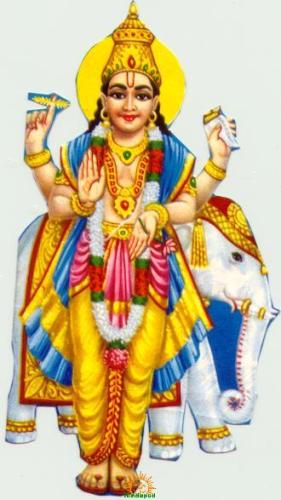
Shravan Guruvar Puja is a Thursday observance dedicated principally to Brihaspati, also known as Guru Graha or Devaguru. During the sacred month of Shravan, the practice brings together worship, fasting, mantra recitation, study, gratitude toward teachers and ethical self-examination. Its outward form differs among regions and families, but its central concern remains remarkably consistent: wisdom should be cultivated with humility and applied for the welfare of others. For many households, the quiet rhythm of a lamp, a short prayer and a renewed commitment to learning becomes one of the most meaningful experiences of the monsoon season.
Shravan Guruvar Puja dates in 2026: North Indian Purnimanta calendars observe the five Thursdays on 30 July, 6 August, 13 August, 20 August and 27 August 2026. Marathi and Gujarati Amanta calendars observe the five Thursdays on 13 August, 20 August, 27 August, 3 September and 10 September 2026.
North Indian calendar dates: Thursday, 30 July 2026; Thursday, 6 August 2026; Thursday, 13 August 2026; Thursday, 20 August 2026; and Thursday, 27 August 2026. These dates apply to the Purnimanta reckoning commonly followed in states such as Uttar Pradesh, Rajasthan, Haryana, Punjab, Delhi, Uttarakhand, Himachal Pradesh, Bihar, Jharkhand, Madhya Pradesh and Chhattisgarh. In this system, Shravan begins with the waning fortnight after the preceding full moon and concludes around Shravan Purnima.
Marathi and Gujarati calendar dates: Thursday, 13 August 2026; Thursday, 20 August 2026; Thursday, 27 August 2026; Thursday, 3 September 2026; and Thursday, 10 September 2026. Maharashtra and Gujarat generally use an Amanta or Amavasyanta lunar month, in which Shravan begins after the new moon and continues through the following new moon. Similar date ranges may be encountered in several other western and southern Indian panchangas, although the presiding deity and detailed Thursday customs can vary.
Why 13, 20 and 27 August appear in both lists: the two lunar systems overlap during a substantial portion of Shravan even though they assign the earlier and later dark fortnights differently. Consequently, the three Thursdays from 13 through 27 August belong to Shravan in both systems. The July and early-August observances are specific to the North Indian Purnimanta month, while the September observances fall within the Marathi and Gujarati Amanta month.
The technical calendar distinction: Purnimanta means that the lunar month ends at the full moon. Its month normally runs from the day after one full moon through the next full moon, placing Krishna Paksha before Shukla Paksha within the named month. Amanta or Amavasyanta means that the month ends at the new moon. It begins with Shukla Paksha and is followed by Krishna Paksha. Neither system is more correct than the other; each represents a historically established method of organizing the same lunisolar cycles.
In 2026, the cited North Indian Shravan period begins on 30 July and ends around 28 August, while the Marathi and Gujarati Shravan period begins on 13 August and ends around 11 September. A panchanga identifies a religious day through more than a printed Gregorian date: local sunrise, tithi boundaries, longitude, time zone and the rules of a particular tradition can all matter. Devotees outside India, as well as those following a temple calendar, should therefore confirm the observance with a reliable local panchanga rather than automatically converting an Indian date by time-zone arithmetic.
What Shravan Guruvar means: Shravan is a lunar month of intensified vrata, pilgrimage, temple worship and household discipline. Guruvar, Brihaspativar and Thursday are related calendrical names for the weekday associated with Guru or Brihaspati. Shravan Guruvar consequently combines the devotional atmosphere of Shravan with the symbolism of sacred learning, wise counsel, moral judgment and reverence for the guru principle.
Shravan customs often organize worship through the seven-day week. Monday is widely associated with Shiva; Tuesday may feature Mangala Gauri Puja; Wednesday may be connected with Budha; Thursday with Brihaspati or, in some communities, Dattatreya; Friday with Lakshmi, Gauri or Jivantika; Saturday with Shani, Hanuman or Balaji; and Sunday with Surya. These associations are not uniform across India, but they reveal how a lunar month can be experienced as a recurring cycle of disciplined remembrance rather than as a single festival.
Brihaspati in Vedic and later traditions: Brihaspati is an ancient Vedic deity associated with sacred utterance, prayer, inspired counsel and priestly intelligence. Rigveda 4.50 addresses Brihaspati in imagery connected with light, power, order and the overcoming of darkness. Later Hindu literature presents him prominently as Devaguru, the preceptor and adviser of the devas. This historical development explains why worship of Brihaspati can emphasize both ritual prayer and the disciplined transmission of knowledge.
In Jyotisha and Navagraha worship, Brihaspati or Guru corresponds to Jupiter. This statement requires a useful distinction. Jupiter is the English astronomical name of the physical planet, whereas Brihaspati is a deity and a graha within a religious and astrological system of meaning. The two correspond in planetary nomenclature, but the theological identity of Brihaspati is broader than the physical planet. Navagraha, moreover, is a ritual category and not simply a modern list of astronomical planets, as demonstrated by the inclusion of Rahu and Ketu.
Guru has several related meanings: it can refer to Brihaspati as Guru Graha, to a spiritual teacher, to an instructor in a lineage or to the general principle by which ignorance is removed through knowledge. Shravan Guruvar Puja should not collapse these meanings into a single identity. Instead, the observance connects them symbolically: worship of Devaguru encourages respect for legitimate teachers, conscientious study and the responsible use of knowledge.
Traditional purposes of Brihaspati Puja: devotees undertake the vrata with intentions connected to education, intellectual clarity, courage, sound judgment, family welfare, longevity and recovery from illness. Students may pray for concentration and perseverance; teachers may renew their commitment to truthful instruction; families may seek harmony and mature decision-making; and spiritual aspirants may focus on humility before knowledge. Such intentions are best understood as devotional aims that guide conduct, not as guaranteed transactions in which an offering mechanically produces a result.
References to health, longevity or recovery belong to the language of prayer and religious hope. Brihaspati Puja does not diagnose disease, replace medication or substitute for qualified medical care. A responsible observance can accompany treatment by providing emotional steadiness, family support and a disciplined contemplative routine, while medical decisions remain under the guidance of appropriate healthcare professionals.
Who may observe Shravan Guruvar: the practice is not limited to people seeking an astrological remedy. It may be undertaken by students, educators, householders, elders, spiritual aspirants or anyone wishing to cultivate learning, gratitude and ethical judgment. Participation can be individual or familial. A person unable to fast, arrange elaborate offerings or visit a temple may still observe the day through a clean space, a lamp, a simple prayer, study, service and respectful remembrance of teachers.
Preparation begins with a clear sankalpa: before purchasing ritual materials, the devotee should decide whether the observance will cover one Thursday or every Shravan Thursday in the applicable calendar. The intention should be specific, ethically sound and realistic. A suitable English sankalpa may express that the puja is being performed on Shravan Guruvar for clarity of understanding, disciplined learning, family welfare and the strength to act according to dharma. A formal Sanskrit sankalpa containing calendrical and geographical details is best learned from a knowledgeable priest or family tradition.
Preparing the worship space: the area should be cleaned and arranged without unnecessary display. An image or murti of Brihaspati, a Navagraha representation or an accepted symbol used by the household may be placed on a stable surface. Some families include an image of Vishnu, Dattatreya, their lineage guru or their ishta-devata according to inherited practice. A yellow or light-colored cloth is customary in many Brihaspati traditions, but it is a symbolic preference rather than a universal requirement.
Common puja materials: a safe oil or ghee lamp, incense if suitable for the household, clean water, a small vessel, flowers, sandal paste or turmeric, akshata, fruit and a simple vegetarian naivedya are sufficient. Yellow flowers, bananas, chickpeas, gram preparations, jaggery and yellow sweets are used in some regional customs because yellow is associated with Guru. Ingredients should follow family practice, availability, health needs and local ecological conditions; ritual sincerity does not depend upon acquiring every item.
A minimal observance remains complete in spirit: where time, mobility or finances are limited, the devotee may clean the altar, light a lamp safely, offer water or a flower, recite a simple Brihaspati mantra, read a short passage on wisdom and conclude with gratitude. No expensive ceremony, gemstone, paid prediction or elaborate collection of objects is inherently necessary for a sincere household puja.
Fasting options: Brihaspati Vrat is practiced in several ways. Some devotees maintain a full fast, some take fruit or milk, some eat one simple vegetarian meal, and others avoid particular foods according to family custom. A vrata is broader than food restriction: it is a chosen discipline involving speech, conduct, attention and remembrance. Restraint from gossip, harsh language, dishonesty and waste can express the guru principle as meaningfully as a dietary rule.
Children, pregnant or nursing people, older adults, those taking medication and anyone living with diabetes, an eating disorder or another medical condition should not undertake a restrictive fast without professional guidance. A non-food vrata based on study, charity, silence for a limited period or disciplined use of technology is an appropriate adaptation. Religious discipline should support life and clarity rather than produce preventable harm.
Choosing the time: many households perform the puja after bathing in the morning, while others worship in the evening when family members can assemble. There is no single universal clock time for every location. Where a tradition specifies a muhurta, tithi condition or avoidance period, a local panchanga should be consulted. The practical requirement is to choose a calm interval in which the observance can be completed attentively and safely.
Step 1 — purification and centering: after bathing or washing appropriately, the devotee wears clean clothing and sits facing the established altar according to household custom. A few quiet breaths help settle attention. The lamp is lit with suitable fire precautions, and the worshipper mentally sets aside routine anxieties. This preliminary stillness marks the transition from ordinary activity to deliberate sacred attention.
Step 2 — preliminary remembrance: many Hindu pujas begin with remembrance of Ganesha, the family deity, the lineage of teachers and the presiding deity of the observance. This order is customary rather than absolutely uniform. A household should retain its sampradaya and family procedure instead of combining unrelated liturgies gathered from multiple online sources.
Step 3 — sankalpa: the devotee states the date and purpose as simply or formally as the tradition requires. The most important feature is ethical clarity. A sankalpa seeking wisdom should be accompanied by willingness to study; one seeking family harmony should be supported by patient communication; and one seeking guidance should include openness to responsible counsel.
Step 4 — invocation and offerings: Brihaspati is respectfully invited to be present in the chosen image or symbol. A simple domestic sequence may offer water, sandal or turmeric, akshata, flowers, incense, light and naivedya. Where Panchopachara is followed, its five common offerings are gandha, pushpa, dhupa, dipa and naivedya. More elaborate Shodashopachara worship should be performed only when its sequence and mantras are properly understood.
Step 5 — mantra japa: a widely accessible devotional formula is ॐ बृहस्पतये नमः, transliterated as oṃ bṛhaspataye namaḥ, meaning a respectful salutation to Brihaspati. It may be recited slowly with attention rather than hurried for a numerical target. Pronunciation can be learned from a competent teacher, especially when a family uses Vedic recitation, tonal accents or a lineage-specific mantra.
Counts such as 11, 27 or 108 repetitions are common in contemporary household practice, but they are not a universal condition for acceptance of the puja. The selected number should fit the sankalpa and available time. A smaller number recited with concentration is preferable to a large count completed mechanically. Mantras requiring initiation, Vedic svara or specialized nyasa should not be treated as interchangeable with a simple nama mantra.
Step 6 — sacred reading and reflection: some families read Brihaspati Vrat Katha, a stotra or an account of Devaguru. Others study a passage from the Bhagavad Gita, the Upanishads or a text honored by their lineage. Study is especially appropriate because the deity represents counsel and knowledge. The reading should not become a mere ritual quantity; even one paragraph can be followed by a practical question about how its teaching applies to speech, work, family duty or education.
Step 7 — prayer for teachers and learners: the devotee may remember parents, schoolteachers, spiritual teachers, mentors and all those who transmitted beneficial knowledge. Gratitude need not imply uncritical obedience. Hindu intellectual traditions preserve questioning, debate and discernment alongside reverence. Mature Guru Puja therefore honors truthful guidance while maintaining ethical judgment and appropriate personal boundaries.
Step 8 — arati, forgiveness and completion: the puja concludes with arati where customary, a final prayer, an acknowledgment of unintended errors and distribution of prasad. Water and food offered in worship should be used respectfully rather than wasted. If a fast is being observed, it is concluded according to the household rule and the devotee’s health requirements. The altar may remain in place for the series of Thursdays or be respectfully cleared after each observance.
Brihaspati Shanti japa and homa: a Shanti japa is a structured recitation undertaken with a pacificatory intention, while a Brihaspati Shanti homa or homam adds offerings into a consecrated fire. A formal ceremony may include sankalpa, kalasha worship, preliminary deity invocations, prescribed mantra counts, homa, purnahuti and concluding gifts or meals according to the ritual school. Because fire rites involve liturgical knowledge, mantra discipline and physical safety, a full homa is best conducted by a trained priest rather than reconstructed casually from a brief online summary.
Understanding Guru dosha responsibly: devotees sometimes request Brihaspati Puja after hearing that a horoscope contains Brihaspati dosha or Guru dosha. These expressions belong to Jyotisha, and their definition is not completely uniform across practitioners. A planet’s sign, house, aspects, conjunctions, strength, divisional placements, dasha and the chart as a whole may all affect interpretation. A single placement should not be used to frighten a person or predict unavoidable misfortune.
Astrological remedies should be presented as religious practices within a traditional interpretive framework, not as scientifically demonstrated mechanisms. An ethical consultation avoids fear, financial pressure and absolute promises. Even where Brihaspati Shanti is recommended, the most coherent remedy includes conduct associated with Guru: honest study, respect for sound counsel, generosity, moderation and responsible decision-making.
How many Thursdays should be observed: some devotees worship only on one Shravan Guruvar, while others complete every Thursday in the month. Longer sequences of Thursday fasting also exist outside Shravan, but their prescribed duration and concluding procedure vary. A person beginning a specific multi-week vrata should establish its length at the sankalpa and follow the inherited or priestly instructions for completion rather than changing rules midway out of anxiety.
Udyapana or formal conclusion: certain family traditions close a completed vrata with additional puja, feeding of guests, distribution of prasad, study materials or another form of dana. Others require only the regular final worship and a prayer of gratitude. Udyapana is not standardized across all Brihaspati observances, so a local tradition should not be imposed as a universal rule.
Dattatreya and other regional forms: in parts of Maharashtra and Gujarat, Shravan Guruvar may include worship of Lord Dattatreya. Other households emphasize Brihaspati, Vishnu, a lineage guru or Guru Graha within Navagraha Puja. These are related devotional environments but should not be presented as identical rituals. Respect for regional diversity allows families to preserve their own sampradaya without declaring another established form invalid.
A practical 2026 plan for North Indian calendars: 30 July can establish the sankalpa and study goal; 6 August can emphasize consistency; 13 August can honor teachers; 20 August can focus on ethical speech and decision-making; and 27 August can review the month and complete the final Thursday worship. These themes are practical suggestions rather than mandatory scriptural assignments.
A practical 2026 plan for Marathi and Gujarati calendars: the series may begin on 13 August, continue on 20 and 27 August, and proceed through 3 and 10 September. The first three dates overlap with the North Indian series, while the final two belong specifically to the later Amanta portion of Shravan. The last Thursday can include gratitude, completion of the chosen study commitment and a realistic plan for maintaining the discipline after the vrata ends.
Making the observance meaningful for students: prayer for education becomes more coherent when joined to a measurable practice. A student might dedicate a distraction-free study period, organize notes, seek help with a difficult topic or teach a younger learner. This approach does not reduce puja to productivity; it allows the symbolic value of Guru to enter daily conduct.
Family participation: children can place a flower, name a teacher who helped them or read a short passage aloud. Elders can describe how Shravan was observed in their region, including differences in food, language and calendar. Such conversations preserve living cultural memory without requiring every generation to reproduce every detail. The emotional center of the observance often lies in this quiet transmission between generations.
The ethical expression of Guru Puja: devotion to Brihaspati is incomplete if knowledge is used arrogantly or deceptively. A fitting Thursday discipline includes careful speech, truthfulness, patience with learners, acknowledgment of sources and willingness to correct an error. Respect for teachers should coexist with accountability, while intellectual confidence should coexist with humility. These qualities transform the vrata from an isolated ceremony into a practice of character formation.
Dharmic unity without erasing difference: Brihaspati Puja is specifically a Hindu observance and should be identified accurately. At an ethical and comparative level, however, its emphasis on disciplined learning, gratitude, self-cultivation, service and responsible guidance can support respectful dialogue with Buddhist, Jain and Sikh traditions, each of which maintains its own distinctive understanding of teachers, discipline and liberation. Unity is strengthened when traditions recognize resonant values while preserving differences in theology, scripture and ritual.
Environmentally responsible worship: flowers and food should be offered in quantities that can be used or composted. Plastic decorations, chemical colors and the disposal of ritual material into waterways should be avoided. Oil lamps require stable holders, ventilation and supervision. If a banana plant or another living plant is included in a regional custom, it should be treated gently rather than damaged for a single ceremony. Care for the surrounding world is consistent with the discipline and responsibility attributed to Guru.
Common errors to avoid: the most frequent calendar mistake is combining a North Indian start date with a Marathi or Gujarati end date without recognizing the change of system. Other problems include treating yellow clothing or a particular food as universally compulsory, copying advanced mantras without instruction, promising guaranteed cures, abandoning medical treatment, interpreting one horoscope placement in isolation, or assuming that an expensive ritual must be more effective than a simple one. Another error is combining unrelated regional procedures until the puja loses internal coherence. A reliable family, temple or sampradaya method provides a sounder foundation.
Is Shravan Guruvar the same as Brihaspati Vrat? In this context, the terms substantially overlap because Thursday in Shravan is dedicated to Brihaspati or Guru Graha. Brihaspati Vrat can also refer to a broader Thursday observance continued beyond Shravan. The intended duration should therefore be clarified whenever a specific vrata manual or family rule is followed.
Must the devotee fast? No single fasting rule governs every household. Some traditions treat dietary fasting as central, while others emphasize puja, japa and disciplined conduct. A health-appropriate modification does not prevent sincere worship. When a formal vrata has already been undertaken under guidance, its rules should be discussed with the guiding priest or elder before modification.
Is yellow compulsory? Yellow is widely associated with Brihaspati and is consequently used for cloth, flowers and food in many communities. It is a conventional symbol, not a test of devotion. Clean, locally available and respectfully offered materials are preferable to wasteful purchases made only to reproduce an online image.
Can the puja be performed without a murti? Yes. Depending on the tradition, an image, a Navagraha representation, a written sacred name, a lamp or another accepted symbol can serve as the devotional focus. The household should avoid inventing a substitute that conflicts with its lineage, but lack of an elaborate image need not prevent prayer.
Can the simple mantra be recited without initiation? The salutation ॐ बृहस्पतये नमः is commonly used as a straightforward devotional nama mantra. More complex Vedic, Tantric or lineage-specific mantras may require initiation, tonal training or prescribed ritual preparation. When uncertainty exists, the simple salutation and a prayer in the devotee’s own language provide a respectful option.
Can the observance be performed outside India? Yes. The worship itself can be adapted to a home, temple or small community setting. The calendar should be calculated for the local place, especially near a lunar-month boundary. A date printed for Mumbai, Delhi or another Indian city should not automatically be treated as the exact panchanga date for Toronto, London, Sydney or New York.
Does Brihaspati Puja guarantee success in education or astrology? No responsible account should make that promise. The ritual expresses devotion, hope and disciplined intention. Educational progress still depends upon study, instruction, rest, opportunity and sustained effort, while astrological interpretations remain part of a traditional belief system rather than an empirically established causal science.
Source and calendar note: the date sequence and core description of Brihaspati Puja follow the supplied Shravan Guruvar source article, read alongside its 2026 Shravan opening-date reference. The distinction between Purnimanta and Amanta lunar systems is also documented in research on Indian calendrical history. The Marathi Vishwakosh entry on Shravan records the regional Thursday association with Brihaspati, while Rigveda 4.50 provides an early textual setting for Brihaspati.
Shravan Guruvar Puja in 2026 can therefore be approached as more than a search for favorable outcomes. Its deeper value lies in a recurring discipline of listening, learning, gratitude and principled action. Whether performed through a complete household ritual or a lamp and a few attentive minutes, the observance becomes meaningful when reverence for Guru is carried into study, service, truthful speech and compassionate judgment throughout the week.
Inspired by this post on Hindu Pad.



Leave a Reply
You must be logged in to post a comment.