
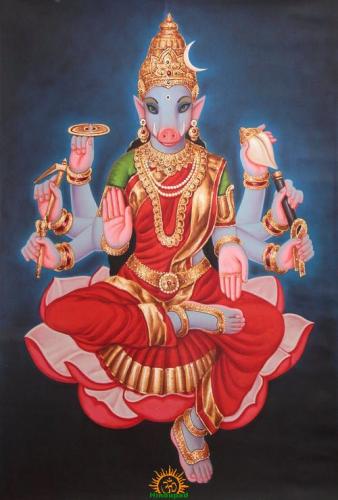
Varahi Navratri 2026 offers nine nights of disciplined reflection on courage, protection, ethical power and the many-sided nature of Maa Shakti. Also known as Ashada Navratri, Ashadha Gupt Navratri or Guhya Navratri, the observance begins on Wednesday, July 15, 2026, and concludes on Thursday, July 23, 2026. In several Shakta and Sri Vidya communities, this relatively private Navratri is especially associated with Goddess Varahi Devi, the boar-faced Mother who belongs to the Saptamatrikas, or Seven Divine Mothers.
Varahi Navratri 2026 at a glance. The festival extends from July 15 to July 23, covering the bright lunar fortnight of the Hindu month of Ashadha. The opening observance is associated with Shukla Pratipada, while the concluding rites are connected with Navami and the appropriate time for parana, or ritual completion. These are lunar-calendar determinations rather than fixed Gregorian anniversaries, so the dates move from year to year.
Why the local panchang matters. A Hindu lunar date, or tithi, is defined by each 12-degree increase in the angular separation of the Moon and Sun. It is therefore not identical to a civil day of 24 hours. A tithi can begin or end at any clock time, and its relationship to local sunrise affects the day on which a ritual is observed. Devotees outside India, and even those in different Indian cities, should use a panchang calculated for their own location rather than simply converting Indian Standard Time.
For New Delhi, one published 2026 calendar places Ashadha Ghatasthapana on July 15, with a reference muhurta from 5:33 a.m. to 10:09 a.m. It calculates Pratipada from 3:12 p.m. on July 14 until 11:50 a.m. on July 15. These timings are useful as a technical example, not as universal instructions. The location-specific details can be checked in the 2026 New Delhi Ashadha Ghatasthapana calendar.
Ashada, Ashadha and Navaratri. Ashadha is the more precise transliteration of the lunar month, while Ashada is a common English spelling. Navaratri literally means nine nights, although the shorter form Navratri is widely used. The expression Gupt Navratri indicates a quieter or guarded cycle of practice. It does not mean that every observance must be secret, nor does it imply that all participants undertake esoteric rites.
The 2026 civil-date sequence. The nine-day sequence is most clearly understood as a devotional framework placed over changing tithis. Because lunar dates do not align neatly with midnight-to-midnight days, an observance may span parts of two civil dates, and two ritual designations may occasionally be associated with one date. This is normal within panchang-based calendrical practice.
Day 1 — Wednesday, July 15: Varahi Navratri begins. The day is associated with Pratipada, the establishment of devotional intention and, in households that follow the custom, Ghatasthapana or Kalasha Sthapana. The source calendar also notes Chandra Darshan and Mahakavi Kalidas Diwas.
Day 2 — Thursday, July 16: The second civil day is associated with Dwitiya. The 2026 calendar also places Jagannath Ratha Yatra in Puri and Manorath Dwitiya Vrat on this date. Their concurrence illustrates how Ashadha Navratri exists within a much larger network of regional Vaishnava, Shakta and household observances.
Day 3 — Friday, July 17: The source identifies Tritiya Navratri and Vinayak Chaturthi. The proximity of the Tritiya–Chaturthi transition is another reminder that a household should follow one consistent local almanac rather than combining labels and timings from several cities.
Day 4 — Saturday, July 18: The associated observances include Hera Panchami, Dwarkadhish Patotsav and Skanda Panchami. Their presence alongside Varahi worship demonstrates the layered character of the Hindu calendar, in which several devotional communities can mark the same day without diminishing one another.
Day 5 — Sunday, July 19: The calendar notes Skanda Shashti, Kumara Shashti, Kumar Shashti and Kasumba Shashti. The varied names reflect regional languages and sampradayas rather than competing claims to a single standardized festival.
Day 6 — Monday, July 20: Vivaswat Saptami, Surya Pujan and Saptami Navratri appear in the source sequence. For Varahi devotees, the evening can remain focused on the chosen household or lineage practice while respecting these concurrent traditions.
Day 7 — Tuesday, July 21: This date is associated with Durgashtami, Parashuram Ashtami in Odisha and Kharchi Puja in Tripura. The convergence is culturally significant because it places a relatively private Shakta observance beside major regional expressions of sacred geography, community memory and Devi worship.
Day 8 — Wednesday, July 22: This is the principal Ashtami–Navami transition in many 2026 calculations. One New Delhi calendar places Sandhi Puja between 4:52 a.m. and 5:40 a.m. and treats Navami as prevailing, whereas the source article retains an Ashtami Navaratri label for the civil date. These labels should not be mechanically combined; the local temple or panchang should determine the applicable observance.
Day 9 — Thursday, July 23: The nine-day observance concludes. The source identifies Bhadli Navami and the end of Navaratri, while location-specific calendars provide the appropriate parana rules. A concluding prayer, distribution of prasada and an act of charity offer an accessible completion for household worship.
The detailed dates above expand upon the Varahi Navratri 2026 source calendar. Its associated festivals are informative, but they are not a single compulsory ritual program. Regional practice, family tradition and the instructions of a recognized temple or guru remain decisive.
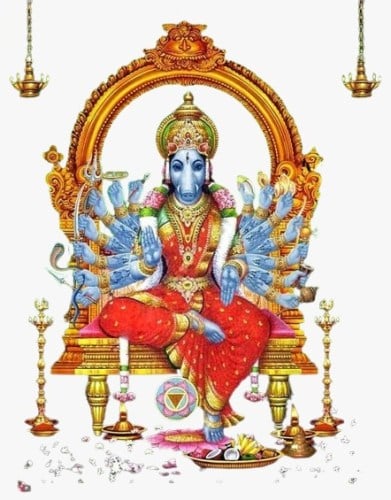
Who is Goddess Varahi? Varahi, academically transliterated as Vārāhī, is a powerful form of the Divine Feminine represented with a boar’s head and a female body. She is most commonly identified as the Shakti, or active power, associated with Varaha, the boar incarnation of Vishnu. Her identity therefore connects Vaishnava imagery with the independent theological power of Devi, especially within Shakta traditions.
Varahi belongs to the Saptamatrikas, a group conventionally consisting of Brahmani, Maheshvari, Kaumari, Vaishnavi, Varahi, Indrani and Chamunda. Texts, sculptures and regional traditions sometimes arrange the Mothers differently or expand the group to eight. Such variation is historically normal. The category describes a family of powerful maternal divinities rather than a completely uniform list preserved in every place and period.
The Matrikas bring together two qualities that modern categories often separate: fierce defensive force and maternal care. They confront forces that endanger cosmic and social order, yet their power is also represented as sheltering, nourishing and protective. A University of Michigan Museum of Art sculpture, for example, depicts Varahi with Varaha-related attributes while emphasizing reassuring and gift-bestowing gestures. The museum’s Varahi collection record identifies her as one of the Seven Mothers and explains this union of martial and maternal imagery.
Varahi in the Devi Mahatmya and related literature. In the Devi Mahatmya tradition, the Matrikas manifest as the powers of the gods and assist the Goddess in battle against destructive forces. Varahi appears with the form or energy of Varaha. Other Puranic accounts provide different theological genealogies, sometimes describing the Mothers as powers emerging from Devi herself. These versions need not be forced into one literal chronology; they express the principle that divine powers are distinct in form while participating in a larger Shakti.
An archaeological study of Varahi images from Bengal notes that her sculptures occur in both Saptamatrika groups and independent forms. It records substantial iconographic variation across regions and periods, including four-armed images carrying combinations of sword, shield, fish and bowl. The study, available through the Heritage journal’s iconographic research on Vārāhī, also situates many surviving Bengal examples between approximately the tenth and twelfth centuries CE.
Understanding the boar-faced iconography. Varahi’s head should be interpreted within the sacred symbolism of Varaha, not through modern negative associations attached to an animal form. In the Varaha narrative, the boar descends into the cosmic waters and raises the Earth. Varahi’s imagery can consequently evoke the capacity to enter difficult or concealed conditions, recover what has been overwhelmed and restore stable ground.
This symbolic reading is especially meaningful during periods of uncertainty. The boar’s strength and ability to move beneath the surface can become a devotional metaphor for penetrating confusion, confronting neglected fears and recovering moral clarity. It remains an interpretation rather than a single universally mandated explanation of every Varahi image.
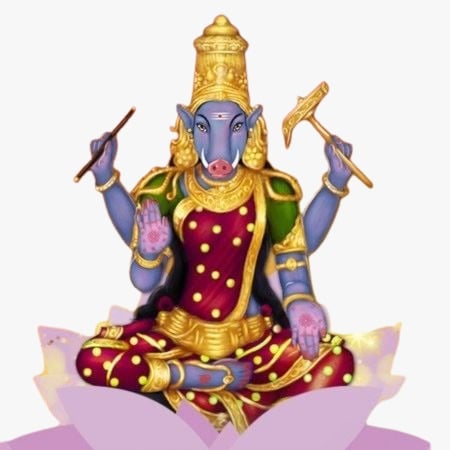
Varahi’s attributes vary considerably. Sculptures and ritual texts may associate her with the chakra, sword, shield, plough, staff, noose, bowl, fish or gestures of reassurance and generosity. Her vehicle and posture also vary. No isolated image should therefore be treated as the only authentic form, and the meaning of a particular attribute should be studied in relation to its temple, text, period and sampradaya.
Varahi as guardian and commander. Within some Sri Vidya lineages, Varahi is honoured as Dandanatha or Dandanayaki, a commanding power in the retinue of Lalita Tripurasundari. This role emphasizes disciplined authority, strategic intelligence and protection of sacred order. It is lineage-specific language and should not be imposed as the sole definition of Varahi across every Hindu tradition.
Her commanding symbolism offers an important ethical lesson. Sacred power is not merely the capacity to dominate; it is the responsibility to protect, restrain harmful impulses and act with discernment. For contemporary devotees, this can translate into healthier boundaries, steadier decision-making and the courage to defend dignity without cultivating hatred.
Why Ashadha Navratri is called Gupt Navratri. The word gupt can mean hidden, protected or private. Compared with the highly public celebrations of Sharad Navratri, Ashadha Gupt Navratri is often observed through restrained household worship, temple rituals or practices transmitted within a lineage. Its quieter character encourages concentration and continuity rather than public display.
Different Shakta communities organize this Navratri in different ways. Some emphasize Varahi Devi, some honour the Navadurgas, some focus on the Dasha Mahavidyas, and others follow a family deity or regional temple calendar. Ashadha Gupt Navratri and Varahi Navratri therefore overlap strongly in certain traditions but are not universally interchangeable labels.
The distinction between public devotion and initiated Tantra is essential. Lighting a lamp, offering flowers, reading an established hymn and meditating on Devi are accessible devotional acts. Practices involving bija mantras, nyasa, specialized mudras, ritual yantras, homa procedures or other restricted elements may require initiation and direct supervision. Internet fragments should not replace a qualified lineage or experienced temple authority.
Ashadha and the inward atmosphere of the monsoon. In much of India, Ashadha arrives with monsoon clouds, altered routines and a visible renewal of the land. Although climate varies greatly across the subcontinent and diaspora, the seasonal setting lends itself to an inward devotional mood. A nightly lamp, a few minutes of silence and the repeated return to one ethical intention can create a stabilizing rhythm amid work, family duties and digital distraction.
Historic and living centres of Varahi worship. The source highlights the Varahi Temple at Chaurasi in Odisha and a MahaVarahi shrine in Ulsoor, Bengaluru. Chaurasi is especially important for the study of Varahi’s regional iconography. Official heritage descriptions place the shrine and its principal image broadly in the ninth-to-tenth-century period, a normal range where architectural and sculptural dating are assessed separately.
The Puri district government’s account of Chaurasi describes Varahi as a boar-faced Mother holding a fish and a cup and identifies the image with a historic Tantric tradition. This local form is often called Matsya Varahi. Its attributes are culturally significant, but they should not be generalized to every Varahi image in India.
Temple traditions preserve much more than iconography. They conserve ritual calendars, oral explanations, music, food customs, craft knowledge and relationships between a deity and a particular landscape. Respectful study therefore recognizes local priests, hereditary communities, devotees, historians and conservation institutions as different custodians of a living heritage.
A simple household Varahi Navratri puja framework. There is no single universal Varahi Navratri puja vidhi suitable for every lineage. A safe household observance can remain deliberately simple. It should support devotion, ethical discipline and gratitude without imitating specialized rites for which the participant has not been trained.
Preparation: The worship area can be cleaned and arranged with an image of Varahi Devi, Maa Durga or the family’s accepted form of Shakti. A clean cloth, lamp, water, flowers and simple food offering are sufficient. If no Varahi image is available, a respectful symbol of Devi or a lamp may serve as the focus; purchasing an elaborate object is not a requirement.
Sankalpa: The observance can begin with a clear statement of intention. A traditional sankalpa may include the devotee’s name, location, date and purpose. In a simplified form, the purpose may be expressed as a commitment to clarity, protection, self-discipline, family welfare and the good of all beings. An intention directed toward another person’s injury would contradict the ethical purpose of devotional practice.
Invocation and offerings: A lamp may be lit, followed by a brief prayer to Ganesha and the chosen form of Devi according to family custom. Water, flowers, fragrance, fruit or a simple sattvic dish may be offered. The quality of attention is more important than the cost or quantity of materials.
Reading and recitation: The original source names Varahi Anugrahastakam and Varahi Nigrahastakam as prayers associated with the Goddess. Any text should be obtained from a reliable edition and recited with attention to meaning and lineage guidance. Anugraha language emphasizes grace, while nigraha language concerns restraint or subduing harmful forces. Such prayers should be understood ethically and never weaponized against individuals or communities.
Those without an established Varahi liturgy can read an accessible passage about Devi, repeat familiar names of Maa Shakti, sing a family-approved bhajan or sit in silent meditation. Specialized Varahi mantras that contain bija syllables should not be copied casually from unverified sources. A mantra received through a legitimate tradition should be practised according to that tradition’s instructions.
Meditation and ethical reflection: After recitation, a short period of silence can be devoted to observing fear, anger, confusion and the use of personal authority. The purpose is not to suppress emotion but to transform reactive force into disciplined action. A brief journal entry can help translate the symbolism of Varahi into one practical commitment for the following day.
Naivedya and service: Food may be offered according to household tradition and then shared as prasada. Feeding another person, supporting an animal-care initiative, helping a neighbour or contributing time to a community need can extend worship into seva. Service grounds the language of divine protection in an observable act of care.
Completion: The daily observance may close with gratitude, pranam and a prayer for peace. On the final day, the household can complete its chosen vow, distribute prasada and perform parana according to its local panchang and fasting practice. A temporary kalasha or other installed object should be concluded only according to the method under which it was established.
Fasting during Varahi Navratri. Upavasa practices vary widely. Some devotees take fruit and milk, some eat one simple vegetarian meal, some avoid selected ingredients, and others observe discipline through reduced consumption rather than a food fast. Fasting is not a test of superiority, and an elaborate restriction should not be represented as universal.
Children, older adults, pregnant or nursing people, those who take medication and anyone with diabetes, an eating disorder or another relevant health condition should not adopt a demanding fast without appropriate medical advice. A modest practice such as avoiding waste, gossip, intoxicants or unnecessary digital consumption can preserve the spirit of restraint without creating physical harm.
An optional nine-day reflective framework. The following themes are a contemporary aid for accessible household reflection, not a canonical replacement for a guru-given Varahi sadhana. They allow the festival’s symbolism to enter daily conduct while leaving ritual authority with the relevant sampradaya.
Day 1 — Establish stable ground: The first day can focus on truthful self-assessment. One unresolved responsibility may be identified, and a realistic first step can be taken. Varahi’s earth-related symbolism makes stability an appropriate opening theme.
Day 2 — Strengthen discipline: A small practice can be repeated at the same time without seeking dramatic results. Consistency in prayer, study, sleep or service reflects controlled power more faithfully than intensity followed by neglect.
Day 3 — Examine fear: The devotee can distinguish between a genuine danger, an inherited anxiety and an imagined outcome. Appropriate protection begins with correct perception.
Day 4 — Nourish what is worth protecting: Attention can turn to family bonds, health, education, ecological care or community trust. Protection without nourishment becomes merely defensive; maternal power holds both functions together.
Day 5 — Practise healthy boundaries: One unnecessary obligation or harmful pattern can be declined calmly. Varahi’s commanding aspect can inspire firmness without humiliation, aggression or contempt.
Day 6 — Cultivate discernment: Information, motives and consequences can be examined before action. This theme is particularly relevant in an age of rapid messaging, manipulated images and impulsive public judgment.
Day 7 — Transform anger into protection: Anger can reveal that a value or boundary has been violated, but it requires discipline. The day can be used to convert agitation into a lawful, proportionate and compassionate response.
Day 8 — Extend courage through service: A protective intention becomes socially meaningful when it assists someone vulnerable. A concrete act of seva prevents spiritual practice from becoming self-absorption.
Day 9 — Integrate and give thanks: The concluding reflection can review what changed, what remains difficult and which practice can continue after Navratri. Gratitude allows intensity to mature into a sustainable rhythm.
Practices that should not be improvised. Restricted mantras, complex yantra installation, nyasa, fire rituals, sacrificial procedures and rites intended to control or injure another person should never be assembled from disconnected online instructions. Apart from questions of ritual authority, such experimentation can encourage fear, exploitation and unethical behaviour. A recognized guru, temple or lineage should define the scope of advanced practice.
Commercial claims promising guaranteed wealth, revenge, domination or instant supernatural results deserve particular caution. Varahi’s sacred authority should not be reduced to a transaction. Academic study and responsible devotion both require source criticism, ethical restraint and respect for the communities that preserve the tradition.
Temple etiquette during Varahi Navratri. Visitors should confirm opening hours, dress expectations, photography rules and access arrangements directly with the temple. Local offerings and procedures should be followed without pressuring priests for restricted information. Historic sculptures should never be touched, marked or photographed against site regulations.
Observing the festival in a family or diaspora setting. A household with limited time can maintain a ten-minute evening practice: light a lamp, offer water or a flower, read a short passage, remain silent for several breaths and name one act of service for the next day. Children can participate through stories about courage, care for the Earth and the idea that strength should protect rather than frighten.
Families with members from different Hindu sampradayas can preserve unity by allowing each person to honour the chosen form of the Divine without declaring one form superior. One member may understand Varahi through Varaha and Vishnu, another through Devi and the Matrikas, and another through a regional temple tradition. The festival can hold these perspectives without erasing their distinctions.
Environmentally responsible worship. Reusable lamps and vessels, locally available flowers, modest food portions and plastic-free decorations reduce waste. Flowers and biodegradable offerings should be handled according to local environmental rules rather than released into waterways. Reverence for Shakti is strengthened when ritual practice protects the material world on which life depends.
Varahi and respectful dialogue among Dharmic traditions. Boar-related feminine imagery also appears in Buddhist traditions, most notably in the distinct figure of Vajravārāhī. Historical interaction across South Asia is a legitimate field of research, but Varahi and Vajravārāhī should not be treated as interchangeable deities or assigned identical rituals. Jain and Sikh traditions likewise possess their own scriptures, disciplines and calendars. Dharmic unity is best supported through accurate comparison, mutual respect and shared ethical commitments rather than forced theological equivalence.
Is Ashadha Gupt Navratri the same as Varahi Navratri? The terms overlap in many Shakta and Sri Vidya settings because Varahi receives special worship during this period. In other communities, Ashadha Gupt Navratri centres on the Navadurgas, Mahavidyas, Gayatri or another form of Devi. The local lineage determines the emphasis.
Can a beginner worship Varahi Devi? A beginner can undertake simple, respectful devotion through a lamp, flowers, prayer, study, meditation and service. Initiatory Tantric procedures are a separate matter and require qualified guidance.
Is night worship compulsory? Varahi is associated with nocturnal practice in several traditions, but that does not make a late-night ritual compulsory for every household. Safety, health, temple custom and lineage instruction should guide the timing. A sincere evening prayer is preferable to an exhausting practice copied without context.
Is fasting compulsory for all nine days? No single fasting rule governs every region and family. The chosen vrata should be sustainable, medically appropriate and consistent with the devotee’s tradition. Ethical restraint and steady devotion remain meaningful when a food fast is unsuitable.
Why do some calendars disagree? Differences can arise from location, sunrise, tithi boundaries, regional almanac conventions and the rule used to assign a ritual to a civil date. The safest method is to choose one reliable local panchang and follow it consistently, especially for Ghatasthapana, Sandhi Puja and parana.
The enduring significance of Varahi Navratri. Varahi Devi embodies a form of strength that enters disorder without becoming disordered. Her maternal and martial dimensions suggest that courage, care, restraint and responsibility are not opposing virtues. For devotees facing uncertainty, the nine nights provide a disciplined interval in which fear can be examined, boundaries restored and power redirected toward protection and service.
Varahi Navratri 2026 is therefore more than a sequence of auspicious dates. From July 15 through July 23, it offers a structured opportunity to study a historically rich form of Maa Shakti, honour regional diversity and cultivate steadiness in daily life. Its deepest value lies not in spectacle or promised rewards, but in the quiet transformation of force into wisdom, devotion into ethical conduct and personal resolve into compassionate protection.
Inspired by this post on Hindu Pad.



Leave a Reply
You must be logged in to post a comment.