Tag: Interfaith Dialogue

  • Overcoming Egoism and Lethargy in Kali-Yuga: Bhagavad Gita Guidance for Humility and Seva

    Overcoming Egoism and Lethargy in Kali-Yuga: Bhagavad Gita Guidance for Humility and Seva

    Egoism and lethargy are two subtle forces that derail spiritual progress in Kali-Yuga. Drawing on Bhagavad Gita teachings and parallel insights from Buddhism, Jainism, and Sikhism, this article explains how false ego (ahankara) reframes practice around I and mine, while tamasic inertia fosters delay and neglect. It then offers an integrated, practical program that combines…

  • Pride Is Not Supremacy: Debunking Smears‑by‑Association Against Hindu American Communities

    Pride Is Not Supremacy: Debunking Smears‑by‑Association Against Hindu American Communities

    This evidence-driven analysis explains why smears-by-association misrepresent Hindu American community life and fuel Hinduphobia. It clarifies the difference between heritage and ideology, showing how family ties, youth camps, and diaspora networks are normal civic features, not pipelines to extremism. Readers learn practical standards for ethical journalism—quote the person, document conduct, triangulate records—and how these protect…

  • Mira Road on Edge Before Bakri Eid: Urgent Call for Dialogue, Lawful, Humane Solutions

    Mira Road on Edge Before Bakri Eid: Urgent Call for Dialogue, Lawful, Humane Solutions

    Ahead of Bakri Eid (Eid-ul-Aazha), Mira Road faces rising tensions over temporary goat sheds and the prospect of public sacrifice in housing societies. This article maps the legal and civic terrain—covering constitutional protections, municipal by-laws, animal welfare norms, and housing society rules—while offering a practical, peace-first roadmap. It argues against provocative counter-actions, including introducing pigs…

  • Bhai Kanhaiya Ji: Sevapanthi Saint Who Healed Friend and Foe, Inspiring Interfaith Unity

    Bhai Kanhaiya Ji: Sevapanthi Saint Who Healed Friend and Foe, Inspiring Interfaith Unity

    Bhai Kanhaiya Ji (1648–1718) is revered in Sikh history for serving water and aid to all the wounded—friend and foe—during the battles around Anandpur Sahib, earning explicit endorsement from Guru Gobind Singh. His example seeded the Sevapanthi tradition, which institutionalized non-sectarian seva through hospices, piyaus, and relief networks. This essay situates his life within the…

  • At Bhojshala After MP High Court Order: Uninterrupted Hindu Worship and a Call for Harmony

    At Bhojshala After MP High Court Order: Uninterrupted Hindu Worship and a Call for Harmony

    Following the Madhya Pradesh High Court’s directives, Bhojshala in Dhar hosted uninterrupted Hindu worship on the first Friday after the order, while Friday namaz did not occur at the monument that day, according to official reports. This analysis explains why the moment is significant, distinguishing symbolic claims (such as “700 years”) from verifiable chronology. It…

  • Sadhu Sanga 2026 Day 3: Immersive Kirtan, Dharmic Unity, and Practical Sadhana Framework

    Sadhu Sanga 2026 Day 3: Immersive Kirtan, Dharmic Unity, and Practical Sadhana Framework

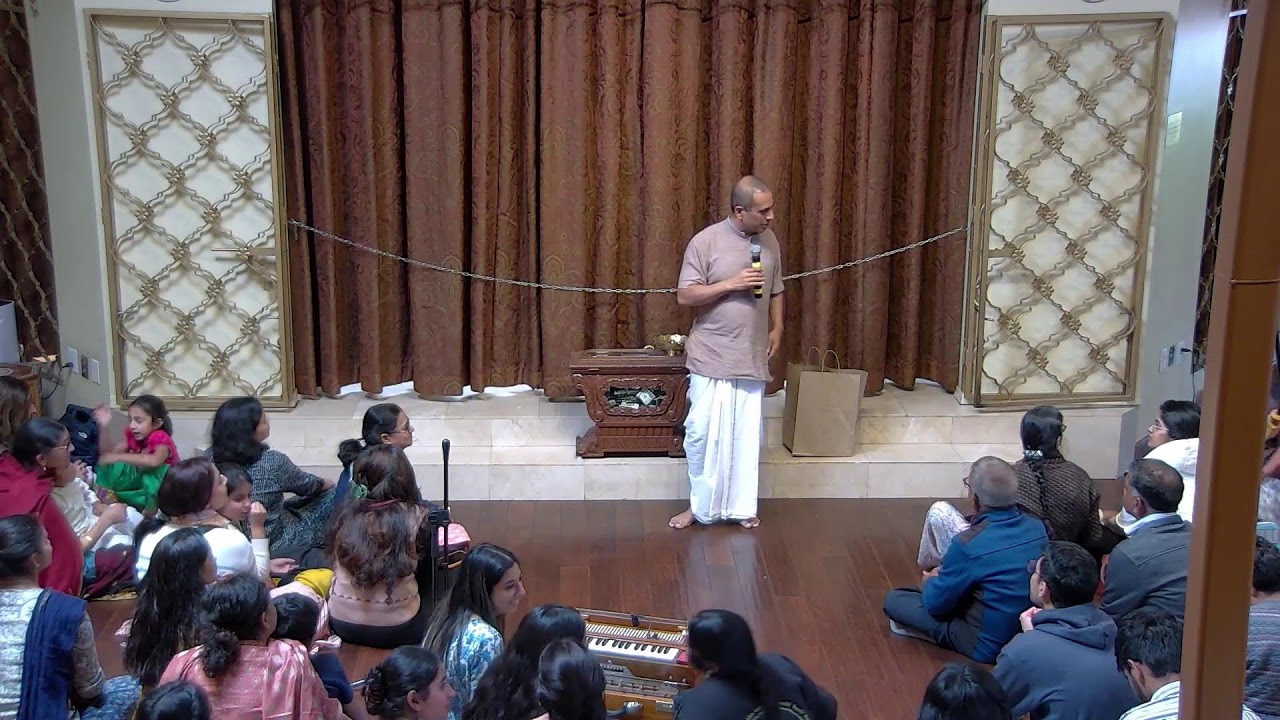
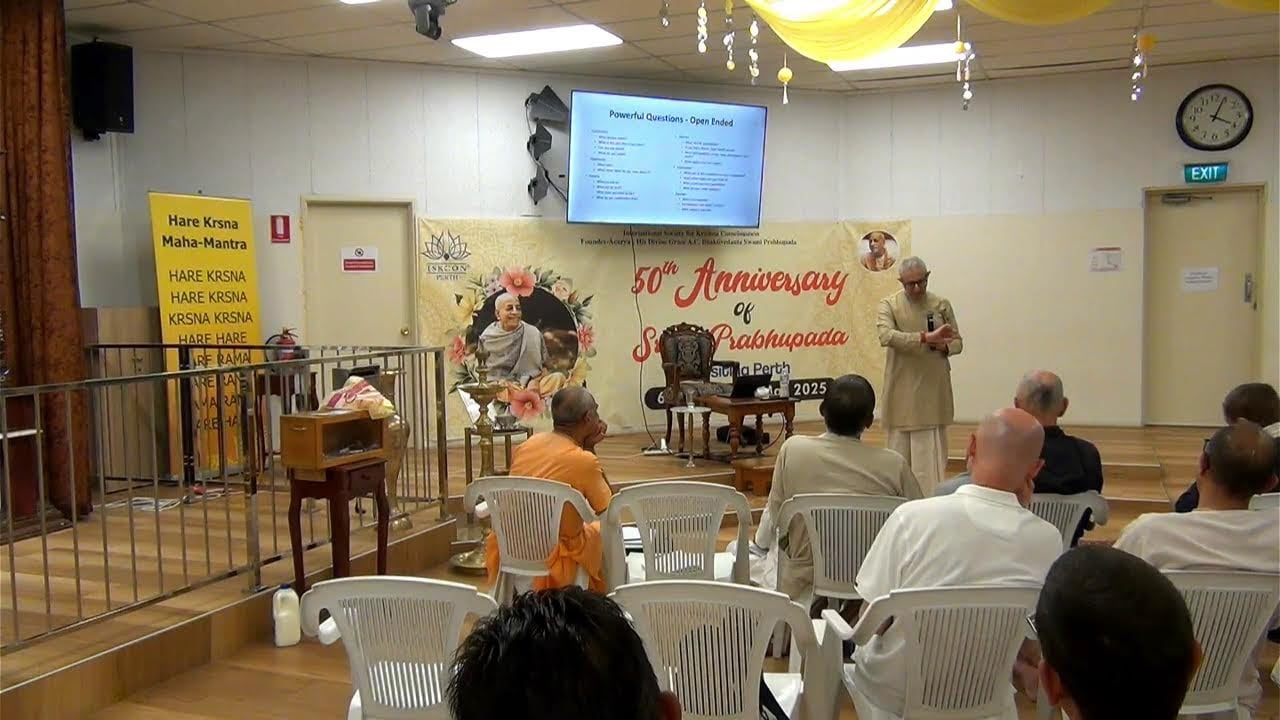
    Day 3 of Sadhu Sanga 2026 distilled multi-day practice into a clear, actionable sadhana framework rooted in kirtan, nama-japa, scripture, and seva. It clarified how sadhu-sanga in the Bhakti Tradition intersects meaningfully with Buddhist Sangha, Jain samayik, and Sikh sangat, strengthening unity in spiritual diversity. The analysis explains the musical and acoustic architecture of kirtan…

  • 2026 Sadhu Sanga Day 1: Transformative Kirtan, Deep Bhakti, and Dharmic Unity Insights

    2026 Sadhu Sanga Day 1: Transformative Kirtan, Deep Bhakti, and Dharmic Unity Insights

    2026 Sadhu Sanga – Day 1 establishes a clear, practice-centered foundation for the retreat by combining immersive kirtan, structured japa, and scriptural framing from Bhagavad-gita and Śrīmad-Bhāgavatam. The opening day focuses on sādhu-saṅga—uplifting association—as a catalyst for devotion and ethical conduct. Participants benefit from accessible orientation, inclusive spaces, and community norms that translate humility and…

  • Gurmat Sangeet Certification: Master Raags, Shabad Kirtan, and Timeless Sikh Devotional Heritage

    Gurmat Sangeet Certification: Master Raags, Shabad Kirtan, and Timeless Sikh Devotional Heritage

    Gurmat Sangeet is the living Sikh tradition of sacred music, where Shabad is sung within the grammar of raag and taal to cultivate contemplation and ethical action. A well-designed certification program grounds training in the Guru Granth Sahib’s raag-based structure, emphasizing accurate pronunciation (santhiya), faithful use of ਰਹਾਉ (rahāo), and historically aware performance. Learners progress…

  • Global Sikhs, Enduring Heritage: How Diaspora Guardians Safeguard Sikhi Worldwide

    Global Sikhs, Enduring Heritage: How Diaspora Guardians Safeguard Sikhi Worldwide

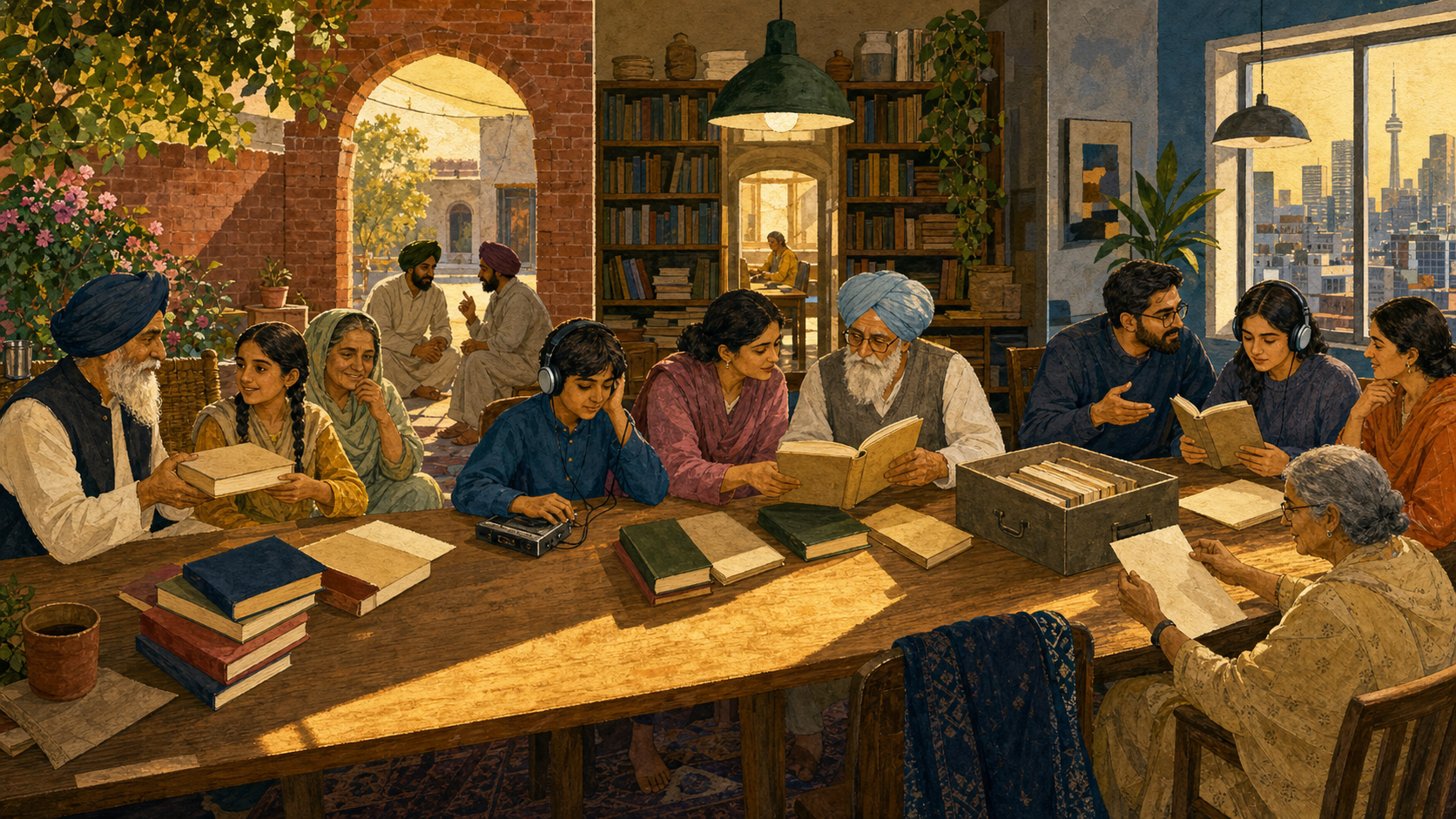
    Global Sikh communities are emerging as rigorous custodians of Sikh heritage, uniting conservation science, digital archiving, and living traditions. The post maps tangible assets—manuscripts, instruments, gurdwaras—and intangible practices such as Gurmat Sangeet, gatka, langar, and Gurmukhi literacy. It outlines technical standards for digitization, metadata, storage environments, and ethical access to Gurbani. It also highlights governance…

  • Pathar Sahib, Leh: A Timeless Testament to Compassion, Forgiveness, and Dharmic Unity

    Pathar Sahib, Leh: A Timeless Testament to Compassion, Forgiveness, and Dharmic Unity

    Gurdwara Pathar Sahib in Leh, Ladakh, is a revered Sikh sanctuary where the legend of Guru Nanak’s compassion and forgiveness converges with the high-Himalayan landscape. This comprehensive, research-driven overview situates the site within Janamsakhi traditions, interfaith memory, and Ladakh’s cultural geography. It explains how the venerated boulder and living practices—kirtan, ardas, and langar—translate ideals like…

  • Meri Janambhumi (Pakistan) Dian Yatravan: Mapping Sacred Punjab and Shared Dharmic Memory

    Meri Janambhumi (Pakistan) Dian Yatravan: Mapping Sacred Punjab and Shared Dharmic Memory

    Meri Janambhumi (Pakistan) Dian Yatravan reads Pakistan’s sacred landscape as a living archive of Sikh, Hindu, Buddhist, and Jain memory. Framing “janambhumi” as homeland and “yatravan” as disciplined pilgrimage, it maps gurdwaras, mandirs, stupas, and Jain temples with ethnographic sensitivity and historical care. The narrative highlights well-known sites such as Nankana Sahib, Panja Sahib, Kartarpur,…

  • Historic First: Dr. Gunisha Kaur Named First Sikh to Serve as a U.S. Federal Commissioner

    Historic First: Dr. Gunisha Kaur Named First Sikh to Serve as a U.S. Federal Commissioner

    Dr. Gunisha Kaur’s appointment as a U.S. federal commissioner is a historic first for the Sikh community and a milestone for Dharmic unity across Hindus, Buddhists, Jains, and Sikhs. The role carries substantive responsibilities: convening stakeholders, analyzing evidence, and issuing policy recommendations that can strengthen civil rights and religious freedom. The piece explains how federal…

  • Historic First for Nevada: Gayatri and Vedic Sanskrit Mantras to Open Elko City Council

    Historic First for Nevada: Gayatri and Vedic Sanskrit Mantras to Open Elko City Council

    On 26 May 2026, the Elko City Council in Nevada will, for the first time, open a meeting with Hindu prayers led by Rajan Zed, featuring the Gayatri Mantra and other Vedic-Upanishadic verses. This inclusive civic moment aligns with U.S. constitutional guidance that permits non-coercive, rotating legislative invocations. The Gayatri Mantra (Rigveda 3.62.10), composed in…

  • Shyam Manav’s Pune Remarks Ignite Fierce Debate: Free Speech, Faith, and Social Harmony

    Shyam Manav’s Pune Remarks Ignite Fierce Debate: Free Speech, Faith, and Social Harmony

    A public programme in Pune featuring rationalist activist Shyam Manav sparked a forceful debate about the boundaries of criticism, constitutional protections for free speech, and the duty to uphold dignity around Hindu Dharma, saints, and traditions. This analysis frames the incident through a dharmic-unity lens, emphasizing shared values across Hinduism, Buddhism, Jainism, and Sikhism. It…

  • Calcutta HC upholds Bengal’s Bakri Eid cattle curbs, says cow sacrifice non-essential

    Calcutta HC upholds Bengal’s Bakri Eid cattle curbs, says cow sacrifice non-essential

    Calcutta High Court has upheld West Bengal’s pre‑Bakri Eid notification that restricts cattle slaughter and bars public slaughter, clarifying that cow sacrifice is not an essential religious requirement of Islam. The bench led by Chief Justice Sujoy Paul and Justice Partha Sarathi Sen anchored its analysis in Article 25, stressing that religious freedom is subject…

  • Bantwal Adhiveshan ignites Dharmic unity and values-driven vision for Constitutional Hindu Rashtra

    Bantwal Adhiveshan ignites Dharmic unity and values-driven vision for Constitutional Hindu Rashtra

    The Bantwal district-level Hindu Rashtra Adhiveshan, organized by Hindu Janajagruti Samiti (HJS), concluded with a values-driven call to strengthen Hindu unity, safeguard Sanatan Dharma, and cultivate value-based families. Discussions framed a Constitutional Hindu Rashtra as a pluralistic, dharma-anchored civic vision aligned with Articles 25–28 of the Indian Constitution and the spirit of fundamental duties. On…

  • Mumbai land row: Hindu Vidhidnya Parishad seeks transparent action on alleged Church encroachment

    Mumbai land row: Hindu Vidhidnya Parishad seeks transparent action on alleged Church encroachment

    Hindu Vidhidnya Parishad has sought administrative action over an alleged illegal occupation of government land by the Church of St Andrew and St Columba in Mumbai. This analysis explains why a neutral, evidence-based approach—grounded in land records, joint surveys, and fair hearings—is essential to uphold rule of law and public trust. It outlines the legal…

  • Turning Obstacles into Opportunity: A Dharmic Guide to Action, Resilience, and Seva

    Turning Obstacles into Opportunity: A Dharmic Guide to Action, Resilience, and Seva

    A classic teaching story about a boulder in the roadway demonstrates a rigorous dharmic principle: obstacles are structured invitations to act responsibly for the common good. Read how Hinduism, Buddhism, Jainism, and Sikhism converge on the same ethic of service, non-harm, and Right Effort, turning adversity into measurable public benefit. The analysis connects Karma Yoga,…

  • All Faiths Share Core Values – So Why Convert? A Deep, Dharmic, Evidence-Based Guide

    All Faiths Share Core Values – So Why Convert? A Deep, Dharmic, Evidence-Based Guide

    This long-form, evidence-based guide explains why religious conversion persists even when core values—compassion, truth, service, and self-discipline—are widely shared. It distinguishes ethical convergence from deeper differences in metaphysics, salvation, and institutional identity that often drive conversion debates. Drawing on Hinduism, Buddhism, Jainism, and Sikhism, it highlights Dharmic pluralism through ideas like Ishta and anekantavada, showing…

  • Why Convert When Core Values Align? A Dharmic, Ethical, and Legal Roadmap to Pluralism

    Why Convert When Core Values Align? A Dharmic, Ethical, and Legal Roadmap to Pluralism

    If core values across religions already align, why do conversion campaigns persist—and why do they trigger anxiety? This long-form analysis approaches the question through Dharmic frameworks, showing how ahiṁsā, satya, seva, and karuṇā unite Hindu, Buddhist, Jain, and Sikh traditions. It explains the theological, social, and historical forces that drive conversion, while clarifying international and…