“Guru Ladho Re!” remains one of the most stirring proclamations in Sikh history and Cultural Heritage. It recalls the moment when Bhai Makhan Shah Lubana identified Guru Tegh Bahadur Ji as the true successor, resolving uncertainty among the Sikh Community and restoring unity in the sangat. The cry encapsulates devotion, discernment, and the living continuity of the Gurus of India.
The historical context is well attested in Sikh tradition. Following the passing of Guru Har Krishan Ji in 1664, the words “Baba Bakala” were understood to indicate that the next Guru would be found in the village of Bakala in Punjab. Multiple claimants emerged, reflecting a complex moment in Indian history when authentic spiritual authority required clear recognition.
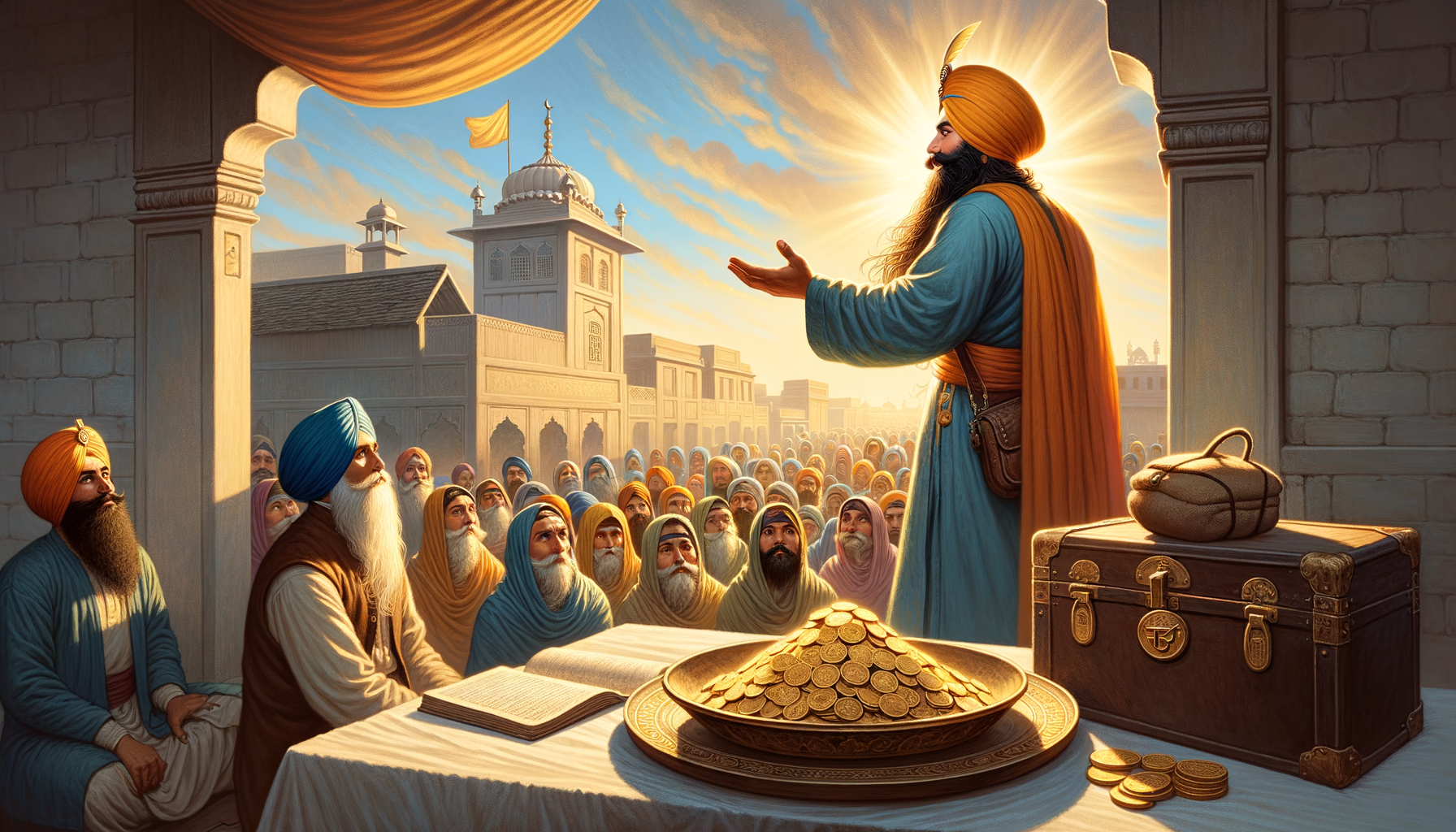
Bhai Makhan Shah Lubana, a devout trader and traveler, had vowed during a perilous sea storm that if saved, he would offer 500 mohar at the feet of the true Guru. Upon reaching Bakala, he systematically tested the claimants by offering only two coins. The test was simple yet profound: true insight, he believed, would recognize the unspoken vow.
Local whispers pointed to a reclusive figure: “There’s a quiet Sodhi here. People call him ‘Tegha Kamla’. He doesn’t meet anyone.” In that quietude, away from pageantry, Makhan Shah encountered Guru Tegh Bahadur Ji, who asked not for two but for the full 500 mohar, revealing knowledge of the unspoken promise. This moment of recognition offered Makhan Shah the necessary certainty.
Makhan Shah then ran to a rooftop and proclaimed, “Guru Ladho Re!” His public declaration unified the sangat, countered confusion, and marked the formal recognition of Guru Tegh Bahadur Ji. In the annals of Sikhism, this episode demonstrates how ethical integrity and spiritual intuition can converge to confirm a True Guru.
Beyond its historical resonance, the episode illuminates enduring themes central to the Guru-Shishya Tradition: fidelity to vows, humility in testing truth, and courage in affirming authenticity. These values echo across dharmic traditionsHinduism, Buddhism, Jainism, and Sikhismwhere the transmission of wisdom, respect for ethical conduct, and compassionate leadership form a shared civilizational fabric.
Readers may recognize the relatable human arc within the narrative: moments of crisis, private resolutions, and the search for trustworthy guidance. As a case study in discernment, the story encourages seekers to combine reason with reverence, aligning personal commitments with service (seva) and communal well-being.
In broader perspective, the recognition of Guru Tegh Bahadur Ji at Baba Bakala foreshadows his later defense of religious freedom and human dignityprinciples that remain pivotal to India’s Cultural Heritage and interfaith harmony. The memory of “Guru Ladho Re!” thus endures not merely as a historical exclamation but as a scholarly window into authentic leadership, community cohesion, and unity in spiritual diversity.
Taken together, the narrative invites reflection on how spiritual authenticity is discerned in public life. It affirms that the dharmic ethosrooted in compassion, courage, and truthcan guide communities toward solidarity, respectful coexistence, and shared purpose.
Inspired by this post on SikhNet – Children Stories.