-
Powerful Surrender to a Bona Fide Guru: How True Knowledge of Kṛṣṇa Transforms Life

The teaching of surrendering to a bona fide guru is central to Krishna consciousness and the guru-shishya tradition. It emphasizes disciplined humility, sincere inquiry, and service rather than blind obedience. A genuine guru transmits knowledge through parampara, aligns instruction with śāstra, and guides the disciple toward Kṛṣṇa rather than personal dependence. This principle is especially…
-
Recognising Paramahamsa Vishwananda: True Guru, Bhakti, and Divine Love

This long-form reflection examines how a seeker may recognise Paramahamsa Vishwananda as a guru within the wider Hindu and dharmic understanding of spiritual guidance. It explains the difference between a guru and a satguru, showing why bhakti traditions treat the guru-shishya relationship as a disciplined path rather than a matter of personality preference. The article…
-
Why the True Sādhu Is Always Present: Restoring Vision, Faith, and Discernment

HH Gour Govinda Swami’s teaching on the ever-present sādhu addresses the pain of seekers who have been disappointed by false or unworthy spiritual figures. The deeper issue is not whether saintly persons exist, but whether conditioned perception can recognize them. This reflection explains the dharmic meaning of sādhu, the need for viveka, and the difference…
-
Guru as Pure Giver: Varahi Tantra’s Compassionate Ethic and the Dharma of Guidance

Hindu tradition locates the guru’s authority in unconditional giving rather than transactional exchange, a principle Shakta lineages honoring Varahi emphasize through an ethic of compassionate protection and grace. Framed by aparigraha and dāna, authentic guidance confers capacity, context, and corrective feedback without coercion or commodification. Varahi-oriented Tantrism articulates this through calibrated initiation, from mantra-dīkṣā to…
-
Transformative Devotee Relationships: A Dharmic Blueprint for Clear Guidance and Unity

Across Hinduism, Buddhism, Jainism, and Sikhism, deep relationships with committed practitioners serve as a reliable channel for spiritual wisdom. Such association, known variously as satsanga, Saṅgha, kalyāṇa-mitra, and Saadh Sangat, refines perception, stabilizes practice, and grounds ethical action. By prioritizing quality over quantity, seekers gain epistemic reliability, ethical modeling, and attentional steadiness. Discernment is essential:…
-
Decoding the True Guru: Parampara, srotriyam, and brahma-nistham for Dharmic seekers

What makes a true guru, and how can seekers discern reliable guidance today? Drawing on the Upanishadic standard of “srotriyam” (lineage-grounded hearing) and “brahma-nistham” (unwavering dedication to the Supreme Truth), this analysis shows why parampara safeguards Vedic wisdom from speculation. It explains how a realized teacher blends scriptural fidelity with lived steadiness, aligning with the…
-
Srila Prabhupada’s Living Bhakti: How Simplicity, Purity, and Love Transform Lives

This in-depth analysis presents Srila Prabhupada as a True Guru whose simplicity, purity, and love operationalized the Bhakti Tradition in modern life. Grounded in Bhagavad Gita and Srimad-Bhagavatam, it explains guru-tattva, paramparā, and the practical mechanics of sadhana-bhakti. The piece highlights how pastoral warmth and ethical clarity work together to produce durable transformation. It examines…
-
Who Is a True Guru? Shrimad Bhagavat’s 24 Transformative Lessons from the Avadhut

What is a true Guru according to the Shrimad Bhagavat? The Eleventh Canto’s dialogue between King Yadu and an Avadhut answers by expanding the Guru beyond a single figure to a universal function that dispels ignorance wherever it appears. Through 24 striking lessons from nature and human lifeEarth’s forbearance, the Ocean’s equanimity, Pingalā’s renunciation, the…
-
Guru Amar Das Ji: Seva, Radical Equality, and the Institutions that Shaped Sikhism

Guru Amar Das Ji, the third Sikh Guru, transformed spiritual principles into living institutions that still guide Sikhism worldwide. This article traces his late-life spiritual turn, the creation of the Manji–Piri leadership network, and the expansion of langar as a disciplined practice of equality. It examines Goindwal Sahib’s Baoli as sacred-public infrastructure and analyzes his…
-
Satguru in Sri Guru Granth Sahib: Timeless Wisdom for Inner Freedom and Dharmic Unity

This article clarifies the meaning of Satguru in the Sri Guru Granth Sahib as the eternal, word-centered True Guru known as the Shabad Guru. It outlines how devotion to Naam, alignment with Hukam, and receptivity to Gur Prasad dissolve ego and cultivate ethical virtues. Readers gain practical stepsdaily shabad study, simran, kirtan, seva, and participation…
-
Guru Ladho Re: Unveiling ਸੱਚੇ ਗੁਰੂ ਦਾ ਪ੍ਰਕਾਸ਼ and the Timeless Light of Guru Teg Bahadur

“ਗੁਰੂ ਲਾਧੋ ਰੇ!” invites seekers to discover ਸੱਚੇ ਗੁਰੂ ਦਾ ਪ੍ਰਕਾਸ਼the clarifying light of the True Guruthrough the life-affirming legacy of Guru Teg Bahadur. The post explores how this call nurtures ethical clarity, compassion, and resilience in daily life. It situates the phrase within Sikh history and highlights its resonance with shared dharmic values across…
-
Beyond Fashion: Recognize the True Guru and Surrender with Discernment for Inner Clarity

In dharmic traditions, a guru is not a trend but the principle of authentic guidance shaping a seeker’s life. Surrender means practicing the guru’s counsel with integrity, not passive or blind obedience. The Bhagavad Gita’s example of Arjuna and Sri Krishna illustrates how discerned acceptance refines agency and aligns action with dharma. Across Hinduism, Buddhism,…
-
Guru Ladho Re: Discovering the True Guru and the Unifying Heart of Dharmic Wisdom

“Guru Ladho Re” The True Guru has been Found expresses a universal Dharmic insight: authentic guidance unites seekers across Hinduism, Buddhism, Jainism, and Sikhism. The True Guru is recognized by Dharma-centered qualities: wisdom, compassion, humility, and ethical integrity. This article clarifies how the Guru-Shishya Tradition promotes discernment, safeguards against personality cults, and directs practice toward…
-
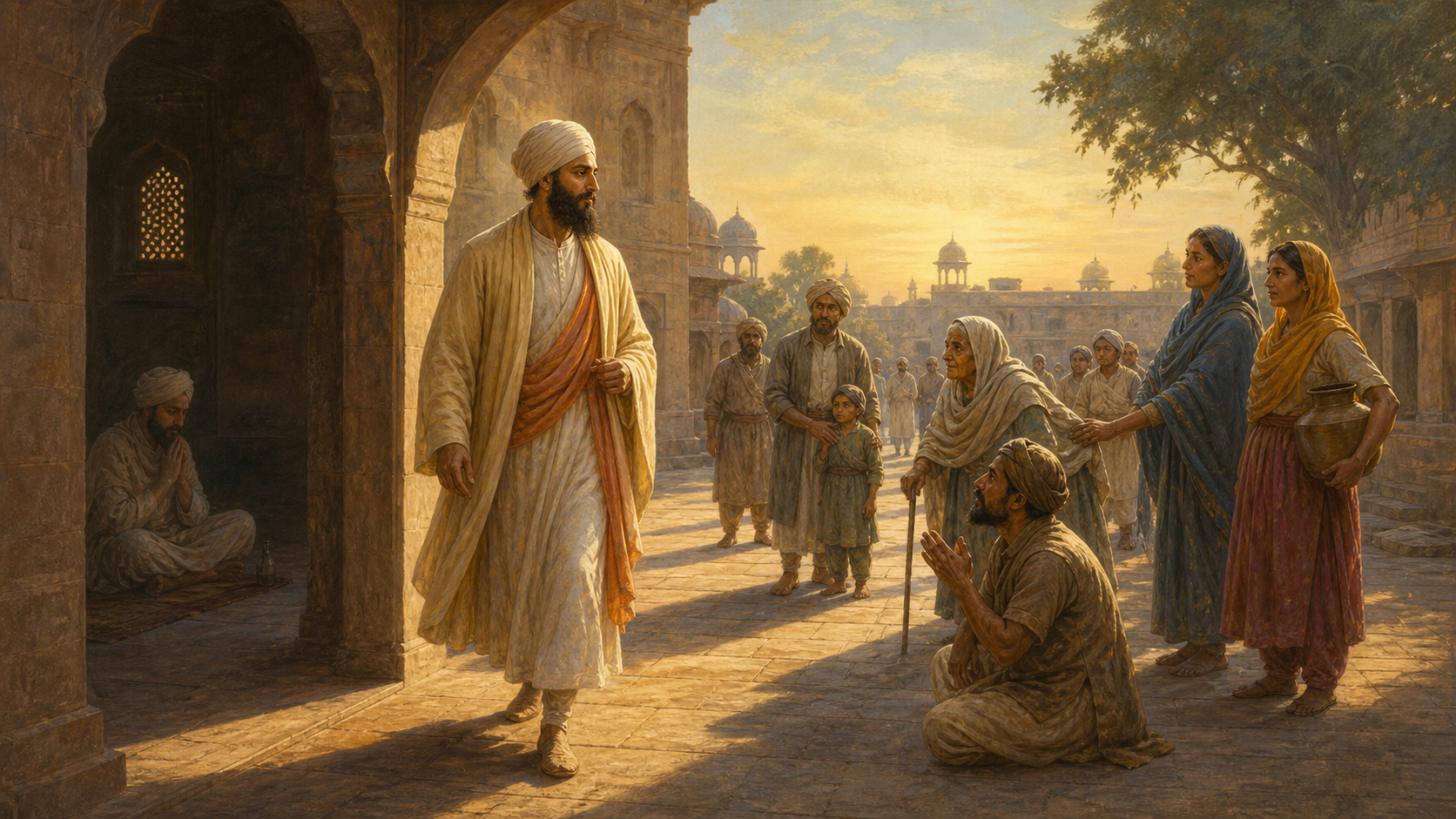
Guru Ladho Re! Bhai Makhan Shah’s Daring Search and the Discovery of Guru Tegh Bahadur Ji

“Guru Ladho Re!” captures the pivotal moment when Bhai Makhan Shah Lubana identified Guru Tegh Bahadur Ji at Baba Bakala, restoring unity amid competing claims. Anchored in Sikh history, the episode showcases discernment, fidelity to vows, and ethical leadership. It offers a relatable model for navigating crisis, testing truth with humility, and affirming authenticity. The…