Sharabha Jayanti, also known as Sharabheshwara Swamy Jayanti, commemorates the first appearance of Lord Sharabha, a protective and pacifying manifestation revered within Shaiva traditions. In 2026, Sharabha Jayanti falls on May 1, aligning with Vaishakh Purnima (the Full Moon of the Vaishakh month) in the traditional Hindu lunar calendar. Regional observances note this Full Moon within different solar-lunar frameworks; in 2026, many almanacs relate the observance to Vaigasi Masam in the Tamil calendar and Edava Masam in the Malayalam calendar, though exact solar-month attribution may vary by local panchangam and geography.
Lord Sharabha is honored as a fierce yet compassionate form that resolves imbalance and restores cosmic harmony. Described in Shaiva textual and iconographic traditions as a composite, winged, leonine being with multiple arms, Sharabha symbolizes the transmutation of unbridled force into protective grace. The worship of Sharabha on Vaishakh Purnima emphasizes inner equilibrium, ethical restraint, and the safeguarding of dharma in both personal and communal life.
Scriptural mentions of Sharabha appear in Shaiva Puranic and Agamic literature and are richly represented in South Indian temple arts. While interpretive nuances differ across sampradayas, the broader dharmic ethos remains shared: fierce forms arise not to perpetuate conflict but to pacify it, allowing compassion to prevail. Accordingly, the diverse retellings across Hindu traditions are best appreciated as complementary expressions of a common aimupholding cosmic order and inner transformationresonating with the inclusive spirit that also underlies Buddhism, Jainism, and Sikhism.
Vaishakh Purnima is the Full Moon when the lunar longitude opposes the Sun by approximately 180 degrees. In the sidereal reckoning used in most Indian panchangams, Vaishakh typically aligns with the Sun’s transit through Mesha (Aries), and the lunar Full Moon often occurs near Viśākhā nakshatrahence the month’s name. For 2026, the Purnima tithi aligns with May 1 in most parts of India; however, specific start–end times of the tithi vary by location and time zone, and householders are advised to consult a reliable regional panchangam for local muhurta details.
Regional calendrical usages enrich this observance’s cultural fabric. The Full Moon is observed within Vaishakh across North India, relates to Boishakh in Bengal, and, in 2026, many regional almanacs map the day to Vaigasi Masam as per Tamil calendar and Edava Masam in Malayalam calendar. These mappings can differ because lunar and solar month boundaries do not always coincide; local temple traditions and authoritative almanacs therefore guide practice.
Sharabha Jayanti’s spiritual meaning centers on converting inner turbulence (ugra) into calm discernment (viveka). Devotees describe the day as an opportunity to surrender agitation, steady the breath, and recommit to satya (truth), ahimsa (non-harm), and seva (selfless service). The votive ambience of Vaishakh Purnima naturally supports such intent through vrata, japa, and quiet study of sacred texts.
Home worship on Sharabheshwara Swamy Jayanti generally begins with a simple sankalpa at sunrise or when the Purnima tithi is operative locally. After cleaning the altar and lighting a deepa, devotees seat a murti or image of Lord Sharabha (or Lord Shiva if a Sharabha murti is not available), invoke Ganesha for removal of obstacles, and then offer Panchopachara or Shodashopachara worship according to household custom. The spirit is meditative and restorative; the goal is not elaborate ritualism alone, but inner attunement to Sharabha’s protective compassion.
Traditional offerings often include Bilva leaves, lamps with sesame or ghee, and Abhishekam with water, milk, and Panchamrita where appropriate. Simple naivedya such as fruits, jaggery-based sweets, payasam, or rice preparations is customary, with a sattvic diet observed throughout the day. Many households incorporate brief pranayama before japa, as calm breathing supports focused remembrance and steadiness of mind.
Mantra recitation is central to Sharabha Jayanti. A commonly used invocation is “Om Sarabeshvaraya Namah,” undertaken with devotion and steady rhythm, often in rounds of 108. Shaiva households may also recite hymns from the Rudra section of the Krishna Yajurveda, Shiva Sahasranama, or locally transmitted stotras to Sharabheshwara Swamy, choosing texts aligned with family tradition and guidance from the kula-guru.
Dana (charity) and seva form an integral part of the day. In keeping with the Full Moon’s energy of completion and generosity, devotees extend practical care to people, animals, and the natural environment. This outward expression of compassion mirrors Sharabha’s protective role and harmonizes well with the service-oriented values upheld across dharmic paths, including Buddhism’s karuna, Jainism’s ahimsa, and Sikhism’s seva.
Those who can visit temples often seek darshan at shrines where Sharabha iconography is prominent, especially within Chola-era sacred complexes of Tamil Nadu. The Sharabeshwarar sanctum at Thirubhuvanam (near Kumbakonam) is notable, and the famed Darasuram complex preserves exquisite sculptural interpretations of Sharabha in its stone program. Temple worship typically features Abhishekam, alankara, deepa, and special archana during the Purnima tithi, with local priests advising community-appropriate timings.
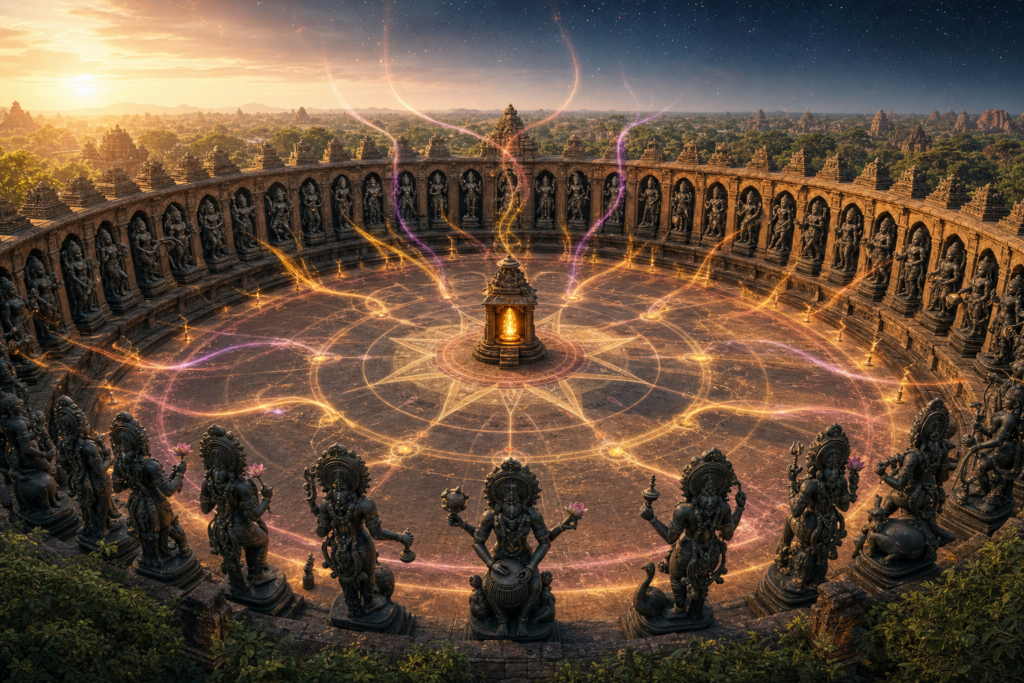
Sharabha’s iconography depicts a winged, leonine, multi-armed form subduing chaos and radiating raksha (protection). Implements such as the trishula, damaru, pasa, and khadga are shown as instruments of restraint, not dominationteaching that spiritual strength is expressed through measured compassion. This visual theology resonates with broader Indic aesthetics in which fierce compassion appears across traditions as a means to dissipate suffering and restore balance.
Timing guidance for 2026 centers on honoring the Purnima tithi. Many traditions prioritize performing the core worship while Purnima prevails locally, with an emphasis on the evening or night hours if lunar visibility heightens contemplative focus. Where the tithi straddles two civil dates, communities may follow the rule of tithi at sunrise or a tradition-specific window (such as pradosha), underlining the importance of local panchangam and sampradaya.
Fasting practices on Sharabha Jayanti vary. Some observe a sunrise-to-moonrise fast with water and fruits, others maintain a light sattvic intake throughout the day. The ethical dimensiontruthfulness, restraint in speech, and compassionate actionis regarded as essential tapas, ensuring that external austerity is matched by internal refinement.
On the same Vaishakh Purnima, Buddhists worldwide celebrate Buddha Purnima (Vesak), venerating the Buddha’s birth, enlightenment, and parinirvana. This shared Full Moon across dharmic lineages highlights a unifying cadence: the search for wisdom, the practice of non-harm, and the dedication to the alleviation of suffering. Such convergence affirms that Sharabha Jayanti’s protective compassion and Vesak’s luminous insight move in tandem toward human flourishing.
Families often blend worship with study, reading passages that explore fierce compassion and moral courage. Reflective journaling, quiet group chanting, and intergenerational storytelling give the day a pedagogical textureelders transmit values while children experience a living tradition. As night deepens, the Full Moon’s brilliance is seen as a mirror for the mind’s innate clarity when agitation subsides.
Frequently asked considerations include the compatibility of Sharabha Jayanti rites with other Full Moon observances such as Satyanarayana Puja. In practice, Full Moon worship is capacious; rites may be sequenced with due decorum, allowing each to be performed with full attention. When scheduling conflicts arise, communities prioritize according to local tradition and guidance from temple authorities, recognizing that intention, sincerity, and adherence to dharma confer the essential merit.
In summary, Sharabha Jayanti 2026 on May 1 invites focused sadhana under the auspices of Vaishakh Purnima. Whether worship is conducted at home or in temple settings, the day’s power lies in transforming intensity into insight, and strength into service. Observed across diverse calendarsincluding Vaigasi Masam and Edava Masam per regional usagethe Jayanti stands as a shared call within the dharmic family to protect, to pacify, and to uplift with thoughtful devotion.
Inspired by this post on Hindu Pad.