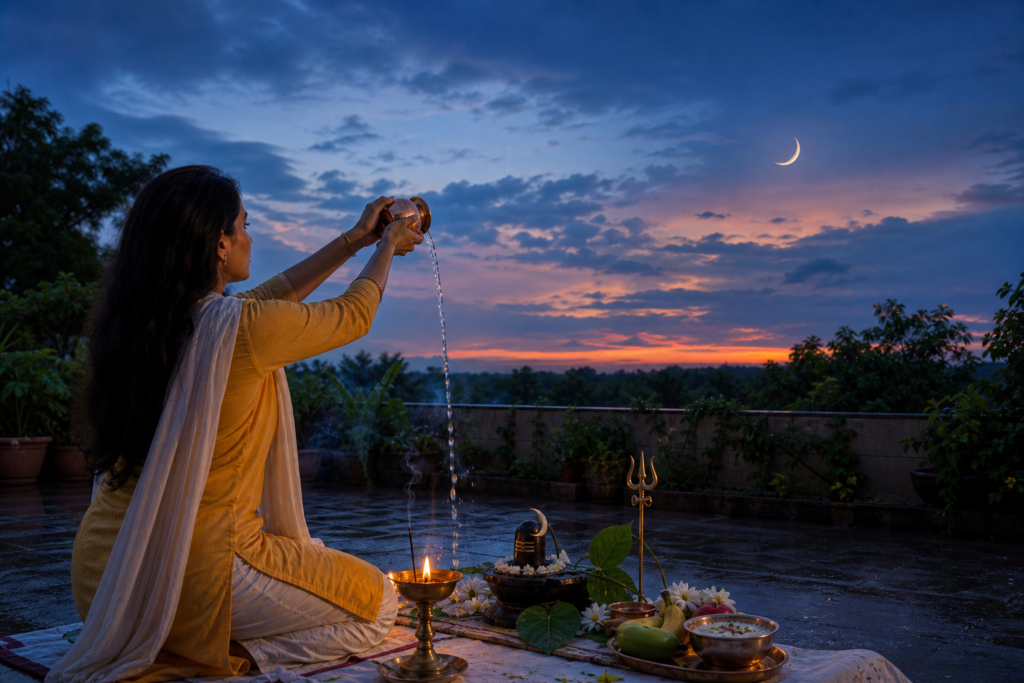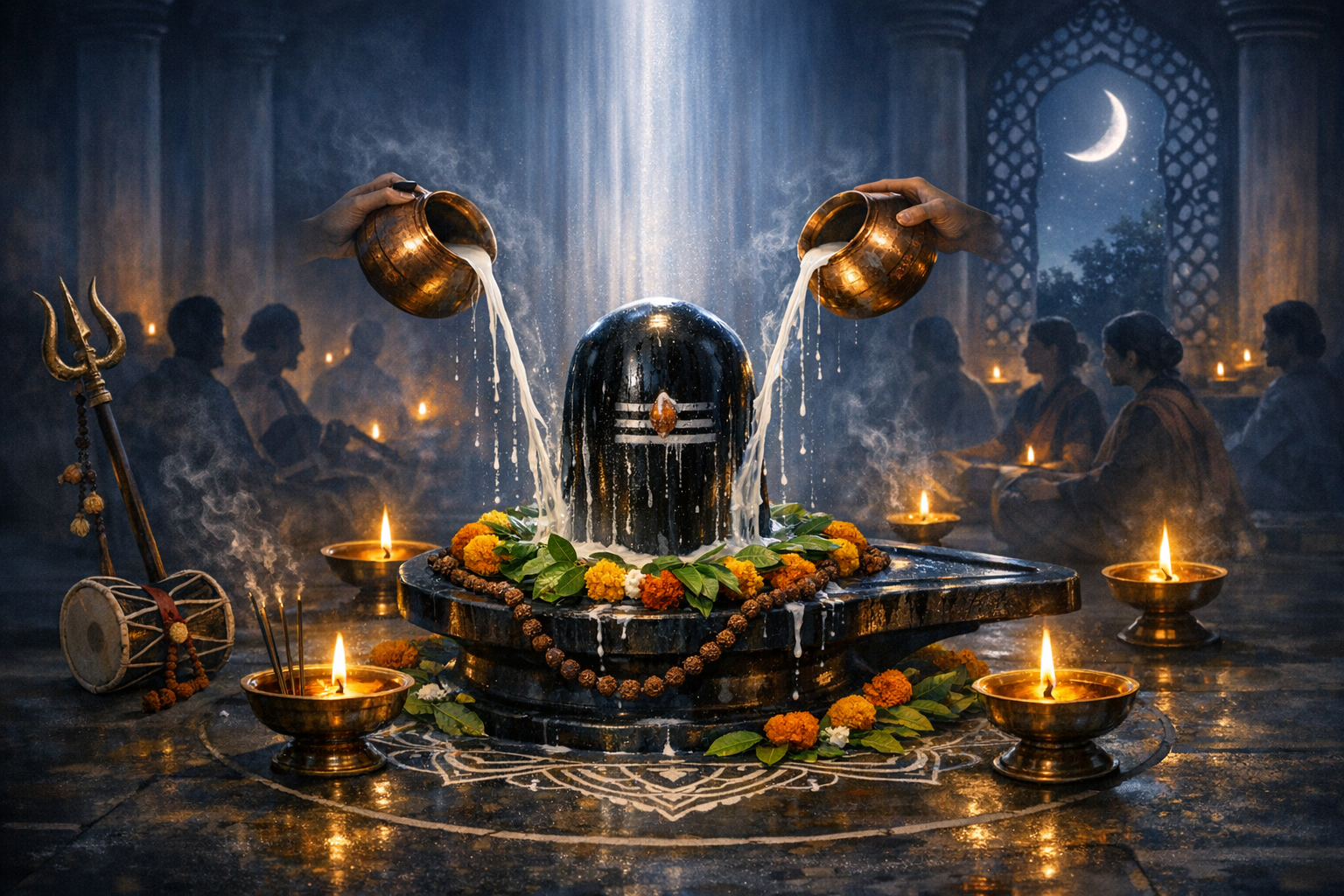
Why do devotees remain awake during Maha Shivaratri? The all-night vigilwidely known as Shivaratri Jagranhas been observed for centuries across the Indic world, not merely as a festival custom but as a carefully structured vrata integrating ritual precision, philosophical depth, and yogic discipline. Remaining awake on this sacred night is considered a conscious practice of alert awareness (jagrata), undertaken to align the mind with Lord Shiva’s transformative grace at a calendrically significant moment.
Scriptural sources such as the Shiva Purana and the Skanda Purana present Maha Shivaratri as the most auspicious Chaturdashi of the year, traditionally falling on the Krishna Paksha of the lunar month of Phalguna (regional calendars may reference Magha/Phalguna). These texts narrate the mahatmya (glory) of staying awake while engaging in Shiva-puja, japa, and dhyana. The well-known vrata-katha of a hunter (lubdhaka)who unintentionally observed an all-night vigil, offered bilva leaves, and attained spiritual meritillustrates that steadfast wakefulness, intentional worship, and purity of heart together precipitate profound inner change.
The timing of the vigil is not incidental. Chaturdashi occurs when the moonsymbolically linked with manas (the fluctuating mind)wanes to its thinnest crescent. In Shaiva symbolism, this is an opportune period to still mental oscillations and direct awareness toward the formless Shiva-tattva. The most sanctified segment of the night, often called nishita-kala (midnight), is revered for its subtle stillness, in which spiritual practices are said to gain heightened efficacy.
Philosophically, the vigil is a conscious reversal of tamas (inertia and dullness), the guna most associated with night and sleep. By choosing disciplined wakefulness, devotees deliberately cultivate sattva (clarity and luminosity). This act of restraint embodies tapas, strengthens sankalpa (sacred intent), and trains attention to rest in Shiva’s presence rather than in habitual somnolence. In yogic literature, this night is also described as conducive to turning inward from the senses (pratyahara), stabilizing attention (dharana), and entering meditative absorption (dhyana).
The vigil unfolds across four prahars (watches of the night), and many temples and households mirror this rhythm with structured Shiva-puja in each segment. Ritual sequences often include Rudrabhishekalibations with water, milk, yogurt, ghee, honey, and sugarcane juice (panchamrita)accompanied by the recitation of Śrī Rudram, the chanting of the Pañchākṣarī mantra “Om Namaḥ Śivāya,” and the Mahāmṛtyuñjaya mantra. Offerings of bilva patra, dhupa, deepa, naivedya, and pradakshina are performed with mindful devotion. Each prahar centers on renewed intention: purity of thought, steadiness of breath, and focused remembrance (smarana) of Lord Shiva.
Fasting (upavasa) on Maha Shivaratri supports the vigil by reducing lethargy and sharpening awareness. Observances range from nirjala (water-only or, for some, complete abstention) to phalahara (fruits and light foods) depending on personal capacity and guidance. Many traditions emphasize sattvic intake, non-harm (ahimsa), truthfulness (satya), and self-restraint (brahmacharya) throughout the day and night. The fast is typically concluded at dawn after the final puja, when devotees break their fast mindfully with simple, pure foods.
From a soteriological perspective, jagaran functions as an enacted metaphor: remaining awake to the Real while the world sleeps in forgetfulness. Shaiva traditions describe Shiva as the ever-awake witness (sakshi) beyond mind’s flux; thus, the night vigil trains the aspirant to abide, however briefly, in that witness-consciousness. Practiced with regularity and right intention, this discipline refines viveka (discernment), weakens entrenched vasanas (habit-patterns), and orients life toward moksha-dharma.
Communally, Shivaratri Jagran gathers families and sanghas in temples and homes for bhajans, kirtan, stotra-recitation, and silent meditation. The shared wakefulness fosters satsanga, deepens collective devotion, and strengthens social bonds anchored in dharma. Many devotees also offer seva, share prasad, and extend care to those observing a stricter fastrendering the vigil not only a personal sadhana but a communal sacral practice.
The night’s symbolism and practice resonate with the broader dharmic ethos shared across Hinduism, Buddhism, Jainism, and Sikhism. Uposatha observances in Buddhism emphasize intensified meditation and ethical vows; Jain communities dedicate sacred nights to pratikraman, svadhyaya, and wakeful introspection; Sikh sangat often participates in all-night simran and kirtan (such as Rainsabhai Kirtan), nurturing collective remembrance of the Divine. Framing Maha Shivaratri within this wider constellation of vigilance, restraint, and contemplation underscores a unifying principle: conscious wakefulness cultivates compassion, clarity, and liberation-oriented living across dharmic traditions.
Regional practices add further richness. Kashmiri Pandits celebrate Herath (their observance of Shivaratri) with distinctive rituals and night-long worship. In South Indian Shaiva temples, the Lingodbhava darshan at midnight dramatizes the revelation of Shiva as the infinite jyotirlinga, aligning iconography, mythology, and liturgy in a single transformative moment. These variations reaffirm the same core insight: the night is a portal to inner stillness and direct encounter with Shiva-tattva.
A thoughtfully planned jagaran supports both sincerity and stamina. Devotees commonly structure the night into clear segments: puja and abhisheka, guided chanting of “Om Namaḥ Śivāya,” periods of silent dhyana, scriptural reading (Śiva Purāṇa passages or stotras like Shiva Mahimna Stotram), and short walking meditation to sustain alertness. Light hydration consistent with the chosen fast, fresh air, and a calm, uncluttered space can reduce fatigue. Group recitation or kirtan naturally helps maintain collective energy and attention.
While traditional accounts extol the spiritual fruits of all-night wakefulness, prudence is encouraged. Those with health conditions, elders, and individuals engaged in physically demanding duties the following day may adapt the intensity of their fast and vigil under appropriate guidance. The spirit of the vratalucid devotion, ethical restraint, and focused remembranceremains paramount, even when practical modifications are necessary.
Ultimately, remaining awake on Maha Shivaratri is an intentional spiritual experiment in awareness. It compresses the axes of ritual (yajna), devotion (bhakti), and knowledge (jnana) into a single luminous night. When observed with shraddha and viveka, Shivaratri Jagran becomes a catalyst for inner transformationrefining attention, softening egoic tendencies, and opening the heart to Shiva’s boundless compassion.
Inspired by this post on Hindu Pad.