Mahashivaratri at the Srisailam Mallikarjuna Swamy Temple is among the most profound Shaiva observances in South Asia, revered for its unbroken ritual lineage and rare confluence of Shiva and Shakti worship. In 2026, Mahashivaratri is on February 15, and Srisailamone of the Dwadasha Jyotirlingas and a celebrated Shakti kshetrambecomes a luminous center of devotion, scholarship, and lived heritage during the temple’s Shivaratri Brahmotsavam.
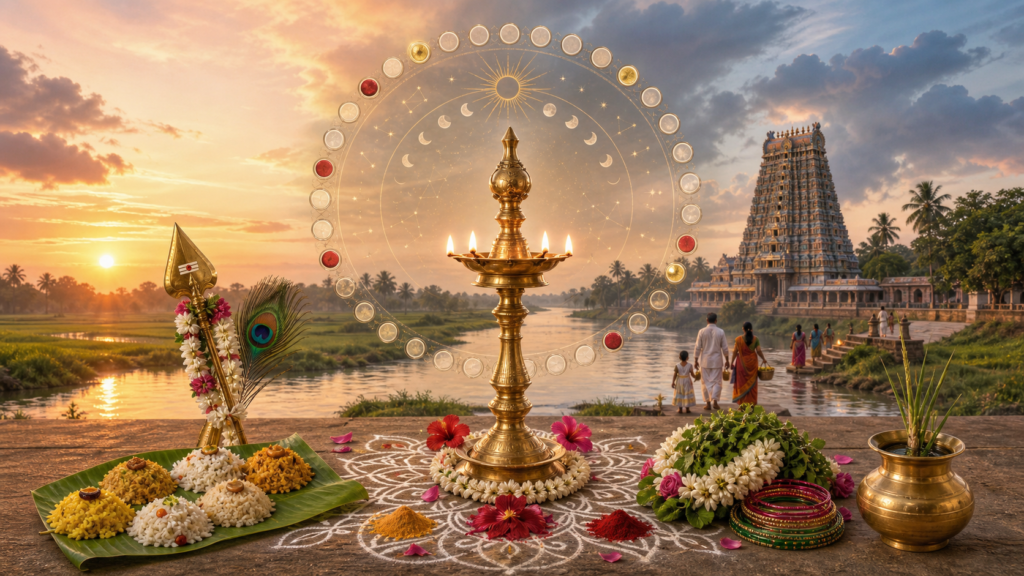
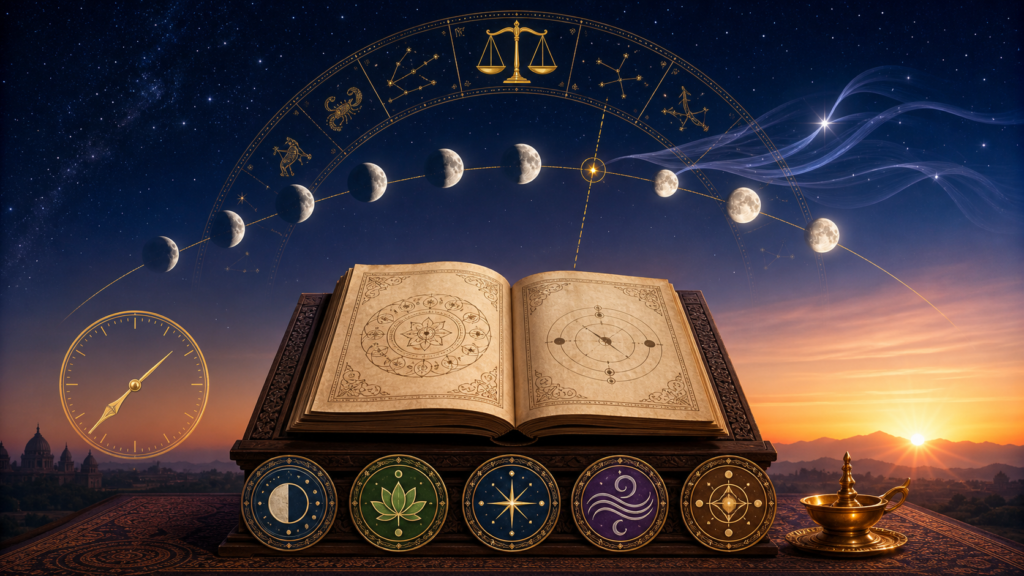
From a calendrical standpoint, Mahashivaratri falls on the Krishna Paksha Chaturdashi (the fourteenth lunar day of the waning fortnight). In the South Indian amanta tradition, this aligns with Magha Krishna Chaturdashi, whereas in the North Indian purnimanta tradition it is often reckoned as Phalguna Krishna Chaturdashi. For 2026, authoritative almanacs concur on February 15, with the principal Nishita Kaal (midnight window) spanning late night hours per local panchang. Devotees planning temple darshan are advised to consult the Srisailam schedule close to the date, as festival timings can be fine-tuned by the Devasthanam.
Srisailam’s primacy derives from its dual sanctity: the Mallikarjuna Swamy shrine is a Jyotirlinga, while the adjacent Bhramaramba Ammavaru sanctum is venerated as a Shakti Peetha. This integrated Shaiva–Shakta kshetram exemplifies the philosophical unity of Shiva and Shakti, offering a powerful template of religious harmony and complementarity within the dharmic traditions.
According to sthala-purana, the name “Mallikarjuna” evokes Parvati’s worship of Shiva with jasmine (mallika) blossoms and the Lord’s manifestation as Arjuna (the propitious one). Another venerable narrative recounts Shiva and Parvati’s compassionate descent to Srisailam to console their son Kartikeya, who had retired to nearby hills. The Bhramaramba epithet (the “Goddess of the bees”) recalls the Goddess’s form assumed to vanquish asuric forces, symbolizing vigilant protection of dharma.
Historically, Srisailam stands on Sriparvata in the Nallamala Hills of present-day Andhra Pradesh, overlooking the Krishna River. Inscriptions and literary testimonies from Satavahana, Kakatiya, and Vijayanagara periods attest to continuous royal patronage, temple expansions, and the codification of ritual practices. The Skanda Purana (Srisaila Khanda) and a rich corpus of local records detail the kshetram’s prominence in pan-Indian pilgrimage networks.
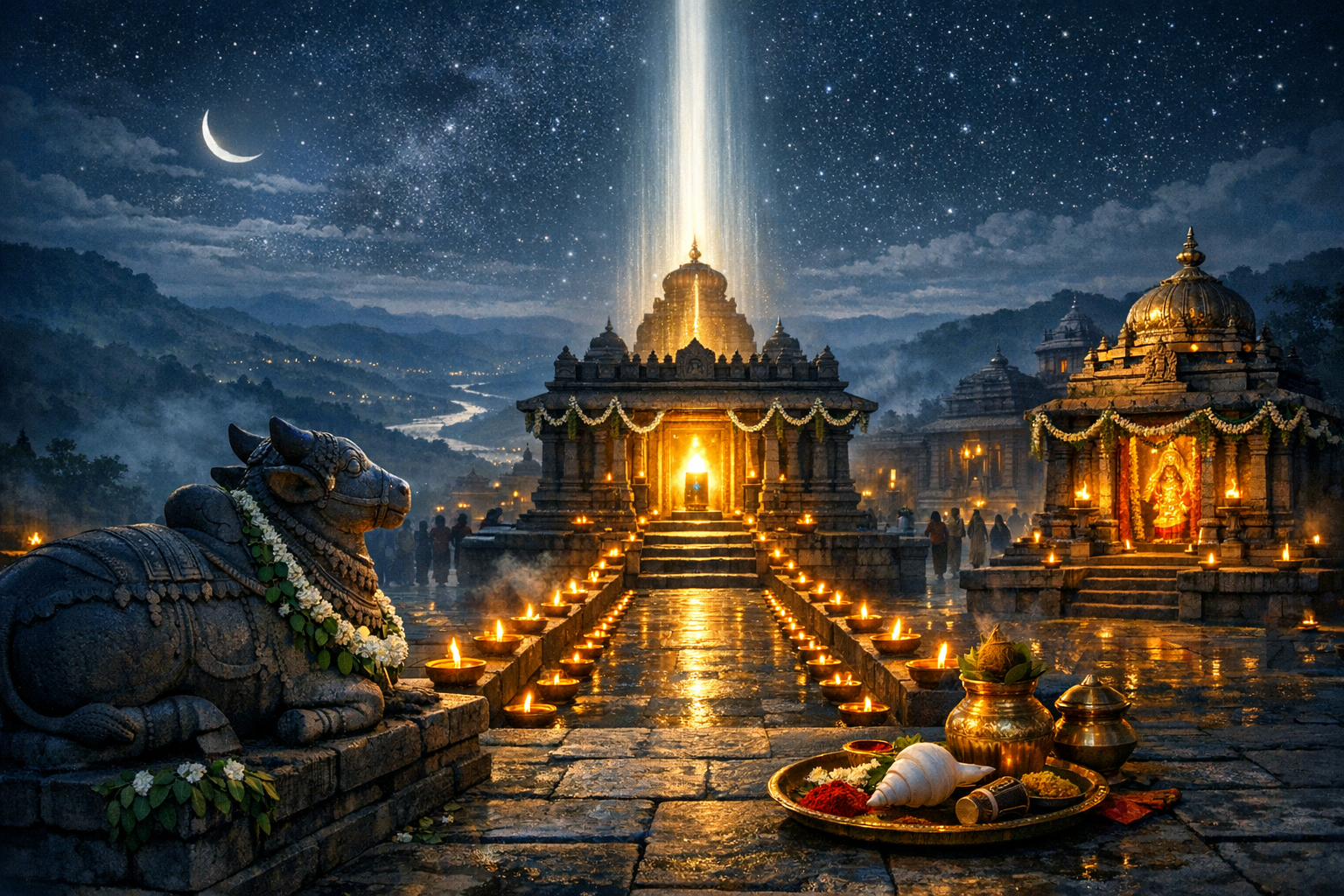
The temple complex is architecturally layered, with a principal sanctum (garbhagriha) for Mallikarjuna Swamy and a distinct yet organically connected shrine for Bhramaramba Devi. Mandapas facilitate Vedic recitation, archana, and cultural offerings. The nandi mandapa and sacred deepas intensify the experiential axis of darshan, underscoring the linga’s aniconic, metaphysical symbolism as the axis mundi.
The Shivaratri Brahmotsavam at Srisailam is a multi-day festival culminating in the Mahashivaratri night. Ritual highlights typically include dhvajarohanam (festival flag hoisting), vahana sevas for the utsava murtis, elaborate alankaras, and continuous Veda–Agama parayanam. These are conducted under Agamic guidelines, preserving an exacting ritual grammar and continuity of practice.
Mahashivaratri observances at Srisailam revolve around the four night-watches (prahars) of worship, with the apex puja occurring during Nishita Kaal near midnight. The temple remains open through the night to accommodate the sahasra-strong flow of devotees who undertake jagaran (vigil) and upavasa (fasting), maintaining inner focus through mantra, dhyana, and darshan.
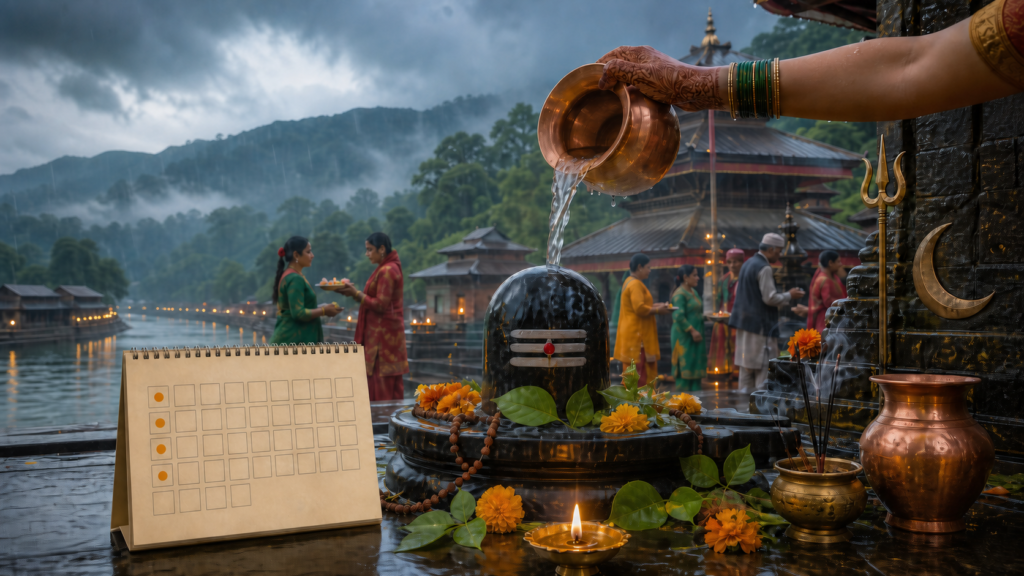
Ritual praxis is anchored by Rudrabhishekam to the Jyotirlinga, performed with dravyas such as sacred water (often sourced from the Krishna River), panchamrita (milk, curd, ghee, honey, sugar), vibhuti, sandal paste, and bilva patra. The liturgical backbone comprises Sri Rudram and Chamakam recitations, Mahanyasa, and stotras venerating Mallikarjuna Swamy and Bhramaramba Devi, with precise nyasas and prosodic fidelity.
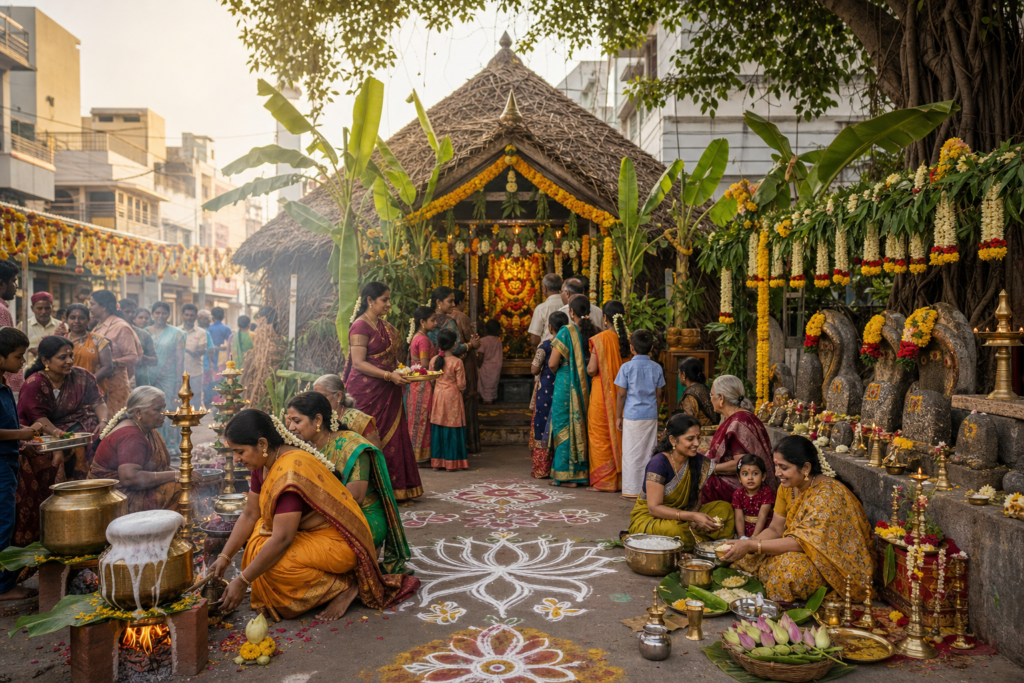
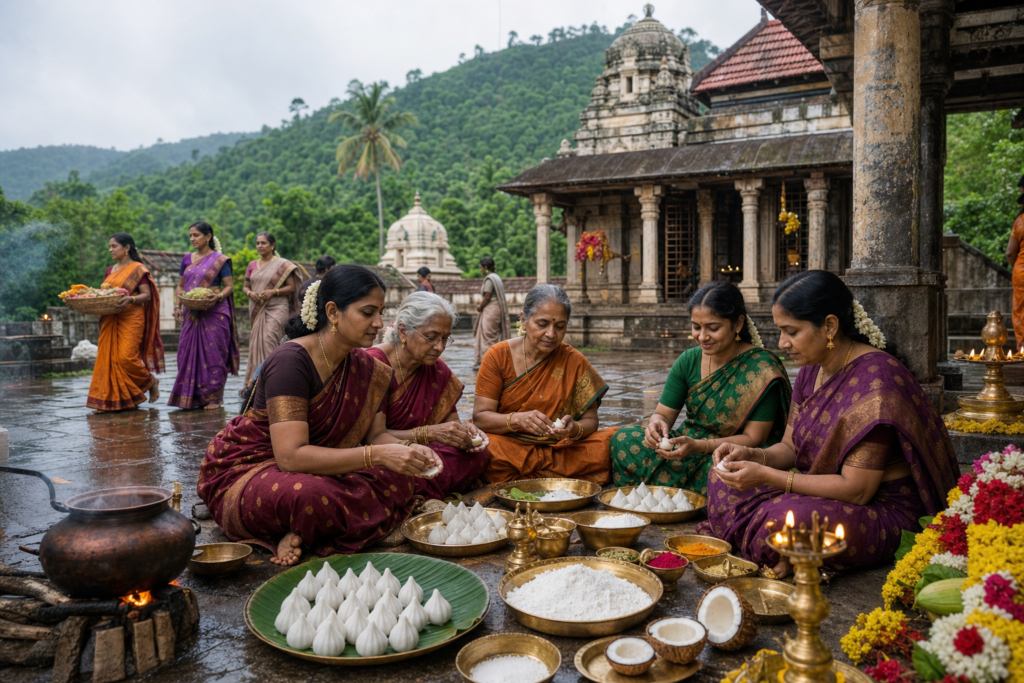
Pious alankaras emphasize the kshetram’s unique Shiva–Shakti synergy: jasmine garlands recall the Mallikarjuna etymology; kumkuma, turmeric, and floral malas grace the Bhramaramba sanctum. The temple’s visual grammardeepa rows, dhupa, and naivedyacreates a sensorial ecology aligned with Agamic aesthetics and embodied devotion.
The midnight Lingodbhava aradhana evokes the timeless puranic episode of Shiva’s emergence as an endless column of light, transcending empirical limits. The narrative, in which Vishnu and Brahma search for the linga’s termini, underscores the non-dual metaphysics of Shiva as ananta jyoti. At Srisailam, this aradhana is performed with heightened solemnity, conch peals, and vedic intonations that devotees often describe as palpably transformative.
Vrata discipline forms a core of Mahashivaratri. Many observe nirjala or phalahara upavasa, practice mouna during set intervals, and perform four rounds of archana aligned to the night’s prahars. Jagaran is maintained through meditation on “Om Namah Shivaya,” the Mahamrityunjaya mantra, and listening to kirtan or shastric kathas that frame Shiva as ascetic, householder, teacher, and cosmic principle.
Pradosha-kala worshipoccurring during the twilight before the night vigilreceives special attention. Deepa pradakshina, bilvarchana, and collective recitation of Sri Rudram set an introspective tone. The arc from pradosha to Nishita Kaal symbolizes a progressive inward turn, culminating in the midnight realization of Shiva-tattva as inner light.
Temple logistics during Shivaratri are calibrated for very high footfall. The Devasthanam generally facilitates extended darshan hours, structured queue systems, and layered entry to sevas. While specific tickets and timings vary annually, popular offerings include Mahanyasa Rudrabhishekam, Laksha Bilwarchana (offering of one lakh bilva leaves), and Kalyanotsavam symbolic of Shiva–Parvati’s ever-auspicious union. Checking the official schedule nearer the festival is prudent.
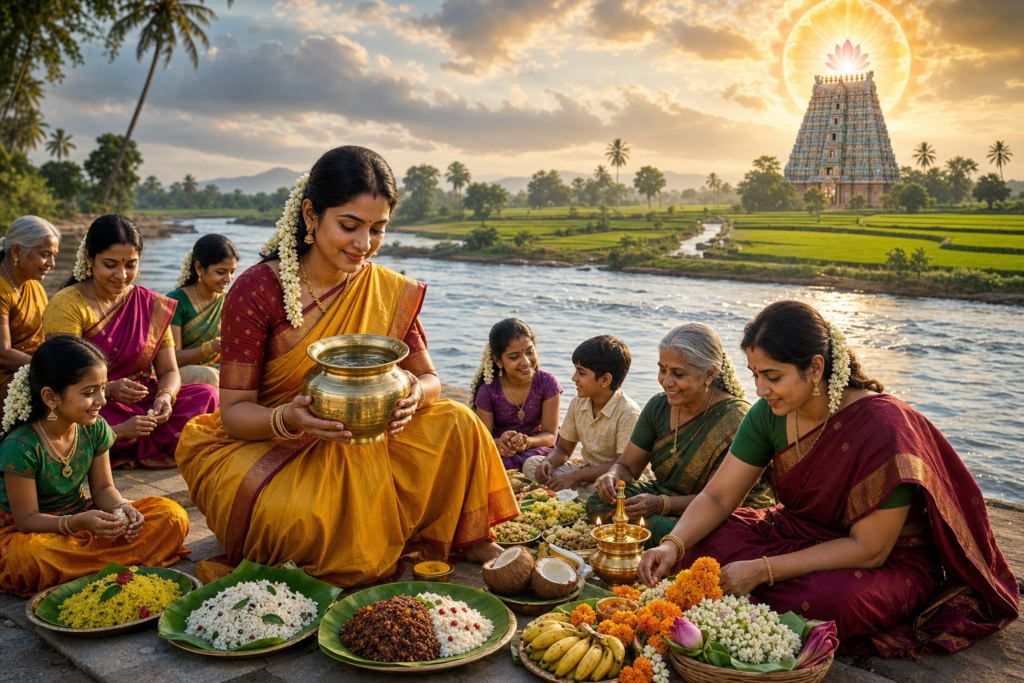
Pilgrims frequently undertake a purificatory snana at the Krishna River (locally approached as Pathala Ganga) before ascending to the temple. The ritual bath, when undertaken mindfully and without polluting the river, is seen as a preparation for heightened receptivity during abhisheka darshan and mantra-japa on the hill.
The experiential quality of Shivaratri at Srisailam is often described through a tapestry of soundsdamaru beats, conch calls, and Vedic recitationinterwoven with the fragrance of incense and jasmine. Devotees report a pronounced sense of inward stillness amidst the grandeur, as if the temple’s spatial design, ritual cadence, and collective bhakti converge to facilitate dhyana.
Dress is typically traditional and modest, aligning with the sanctity of the kshetram. Vibhuti tripundra for devotees of Shiva and kumkuma tilaka for those revering the Devi are common; both are visual affirmations of the Shiva–Shakti doctrine that Srisailam embodies at every turn.
Nutritional dimensions of the vrata are kept sattvic, with many observing a complete fast or consuming light phalahara after the principal puja windows. Annadana, when organized by the temple, is conducted with eco-conscious protocols; pilgrims are encouraged to minimize plastic use and support cleanliness drives, consistent with dharmic stewardship of sacred ecologies.
For those planning travel, Srisailam lies in Andhra Pradesh’s Nallamala Hills, accessible by road from Hyderabad and other regional hubs. Given demand spikes, arriving ahead of the main night and allocating time for queue-based darshan enhances the likelihood of participating meaningfully in multiple puja segments, including pradosha-based worship and the midnight Nishita Kaal.
The theological heart of Srisailam during Mahashivaratri is the indivisible unity of Shiva and Shakti. Philosophically mirrored in the concept of Ardhanarishvara, this unity also resonates with shared contemplative values across dharmic traditionsBuddhist uposatha night vigils, Jain pratikraman and tapas, and Sikh simran and nitnemaffirming a civilizational ethic of inner discipline, compassion, and pluralistic reverence for the sacred.
Symbolically, the Jyotirlinga is not merely an object of veneration but a pointer to the formless Absolute. Bilva leaves (with their tri-foliate aspect), the damaru’s rhythms, and the potent syllables of “Namah Shivaya” all function as sadhana tools, guiding the practitioner from gross to subtle, from ritual participation to contemplative assimilation of Shiva-tattva.
Those unable to visit Srisailam can observe Mahashivaratri at home by maintaining a clean altar, lighting deepas, offering bilva and water to a Shiva linga or photograph, performing four kala-pujas through the night, and sustaining mantra-japa. Reading passages from Shiva Mahimna Stotra, Sri Rudram, or Skanda Purana’s Srisaila narratives can deepen the observance in alignment with the temple’s ethos.
In terms of festival focus, three anchors define the night: pradosha worship (the gateway of grace), the Nishita Kaal puja (the apex), and jagaran (the sustained inner vigilance). Together, they instantiate Mahashivaratri’s transformative arcdevotees enter with vrata and sankalpa, pass through purifying rituals, and emerge with renewed clarity, humility, and resolve for dharmic living.
As a living temple where Jyotirlinga and Shakti Peetha converge, Srisailam during Mahashivaratri offers more than spectacle; it offers a pedagogy of sacred time, sacred sound, and sacred space. The Mallikarjuna–Bhramaramba synthesis articulates a complete spiritual ecology, inviting practitioners to experience devotion as both bhava and jnana, both ritual correctness and inward freedom.
For 2026, the essential guidance is clear: February 15 marks Mahashivaratri, with the midnight Nishita Kaal at the heart of the observance. Aligning personal sadhana with Srisailam’s ritual sequenceRudrabhishekam, bilvarchana, Lingodbhava aradhanaamplifies the lived meaning of the night and roots participants in an ancient, yet ever-renewing, stream of dharmic practice.
Inspired by this post on Hindu Pad.