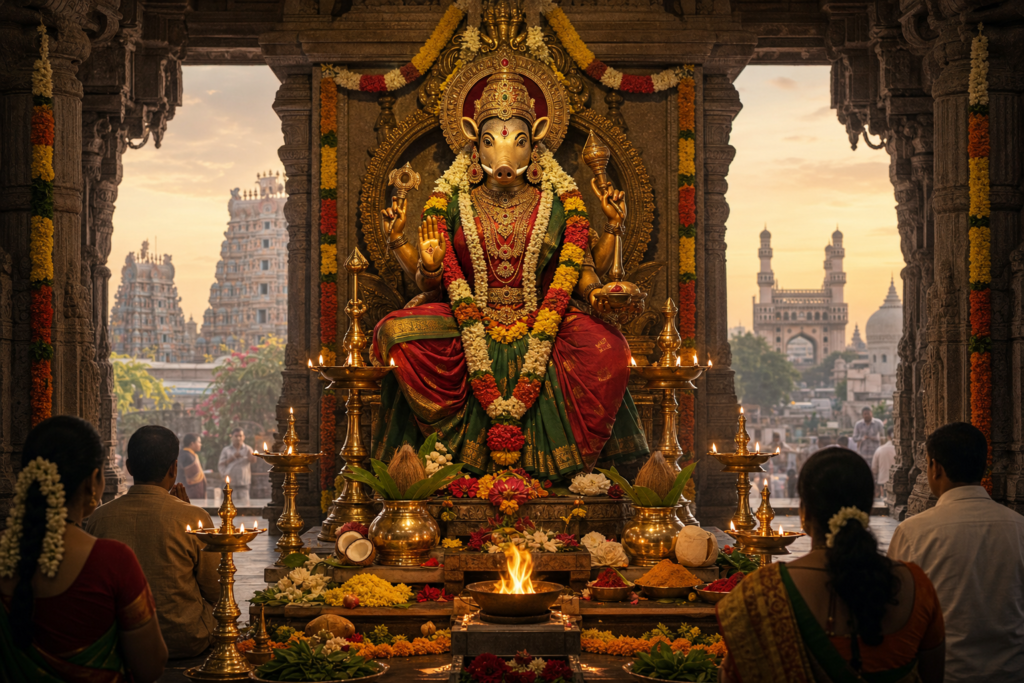
Bhishma Tharpanam is observed on Bhishma Ashtami as a solemn tribute to Bhishma Pitamahaan exemplar of Dharma in the Mahabharata and the revered teacher who revealed the Vishnu Sahasranama Stotram. This observance combines gratitude for a spiritual preceptor with remembrance of ancestors, aligning devotion, duty, and wisdom. Performed with sincerity and clarity of intention, it becomes a contemplative practice that connects the devotee to ethical strength, inner resolve, and the healing power of remembrance.
Traditionally, the Tharpanam is done on the Shukla Paksha Ashtami of the Magha month, ideally in a clean and quiet space, facing east or north. Perform Sandhya Vandana nitya karmas first, and then proceed to Bhishma Tharpanam. Those following a specific sampradaya may consult family elders or a knowledgeable priest for regional and lineage-based nuances, while remembering that sincerity of purpose is central.
Preparation emphasizes simplicity and sattva: a clean space, a calm mind, and essential items such as darbha (kusha) grass if available, til (black sesame), clean water in a copper or steel vessel, a plate for offerings, flowers or tulasi leaves, and akshata (rice mixed with turmeric) if customary. A simple white cloth and a focused, prayerful intention enhance the contemplative atmosphere. Observing moderate speech and a light, sattvic diet supports the ritual’s reflective quality.
The Vidhi generally begins with a sankalpaclearly stating the place, date, tithi, and purpose: to honor Bhishma Pitamaha on Bhishma Ashtami and to seek inner steadfastness in Dharma. Achamana and quiet breath awareness bring the mind to stillness. Many devotees invoke Vishnu with the mantra “Om Namo Narayanaya” or “Om Namo Bhagavate Vasudevaya” and then recite, in part or full, the Vishnu Sahasranama Stotram revealed by Bhishma. Where reciting the entire stotram is not possible, selected names offered with devotion convey the spirit of the observance.
The core offering (tarpana) is performed by placing darbha between the fingers (if available), taking a small quantity of til with water, and offering it with quiet recitation in praise and remembrance of Bhishma Pitamaha. Devotees may respectfully repeat Bhishma’s name“Bhishma” with “namah”and reflect on his truthfulness, courage, and unwavering commitment to Dharma. Reading or recalling the Bhishma-stuti (Srimad-Bhagavatam 1.9.33–43) and select verses from Mahabharata passages related to Bhishma’s teachings deepens the significance of each offering.
Closing prayers typically include peace invocations and universal goodwill. Many conclude with “Sarve bhavantu sukhinah,” extending the merit of the observance to family, community, and the larger world. A simple pranam to elders, teachers, and ancestorsliving or departedanchors the ritual in gratitude. If feasible, sharing prasada at home reinforces collective remembrance and unity.
Across the broader Dharmic family, the values upheld by Bhishmatruth, self-restraint, compassion, and serviceresonate deeply. The spirit of remembrance and gratitude in Bhishma Tharpanam aligns with Sikh seva (selfless service), Buddhist karuṇā (compassion), and Jain ahiṃsā (non-violence), affirming a shared ethical horizon. Observed in this inclusive light, the ritual becomes a bridge across traditions, celebrating unity in spiritual diversity.
Practical guidance supports accessibility. Household heads often lead the Tharpanam, though any sincere devotee may perform it with reverence. If certain items are unavailable, prioritizing purity of intent, clean water, and a quiet mind preserves the essence. Those living away from home can read the Vishnu Sahasranama Stotram, remember Bhishma’s life-lessons, and make symbolic water offerings, trusting that devotion and discipline carry the ritual’s heart.
Many practitioners describe a profound stillness when the first handful of water fallsan inner assurance born of recollection and resolve. In honoring Bhishma on Bhishma Ashtami, devotees often feel accompanied by the timeless counsel of the Mahabharata: live truthfully, protect Dharma, and serve with compassion. Year after year, this observance becomes both remembrance and renewala way to bring the courage of Bhishma into contemporary life.
Inspired by this post on Hindu Pad.