
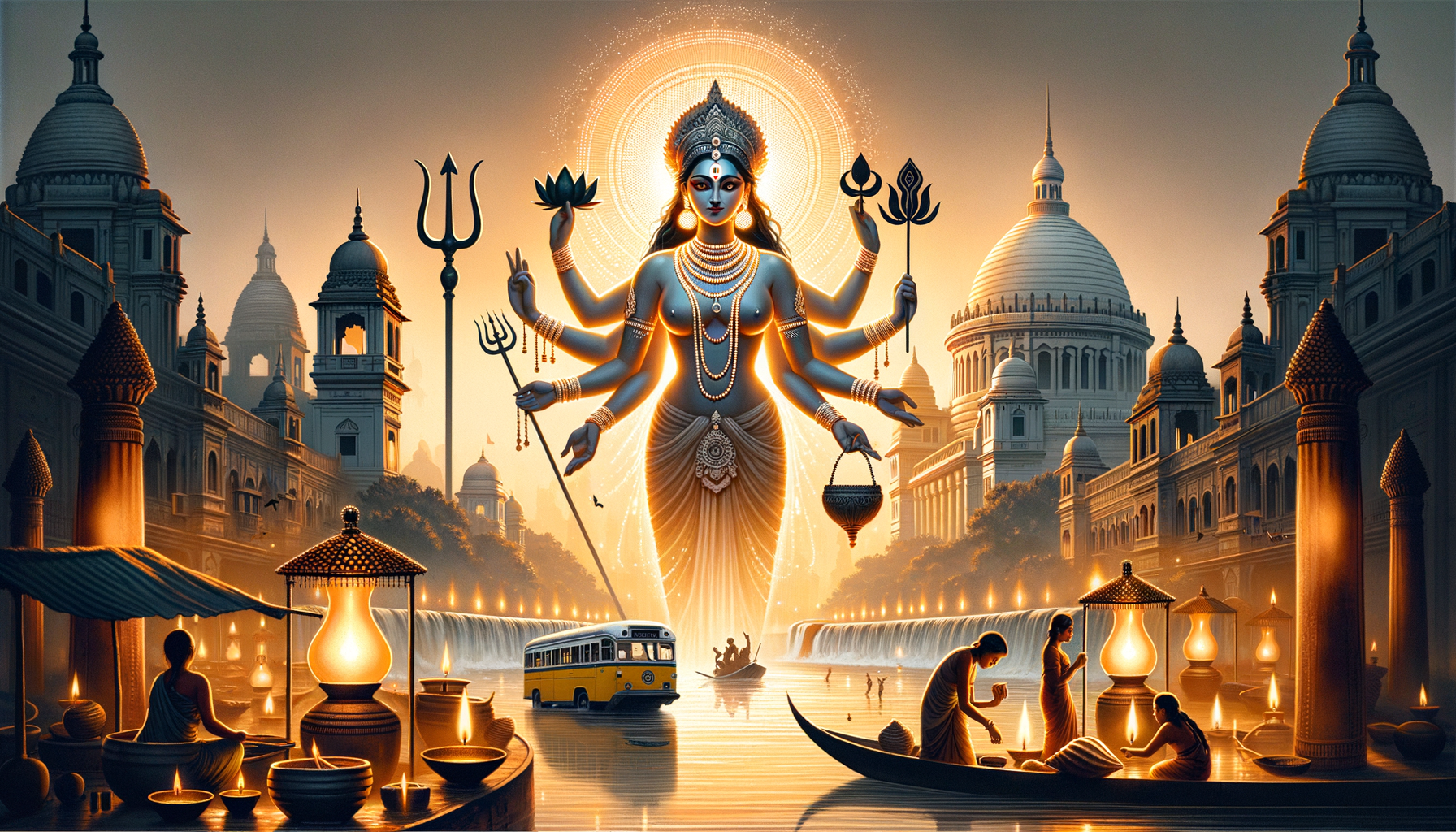
“Jai Kali Kalkattewali!” resounds through Kolkata’s lanes with a fervor that carries centuries of faith. The honorific “Kalkattewali” the Lady of Calcutta does not merely denote place; it signifies a living covenant between Goddess Kali and the city’s cultural soul, where devotion, memory, and urban life form a single sacred narrative.
The epithet reflects a distinctive sacred geography that has shaped Kolkata’s identity. Kalighat Temple, revered in Shakta tradition as a Shakti Peetha, and the Dakshineswar Kali Temple on the Ganga’s edge embody this bond, anchoring the city’s spiritual map. In this landscape, “Kalkattewali” expresses both belonging and guardianship a sense that the Goddess protects, tests, and ultimately elevates the collective spirit.
Historically, the city accrued sanctity around its shrines. Kalighat emerged as a major pilgrimage site centuries ago, drawing merchants, scholars, and seekers whose journeys braided trade and transcendence. According to Shakta lore, the site marks where a fragment of Sati’s body fell, a mythic memory that sanctified the earth and turned the surrounding settlement into a spiritual commons.
The 19th century intensified this identity. At Dakshineswar, Rani Rashmoni’s temple complex and Ramakrishna’s tapasya made Kolkata a crucible of Shakti devotion and inter-sectarian understanding. Through Ramakrishna’s lived experience of Kali as the compassionate Mother and Swami Vivekananda’s articulation of universal spirituality, the city learned to see fierce transcendence and tender grace as complementary truths.
Festivals convert this metaphysics into civic life. Kali Puja and Durga Puja transform neighborhoods into sanctuaries where craftsmanship, music, and ritual merge. Artisans of Kumartuli fashion images that are at once classical and contemporary, while families, students, and workers come together in acts of darshan, seva, and shared meals. In these moments, Kolkata becomes a participatory temple inclusive, humane, and resilient.
Kali’s iconography encodes a precise spiritual psychology. The raised sword signifies the cutting of ego; the severed head emblemizes the end of ignorance; the garland of skulls mirrors time’s alphabet and life’s impermanence; and the Goddess standing over Shiva communicates the indivisibility of Shakti and consciousness. These symbols resonate with everyday Kolkata a city that confronts hardship with creativity and turns tumult into renewal.
The city’s sacred geography amplifies this meaning. The Adi Ganga, historic ghats, and bustling Kalighat bazaar trace pathways where ritual, trade, and community intersect. Processions weave through narrow lanes; conches echo at dusk; and household shrines glow with oil lamps. Such textures of place impart continuity, teaching that sanctity thrives not only in monuments but in ordinary rhythms of care and courage.
Dharmic unity undergirds the reverence for Kali Kalkattewali. Within Hindu traditions, Shakta, Shaiva, and Vaishnava streams converge around the Mother’s grace; in Buddhist frames, feminine wisdom finds expression in Tara iconography; Jain and Sikh communities in Kolkata participate in civic solidarity through service, dialogue, and shared cultural life. This plurality reflects the Ishta principle the acceptance of many valid paths and strengthens harmony among Hinduism, Buddhism, Jainism, and Sikhism.
Modern Kolkata has carried this legacy through upheavals and renewal alike. From colonial pressures to Partition migrations and contemporary urban challenges, the city’s empathy has often taken the form of public service during pujas, neighborhood philanthropy, and cultural stewardship. In this ongoing story, “Kalkattewali” signifies moral courage the capacity to protect the vulnerable and to dignify dissent without abandoning civility.
For younger generations, the image of Kali as the city’s guardian offers a stabilizing anchor. As a symbol of fearlessness and compassion, she inspires community leadership, women’s empowerment, and creative expression. Whether through classical dance, contemporary art, or volunteer initiatives, engagement with Kali’s ethos nurtures resilience and ethical clarity in public life.
Pilgrims and visitors encounter this ethos most vividly at Kalighat and Dakshineswar. Respectful darshan, mindful queueing, sustainable offerings, and support for artisan communities help preserve both sanctity and livelihoods. By honoring temple customs and local ecology, seekers participate in the city’s long-standing ethic of reverence joined with responsibility.
The cry “Jai Kali Kalkattewali!” thus encapsulates a complete cultural philosophy fierce in self-discipline, tender in fellowship, and inclusive in spiritual understanding. It affirms that Kolkata’s heart beats in rhythm with the Goddess, and that the city’s future will remain luminous wherever devotion, artistry, and dharmic unity meet.
Inspired by this post on Hindu Blog.
