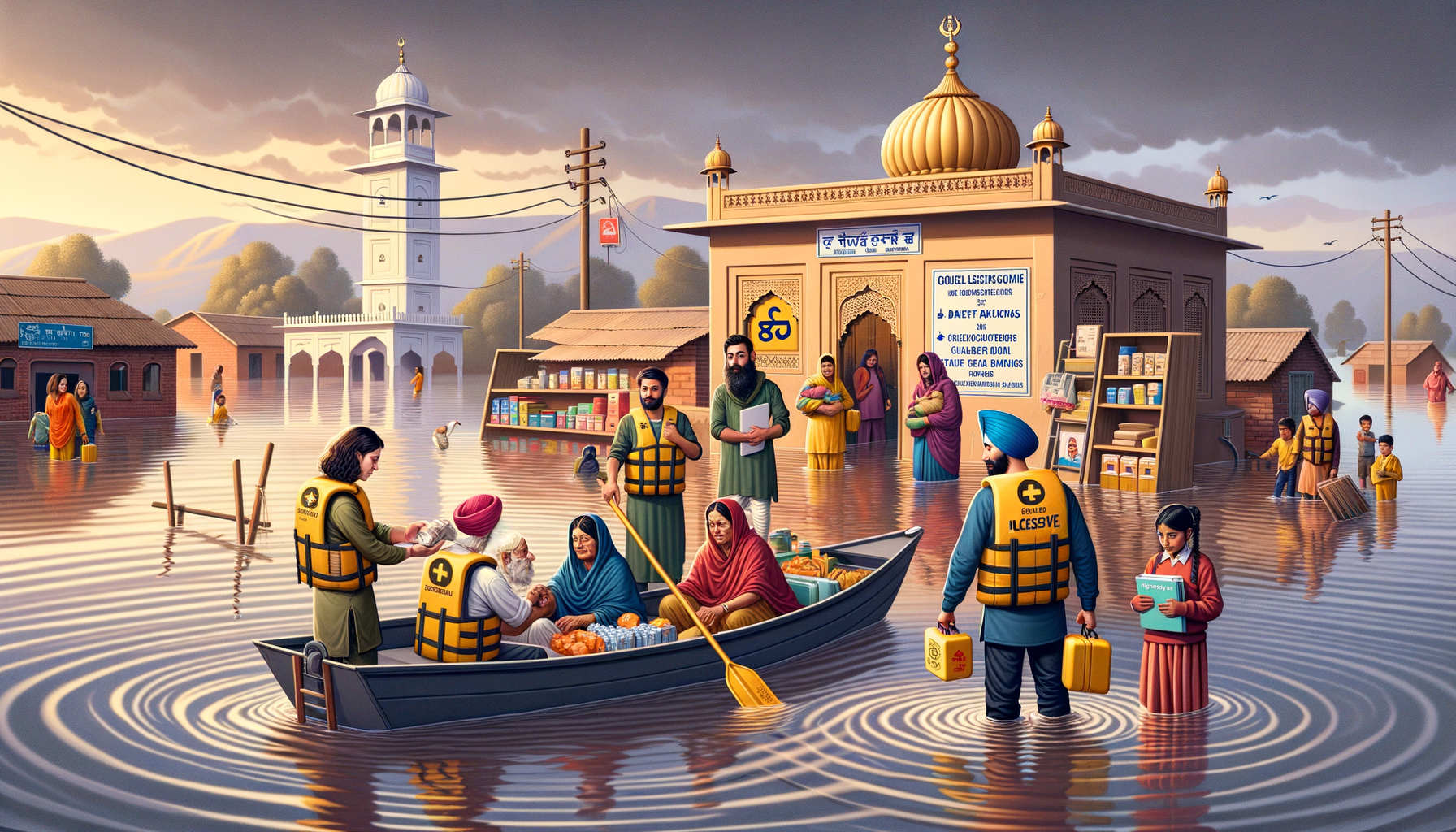
Across Punjab’s floodplains, recent inundations have redrawn familiar maps into uncertain waters, leaving homes marooned and livelihoods disrupted. What persists, however, is a collective ethic of care that scholars of society and religion frequently identify as a living practice of Chardhīkalāan ever-ascending spirit that meets pain with purposeful resilience. The experience on the ground is defined not only by loss but by the disciplined hope that enables communities to recover, rebuild, and reaffirm shared bonds.
Chardhīkalā, rooted in Sikh dharma, reflects a wider dharmic sensibility that is equally legible in Hinduism, Buddhism, and Jainismcompassion (karuṇā), non-violence (ahiṁsā), self-restraint (aparigraha), and loving-kindness (maitrī). In the context of floods in Punjab, this integrated ethos is not an abstraction; it is observable in practical, cooperative action. The result is a civic culture that draws strength from spirituality while remaining focused on evidence-based, community-led relief.
Accounts from villages near the Sutlej, Beas, and Ravi rivers converge on a common theme: pain is immediate, yet despair is not definitive. Families salvage documents, seed stock, and schoolbooks; neighbors guide the elderly through waist-deep water; youth groups coordinate boats and distribute dry rations. The prevailing tone is one of sevāservice anchored in dignitywoven into daily decision-making under pressure.
Gurdwaras activate langar as community kitchens, temples open halls as temporary shelters, Jain sanghas organize medical camps, and Buddhist groups facilitate trauma-sensitive listening circles. This interfaith cooperation functions as a social safety net that predates formal disaster protocols, demonstrating how dharmic pluralism translates into operational solidarity. The unity in diversity observed in these efforts is pragmatic, humane, and quietly transformative.
Household resilience in Punjab is also shaped by the joint-family system, local panchayats, and volunteer networks that maintain trust across caste, creed, and class. These institutionsinformal yet robustshortcut the time between need and response: water purification units arrive faster, evacuation lists are verified sooner, and vulnerable residents receive priority support without bureaucratic delay.
From an environmental governance perspective, the floods underscore the necessity of climate resilience: improved river-basin coordination, wetland restoration, scientifically informed embankments, desilting, and nature-based flood buffers. Early warning systems, community drills, and localized risk assessmentsconducted in partnership with schools, gurdwaras, temples, monasteries, and Jain upāśrayastranslate technical knowledge into accessible, life-saving routines.
Cultural and spiritual practices provide psychological ballast. Shabad kīrtan, paath, bhajans, metta meditation, and pratikraman nurture calm attention and collective composure. These ritual forms do not deny grief; they organize it, creating a structure within which loss can be acknowledged and transformed into socially useful action. In this way, spiritual insight becomes a public good.
Equally significant is the ethics of language in crisis. Communities describe challenges without fatalism and narrate recovery without triumphalism. This balanced discourseneither alarmist nor complacentmirrors Chardhīkalā’s disciplined optimism: a refusal to romanticize suffering, coupled with a refusal to yield to it.
Several proven, community-centered measures emerge from the Punjab experience: mapping low-lying areas and evacuation routes at the ward level; pre-positioning boats and first-aid kits in gurdwaras and temples; establishing women-led safety committees; training youth brigades for water, hygiene, and sanitation; setting up modular, fuel-efficient community kitchens; installing solar backup for pumps and communications; and integrating micro-insurance with flexible credit for farmers and small traders.
Education continuity also matters. School-based hubssupported by religious institutions and civil societycan protect learning through mobile libraries, shared digital devices, and tutoring circles. Such arrangements preserve routine and purpose for children, reducing long-term psychosocial impacts.
Ultimately, the floods in Punjab present a clear portrait: pain is real, resilience is learned, and Chardhīkalā is a practical discipline as much as a spiritual ideal. Grounded in dharmic unityHindu, Buddhist, Jain, and Sikh traditionsthis region’s response offers a replicable model for disaster resilience in India: humane, coordinated, and oriented toward a future where recovery is not merely possible, but thoughtfully prepared.
Inspired by this post on SikhNet – News.