
-

Historic MP High Court Verdict Affirms Bhojshala as Saraswati Temple: Devotees Pray Peacefully
Read more: Historic MP High Court Verdict Affirms Bhojshala as Saraswati Temple: Devotees Pray PeacefullyA day after the Madhya Pradesh High Court affirmed Bhojshala as the Mata Saraswati temple, Hindu devotees in Dhar offered prayers peacefully under a robust security plan. The verdict clarifies the site’s religious character while embedding worship within heritage protection norms and public-order protocols. Historical and archaeological evidence—documented by the Archaeological Survey of India—underpins the…
-

May 24, 2026 Panchang Deep-Dive: Shukla Ashtami to Navami, Shubh Muhurat, Nakshatra & Rashi
Read more: May 24, 2026 Panchang Deep-Dive: Shukla Ashtami to Navami, Shubh Muhurat, Nakshatra & RashiSunday, May 24, 2026, features Shukla Paksha Ashtami until 8:52 AM (IST), followed by Shukla Paksha Navami. Ashtami is a Jaya tithi favoring disciplined, protective efforts, while Navami is a Rikta tithi best used for contemplation, study, seva, and remedial worship. The piece explains how to utilize Abhijit Muhurta near local solar noon and avoid…
-

Jharkhand Governor to Brief PM and CM on Alleged Corporate Bias, Safeguarding Social Cohesion
Read more: Jharkhand Governor to Brief PM and CM on Alleged Corporate Bias, Safeguarding Social CohesionA delegation from Hindu Janajagruti Samiti (HJS) met the Governor of Jharkhand to flag concerns about alleged corporate bias, a claim described by the delegation as “corporate jihad.” The Governor reportedly assured that the matter would be conveyed to the Prime Minister and the Chief Minister through constitutional channels. This analysis situates the development within…
-

Awe-Inspiring Pushpaka Vimana: Self-Restoring Design, Vedic Engineering, and Ramayana Legacy
Read more: Awe-Inspiring Pushpaka Vimana: Self-Restoring Design, Vedic Engineering, and Ramayana LegacyPushpaka Vimana, the famed aerial craft of the Ramayana, is widely remembered for adaptive flight, moral stewardship, and a compelling motif of self-restoration. Read as an engineering imagination, its traits anticipate modular design, redundancy, autonomous control, and lifecycle repair. Read as sacred symbolism, its self-reassembling power affirms dharma’s resilience and responsible governance. Cross-dharmic echoes in…
-

Shani Sade Sati for Tula Rashi: Viraya (Vyaya) Shani Effects, Timing, Remedies—A Deep-Dive Guide
Read more: Shani Sade Sati for Tula Rashi: Viraya (Vyaya) Shani Effects, Timing, Remedies—A Deep-Dive GuideShani Sade Sati for Tula Rashi begins when Saturn enters Virgo, launching the first 2½-year phase known as Viraya (Vyaya) Shani. This period emphasizes 12th-house matters—expenditure, seclusion, sleep, and the dissolution of attachments—framed by Saturn’s discipline and Virgo’s analytic rigor. The analysis explains how Saturn’s special aspects from Virgo shape communication, partnerships, and career through…
-

Shani Sade Sati for Tula Rashi: Master the Exalted Janma Shani Phase—Effects, Risks, Remedies
Read more: Shani Sade Sati for Tula Rashi: Master the Exalted Janma Shani Phase—Effects, Risks, RemediesShani Sade Sati for Tula Rashi enters its decisive second 2.5 years when Saturn transits Libra, delivering an exalted Janma Shani that combines pressure with profound potential. This analysis explains the mechanics of Sade Sati, the nakshatra-level nuances of Chitra, Swati, and Vishakha, and the practical significance of Saturn’s aspects to the 3rd, 7th, and…
-

Unraveling Mayasura, the Demon Architect: Epic Engineering, Sacred Geometry, and Maya Sabha’s Legacy
Read more: Unraveling Mayasura, the Demon Architect: Epic Engineering, Sacred Geometry, and Maya Sabha’s LegacyMayasura—Maya Dānava in the epics—emerges as a master engineer whose works combine optics, hydrology, geometry, and ethics. The Mahabharata’s Khandava-daha and Maya Sabha episodes showcase advanced architectural thinking framed by Dharma: perception can be trained or misled, and design must answer to conscience. Purāṇic narratives such as Tripura reaffirm this ethic by sparing the architect…
-

Shani Sade Sati for Tula Rashi: Navigate the Final 2.5 Years (Paada Shani) with Wisdom
Read more: Shani Sade Sati for Tula Rashi: Navigate the Final 2.5 Years (Paada Shani) with WisdomShani Sade Sati for Tula Rashi culminates with Paada Shani, the 2nd-house transit of Saturn through Scorpio. Classical Vedic astrology frames this final 2.5-year phase as an audit of finances, family bonds, speech ethics, and personal values. With Shani in a Mars-ruled sign, results arrive through steady, disciplined effort rather than speed. Outcomes vary by…
-
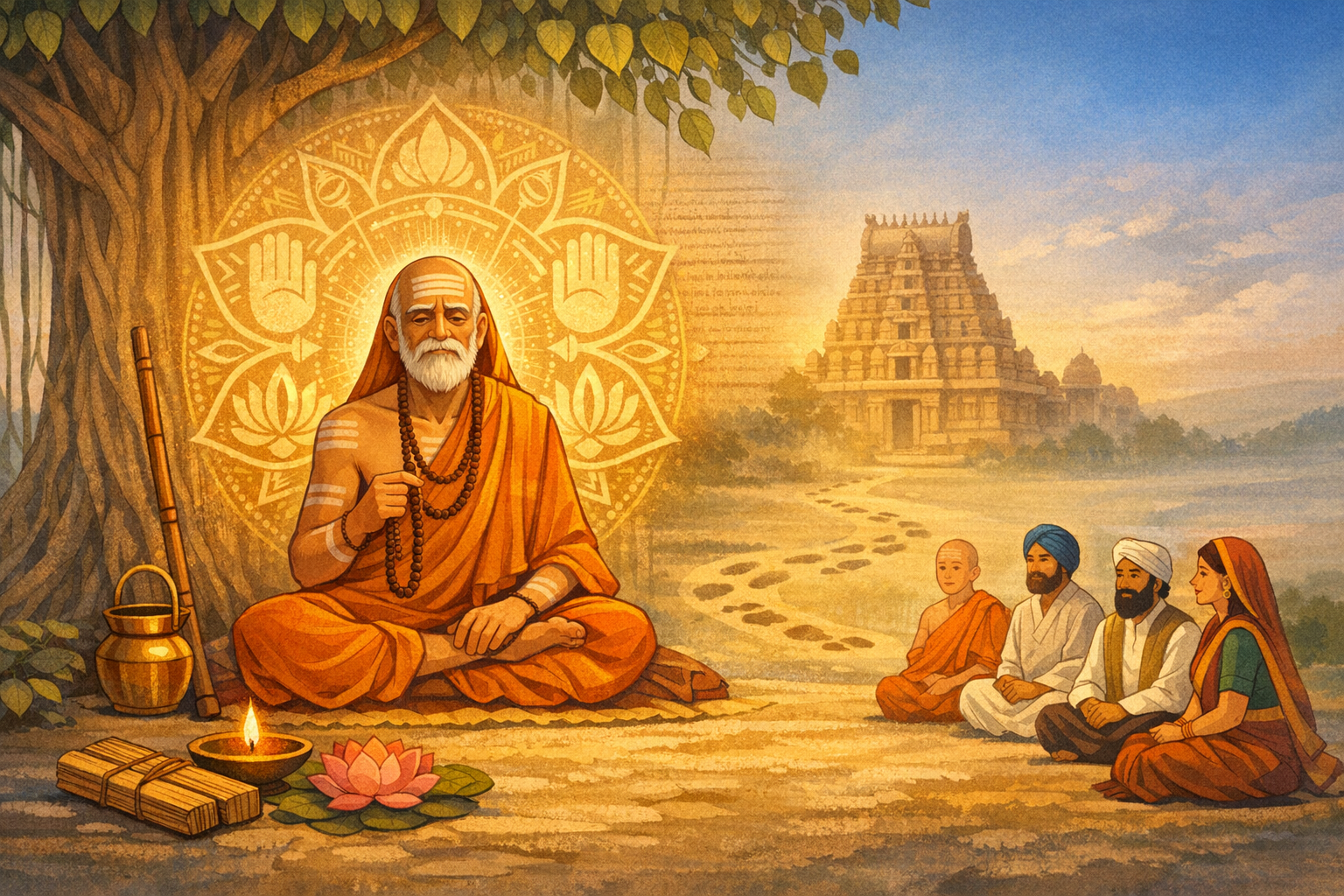
Mahaperiyava’s Living Grace: Academic Portrait of the Sage of Kanchi’s Path to Unity
Read more: Mahaperiyava’s Living Grace: Academic Portrait of the Sage of Kanchi’s Path to UnityShri Chandrashekarendra Saraswati Swamigal (Mahaperiyava), the 68th Jagadguru of Kanchi Kamakoti Peetam, exemplified Advaita Vedanta through disciplined practice, inclusive compassion, and service. This academic portrait situates his life within the Shankaracharya Parampara, outlining how padayatra, temple revitalization, and Vedic learning strengthened communities. It clarifies core methods—sadhana-chatuṣṭaya and śravaṇa–manana–nididhyāsana—while showing how bhakti and karma integrate with…
-
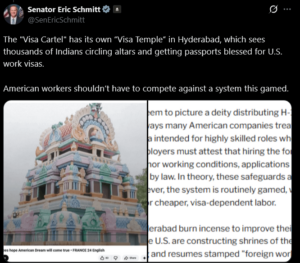
Unpacking the ‘Visa Temple’ Controversy: H‑1B Facts, Faith Traditions, and Senator Schmitt’s Claims
Read more: Unpacking the ‘Visa Temple’ Controversy: H‑1B Facts, Faith Traditions, and Senator Schmitt’s ClaimsA U.S. senator’s remarks about a “Visa Cartel” and Hyderabad’s “Visa Temple” have intensified debate about H‑1B visas, cultural practices, and Indian professionals in America. This analysis separates devotional symbolism from immigration law, explaining how H‑1B really works—caps, LCAs, wages, audits, and recent beneficiary‑centric lottery reforms. It shows why Indian nationals make up a large…
-

Asansol Loudspeaker Compliance Drive Turns Violent: Police Outpost Vandalized, Appeal for Calm
Read more: Asansol Loudspeaker Compliance Drive Turns Violent: Police Outpost Vandalized, Appeal for CalmAsansol, West Bengal, saw brief unrest during a loudspeaker regulation drive when stone pelting and vandalism damaged a police outpost. This analysis explains the legal framework—the Noise Pollution (Regulation and Control) Rules, 2000—and the Calcutta High Court’s emphasis on uniform, permission-based use of amplified sound across religious and secular settings. Readers gain a clear timeline…
-

Sura Linga Revealed: Celestial Shivalingas of the Devas, Cosmic Order, Ritual Science, Protection
Read more: Sura Linga Revealed: Celestial Shivalingas of the Devas, Cosmic Order, Ritual Science, ProtectionSura Lingas—Shivalingas believed to be installed by Devas—embody a sophisticated synthesis of metaphysics, temple architecture, and ritual science in Hinduism. This long-form guide explains how Sura Lingas anchor cosmic order (ṛta) and provide a protective axis for communities, drawing on Puranic, Agamic, and śilpa-śāstra perspectives. Readers gain clarity on consecration (prāṇa-pratiṣṭhā), canonical Linga morphology, vastu-aligned…
-

Jharkhand Governor to raise ‘corporate jihad’ grievances with PM, seeking a transparent probe
Read more: Jharkhand Governor to raise ‘corporate jihad’ grievances with PM, seeking a transparent probeA memorandum submitted in Jharkhand alleging coordinated corporate misconduct—described by petitioners as “corporate jihad”—will be conveyed by the Governor to the Prime Minister for appropriate consideration. The constitutional pathway emphasized here prioritizes due process, evidence, and regulatory competence over rhetoric. A rigorous inquiry, if initiated, would likely engage the MCA, SEBI, and the CCI to…
-

Satara memorandum: Hindu organisations demand zero‑tolerance, tougher sentences to protect women and children
Read more: Satara memorandum: Hindu organisations demand zero‑tolerance, tougher sentences to protect women and childrenA delegation of Hindu organisations in Satara submitted a memorandum urging zero‑tolerance and tougher sentences for crimes against women and children. The appeal aligns with India’s strengthened legal framework under POCSO and the Bharatiya Nyaya Sanhita while highlighting gaps in implementation. The analysis underscores that certainty and speed of punishment, coupled with survivor‑centric care, drive…
-

Sadguru Dr Charudatta Pingale’s Madhya Pradesh Abhiyan Sparks Dharmic Unity and Dialogue
Read more: Sadguru Dr Charudatta Pingale’s Madhya Pradesh Abhiyan Sparks Dharmic Unity and DialogueSadguru Dr. Charudatta Pingale led the Hindu Rashtra Sampark Abhiyan across Madhya Pradesh to strengthen social cohesion through listening-first dialogue, constitutional literacy, and dharmic unity. The outreach framed Rashtra as a civilizational ethos grounded in pluralism and responsibility, not exclusion. Participants found value in practical tools for conflict de-escalation, media literacy against misinformation, and structured…
-
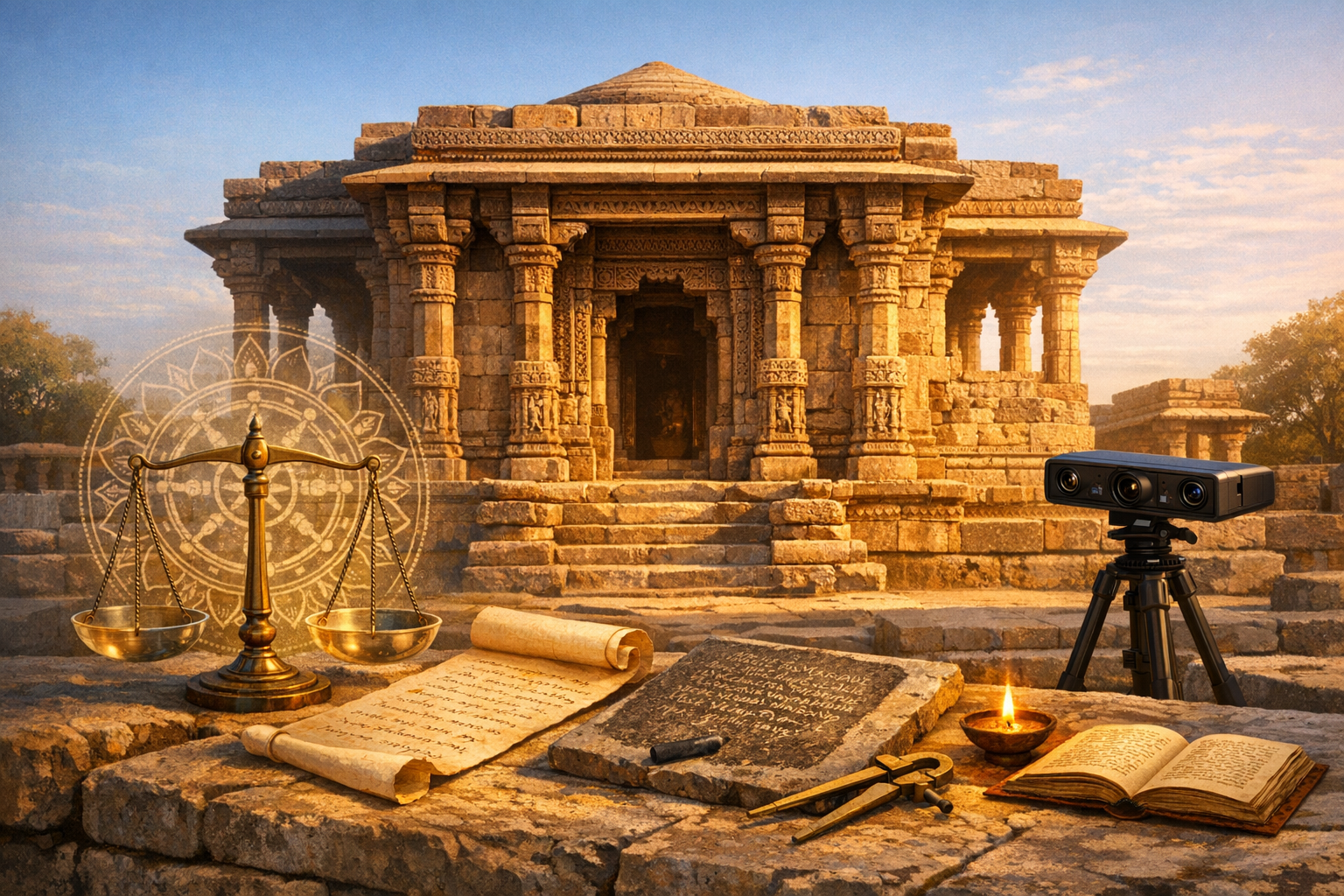
MP High Court Recognizes Dhar’s Bhojshala as a Hindu Temple: Evidence, Law, and Legacy
Read more: MP High Court Recognizes Dhar’s Bhojshala as a Hindu Temple: Evidence, Law, and LegacyThe Madhya Pradesh High Court has recognized Dhar’s Bhojshala complex as a Hindu temple, grounding its decision in corroborated archaeological, epigraphic, and archival evidence. The ruling operates within India’s constitutional guarantees under Articles 25 and 26 and aligns with heritage conservation duties under the AMASR framework. Readers will gain a clear view of how courts…
-

Mandir Mahasangh’s Statewide Drive Challenges Maharashtra Devasthan Inam Abolition Draft 2026
Read more: Mandir Mahasangh’s Statewide Drive Challenges Maharashtra Devasthan Inam Abolition Draft 2026Mandir Mahasangh has launched a statewide memorandum campaign opposing the Maharashtra Devasthan Inam Abolition Draft Act 2026, bringing temple autonomy and dharmic heritage to the forefront of policy debate. This analysis explains what Devasthan inams are, why abolition frameworks can affect core religious and charitable functions, and how Articles 25 and 26 shape constitutional limits…
-

Divine Fury, Compassionate Shelter: Nakhayudha—Sacred Claws of Narasimha in Hindu Iconography
Read more: Divine Fury, Compassionate Shelter: Nakhayudha—Sacred Claws of Narasimha in Hindu IconographyNakhayudha—the sacred claws of Narasimha—embodies a unique class of natural, non-forged weaponry in Hindu iconography, expressing spontaneous divine protection without reliance on manufactured arms. This long-form exploration clarifies the mythic logic behind Hiranyakashipu’s boon and shows how Narasimha’s claws resolve each clause through liminality. It decodes the visual grammar defined by Shilpa Shastra and Vaishnava…
-

Dhruva’s Homecoming in Srimad Bhagavatham 4.9 (18–26): Transformative Grace and Dharma
Read more: Dhruva’s Homecoming in Srimad Bhagavatham 4.9 (18–26): Transformative Grace and DharmaThis in-depth, verse-focused reading of Srimad Bhagavatham 4.9 (18–26) examines Dhruva Maharaja’s homecoming as a masterclass in devotion, ethical leadership, and reconciliation. It situates the passage within the broader Dhruva narrative, highlighting how grace, disciplined practice, and guru-guidance transform reactive motives into service. Readers gain clear, actionable insights on integrating bhakti with rāja-dharma, healing family…
-

Tasting the Whole Krishna: Beyond One‑Dish Devotion to the Complete Vishvarupa Experience
Read more: Tasting the Whole Krishna: Beyond One‑Dish Devotion to the Complete Vishvarupa ExperienceA Kerala Sadhya on a banana leaf offers the perfect metaphor for understanding Sri Krishna: tasting only the sweet payasam is not the same as experiencing the complete meal. This long-form reflection shows how the Bhagavad Gita, the Bhagavata Purana, and Vaishnava theology present a whole vision—Vishvarupa, six divine opulences, multiple rasas, and the vyūha…
-

Success Sadhana, Dwindling Intent: Evidence-Based Protocols to Reignite Devotional Focus
Read more: Success Sadhana, Dwindling Intent: Evidence-Based Protocols to Reignite Devotional FocusDwindling intent in sādhana is common and correctable. This analysis integrates Dharma teachings and behavioral science to convert wavering motivation into a structured, resilient practice. It maps classical obstacles from Patañjali and the Buddhist hindrances to modern psychology, then offers specific breath, mantra, mindfulness, and seva protocols to regulate state and rebuild momentum. Practical routines…
-

Unveiling the Musala of Balarama: Agrarian Power, Sacred Iconography, and Divine Strength
Read more: Unveiling the Musala of Balarama: Agrarian Power, Sacred Iconography, and Divine StrengthThe musala—Balarama’s sacred pestle—embodies agrarian power transformed into protective, ethical strength. This long-form analysis clarifies how its cylindrical form differs from the gadā, why Vaishnava texts hail Balarama as Hala-muṣala-dhara, and how the Mausala Parva frames the musala as a moral instrument entwined with dharma and time. Readers learn practical iconographic cues for identifying the…
-

Why Red Rules Hindu Temples: Shakti, Auspiciousness, Ritual Power, and Color Science
Read more: Why Red Rules Hindu Temples: Shakti, Auspiciousness, Ritual Power, and Color ScienceRed in Hindu temples is far more than ornament; it is the visual pulse of Shakti, auspiciousness, and energized devotion. This article explains how scriptures, Agamic traditions, and Shakta Tantras align red with rajas and protective grace, while temple practices translate meaning into materials such as kumkum, sindoor, and red flowers. It examines the role…
-

To Know Sanatana Dharma, Become It: Transform Study into Embodied, Breath-by-Breath Wisdom
Read more: To Know Sanatana Dharma, Become It: Transform Study into Embodied, Breath-by-Breath WisdomStudying Sanatana Dharma offers orientation; living it confers transformation. This essay explains how knowledge becomes embodied through śravaṇa–manana–nididhyāsana, prāṇāyāma, meditation, and ethical discipline, aligning ancient insights with contemporary understanding of attention, stress, and habit-formation. It shows how Hinduism, Buddhism, Jainism, and Sikhism converge on shared methods—breath, mindfulness, vows, and seva—while honoring pluralism via Ishta and…
Categories
- Agriculture (20)
- Akhand Bharat (30)
- Aryan Migration -vs- Out of India (8)
- Ayurveda (20)
- Celebrations (882)
- Community (150)
- Community Events (231)
- Cross Posted (105)
- Cultural Advocacy (33)
- Cultural Commentary (61)
- Cultural Heritage (556)
- Cultural Insights (142)
- Cultural Issues (29)
- Cultural Traditions (757)
- Culture (33)
- Economics (22)
- Education (152)
- Geo-Politics (60)
- History (378)
- Indian Authors (7)
- International Trade (8)
- Labor Market (8)
- Literature (97)
- News (619)
- Opinion Pieces (143)
- Personal Reflections (161)
- Personalities (186)
- Philosophy (1,036)
- Politics (208)
- Scripts (3)
- Scriptures (975)
- Spiritual Insight (3,207)
- Spirituality (750)
- Temples (731)
- Tribute (65)
- Uncategorized (6)
- Yoga (103)
Archive