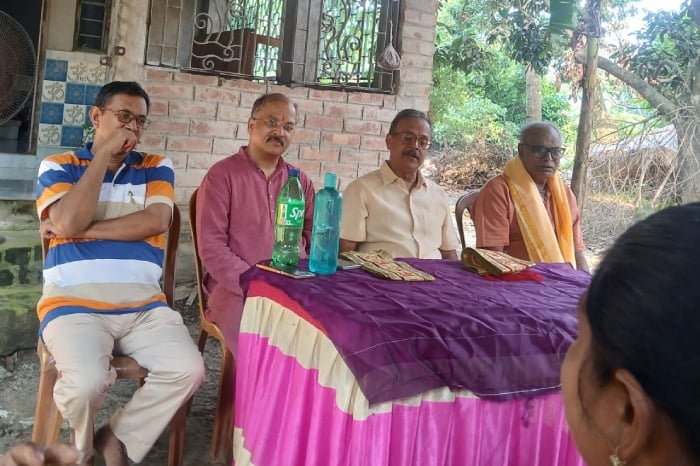
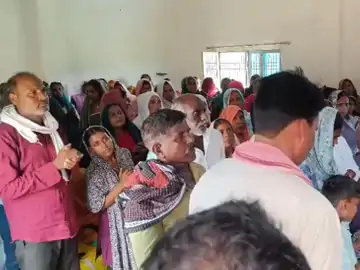
Sadguru Dr. Charudatta Pingale led the Hindu Rashtra Sampark Abhiyan across Madhya Pradesh, convening dialogues with a broad spectrum of community stakeholders and addressing salient civic and civilizational issues through structured, non-partisan engagement. The outreach placed emphasis on listening, trust-building, and constitutional literacy while advancing dharmic unity across Hindu, Buddhist, Jain, and Sikh communities.
Interpreted through an academic and civilizational lens, Hindu Rashtra Sampark Abhiyan may be understood as an outreach initiative that strengthens the connective tissue of society by affirming shared ethical principles, community service, and social harmony. In this framing, Rashtra is not theocratic but civilizational, foregrounding responsibilities, pluralism, and public-spirited conduct consonant with the ethos of Sanatana Dharma and the constitutional promise of freedom of belief and practice.
Madhya Pradesh, a centrally located state with deep cultural memory and diverse social geographies, provided a meaningful canvas for such community engagement. Its mix of urban and rural constituencies, longstanding pilgrimage circuits, and living traditions created opportunities for inclusive conversations that were sensitive to local contexts while relevant to pan-Indian civic aspirations.
The initiative advanced a program design consistent with tested community engagement practice: multi-node scheduling across districts, stakeholder mapping to include civil society representatives and community elders, small-group consultations for depth, larger assemblies for consensus, and feedback loops to keep conversations iterative and transparent. Each interaction oriented around practical problem-solving, community safety, and strengthening channels for peaceful, lawful redress of grievances.
Key issues addressed included social cohesion and harmony, constitutional literacy on freedom of religion, heritage stewardship, youth civic participation, women’s leadership in community initiatives, and the ethics of seva. Attention was also given to countering misinformation through media literacy and to nurturing local capacity for conflict de-escalation, dialogue, and collaborative problem solving.
Facilitation drew on a listening-first approach. Structured listening circles enabled participants to share lived experience, while guided samvad helped translate concerns into actionable next steps. Neutral ground rules, careful time management, and transparent note-taking supported trust. The discussions then converged on short-term commitments and medium-term action points that could be tracked locally.
Dharmic ethics offered a unifying vocabulary. From Anekantavada and Ahimsa to Karuna, Seva, and the Sikh ideal of Sarbat da Bhala, the sessions emphasized values that inspire compassionate action and civic responsibility. The widely cherished ideal of Vasudhaiva Kutumbakam framed the moral horizon for dialogue, underscoring a vision of society as a shared home where dignity, duties, and rights are co-affirmed.
Constitutional reference points, notably Articles 25 and 26 on freedom of conscience and the right to manage religious affairs, served as anchors for discussions on lawful, peaceful, and plural practice. The outreach highlighted the complementary roles of families, community institutions, and civic bodies in upholding both constitutional guarantees and the cultural norms that enable everyday coexistence.
Safeguards were emphasized to keep engagement inclusive and constructive. These included a clear non-coercion ethic; apolitical facilitation; avoidance of inflammatory rhetoric; sensitivity to local customs and languages; and open documentation practices. The approach recognized the value of early rumor management, fact-checking support, and respectful coordination with local stakeholders to prevent escalation.
Participants repeatedly voiced a desire for practical tools to navigate contemporary challenges without sacrificing time-honored values. Elders shared memories of shared service across communities; youth articulated a need for mentorship, civic literacy, and meaningful responsibility. Across sessions there was a palpable sense that inclusive language and respectful listening can defuse tension and catalyze cooperation.
As networks of trust deepened, pathways for continued consultation became more visible. Regular check-ins, open channels for concerns, and recognition of local convenors helped communities coordinate quicker, respond better to misinformation, and amplify positive narratives of everyday cooperation. These are steady, incremental gains that often determine whether dialogue endures beyond a single campaign.
Assessment and learning were framed around pragmatic indicators of progress. While exhaustive measurement requires dedicated baselines, initiatives of this nature can be responsibly tracked using a simple logic model that links inputs to activities, outputs, and near-term outcomes. Knowledge-attitude-practice snapshots, participation breadth, and the frequency of community-led follow-ups offer low-cost proxies for social trust and cohesion.
Communication strategy prioritized clarity and transparency. Locally intelligible messaging, preference for verified information, and highlighting of collaborative success stories aided credibility. The outreach underscored that community media and digital platforms carry special responsibilities to minimize sensationalism, encourage respectful debate, and model solution-oriented discourse.
Capacity-building recommendations emerged organically from the dialogues. These included training for local facilitators in conflict de-escalation and consensus-building, thematic workshops on constitutional rights and duties, structured roles for women and youth in community projects, and knowledge repositories that offer replicable templates, checklists, and case studies.
Risk management remained a core consideration. Potential risks such as polarization, rumor cascades, or the capture of community platforms by partisan interests were addressed through pre-session risk scans, clear codes of conduct, and open redress pathways. These measures advance an ethic of care that protects both participants and the integrity of the process.
Replicability depends on simple, adaptable tools. Templatized facilitation guides, multilingual outreach material, periodic reflection sessions, and coupling dialogues with visible seva initiatives help sustain momentum. When people experience shared service alongside shared speech, trust compounds and civic habits take root.
Viewed in the round, the Hindu Rashtra Sampark Abhiyan in Madhya Pradesh functioned as a community-strengthening platform that integrated dharmic ethics, constitutional guidance, and practical facilitation. By aligning civilizational values with modern civic norms, the outreach offered a credible pathway to deepen social cohesion, protect heritage, and encourage lawful, peaceful engagement.
In conclusion, Sadguru Dr. Charudatta Pingale’s leadership in Madhya Pradesh exemplified a bridge-building approach that is faithful to the plural spirit of Sanatana Dharma while attentive to contemporary challenges. Rooted in unity across Hindu, Buddhist, Jain, and Sikh traditions, the Abhiyan demonstrated how community engagement, interfaith dialogue, and service can translate shared values into shared outcomes for the common good.
Inspired by this post on Hindu Jagruti Samiti.