
-

To Know Sanatana Dharma, Become It: Transform Study into Embodied, Breath-by-Breath Wisdom
Read more: To Know Sanatana Dharma, Become It: Transform Study into Embodied, Breath-by-Breath WisdomStudying Sanatana Dharma offers orientation; living it confers transformation. This essay explains how knowledge becomes embodied through śravaṇa–manana–nididhyāsana, prāṇāyāma, meditation, and ethical discipline, aligning ancient insights with contemporary understanding of attention, stress, and habit-formation. It shows how Hinduism, Buddhism, Jainism, and Sikhism converge on shared methods—breath, mindfulness, vows, and seva—while honoring pluralism via Ishta and…
-
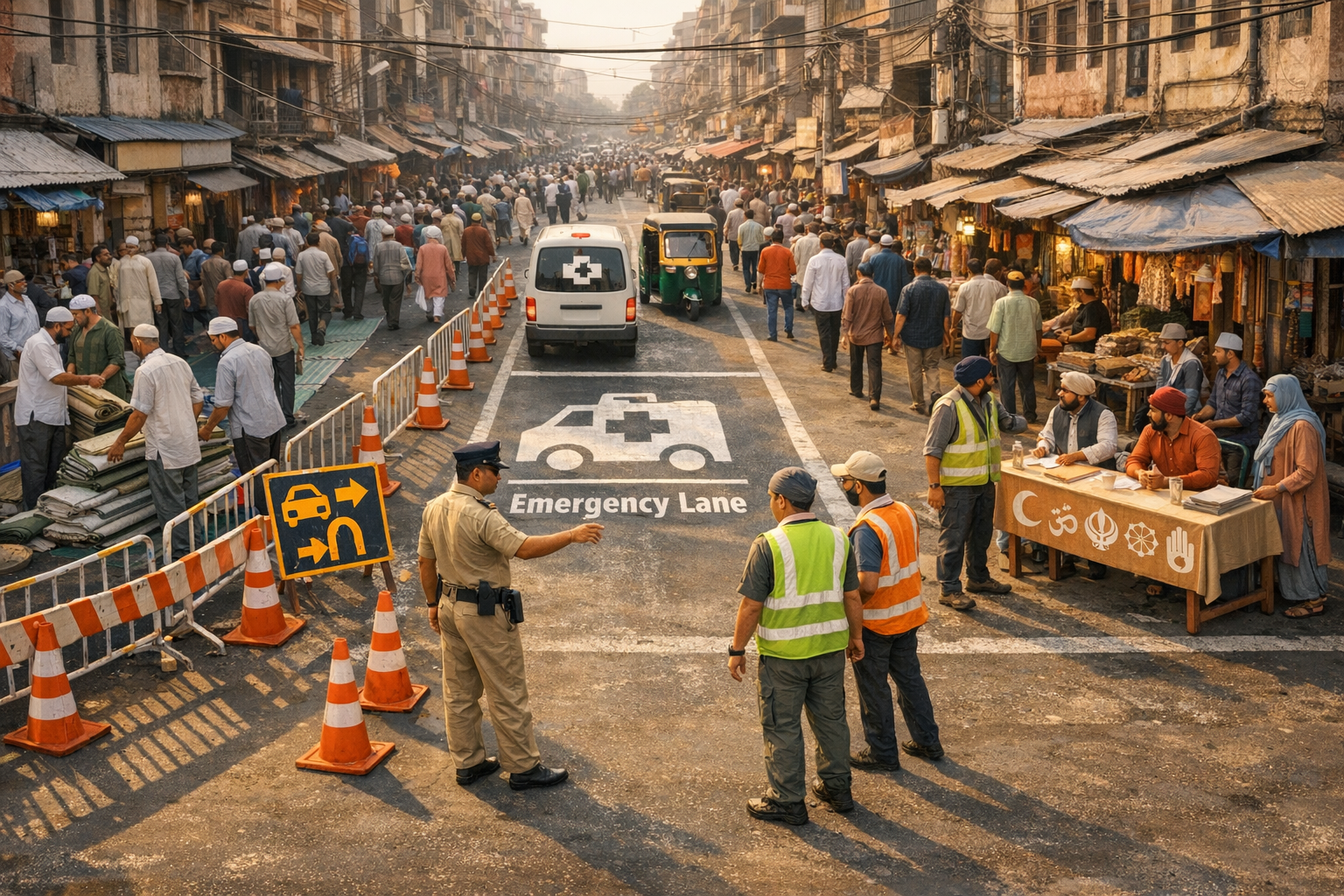
Rajabazar Tension in Kolkata After Jumma Namaz Road Block: Upholding Law, Peace, and Pluralism
Read more: Rajabazar Tension in Kolkata After Jumma Namaz Road Block: Upholding Law, Peace, and PluralismA brief dispute over Jumma Namaz on a public road in Kolkata’s Rajabazar highlighted a familiar urban challenge: balancing freedom of worship with the right to movement and livelihood. This analysis outlines the constitutional framework (Article 25 and Article 19), relevant judicial principles on the non-occupation of public ways, and Kolkata’s practice of permission-based, time-bound…
-

May 23, 2026 Panchang: Shukla Saptami to Ashtami, Auspicious Muhurat, Nakshatra & Rashi Guide
Read more: May 23, 2026 Panchang: Shukla Saptami to Ashtami, Auspicious Muhurat, Nakshatra & Rashi GuideSaturday, May 23, 2026, transitions from Shukla Paksha Saptami to Shukla Paksha Ashtami at 10:08 AM, shaping the day’s devotional and practical rhythm in the Daily Hindu Calendar. This comprehensive Panchang guide explains how Tithi is computed, outlines the qualities associated with Saptami and Ashtami, and shows how to select Shubh Muhurat using Abhijit, Rahu…
-
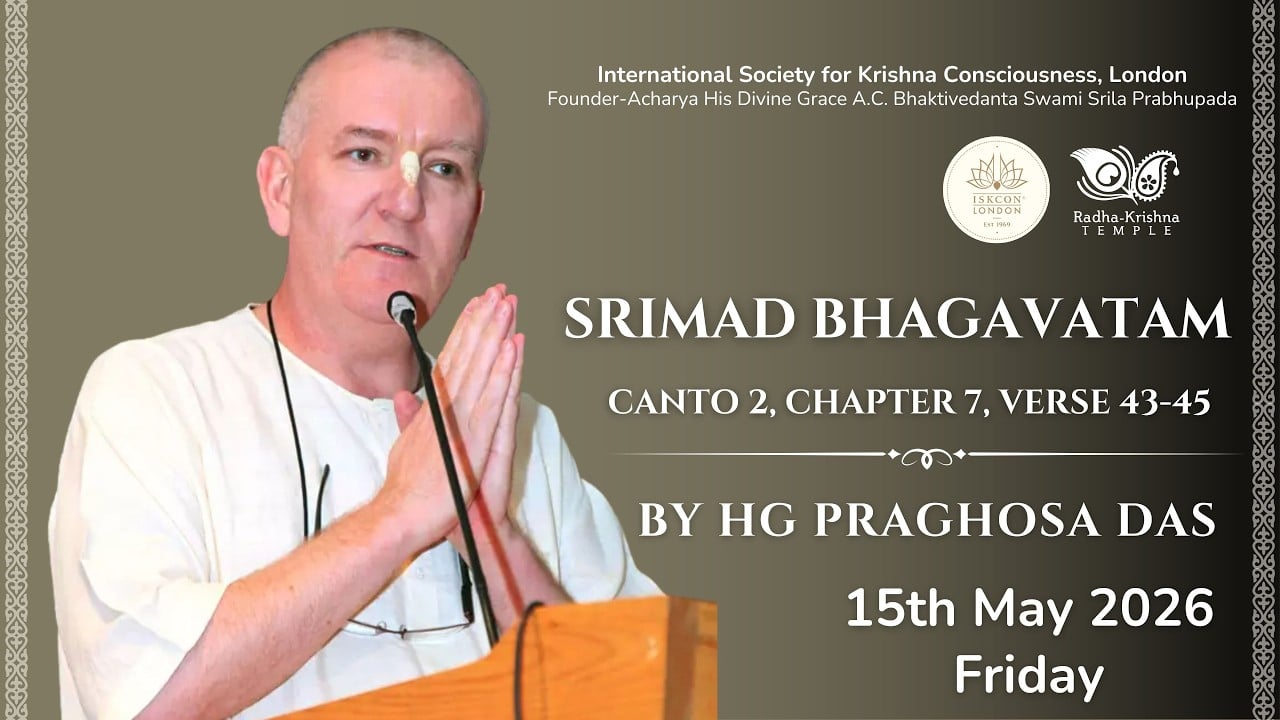
Transformative Special Seminar Day 1 with HG Praghosa Das: Bhakti, Unity, and Practice | 15 May 2026
Read more: Transformative Special Seminar Day 1 with HG Praghosa Das: Bhakti, Unity, and Practice | 15 May 2026Special Seminar Day 1 with HG Praghosa Das at ISKCON London Radha-Krishna Temple presented a disciplined, practice-centered exploration of bhakti-yoga for contemporary urban life. The discussion integrated classical Gaudiya Vaishnava theology with evidence-informed community leadership, child protection, and transparent governance. Attendees encountered a technical overview of the nine limbs of bhakti and the progressive stages…
-

Decoding Aghora Shiva: The Non‑Terrible Power Transforming Fear, Ignorance, and Karma
Read more: Decoding Aghora Shiva: The Non‑Terrible Power Transforming Fear, Ignorance, and KarmaAghora Shiva, the a-ghora or “non-terrible” aspect of Shiva, transforms fear into clarity by revealing the compassionate core behind seemingly fierce symbols. Rooted in the pañcabrahma framework, Aghora aligns with the southern face, the fire principle, and the function of transformative dissolution (saṁhāra). Iconography—triśūla, ḍamaru, khaṭvāṅga, kapāla, vibhūti, tiger skin, and cremation-ground motifs—forms a coherent…
-

Moodami Decoded: Avoidable Events When Guru & Shukra Are Combust—and Safer Alternatives
Read more: Moodami Decoded: Avoidable Events When Guru & Shukra Are Combust—and Safer AlternativesMoodami (Guru and Shukra combustion) marks periods when Jupiter or Venus approach the Sun and are considered ritually weakened in Hindu calendar practice. This long-form guide explains the astronomical basis of combustion, why it matters for shubha kāryas, and which events are best deferred. It clarifies common dilemmas—marriages, Aksharabhyasam, Seemantham, Griha Pravesh, and launching a…
-

Adhika Jyeshta Masam 2026 (Telugu Calendar): Sacred Dates, Rituals & Purushottama Vrata Guide
Read more: Adhika Jyeshta Masam 2026 (Telugu Calendar): Sacred Dates, Rituals & Purushottama Vrata GuideAdhika Jyeshta Masam 2026 in the Telugu Chandramana Panchangam runs from 17 May to 15 June during Parabhava Nama Samvatsaram. This intercalary month appears when no solar saṅkrānti occurs within a lunar cycle, ensuring long-term alignment of the lunisolar calendar. Revered as Purushottama Maas and dedicated to Lord Krishna, it emphasizes bhakti, ethical living, and…
-
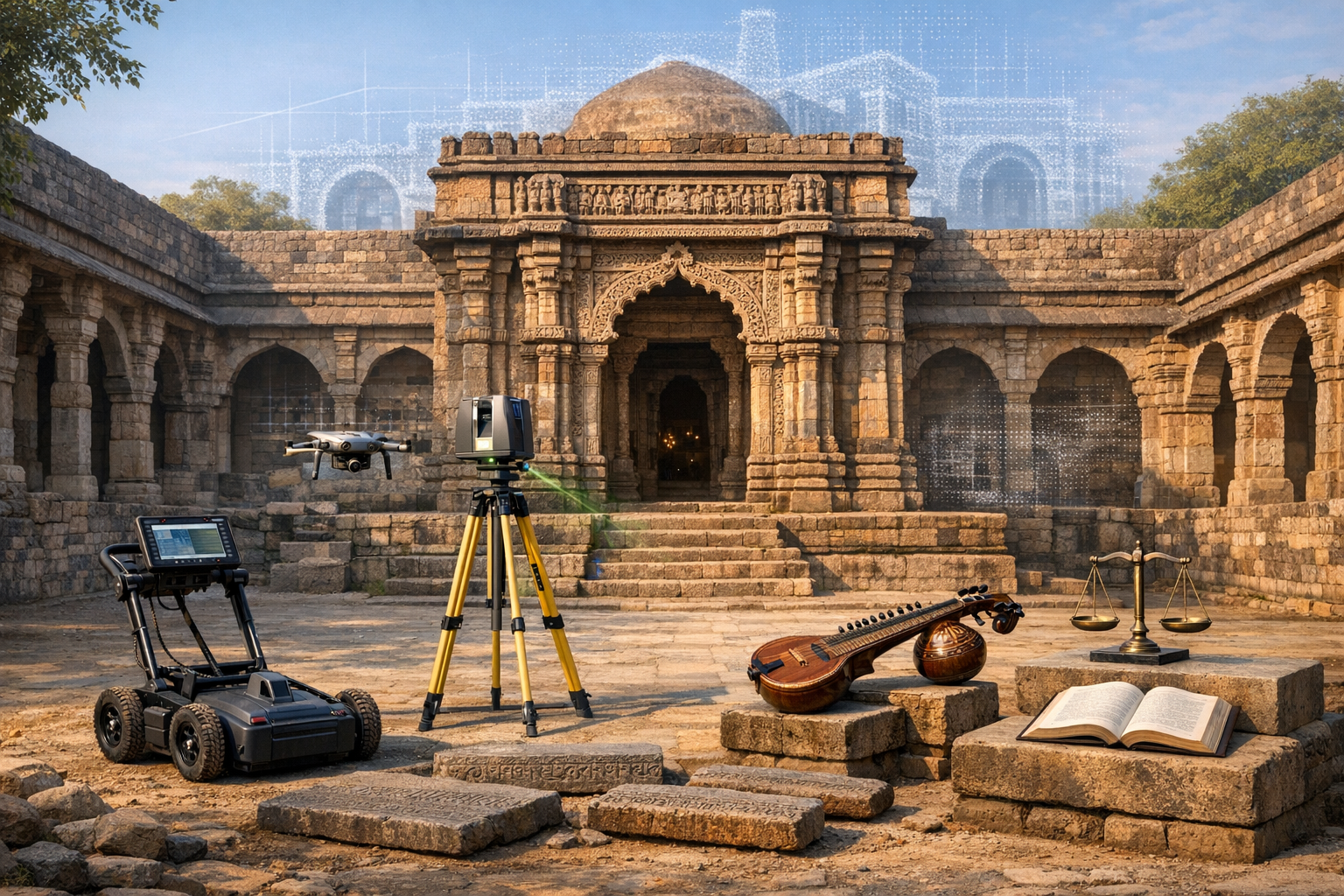
MP High Court Declares Bhojshala a Hindu Temple: Landmark Ruling, Ayodhya Principles, ASI Proof
Read more: MP High Court Declares Bhojshala a Hindu Temple: Landmark Ruling, Ayodhya Principles, ASI ProofThe Madhya Pradesh High Court has declared the disputed precinct within the Bhojshala complex a Hindu temple, expressly invoking the Supreme Court’s Ayodhya principles. This long-form analysis explains what the ruling means in constitutional and heritage law, how courts distinguish historical “religious character” from mere possession, and why archaeology and epigraphy matter. It unpacks the…
-

Krishna and the Six Sons of Devaki: A Compassionate Jain Harivamsa vs Hindu Puranas
Read more: Krishna and the Six Sons of Devaki: A Compassionate Jain Harivamsa vs Hindu PuranasThis long-form, comparative study examines how Hindu scriptures (Bhagavata Purana, Vishnu Purana) and the Jain Harivamsa Purana narrate the episode of Devaki’s six sons and Kamsa’s violence. It clarifies the difference between the Hindu Harivamsha and the Jain Harivamsa Purana, then maps their contrasting theological aims: divine descent and restoration of dharma versus karmic causality…
-

16 May as ‘Black Day’: Unflinching History of the Goa Inquisition and a Roadmap to Reconciliation
Read more: 16 May as ‘Black Day’: Unflinching History of the Goa Inquisition and a Roadmap to ReconciliationThe Hindu Ekta Manch has asked Goa to mark 16 May as ‘Black Day’, linking it to a 1546 letter in which Francis Xavier is widely understood to have advocated an Inquisition in Portuguese India. This analysis situates the demand within the documented history of the Goa Inquisition, clarifies the tribunal’s jurisdiction and colonial-era restrictions,…
-

Tamil Nadu’s Hindutva–Sanatan Dharma Flashpoint: Context, Constitutional Law, and a Dharmic Unity Roadmap
Read more: Tamil Nadu’s Hindutva–Sanatan Dharma Flashpoint: Context, Constitutional Law, and a Dharmic Unity RoadmapA minister’s statement—“We Are Not Against Hindus, But Hindutva”—and subsequent responses by BJP leader K. Annamalai spotlight a delicate but crucial distinction between Sanatan Dharma as a living religious tradition and Hindutva as a modern sociopolitical ideology. This analysis explains why that distinction matters in Tamil Nadu’s political culture, where Dravidian rationalism and temple heritage…
-

Neo‑Vedanta Unveiled: A Powerful Modern Synthesis Bridging Dharmic Wisdom and Pluralism
Read more: Neo‑Vedanta Unveiled: A Powerful Modern Synthesis Bridging Dharmic Wisdom and PluralismThis article examines Neo‑Vedanta as a rigorous, modern synthesis of Vedāntic wisdom grounded in the Prasthanatraya (Upanishads, Bhagavad Gita, Brahmasutras). It traces historical catalysts in nineteenth‑century India and explains how Sri Ramakrishna and Swami Vivekananda anchored a plural, practice‑oriented vision. Readers gain a clear understanding of Ishta as a principle of respectful diversity and see…
-

Udhayanidhi Stalin’s anti-‘Sanatan’ remarks: outrage, constitutional limits, and a call to unity
Read more: Udhayanidhi Stalin’s anti-‘Sanatan’ remarks: outrage, constitutional limits, and a call to unityUdhayanidhi Stalin’s renewed anti-‘Sanatan’ remarks in the Tamil Nadu Assembly have reignited a national discussion on religious freedom, constitutional limits, and the ethics of political speech. This analysis clarifies what Sanatan Dharma signifies within the broader Dharmic family, separating critique of social evils from denigration of faith. It maps the constitutional terrain—Articles 19 and 25–28,…
-

Virabhadra vs Bhairava: Decoding Shiva’s Fierce Twins—Origins, Iconography, Tantra, Temple Worship
Read more: Virabhadra vs Bhairava: Decoding Shiva’s Fierce Twins—Origins, Iconography, Tantra, Temple WorshipVirabhadra and Bhairava are Shiva’s fiercest yet compassionate forms, distinguished by purpose, scope, and soteriology. Virabhadra embodies event-specific dharmic correction in the Daksha Yajna narrative, while Bhairava serves as perennial guardian of thresholds and time. Their iconographies differ—Virabhadra as heroic warrior and Bhairava as digambara sentinel with skull-bowl and dog vahana—yet both enact restorative justice.…
-

Break Free from the Cult of Approval: A Seven-Year Deprogramming Toward Dharmic Inner Freedom
Read more: Break Free from the Cult of Approval: A Seven-Year Deprogramming Toward Dharmic Inner FreedomThis essay examines the “cult of approval” as a pervasive people-pleasing pattern and presents a seven-year deprogramming arc grounded in psychology and dharmic wisdom. It clarifies how unspoken social contracts—trading authenticity for belonging—form and why they are so hard to leave. It outlines pragmatic steps for change: mapping implicit rules, creating ethical distance, regulating the…
-

Sacred Science of Nidra: Yogic Sleep in Vedas, Upanishads, and Ayurveda for Whole-Person Wellbeing
Read more: Sacred Science of Nidra: Yogic Sleep in Vedas, Upanishads, and Ayurveda for Whole-Person WellbeingNidra, or sleep, occupies a sacred and carefully defined role in yoga and Hindu scriptures: it stabilizes the nervous system, ripens sattva, and supports deeper meditation. The Upanishads interpret deep sleep as a vital experiential key to understanding consciousness, while Patanjali frames nidra as a distinct mental modification that can inform contemplative practice. The Bhagavad…
-

Cultivating Abundance: A Dharmic, Sustainable Blueprint to End Food Shortages Worldwide
Read more: Cultivating Abundance: A Dharmic, Sustainable Blueprint to End Food Shortages WorldwideFood shortages stem less from absolute scarcity than from poor land use, waste, and weak market design. A dharmic ethic—uniting Dharma, Ahimsa, seva, and karuṇā—aligns naturally with modern agronomy to promote Sustainable agriculture and robust Food Security. The blueprint emphasizes proper utilization of suitable, currently idle land; regenerative soil and water stewardship; climate-resilient diversification with…
-

Memento Mori as Dharmic Practice: Urgent Living, Clear Priorities, and Courageous Leadership
Read more: Memento Mori as Dharmic Practice: Urgent Living, Clear Priorities, and Courageous LeadershipThis article presents a disciplined, Dharmic approach to mortality contemplation as a practical technology for urgent living and ethical leadership. It synthesizes insights from Hinduism, Buddhism, Jainism, and Sikhism—maranasati, pratikraman, simran, and dharma—to convert awareness of impermanence into decisive action. A step-by-step protocol guides breath awareness, a regrets inventory, value-based reprioritization, and execution of one…
-

Bliss, Boredom, and Breakthroughs: An Evidence-Based Guide to Japa Practice
Read more: Bliss, Boredom, and Breakthroughs: An Evidence-Based Guide to Japa PracticeJapa often swings between luminous connection and dutiful repetition. This guide explains why that fluctuation is normal and how to stabilize practice using classical modes (vācika, upāṁśu, mānasa), breath entrainment, and ergonomic cues. It reframes “bad days” into actionable categories—physiological, environmental, cognitive-emotional, and social—so adjustments become precise rather than punitive. Practical protocols cover time-of-day strategy,…
-
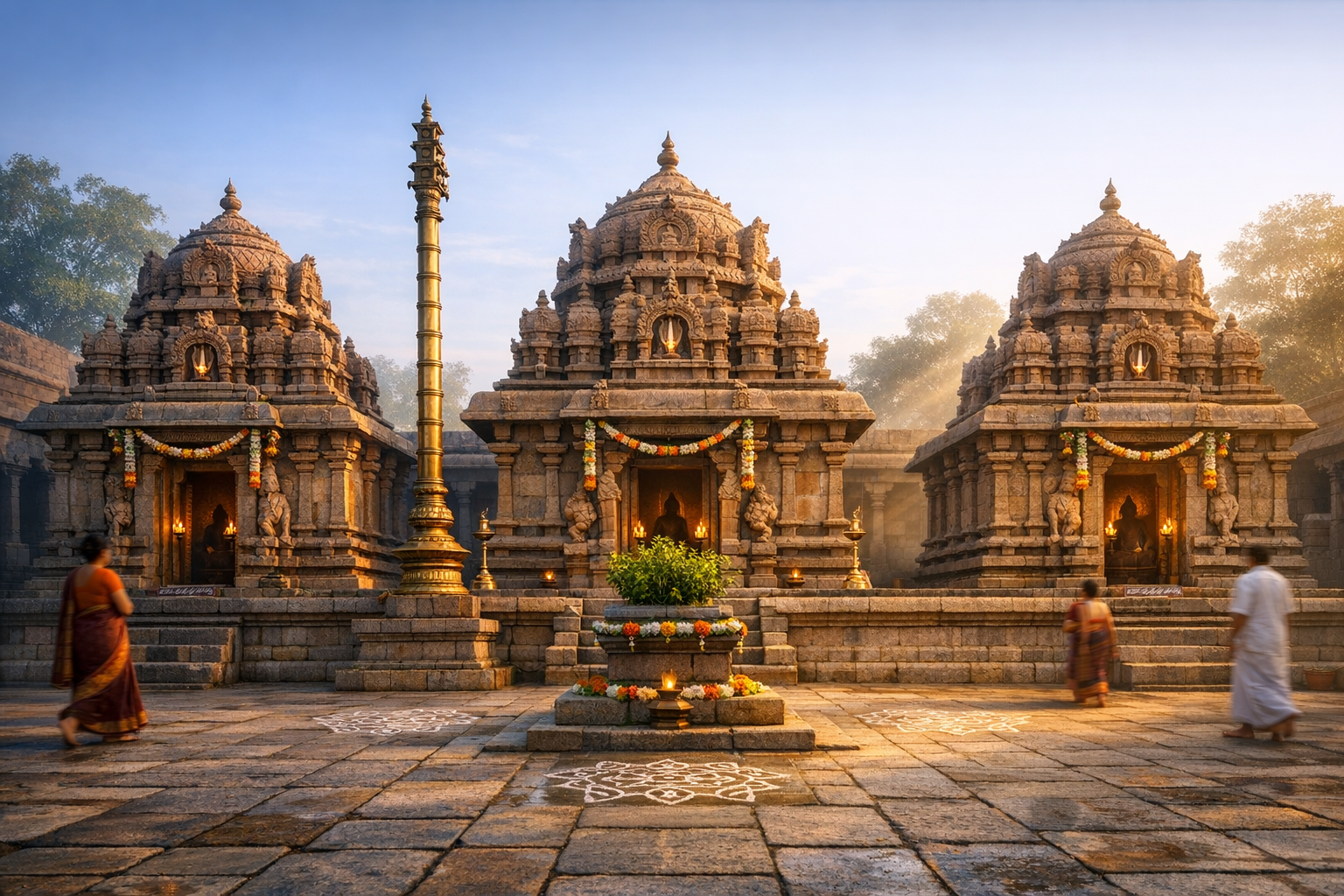
Thanjai Mamani Koil: Unraveling Thanjavur’s Sacred Triple Divya Desam and Living Heritage
Read more: Thanjai Mamani Koil: Unraveling Thanjavur’s Sacred Triple Divya Desam and Living HeritageThanjai Mamani Koil in Thanjavur is a rare triadic Divya Desam where three adjacent Vishnu sanctums share a single sacred precinct. Celebrated in the Naalayira Divya Prabandham, the complex embodies a living synthesis of theology, architecture, and ritual practice in the Kaveri delta. The three deities—Neelamegha Perumal, Manikundra Perumal, and Veera Narasimha Perumal—offer complementary experiences…
-

Dissolving Trishna’s Hidden Fire: Timeless Dharmic Strategies to Transform Craving into Freedom
Read more: Dissolving Trishna’s Hidden Fire: Timeless Dharmic Strategies to Transform Craving into FreedomThis long-form, research-driven exploration explains trishna (craving) as the subtle energy that precedes action—the “root before the root.” It integrates Hindu, Buddhist, Jain, and Sikh perspectives to present a unified Dharmic framework for transforming craving into clarity and freedom. Readers gain a technical map (kleśas, vāsanās, vedanā, dependent arising), scriptural anchors (Yoga Sutra, Bhagavad Gita,…
-
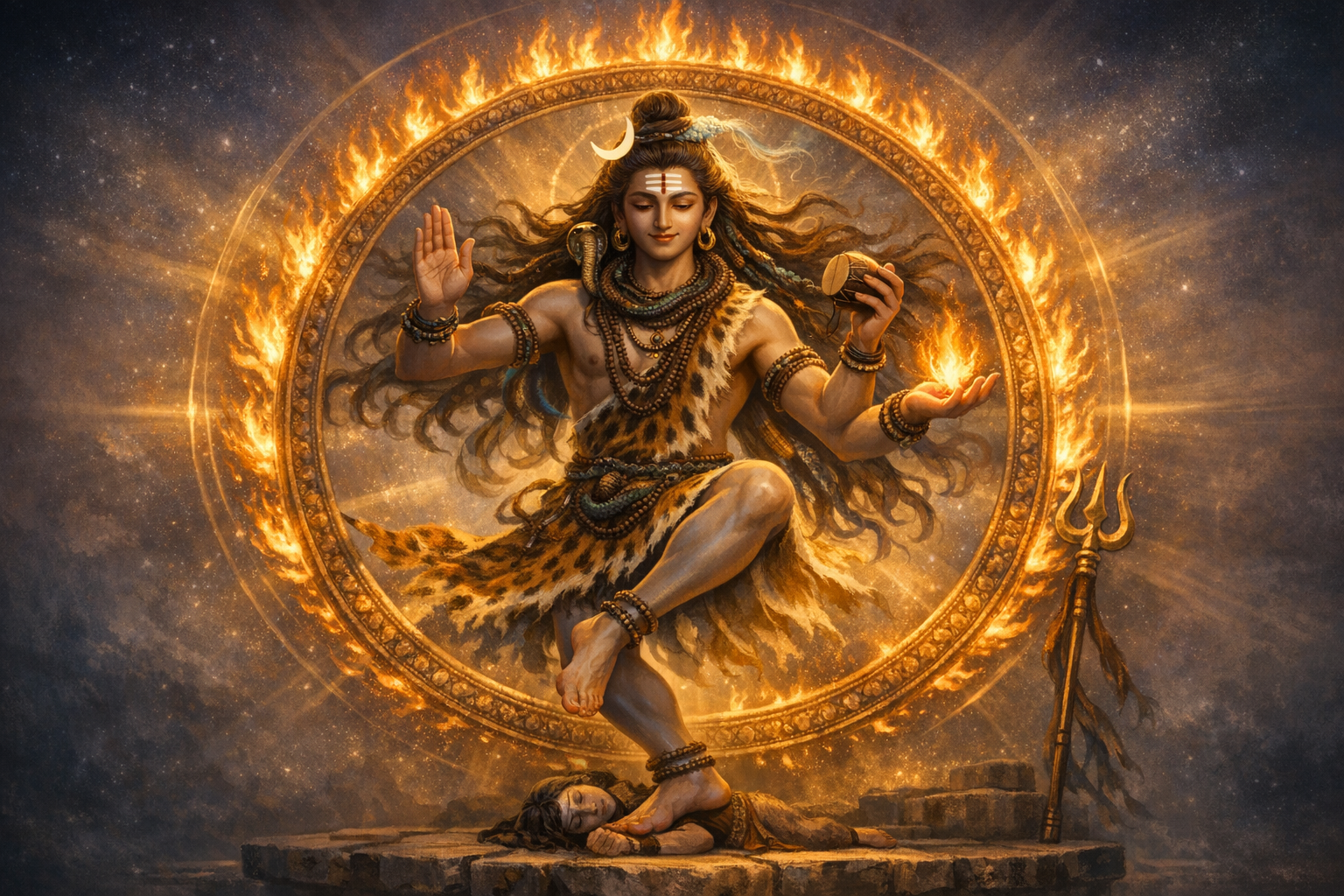
Samhara of Shiva: Unveiling the Compassionate Power of Dissolution and Renewal
Read more: Samhara of Shiva: Unveiling the Compassionate Power of Dissolution and RenewalSamhara, the dissolution aspect of Shiva, is not violent destruction but compassionate renewal that clears exhausted forms so truth can shine. Grounded in Vedic, Purāṇic, and Āgamic sources, this long-form analysis explains how Samhara interlocks with Shiva’s five acts to sustain cosmic and personal transformation. The iconography of Naṭarāja, Mahākāla, and Kālābhairava decodes dissolution as…
-

May 22, 2026 Panchang: Exact Sashti–Saptami Shift, Good Muhurtas, Nakshatra and Rashi Insights
Read more: May 22, 2026 Panchang: Exact Sashti–Saptami Shift, Good Muhurtas, Nakshatra and Rashi InsightsMay 22, 2026 is a two-tithi day in the Hindu Calendar: Shukla Paksha Sashti lasts until 11:46 AM (IST), followed by Shukla Paksha Saptami. This guide explains how to plan devotion and life tasks across the Sashti-to-Saptami transition, when to prefer Abhijit and Brahma Muhurtas, and how to avoid Rahu Kalam using a simple, location-based…
-

Inspiring Dialogue in Kochi: HJS and Amrita Vishwa Vidyapeetham Explore Value-Centered Synergy
Read more: Inspiring Dialogue in Kochi: HJS and Amrita Vishwa Vidyapeetham Explore Value-Centered SynergyRepresentatives of the Hindu Janajagruti Samiti (HJS) paid a courtesy visit to Dr U. Krishnakumar at Amrita Vishwa Vidyapeetham, Kochi, opening a channel for academia–civil society collaboration. The exchange highlighted shared priorities in values-based education, Indian Knowledge Systems, and community engagement aligned with NEP 2020. By emphasizing non-partisan, ethics-driven design, the dialogue supports campus neutrality…
Categories
- Agriculture (20)
- Akhand Bharat (30)
- Aryan Migration -vs- Out of India (8)
- Ayurveda (20)
- Celebrations (882)
- Community (150)
- Community Events (231)
- Cross Posted (105)
- Cultural Advocacy (33)
- Cultural Commentary (61)
- Cultural Heritage (556)
- Cultural Insights (142)
- Cultural Issues (29)
- Cultural Traditions (757)
- Culture (33)
- Economics (22)
- Education (152)
- Geo-Politics (60)
- History (379)
- Indian Authors (7)
- International Trade (8)
- Labor Market (8)
- Literature (97)
- News (619)
- Opinion Pieces (143)
- Personal Reflections (161)
- Personalities (186)
- Philosophy (1,036)
- Politics (208)
- Scripts (3)
- Scriptures (975)
- Spiritual Insight (3,208)
- Spirituality (750)
- Temples (731)
- Tribute (65)
- Uncategorized (6)
- Yoga (103)
Archive