
-
Sankirtana as Sound Medicine: How Hare Krishna Chanting Nurtures Inner Calm and Social Harmony
Read more: Sankirtana as Sound Medicine: How Hare Krishna Chanting Nurtures Inner Calm and Social HarmonyA common objection to public Hare Krishna chanting asks: how is it welfare if bystanders do not understand the words? Sankirtana addresses this by working through sound’s direct effects on breath, attention, and emotion, much like a medicine that heals without requiring knowledge of pharmacology. Classical bhakti sources emphasize kirtan’s potency in the present age,…
-

“I Feel No Fear”: How the Hare Krishna Maha-mantra Builds Abhaya Across Dharmic Paths
Read more: “I Feel No Fear”: How the Hare Krishna Maha-mantra Builds Abhaya Across Dharmic PathsA memorable exchange crystallizes a core promise of mantra meditation: asked what chanting the Hare Krishna maha-mantra feels like, Srila Prabhupada replied, “I feel no fear.” This article unpacks that claim in an academic yet accessible way, explaining how abhaya (fearlessness) emerges at the intersection of Bhakti theology, rhythmic sound, and breath regulation. It clarifies…
-

Stop Neglecting Karnataka’s Temples: Bagalkot Mandir Mahasangh Seeks Bold Budget Action
Read more: Stop Neglecting Karnataka’s Temples: Bagalkot Mandir Mahasangh Seeks Bold Budget ActionA regional convention of the Karnataka Mandir Mahasangh in Bagalkot has urged the state to create a ring-fenced budget for temple renovation, preventive maintenance, and professional management. The appeal frames temples as living heritage—sacred spaces that sustain ritual continuity, artisans’ livelihoods, and local economies—requiring predictable funding and technical rigor. The analysis outlines a pragmatic roadmap:…
-
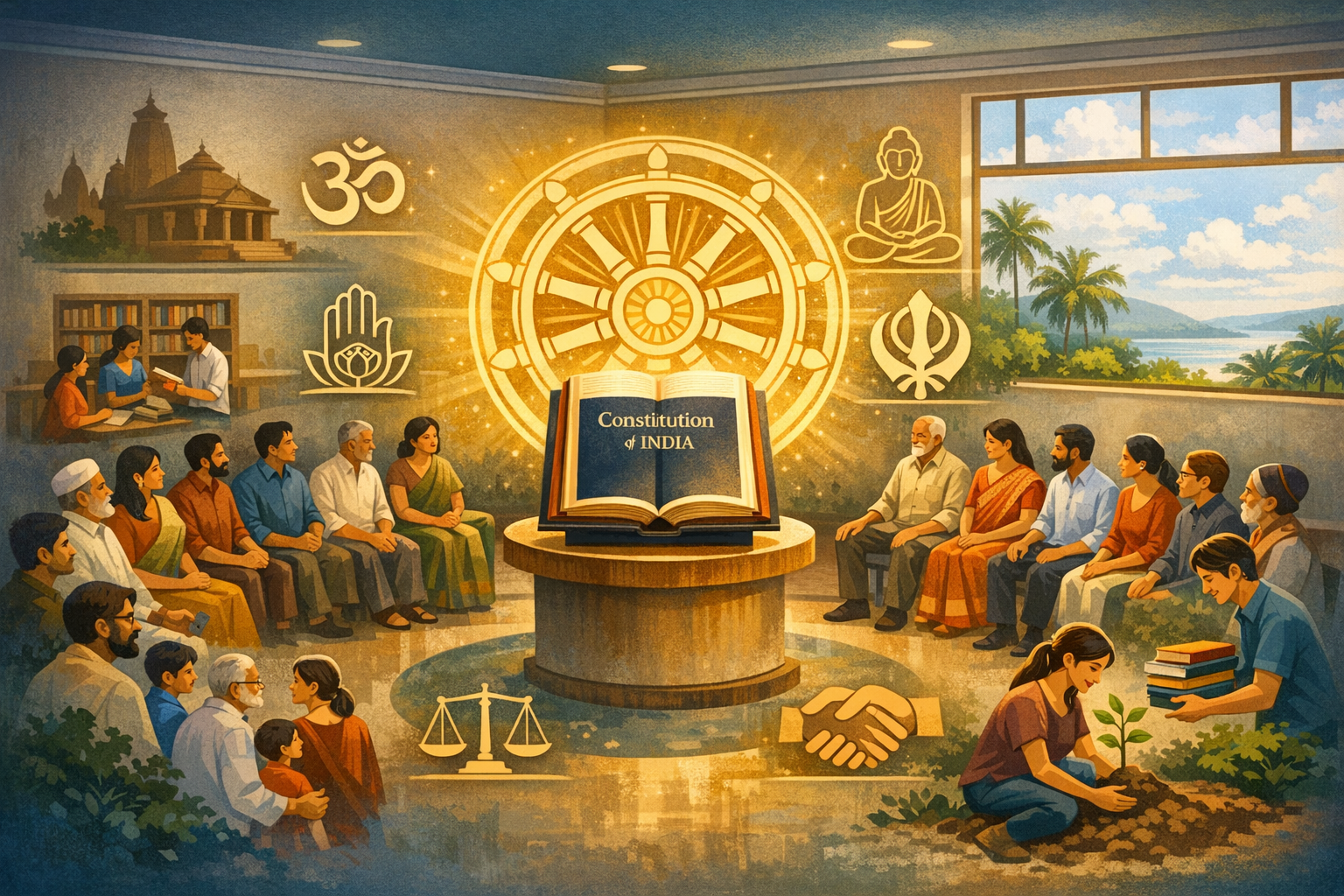
Bantwal Adhiveshan ignites Dharmic unity and values-driven vision for Constitutional Hindu Rashtra
Read more: Bantwal Adhiveshan ignites Dharmic unity and values-driven vision for Constitutional Hindu RashtraThe Bantwal district-level Hindu Rashtra Adhiveshan, organized by Hindu Janajagruti Samiti (HJS), concluded with a values-driven call to strengthen Hindu unity, safeguard Sanatan Dharma, and cultivate value-based families. Discussions framed a Constitutional Hindu Rashtra as a pluralistic, dharma-anchored civic vision aligned with Articles 25–28 of the Indian Constitution and the spirit of fundamental duties. On…
-

Decoding the Pitha of the Shivling: Divine Architecture, Agamic Science, and Living Ritual
Read more: Decoding the Pitha of the Shivling: Divine Architecture, Agamic Science, and Living RitualThe pitha or yoni-pitha of the Shivling is not merely a base but a sacred support that grounds, stabilizes, and channels divine energy. Rooted in Agamic prescriptions and Shilpa Shastra canons, it integrates precise geometry, structural stability, and a hydraulically sound soma-sutra or gomukha outlet for abhishekam. The linga’s three-part articulation fits into the pitha…
-
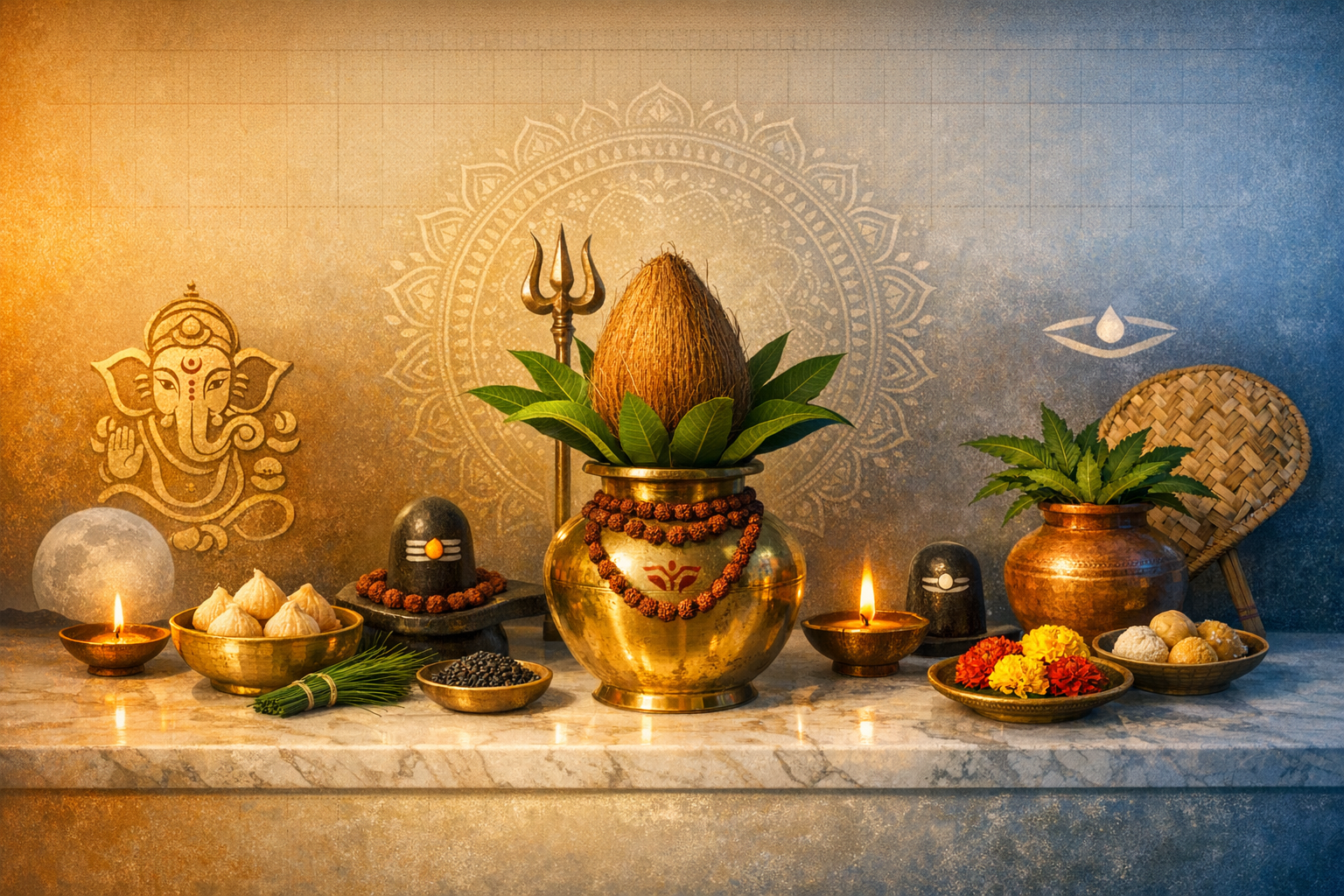
July 2026 Hindu Festivals (IST): Sankashti, Kalashtami, Sheetala Ashtami—Vrat & Puja Guide
Read more: July 2026 Hindu Festivals (IST): Sankashti, Kalashtami, Sheetala Ashtami—Vrat & Puja GuideThis guide compiles July 2026 Hindu festivals and vrats based on major Indian Panchang traditions, with all observances referenced to Indian Standard Time (IST). It highlights Sankashti Chaturthi on July 3 with a moonrise at 9:49 PM (IST), Kalashtami on July 7, and region-specific Sheetala Ashtami, Indrani Puja, and Trilochan Ashtami on July 8. Clear…
-
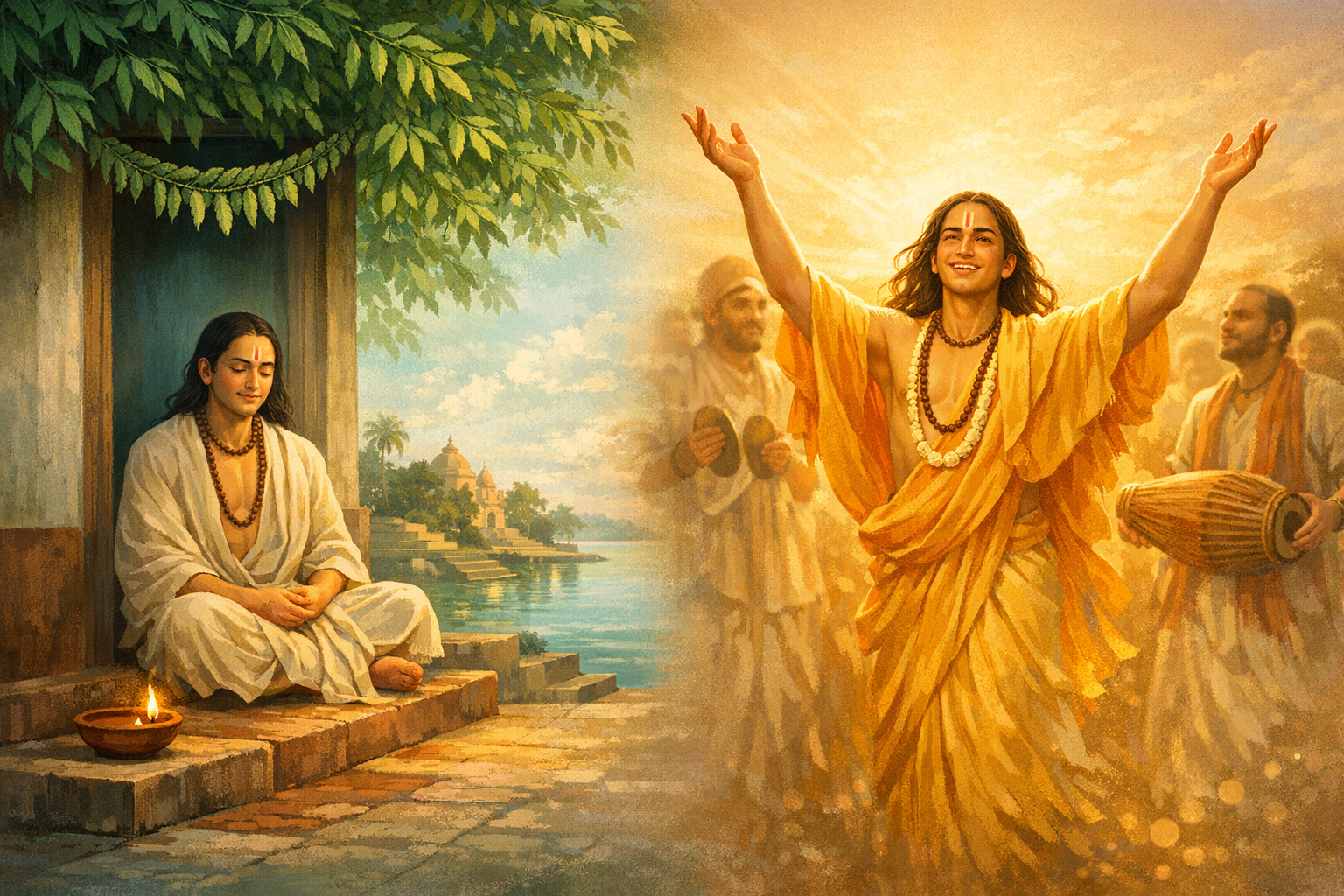
Golden Grace and Neem-born Humility: Decoding ‘Gauranga’ and ‘Nimai’ of Chaitanya Mahaprabhu
Read more: Golden Grace and Neem-born Humility: Decoding ‘Gauranga’ and ‘Nimai’ of Chaitanya MahaprabhuThis article decodes the dual symbolism embedded in Chaitanya Mahaprabhu’s epithets “Nimai” and “Gauranga.” It explains how “Nimai,” rooted in neem’s purificatory aura and Bengal’s domestic piety, conveys protection, intimacy, and inner cleansing. It then unpacks “Gauranga” as a theological epithet signifying Krishna’s golden, compassion-filled form, central to Gaudiya Vaishnavism’s mission of Nama Sankirtana. Drawing…
-

Mumbai land row: Hindu Vidhidnya Parishad seeks transparent action on alleged Church encroachment
Read more: Mumbai land row: Hindu Vidhidnya Parishad seeks transparent action on alleged Church encroachmentHindu Vidhidnya Parishad has sought administrative action over an alleged illegal occupation of government land by the Church of St Andrew and St Columba in Mumbai. This analysis explains why a neutral, evidence-based approach—grounded in land records, joint surveys, and fair hearings—is essential to uphold rule of law and public trust. It outlines the legal…
-
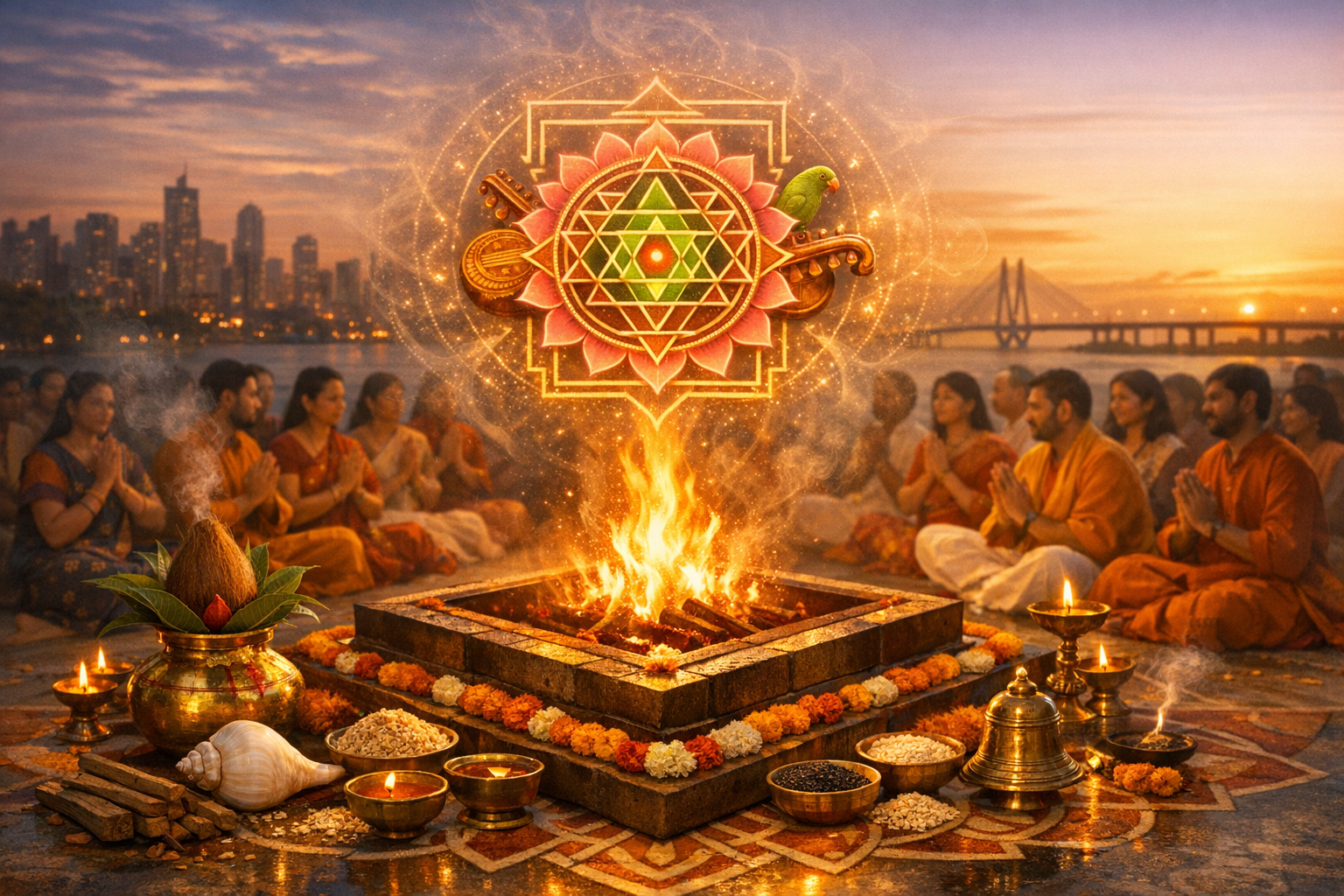
Shri Rajmatangi Mahayagya in Mumbai: A potent Vedic call for Bharat’s protection and prosperity
Read more: Shri Rajmatangi Mahayagya in Mumbai: A potent Vedic call for Bharat’s protection and prosperityHeld in Mumbai, the Shri Rajmatangi Mahayagya brought together devotees and ritual specialists for a meticulously structured Vedic–Agamic ceremony dedicated to Bharat’s protection and prosperity. Centered on Shri Rajmatangi (Raja Shyamala), a sovereign form of the Mahavidya Goddess Matangi associated with ethical speech and wise governance, the rite aligned mantra, homa, and communal sankalpa to…
-

Decode Shyam–Shyama: Baul Mysticism’s Bold Union of Krishna and Kali as One
Read more: Decode Shyam–Shyama: Baul Mysticism’s Bold Union of Krishna and Kali as OneBaul spirituality in Bengal contemplates Krishna (Shyam) and Kali (Shyama) as expressions of one luminous Reality, using their shared dark hue as a theological bridge between bhakti and tantra. This essay explains how Bauls integrate Vaishnava love, Shakta insight, yogic embodiment, and Sufi interiority to honor moner manush—the innermost Beloved. It unpacks the symbolism of…
-

Turning Obstacles into Opportunity: A Dharmic Guide to Action, Resilience, and Seva
Read more: Turning Obstacles into Opportunity: A Dharmic Guide to Action, Resilience, and SevaA classic teaching story about a boulder in the roadway demonstrates a rigorous dharmic principle: obstacles are structured invitations to act responsibly for the common good. Read how Hinduism, Buddhism, Jainism, and Sikhism converge on the same ethic of service, non-harm, and Right Effort, turning adversity into measurable public benefit. The analysis connects Karma Yoga,…
-

All Faiths Share Core Values – So Why Convert? A Deep, Dharmic, Evidence-Based Guide
Read more: All Faiths Share Core Values – So Why Convert? A Deep, Dharmic, Evidence-Based GuideThis long-form, evidence-based guide explains why religious conversion persists even when core values—compassion, truth, service, and self-discipline—are widely shared. It distinguishes ethical convergence from deeper differences in metaphysics, salvation, and institutional identity that often drive conversion debates. Drawing on Hinduism, Buddhism, Jainism, and Sikhism, it highlights Dharmic pluralism through ideas like Ishta and anekantavada, showing…
-

Spirituality of Nature: Dharmic wisdom and science for resilient, unshakable inner strength
Read more: Spirituality of Nature: Dharmic wisdom and science for resilient, unshakable inner strengthThis long‑form exploration presents a rigorous, Dharmic view of nature as a living revelation of consciousness, uniting Hinduism, Buddhism, Jainism, and Sikhism around interdependence, non‑harm, disciplined awareness, and service. It clarifies how Upanishadic, Buddhist, Jain, and Sikh insights translate into ecological ethics and everyday practices. Evidence from psychology and physiology shows why slow breathing, awe,…
-
Does God Really Exist? A Dharmic Deep Dive into Suffering, Karma, and Yuga Dharma
Read more: Does God Really Exist? A Dharmic Deep Dive into Suffering, Karma, and Yuga DharmaThis long-form exploration reframes “Does God really exist?” through the dharmic lenses of Hinduism, Buddhism, Jainism, and Sikhism. It explains how Yuga Dharma situates the present age (Kali Yuga) and why accessible practices—like nāma-japa, kīrtana, satsanga, and seva—are especially potent now. Drawing on pramāṇa theory, Nyāya arguments, and Vedānta’s non-dual and devotional streams, it outlines…
-

Arghya to the Sun: Vedic Symbolism, Subtle Physiology, and Daily Surya Worship Benefits
Read more: Arghya to the Sun: Vedic Symbolism, Subtle Physiology, and Daily Surya Worship BenefitsArghya—offering water to the rising Sun—unites Vedic symbolism, yogic subtle physiology, and modern circadian insights in a simple, potent daily rite. Rooted in sandhyā-vandana and popularized in contemporary teachings as “water is love,” arghya blends mantra, breath, and gratitude to steady attention and uplift mood. Yogic traditions describe a gentle activation of the solar current…
-
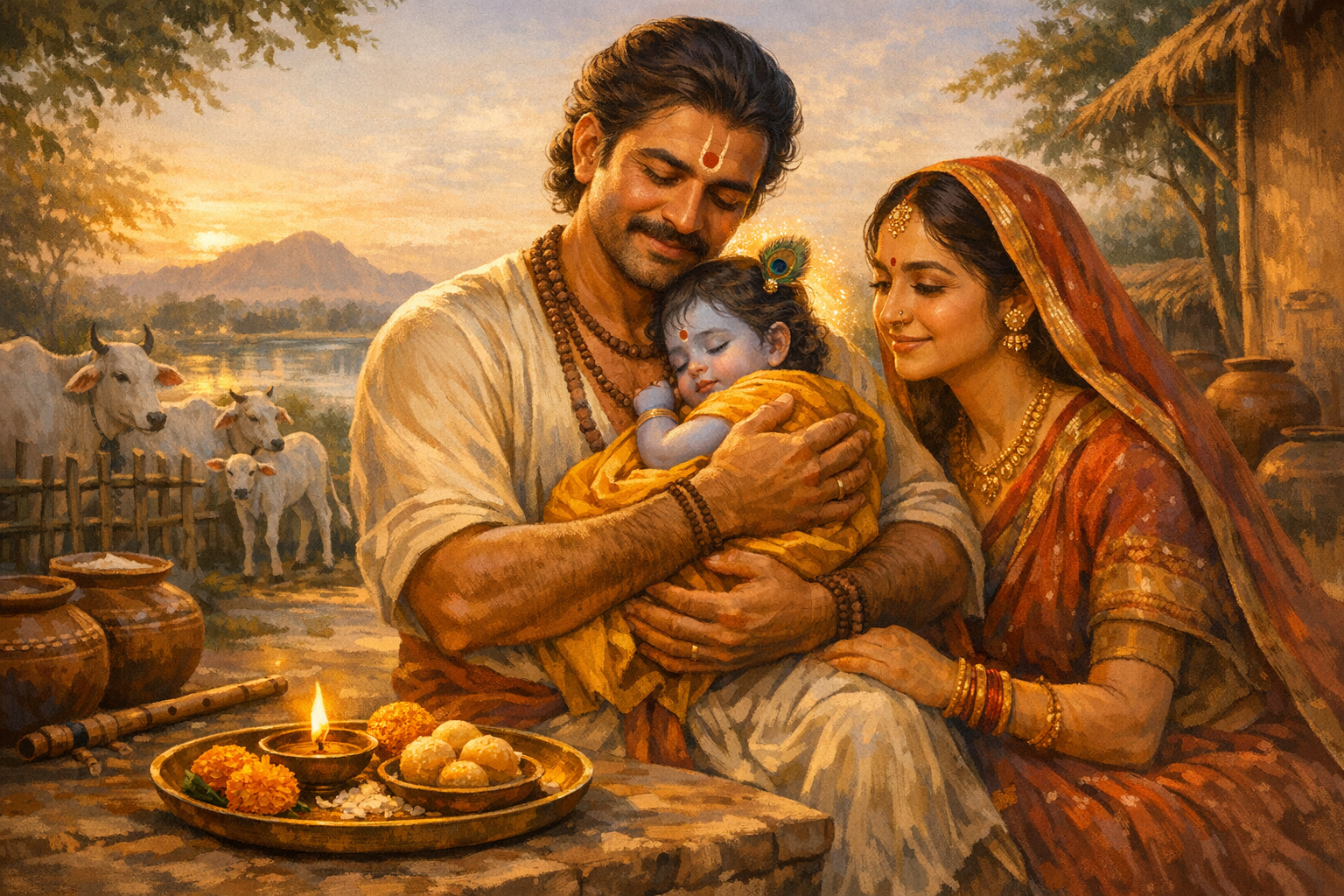
Nandagopa, Krishna’s Foster-Father: A Powerful Study in Dharma, Adoption, and Love Beyond Blood
Read more: Nandagopa, Krishna’s Foster-Father: A Powerful Study in Dharma, Adoption, and Love Beyond BloodNandagopa—Nanda Maharaja of Vraja—embodies a dharmic model of fatherhood defined by nurture rather than blood. Drawing on the Bhagavata Purana and allied traditions, this analysis situates him as Krishna’s foster-father who performs samskaras, protects the child, and leads the Gopa community with ethical clarity. The study explores adoption and kinship in Dharmashastra, shows how bhakti…
-

Sharpening the Inner Compass: Trusting Intuition on the Dharmic Path with Clarity and Courage
Read more: Sharpening the Inner Compass: Trusting Intuition on the Dharmic Path with Clarity and CourageTrustworthy intuition in Hinduism is not impulse but disciplined, dharma-aligned insight that integrates perception, reason, and sacred testimony. This article clarifies how the inner compass relates to Atman, the Upanishads, and the Bhagavad Gita, while showing convergences with prajñā in Buddhism, anekāntavāda in Jainism, and hukam in Sikhism. Readers learn practical tests for discernment—ahiṃsā, satya,…
-
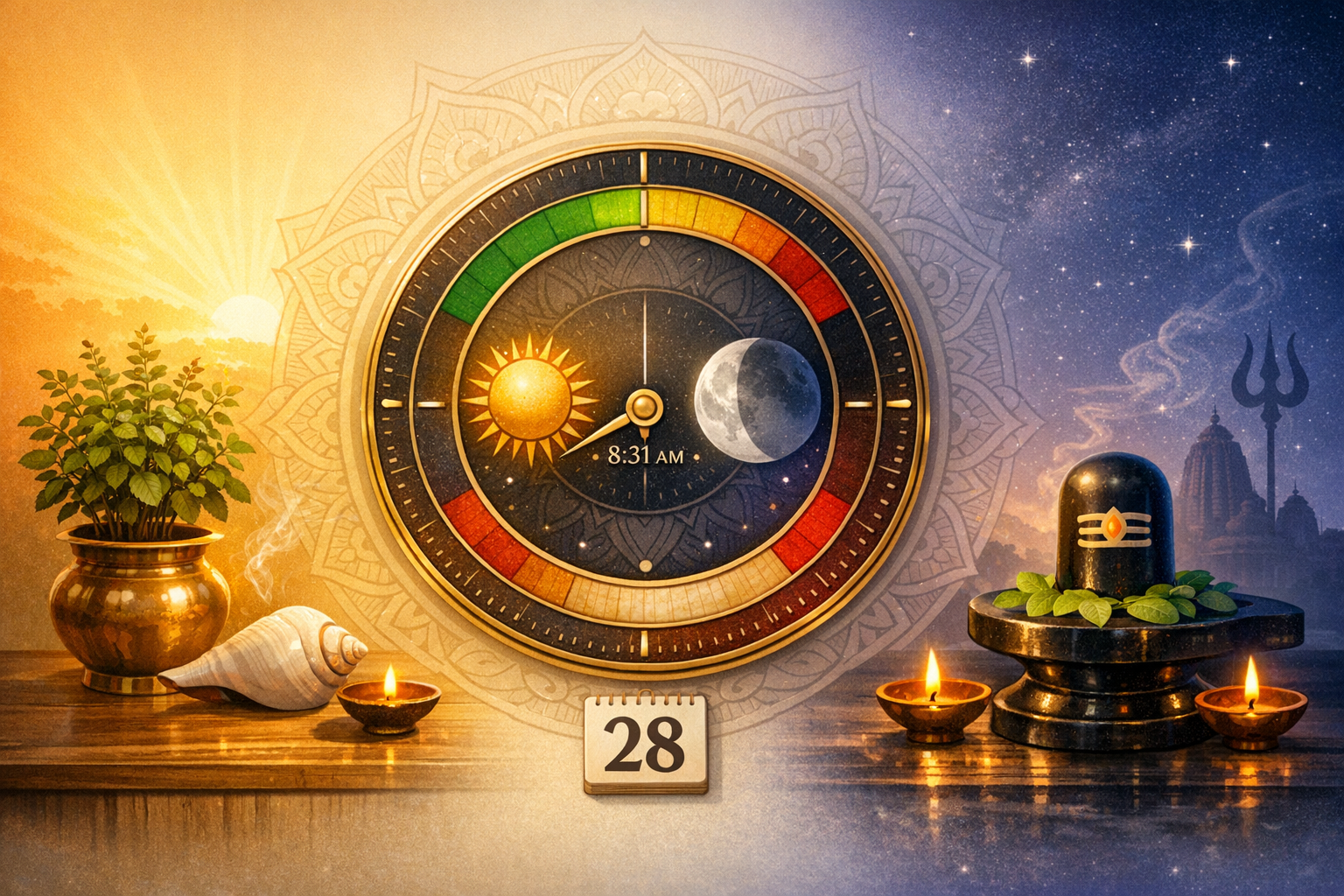
May 28, 2026 Panchang: Shukla Dwadashi–Trayodashi, Sacred Muhurats, Pradosh & Parana Guide
Read more: May 28, 2026 Panchang: Shukla Dwadashi–Trayodashi, Sacred Muhurats, Pradosh & Parana GuideOn Thursday, May 28, 2026, the Panchang marks Shukla Paksha Dwadashi until 8:31 AM, after which Shukla Paksha Trayodashi prevails. This timing supports Ekadashi parana in the morning and aligns the evening with Shukla Pradosh observance. The guide explains what a tithi is, why times vary by region and method, and how to use Abhijit…
-

From Boulder to Breakthrough: How Obstacles Become Opportunities in Dharmic Practice
Read more: From Boulder to Breakthrough: How Obstacles Become Opportunities in Dharmic PracticeA timeless parable about a king, a boulder, and a hidden reward demonstrates how initiative and service turn obstacles into opportunities. Interpreted through dharmic lenses—Hinduism, Buddhism, Jainism, and Sikhism—the story converges on ethical action (dharma), selfless service (seva), and resilient optimism (chardi kala). The analysis links Karma Yoga and mindful effort with modern research on…
-

Why Convert When Core Values Align? A Dharmic, Ethical, and Legal Roadmap to Pluralism
Read more: Why Convert When Core Values Align? A Dharmic, Ethical, and Legal Roadmap to PluralismIf core values across religions already align, why do conversion campaigns persist—and why do they trigger anxiety? This long-form analysis approaches the question through Dharmic frameworks, showing how ahiṁsā, satya, seva, and karuṇā unite Hindu, Buddhist, Jain, and Sikh traditions. It explains the theological, social, and historical forces that drive conversion, while clarifying international and…
-

Spirituality of Nature: Sacred Dharmic Wisdom, Science-Backed Healing, Inner Resilience
Read more: Spirituality of Nature: Sacred Dharmic Wisdom, Science-Backed Healing, Inner ResilienceThis long-form guide presents an academic yet accessible exploration of the spirituality of nature across Hinduism, Buddhism, Jainism, and Sikhism. It grounds ecological reverence in the Upanishads and the Bhagavad Gita, links practices like mindfulness and pranayama to measurable health benefits, and shows how Ahimsa and Aparigraha become daily Environmental stewardship. Readers gain a stepwise…
-

Does God Really Exist? Evidence, Yuga Dharma, and Dharmic Wisdom across Indic Traditions
Read more: Does God Really Exist? Evidence, Yuga Dharma, and Dharmic Wisdom across Indic TraditionsThis essay examines the perennial question ‘Does God really exist?’ through the lens of Yuga Dharma and the shared wisdom of Hindu, Buddhist, Jain, and Sikh traditions. It explains how Kali Yuga conditions intensify suffering yet elevate the effectiveness of simple, sincere practices such as devotion, meditation, simran, ahiṃsā, and seva. Drawing on classical Indian…
-

Offering Arghya to the Sun: Sacred Science, Healing Light, and a Detailed Ritual Guide
Read more: Offering Arghya to the Sun: Sacred Science, Healing Light, and a Detailed Ritual GuideArghya—the Vedic offering of water to the rising Sun—unites gratitude, ethics, and contemplative focus in a simple daily rite. Rooted in Rigvedic hymns and household dharma, it pairs the radiance of Surya with the nurturance of Apa (water), symbolizing compassion illuminated by discernment. This guide explains timing, materials, mantras (including the Dvādaśa Āditya salutations and…
-

High-Stakes Calcutta HC Row on Bakri Eid Slaughter: TMC Petition, Cow Laws, and a Path to Harmony
Read more: High-Stakes Calcutta HC Row on Bakri Eid Slaughter: TMC Petition, Cow Laws, and a Path to HarmonyA reported petition by TMC leaders Mahua Moitra and Adv Akhruzzaman over West Bengal’s cattle slaughter notification ahead of Bakri Eid has spotlighted how constitutional rights, animal welfare, and public order must be balanced. This analysis explains the state’s statutory framework (notably the WB Animal Slaughter Control Act 1950), national overlays such as the Prevention…
Categories
- Agriculture (20)
- Akhand Bharat (30)
- Aryan Migration -vs- Out of India (8)
- Ayurveda (20)
- Celebrations (882)
- Community (150)
- Community Events (229)
- Cross Posted (105)
- Cultural Advocacy (33)
- Cultural Commentary (61)
- Cultural Heritage (556)
- Cultural Insights (142)
- Cultural Issues (29)
- Cultural Traditions (757)
- Culture (33)
- Economics (22)
- Education (151)
- Geo-Politics (60)
- History (377)
- Indian Authors (6)
- International Trade (8)
- Labor Market (8)
- Literature (97)
- News (619)
- Opinion Pieces (143)
- Personal Reflections (161)
- Personalities (186)
- Philosophy (1,036)
- Politics (208)
- Scripts (3)
- Scriptures (975)
- Spiritual Insight (3,207)
- Spirituality (750)
- Temples (730)
- Tribute (65)
- Uncategorized (6)
- Yoga (103)
Archive