
-
Conquering the Disease of Envy: SB 3.29’s Remedy for Respect, Ahimsa, and Dharmic Unity
Read more: Conquering the Disease of Envy: SB 3.29’s Remedy for Respect, Ahimsa, and Dharmic UnityThis deep-dive, inspired by a Brambleton, VA discourse on May 21, 2026, examines why envy (īrṣyā, asūyā, mātsarya) is the principal obstacle to authentic respect and spiritual growth. Drawing on Srimad Bhagavatam 3.29, it maps how envy aligns with rajas and tamas and why non-envious devotion in sattva is essential. The analysis integrates parallel remedies…
-

Unveiling Bhaujya: Aindra Mahabhisheka, Aitareya Brahmana, and the Power of Vedic Statecraft
Read more: Unveiling Bhaujya: Aindra Mahabhisheka, Aitareya Brahmana, and the Power of Vedic StatecraftBhaujya in the Aitareya Brahmana names both a system of governance and the oath-taking moment of the Aindra Mahabhisheka, where sovereignty is publicly bound to dharma. The celebrated sequence “samrajyam”, “bhaujyam”, “svarajyam”, “vairajya”, and “paramestya” maps layered forms of power—from self-rule to apex sovereignty—while insisting on ethical constraint. Read with Arthasastra and Dharmasastra, bhaujya emerges…
-
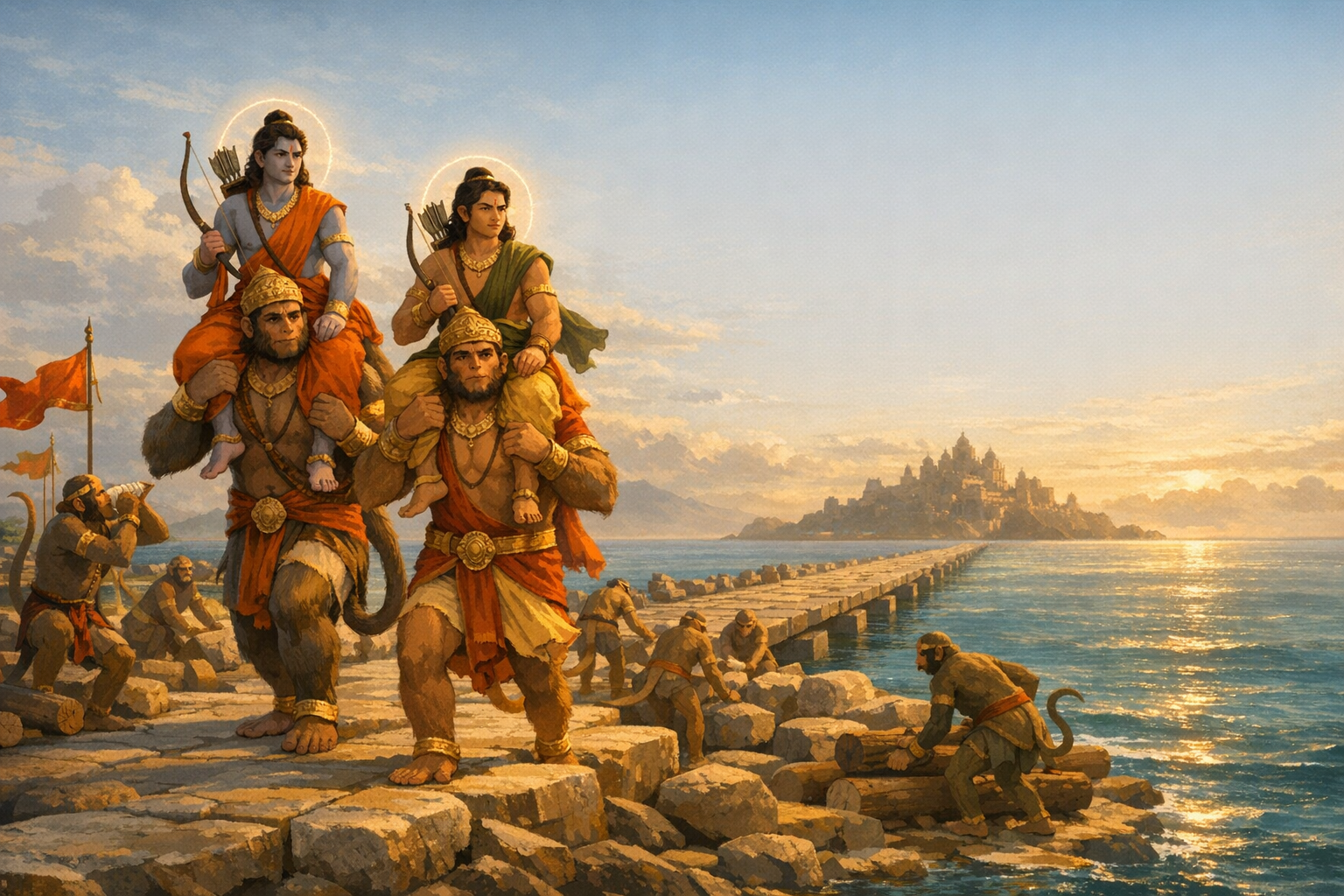
Rama on Hanuman, Lakshman on Angada: Decoding Yuddha Kanda Strategy and Sacred Symbolism
Read more: Rama on Hanuman, Lakshman on Angada: Decoding Yuddha Kanda Strategy and Sacred SymbolismThis study examines Rama’s march to Lanka through the dual lenses of strategy and symbolism in the Yuddha Kanda. It traces how intelligence from Sundara Kanda matured into a disciplined campaign: ritual diplomacy with the ocean, Nala’s engineering of Rama Setu, and Sugriva’s team-of-teams command across a high-mobility Vanara army. It clarifies that Valmiki does…
-

The Quiet Architecture of Grief: Evidence-Based Ways Small Rituals and Memories Sustain Love
Read more: The Quiet Architecture of Grief: Evidence-Based Ways Small Rituals and Memories Sustain LoveGrief seldom ends; it changes form. Using a clear case of companion‑animal loss, this piece explains how routine, memory, and community support help sustain love after bereavement without minimizing sorrow. Readers will learn key frameworks from contemporary bereavement science—Continuing Bonds Theory, the Dual Process Model, disenfranchised grief, and post‑traumatic growth—and how these map onto everyday…
-
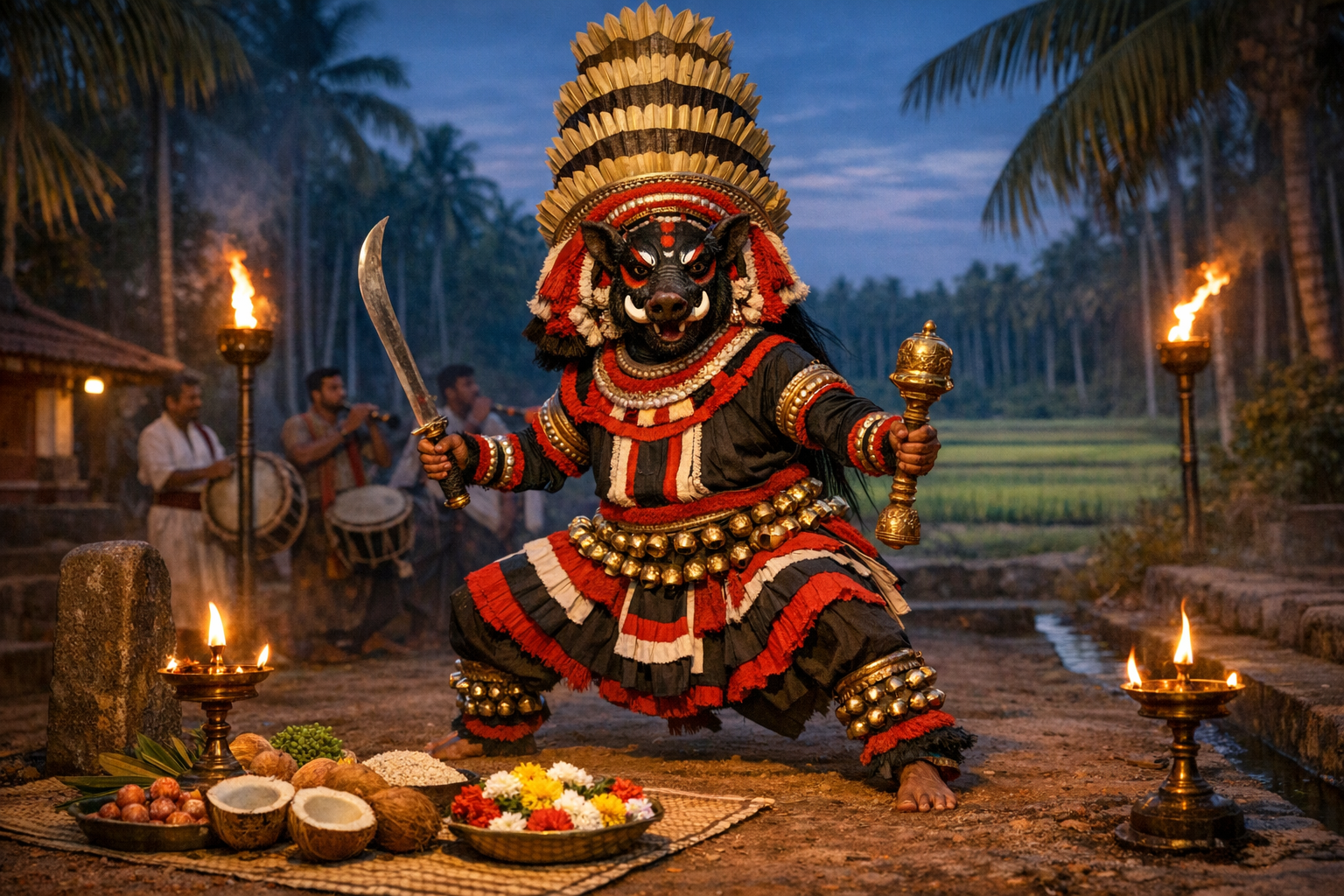
Panjurli Daiva of Tulunadu: Sacred Boar, Agrarian Covenant, and the Living Bhuta Kola
Read more: Panjurli Daiva of Tulunadu: Sacred Boar, Agrarian Covenant, and the Living Bhuta KolaTulunadu’s Panjurli Daiva, the sacred boar guardian of coastal Karnataka and northern Kerala, embodies a living covenant between forest and farmland. This in-depth overview situates Panjurli within Bhuta Kola/Nema traditions, tracing historical continuities, ritual roles, costume language, and oracular justice. Readers gain an integrated view of how daivasthanas function as both sacred spaces and civic…
-

Beyond the Chase: Hinduism’s Radical Blueprint for Lasting Happiness and Inner Freedom
Read more: Beyond the Chase: Hinduism’s Radical Blueprint for Lasting Happiness and Inner FreedomThis long-form analysis explains a core Hindu teaching: lasting happiness is revealed when the compulsive pursuit of happiness ends. It clarifies the difference between sukha (pleasure) and ananda (bliss), grounding the argument in the Upanishads, Bhagavad Gita, and Patanjali’s Yoga Sutra. Readers gain a rigorous framework for understanding moksha, along with a practical blueprint that…
-
Timeless Welcoming Grace: Ahuya–Varada Mudra in Hindu Iconography and Sculpture
Read more: Timeless Welcoming Grace: Ahuya–Varada Mudra in Hindu Iconography and SculptureAhuya–Varada Mudra crystallizes a powerful promise in Hindu iconography: an invitation to approach, followed by the boon of grace. The analysis clarifies etymology and form—Ahuya as a welcoming inclination, Varada as the classic downward, open palm—while distinguishing them from Abhaya. Drawing on Shilpa Śāstra canons, regional styles (Chola, Odishan, Pāla–Sena, Hoysala), and ritual practice, it…
-
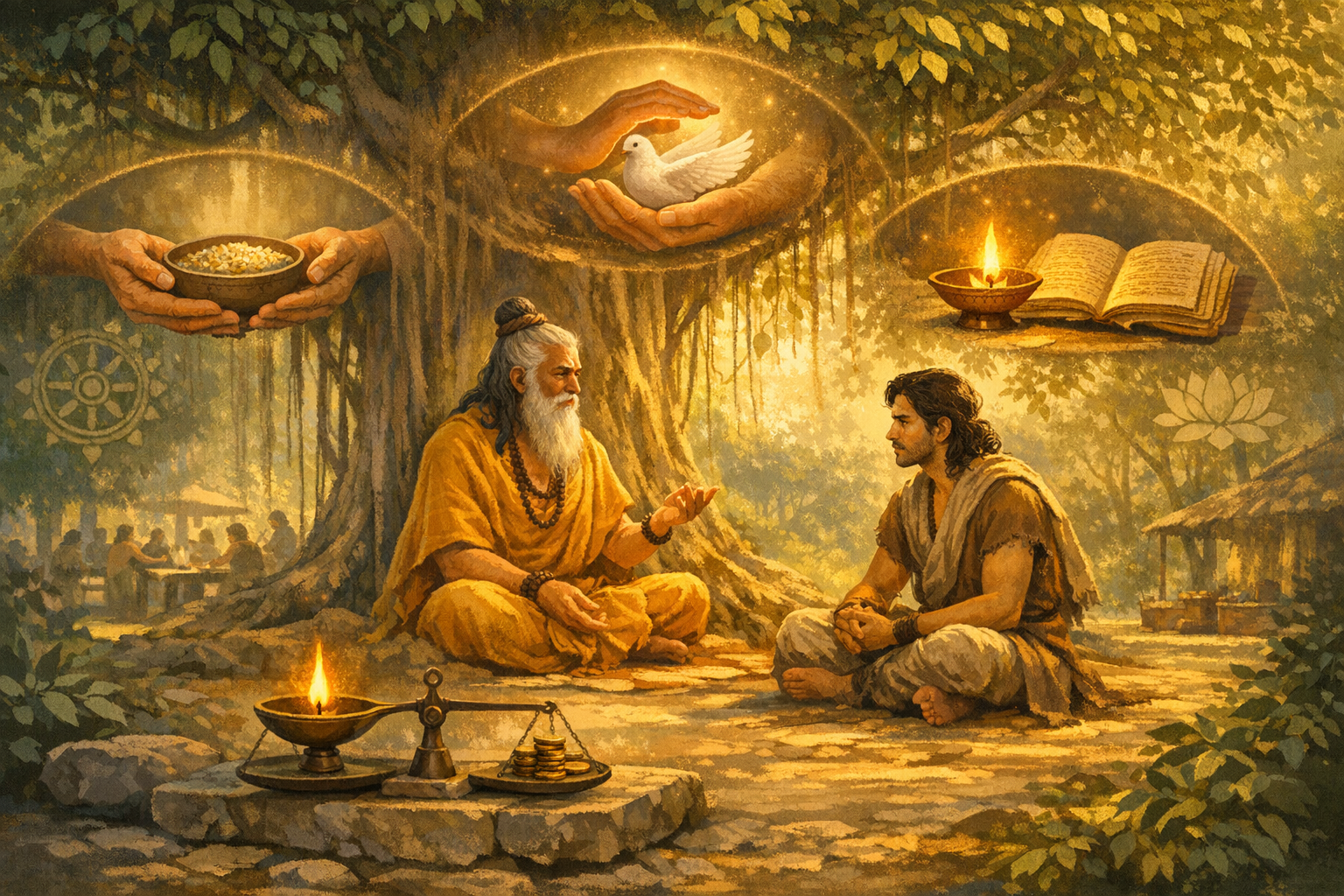
Mahabharata Wisdom on the True Gift: Markandeya’s Guide to Nishkama Dāna and Seva
Read more: Mahabharata Wisdom on the True Gift: Markandeya’s Guide to Nishkama Dāna and SevaThis long-form exploration distills Sage Markandeya’s Mahabharata teaching on the nature of the true gift (dāna) and explains why intention, not magnitude, confers ethical value. It maps dāna to the Bhagavad-Gita’s guṇa framework, clarifying the difference between sāttvika, rājasa, and tāmasa giving. Through the exemplar of King Śibi, it highlights abhayadāna (the gift of fearlessness)…
-

What Is the Purpose of Creation? A Dharmic, Scholarly Guide to Līlā and Liberation
Read more: What Is the Purpose of Creation? A Dharmic, Scholarly Guide to Līlā and LiberationThe question “What is the purpose of creation?” can be read most fruitfully through the dharmic idea of līlā—cosmic play—where manifestation is a free, blissful self-expression rather than a utility-driven project. Hindu philosophy frames this across Advaita, Vişiṣṭādvaita, Dvaita, Śaiva thought, and Sāṁkhya–Yoga, uniting expressive freedom with ethical purpose and liberation (mokṣa). Purāṇic aesthetics and…
-

Srimad-Bhagavatam: Timeless Wisdom That Transcends Dharma, Artha, Kama, and Moksha
Read more: Srimad-Bhagavatam: Timeless Wisdom That Transcends Dharma, Artha, Kama, and MokshaSrimad-Bhagavatam, the Bhagavata Purana, honors the classic Hindu puruṣārthas—dharma, artha, kāma, and mokṣa—while demonstrating how each is perfected and transcended through bhakti. Presented through a refined narrative and commentarial tradition, it integrates theology, cosmology, ethics, and contemplative practice. Readers encounter vivid exemplars such as Dhruva, Prahlāda, Ajamila, Gajendra, and Ambarīṣa, alongside philosophical teachings that unite…
-
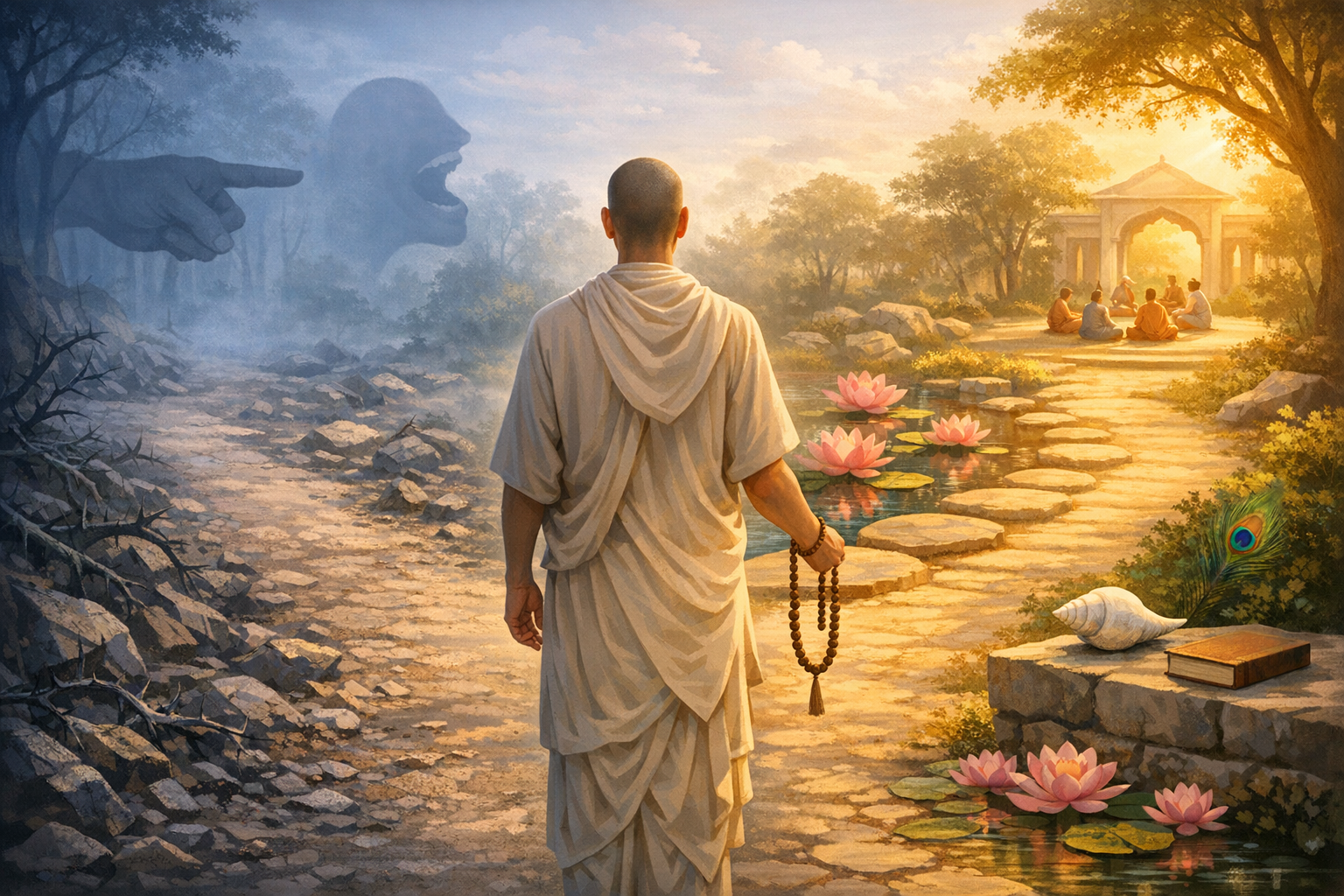
Easy vs Difficult in Krishna Consciousness: A Practical Guide to Compassion and Inner Discipline
Read more: Easy vs Difficult in Krishna Consciousness: A Practical Guide to Compassion and Inner DisciplineKrishna Consciousness reframes everyday choices as a movement from easy reactions to difficult but transformative disciplines. Drawing on the Bhagavad Gita, Gaudiya Vaishnava texts, and the sadhana-bhakti tradition, it explains why judging others, impulsive speech, and harming are effortless habits, while introspection, restraint, and healing require cultivated virtue. Upadeshamrita and the Gita’s tapas of speech…
-

What Happens After Death? Garuda Purana’s Vivid Journey of the Soul, Karma, and Liberation
Read more: What Happens After Death? Garuda Purana’s Vivid Journey of the Soul, Karma, and LiberationThe Garuda Purana’s teachings on what happens after death combine vivid narrative with careful ethics and ritual guidance. Rather than inducing fear, these descriptions function as moral instruction, emphasizing accountability (karma), communal care (śrāddha and piṇḍa-dāna), and the ultimate aim of liberation (moksha). Read alongside Upaniṣadic psychology, death can be seen as akin to deep…
-
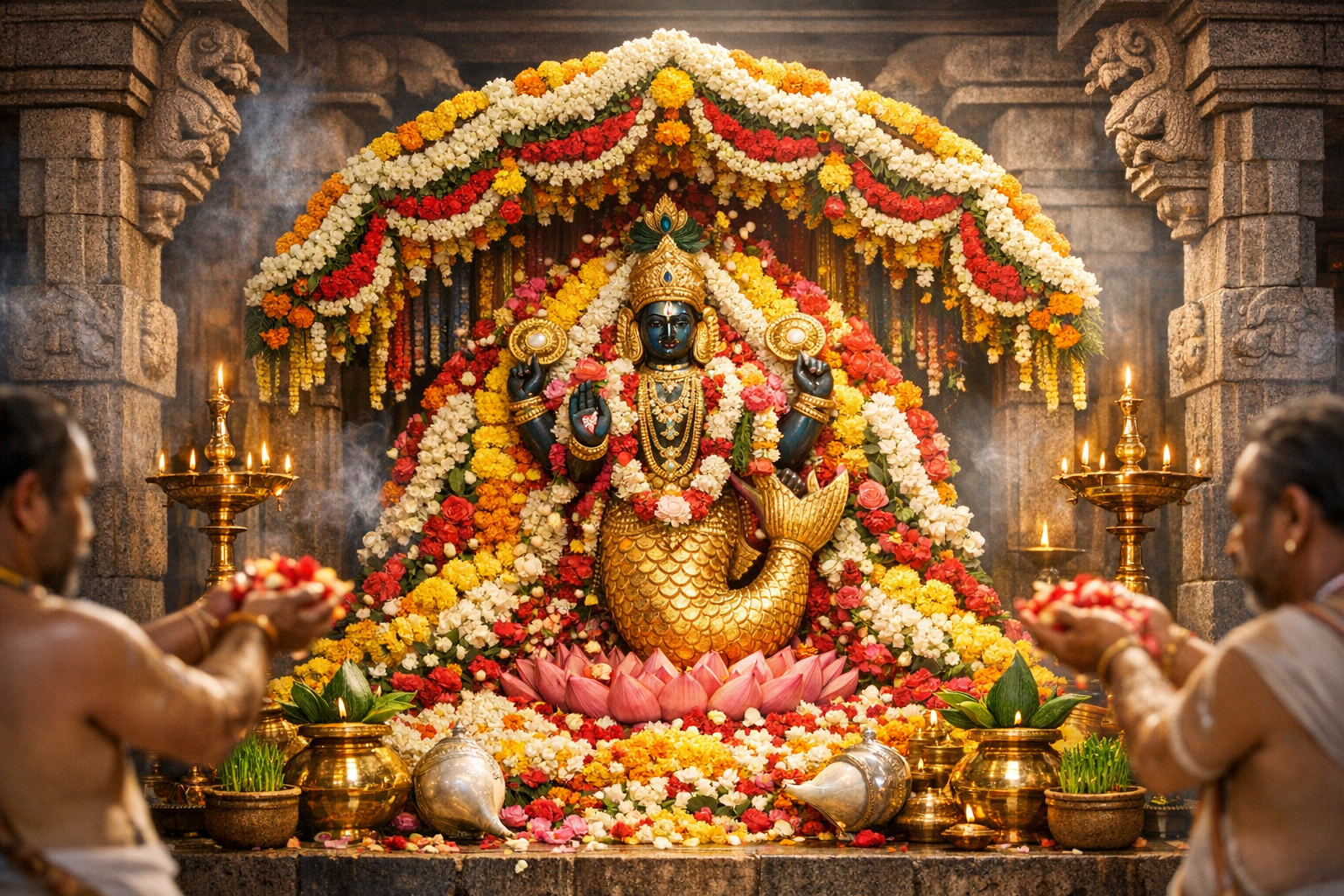
Nagulapuram Vedanarayana Swamy Pushpayagam 2026: Timings, Vedic Rites, History & Significance
Read more: Nagulapuram Vedanarayana Swamy Pushpayagam 2026: Timings, Vedic Rites, History & SignificanceNagulapuram (Nagalapuram) Sri Vedanarayana Swamy Temple will observe Pushpayagam Mahotsavam on 5 June 2026, with preparatory rites on 4 June from 6.15 pm to 7.45 pm IST. Scheduled rites include Punyahavachanam, Rakshabandhanam, Mrutsangrahanam, Senadhipati Utsavam, and Ankurarpanam, followed on 5 June by Snapana Tirumanjanam from 11.00 am IST and the floral Pushpayagam. The temple, administered…
-
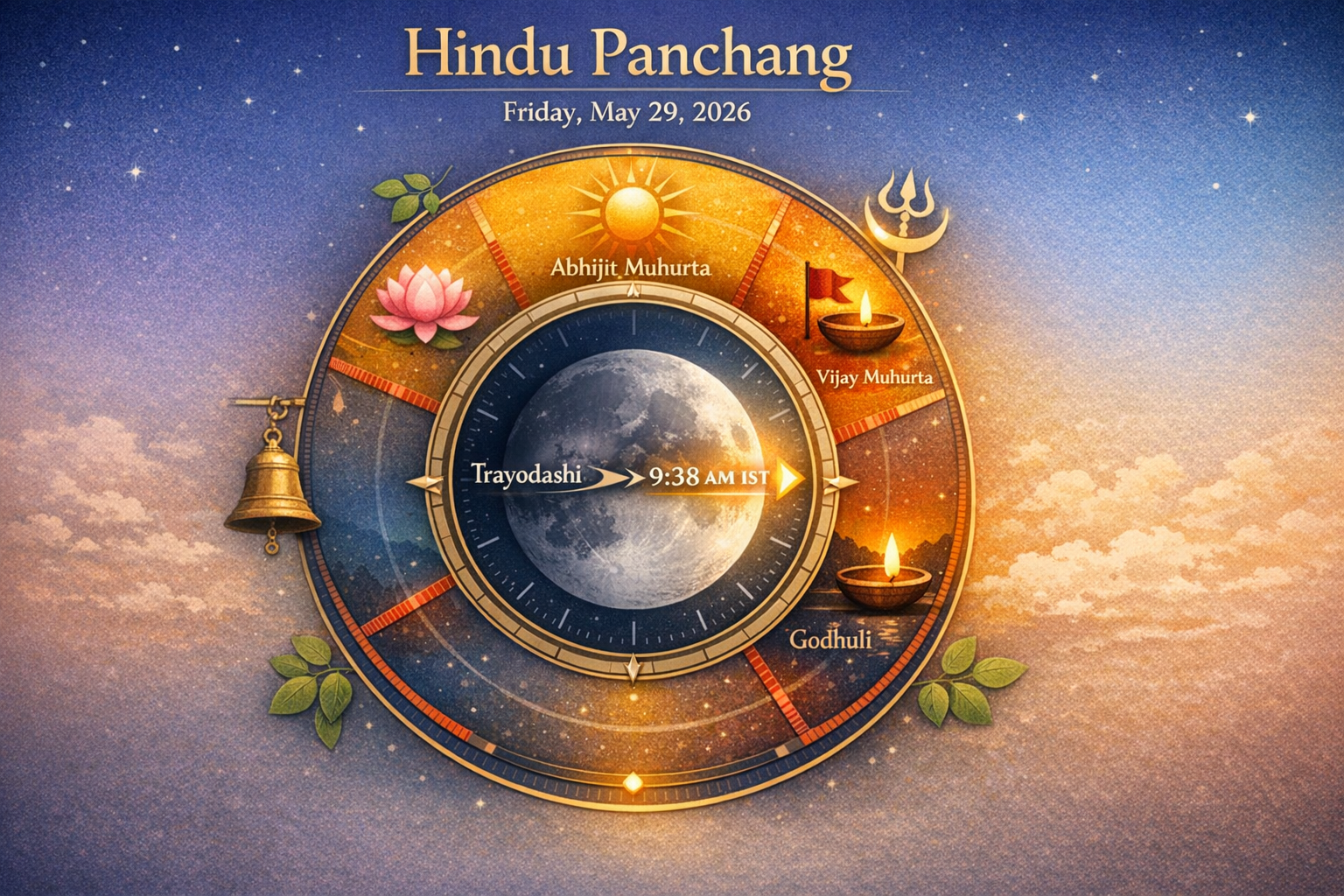
May 29, 2026 Panchang: Shukla Trayodashi→Chaturdashi, Auspicious Muhurtas & Rahu Kalam
Read more: May 29, 2026 Panchang: Shukla Trayodashi→Chaturdashi, Auspicious Muhurtas & Rahu KalamMay 29, 2026 begins with Shukla Paksha Trayodashi and transitions to Shukla Paksha Chaturdashi at about 9:38 AM (IST) in most Indian Panchangs. The summary explains what a Tithi is, why change times vary regionally, and how to plan the day using stable, high-value Muhurtas such as Brahma Muhurta, Abhijit, and Vijay Muhurta. It also…
-

West Bengal Flashpoint: Police Complaint Over Mamata Banerjee’s Alleged Anti-Hindu Remarks
Read more: West Bengal Flashpoint: Police Complaint Over Mamata Banerjee’s Alleged Anti-Hindu RemarksA police complaint against Mamata Banerjee over alleged anti-Hindu remarks has ignited a West Bengal flashpoint where constitutional rights, statutory limits on hate speech, and communal harmony meet. This analysis explains the relevant IPC provisions (295A, 153A, 505), the Supreme Court’s tests for intent and harm, and the procedural safeguards including Section 65B electronic evidence…
-
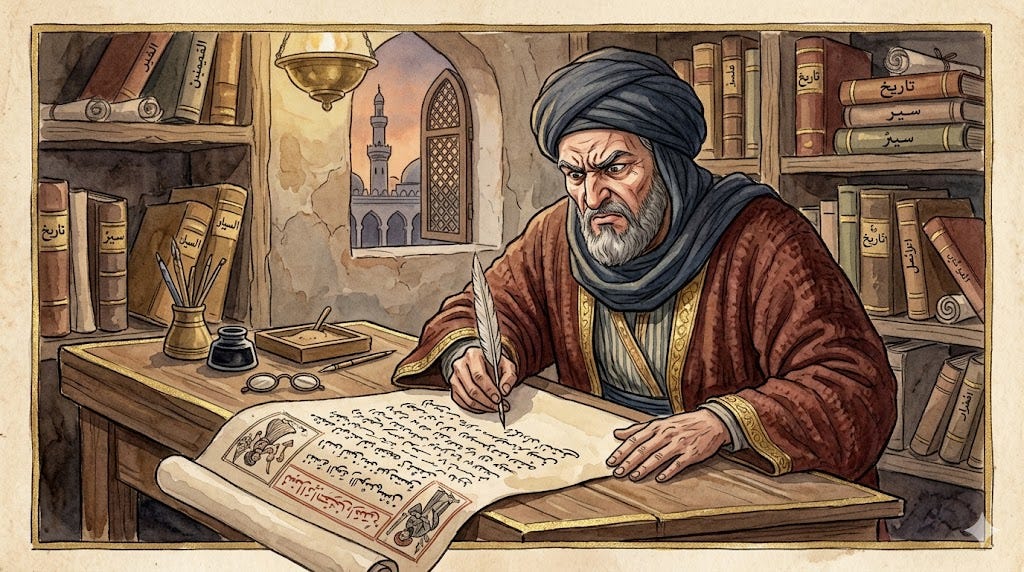
Decoding Medieval Islamicate Court Chronicles: Skills, Hijri Timekeeping, and How to Read Them Critically
Read more: Decoding Medieval Islamicate Court Chronicles: Skills, Hijri Timekeeping, and How to Read Them CriticallyThis essay decodes how medieval Islamicate court chronicles in India were made, why they date events from the Hijri era, and how their theological vocabulary shaped historical writing. It details the rigorous training of chroniclers in Quran, Hadis, Fiqh, Persian adab, and calligraphy, and explains their overlapping roles as jurists, advisers, and scribes. Through examples—Amir…
-
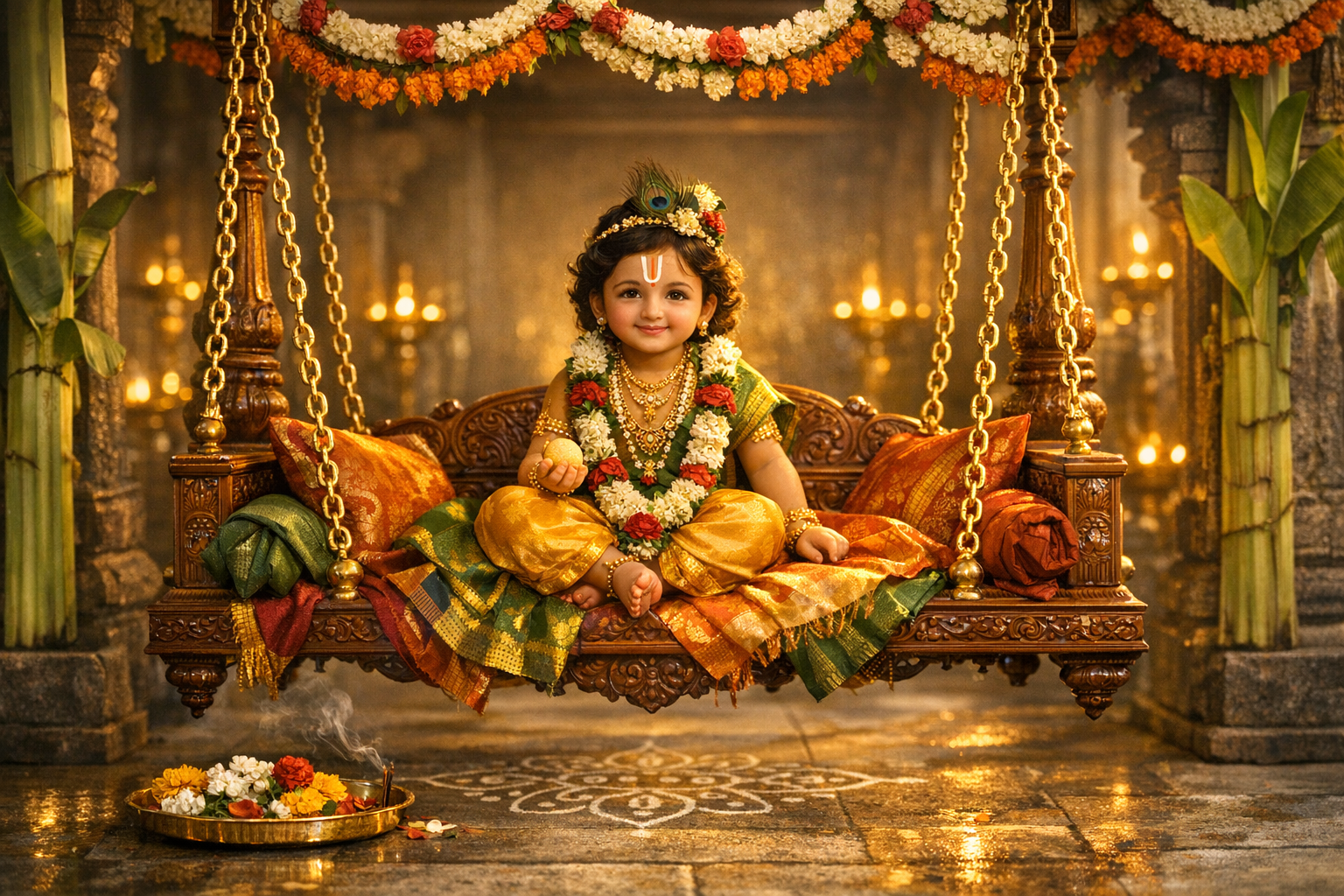
Dolai Kannan Unveiled: The Sacred Swing of Krishna and the Transformative Joy of Bhakti
Read more: Dolai Kannan Unveiled: The Sacred Swing of Krishna and the Transformative Joy of BhaktiDolai Kannan—Krishna enthroned on a flower-decked swing—embodies the tenderness of vatsalya-bhava and the theological richness of Sri Vaishnava liturgy in South Indian temples and homes. Rooted in the Bhagavata Purana and guided by Vaikhanasa and Pancharatra Agamas, the rite integrates abhishekam, alankara, Divya Prabandham, and gentle oonjal seva into a unified contemplative experience. The swing’s…
-
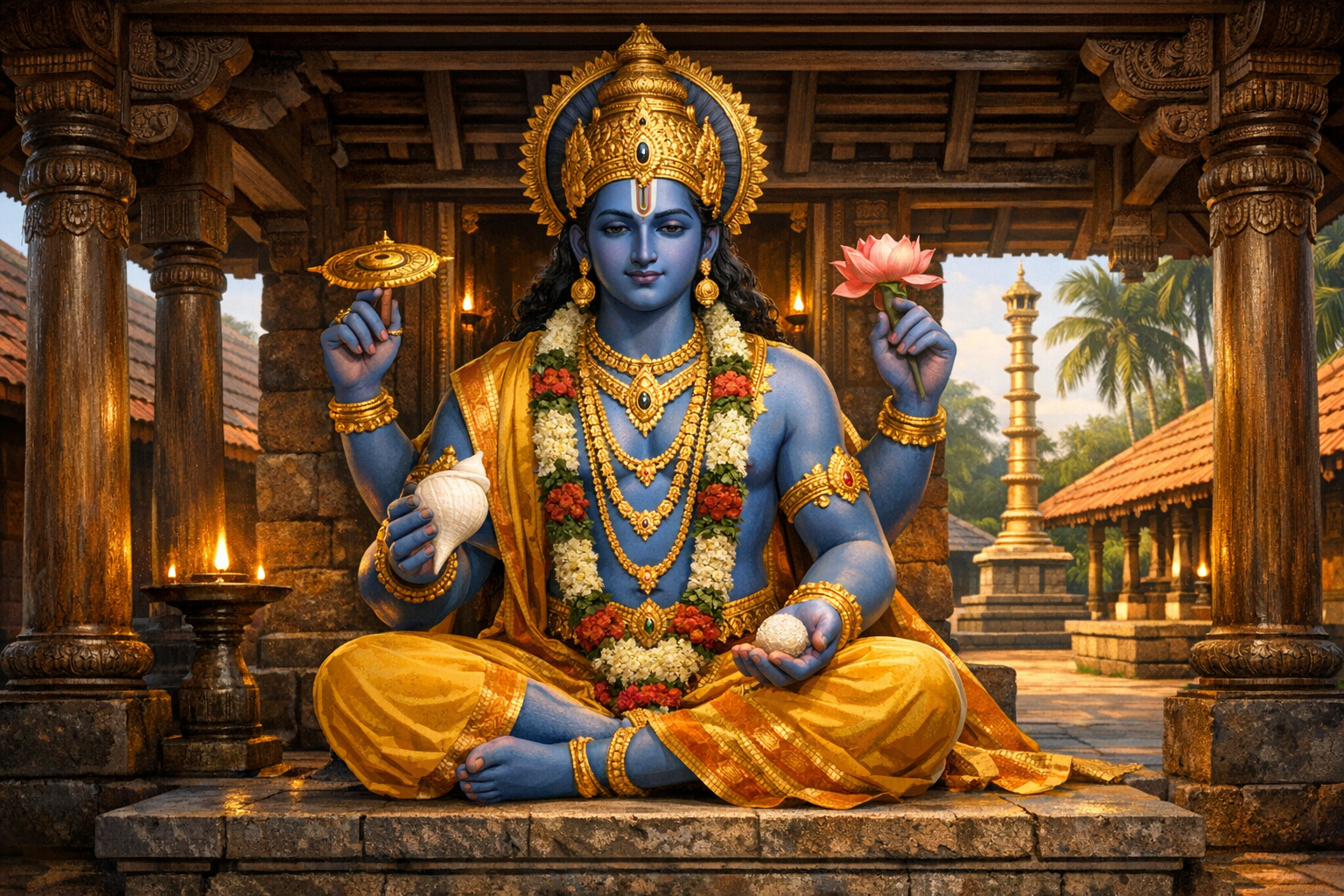
Unveiling Shimanthoor’s Sri Adi Janardhana: A Rare Vishnu Icon Holding Pinda in Karnataka
Read more: Unveiling Shimanthoor’s Sri Adi Janardhana: A Rare Vishnu Icon Holding Pinda in KarnatakaSri Adi Janardhana Temple in Shimanthoor, Dakshina Kannada, is among the rarest Vishnu shrines in India, featuring Janardhana holding a pinda in the lower right hand. This singular iconography bridges Vaishnava theology with ancestral remembrance, situating śrāddha values within the very form of the deity. Set in Karnataka’s Tulu Nadu, the temple showcases coastal architecture…
-

From Jamun to Jambudvipa: Sacred Dark Hues, Divine Cosmology, and Bharata’s Enduring Soul
Read more: From Jamun to Jambudvipa: Sacred Dark Hues, Divine Cosmology, and Bharata’s Enduring SoulJamun’s deep purple hue, Jambudvipa’s sacred geography, and the dark complexions of Divine iconography converge to reveal a unifying civilizational vision of Bharata. Drawing on Hindu Puranas, Buddhist Pali sources, and Jain cosmography, the analysis shows how Jambudvipa frames Bharata-varsha as a moral and spiritual habitat rather than a mere map. The essay connects sacred…
-

Rome Resonates with Varanasi: Italian Art and Hamsadhwani Mark PM Modi’s Italy Visit
Read more: Rome Resonates with Varanasi: Italian Art and Hamsadhwani Mark PM Modi’s Italy VisitAn Italian tribute to India’s sacred heritage took center stage in Rome during Prime Minister Narendra Modi’s Italy visit, pairing Giampaolo Tomassetti’s painting of the Varanasi ghats with an Italian ensemble’s performance of Hamsadhwani. The artwork distilled the spiritual essence of Kashi’s riverfront, while the raga—performed on santoor, sitar, bansuri, and tabla—introduced listeners to Indian…
-

Alidhasana Unveiled: The Warrior Stance Powering Hindu Iconography and Yoga
Read more: Alidhasana Unveiled: The Warrior Stance Powering Hindu Iconography and YogaAlidhasana (Alīḍha/Ālīḍha) is the subcontinent’s signature warrior stance, a diagonal lunge that encodes heroic intent in Hindu iconography, dance, and yoga. Grounded in the Nāṭyaśāstra and Śilpa-śāstra, it appears in temple sculpture for Durgā, Bhairava, and Vīrabhadra to signal protective, dharmic power. The same geometry informs Bharatanatyam karaṇas, kalaripayattu lunges, and modern haṭha alignments akin…
-

West Bengal Restores Pre‑2010 OBC List; 7% Quota Reset Prioritizes Lawful, Data‑Driven Equity
Read more: West Bengal Restores Pre‑2010 OBC List; 7% Quota Reset Prioritizes Lawful, Data‑Driven EquityWest Bengal has restored its pre‑2010 OBC list and reset the OBC quota to 7%, presenting the change as a law‑aligned, interim framework pending a fresh, data‑driven review. The move foregrounds constitutional compliance under Articles 15(4) and 16(4), adherence to Indra Sawhney benchmarks, and the need for quantifiable evidence of social and educational backwardness. By…
-
Sankirtana as Sound Medicine: How Hare Krishna Chanting Nurtures Inner Calm and Social Harmony
Read more: Sankirtana as Sound Medicine: How Hare Krishna Chanting Nurtures Inner Calm and Social HarmonyA common objection to public Hare Krishna chanting asks: how is it welfare if bystanders do not understand the words? Sankirtana addresses this by working through sound’s direct effects on breath, attention, and emotion, much like a medicine that heals without requiring knowledge of pharmacology. Classical bhakti sources emphasize kirtan’s potency in the present age,…
-
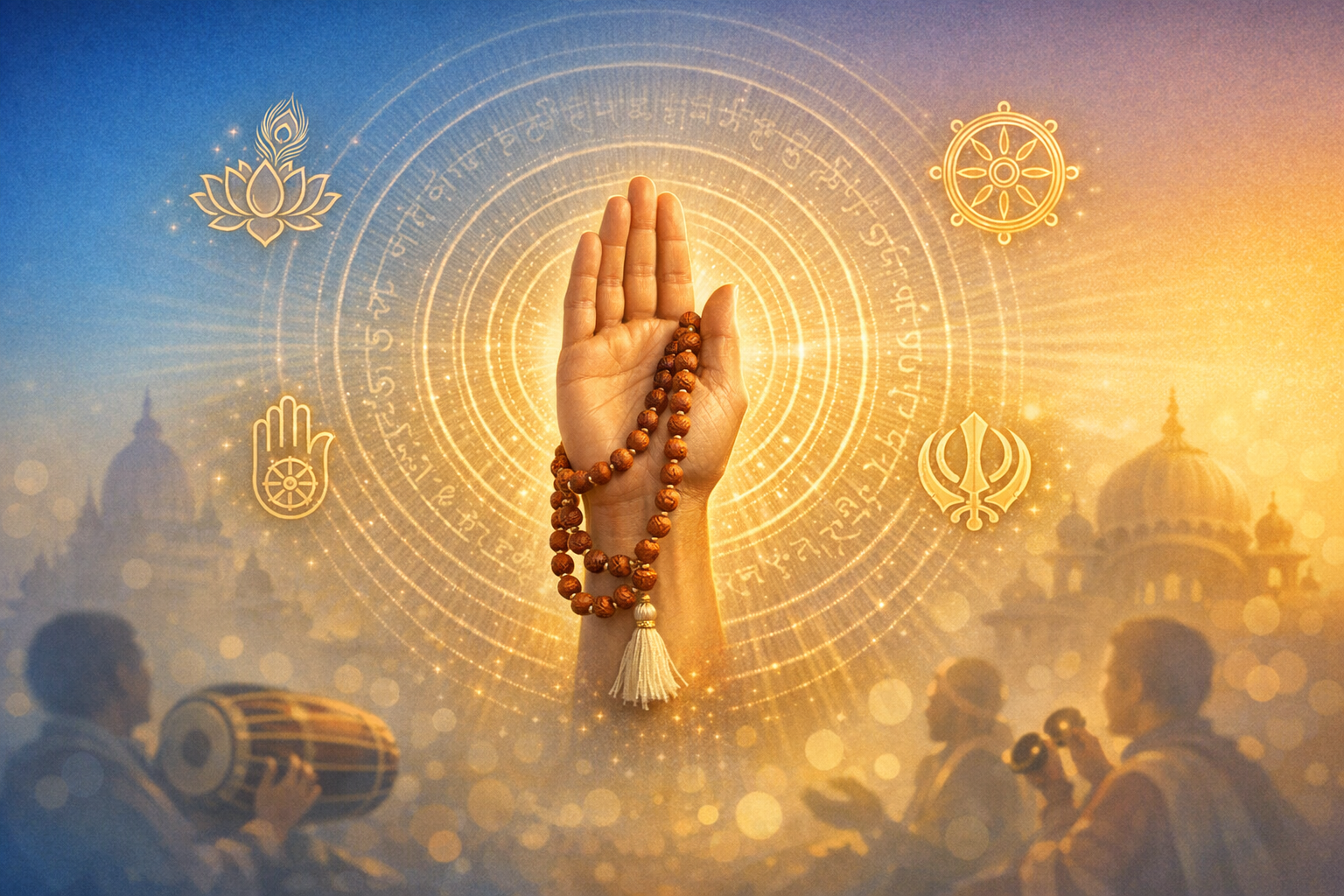
“I Feel No Fear”: How the Hare Krishna Maha-mantra Builds Abhaya Across Dharmic Paths
Read more: “I Feel No Fear”: How the Hare Krishna Maha-mantra Builds Abhaya Across Dharmic PathsA memorable exchange crystallizes a core promise of mantra meditation: asked what chanting the Hare Krishna maha-mantra feels like, Srila Prabhupada replied, “I feel no fear.” This article unpacks that claim in an academic yet accessible way, explaining how abhaya (fearlessness) emerges at the intersection of Bhakti theology, rhythmic sound, and breath regulation. It clarifies…
Categories
- Agriculture (20)
- Akhand Bharat (30)
- Aryan Migration -vs- Out of India (8)
- Ayurveda (20)
- Celebrations (882)
- Community (150)
- Community Events (228)
- Cross Posted (105)
- Cultural Advocacy (33)
- Cultural Commentary (61)
- Cultural Heritage (556)
- Cultural Insights (142)
- Cultural Issues (29)
- Cultural Traditions (757)
- Culture (33)
- Economics (22)
- Education (151)
- Geo-Politics (60)
- History (377)
- Indian Authors (6)
- International Trade (8)
- Labor Market (8)
- Literature (97)
- News (619)
- Opinion Pieces (143)
- Personal Reflections (161)
- Personalities (186)
- Philosophy (1,036)
- Politics (208)
- Scripts (3)
- Scriptures (974)
- Spiritual Insight (3,205)
- Spirituality (750)
- Temples (730)
- Tribute (65)
- Uncategorized (6)
- Yoga (103)
Archive