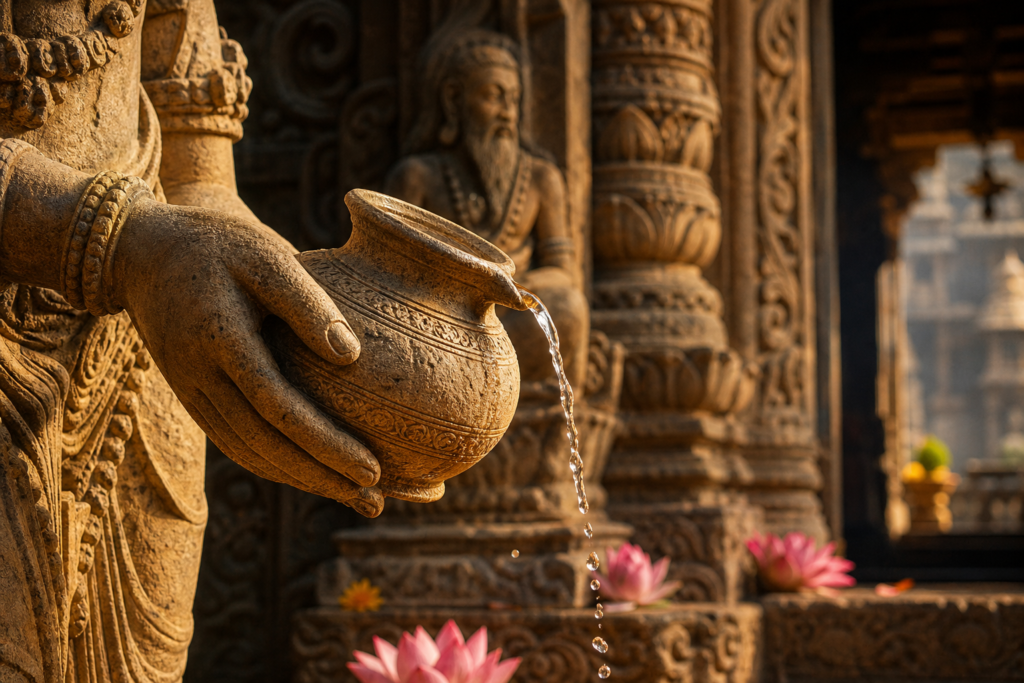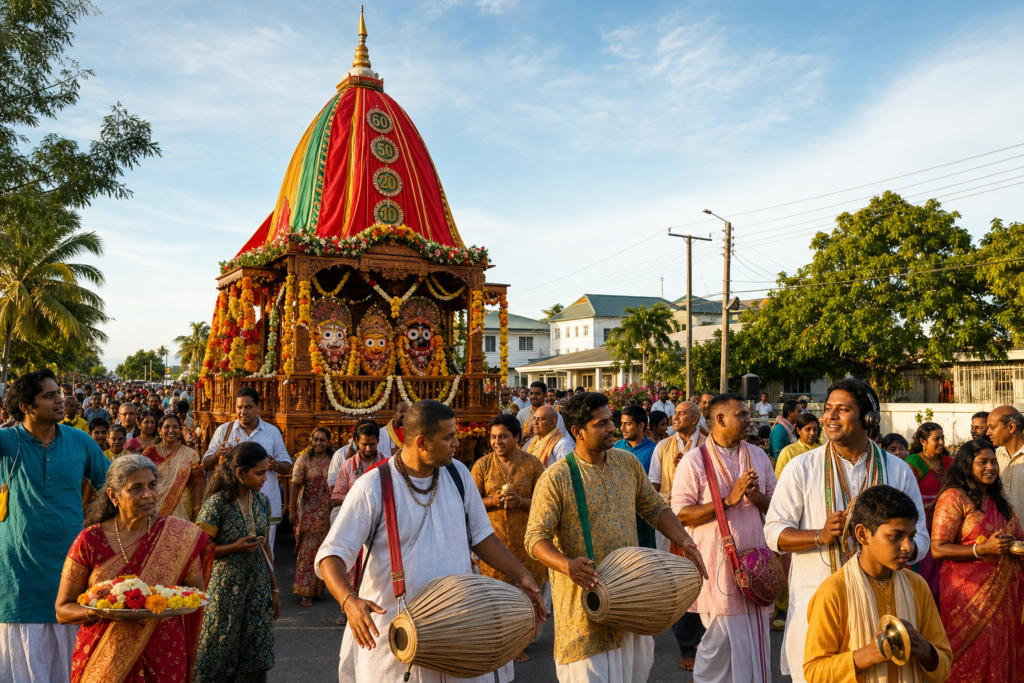
Nature, within the dharmic worldview, is not a passive backdrop but a living, sacred field of consciousness. The Supreme power is simultaneously immanent and transcendent, permeating the inner landscape of awareness and the outer tapestry of forests, rivers, mountains, and sky. When this recognition matures into steady conviction, equanimity stabilizes, fear recedes, and a resilient inner strength emerges despite the flux of circumstances.
This integrative understanding is shared across Hinduism, Buddhism, Jainism, and Sikhism, offering a unifying spiritual grammar for ecological reverence. Hindu thought frames all phenomena through the lens of Prakriti and Purusha, while Buddhism illumines interdependence through pratītyasamutpāda. Jain ethics centers Ahimsa paramo dharmah, extending non-violence to all sentient life. Sikh wisdom resonates with Ik Onkar and the luminous verse Pavan Guru, Pani Pita, Mata Dharat Mahat, evoking air as guide, water as progenitor, and Earth as the great mother. Each tradition converges on a shared ethic: honor life, cultivate mindfulness, and protect Mother Earth.
Scriptural foundations are explicit. The Isha Upanishad declares Īśāvāsyam idam sarvam, affirming the indwelling of the Divine in all existence. The Bhagavad Gita situates nature within the spectrum of the Lord’s vibhūtis and articulates a layered Prakriti (BG 7.4–7.5), spanning gross elements and subtle principles. Vedic philosophy thus refrains from isolating humanity from the environment; it teaches the Hindu way of life as ecological participation, not dominion.
The Pancha Mahābhūtasearth, water, fire, air, and spaceoffer a practical map for contemplative life in nature. Pancha Kosha Viveka, the discernment of bodily sheaths from gross (sthula) to subtle (sukshma) and causal (Karana Sharira), connects somatic experience to consciousness. By refining perception of elemental qualities in landscapes (solidity of earth, fluidity of water, radiance of fire, movement of air, and spaciousness of ether), contemplatives align inner sensation with outer ecology, deepening non-dual insight.
Contemporary science increasingly corroborates these contemplative intuitions. The biophilia hypothesis suggests an innate human affinity for natural settings. Attention Restoration Theory shows that soft, fractal-rich stimuli in forests and riverscapes replenish cognitive focus. Clinical studies on forest bathing report reductions in cortisol, improvements in heart-rate variability, lower blood pressure, and enhanced parasympathetic tonephysiological correlates of dhyana and mindful presence. Vagus nerve activity and breath coherence mirror classical pranayama claims for nervous-system balance.
Yoga, pranayama, and mindfulness practices function as reliable bridges between inner stillness and ecological belonging. Breath awareness synchronized with natural rhythmsa breeze, wave cadence, or birdsong intervalsstabilizes attention. Gentle retention (kumbhaka) in safe, brief windows, followed by slow exhalation, lengthens vagal response and reduces hyperarousal. As breath steadies, sushumna nadi-focused visualization supports balanced alertness without strain.
Nature-based meditation frameworks translate theory into embodied practice. A dhyana seat under a tree invites panoramic awareness, while mindfulness tracks sensory inputlight, scent of soil, texture of barkwithout grasping. Japa with a soft mantra integrates breath and sound; metta from the Buddhist tradition expands goodwill to seen and unseen beings; Jain samayik grounds non-harm in precise attentiveness; Sikh simran sustains remembrance of Ik Onkar as one walks. These modalities differ in form yet converge in function: quieting agitation, clarifying perception, and opening compassion.
Elemental purification (bhuta shuddhi) can be adapted ecologically. One might contemplate the steadiness of earth through grounded posture; water through gentle flow of movement or riverside sitting; fire through the warmth of sunlight at dawn; air through elongated exhalations; and space through open-sky meditation. Such sequences operationalize Upanishadic insight, allowing the practitioner to sense the continuity of inner and outer Prakriti.
Ethical vows convert contemplation into durable character. Ahimsa discourages needless disturbance of habitats; Aparigraha limits consumption and nurtures gratitude. Truthfulness resists denial of ecological data; seva converts love into servicetree-planting, riverbank clean-ups, soil regeneration, and biodiversity care. These commitments enact Environmental stewardship and foster Ecological balance, aligning spiritual development with planetary flourishing.
A simple seven-day rhythm sustains momentum. Day one emphasizes grounding walks and breath awareness; day two introduces mantra with slow exhalations; day three adds metta or samayik; day four explores sky-gazing for expansive attention; day five deepens stillness through longer sits; day six channels contemplation into seva; day seven becomes a reflective auditwhat shifted in mood, sleep, focus, and reactivity. Rotating this cycle retains freshness while cultivating steady depth.
Measurement enhances clarity without reducing practice to metrics. Journaling captures affect and insight; basic heart-rate variability apps track autonomic balance; periodic blood-pressure checks reflect relaxation carryover. These gentle indicators complement, rather than replace, the primacy of direct experience. Over weeks, trends often include calmer baseline mood, faster recovery after stress, and improved attentional stability.
Seasonal observances weave nature devotion into communal life. Dawn sun salutations during Vasant Panchami or Gudi Padwa honor cyclical renewal; full-moon meditations attune to atmospheric luminosity; Karthika Masam lamp-lighting ritualizes gratitude for fire and light. Such practices anchor Hindu spirituality in daily and festival rhythms, illustrating how Indian Spirituality integrates cosmology, ritual, and ecology.
Urban contexts can fully participate. Micro-parks, balcony gardens, campus quads, and even windowsill herbs provide tactile connection to living systems. Short, frequent practicesfive mindful breaths gazing at trees, a brief japa walk around a block, or pranayama near an open windowaggregate into substantive transformation. The locus of practice is less important than the continuity of attention.
Common pitfalls warrant care. Romanticizing nature can obscure ecological complexity; spiritual bypassing avoids difficult emotions rather than metabolizing them; performative eco-virtue neglects sustained habits; and cultural appropriation disregards lineage contexts. An academic, humble stancestudy, practice, reflection, and serviceensures depth and respect for tradition.
An evocative image clarifies the arc: at dawn, in a quiet grove, attention widens, breath slows, and the mind ceases to push. Tree canopies filter light; a creek carries sound; the body’s tension softens. In that intimacy, Īśāvāsyam idam sarvam ceases to be theory and becomes the felt grammar of reality: the same presence shines within and without.
Across dharmic lineages, the convergence is unmistakable. Hindu contemplative methods, Buddhist mindfulness, Jain non-violence, and Sikh remembrance harmonize in the recognition of one living fabric. This is Vasudhaiva Kutumbakam in practicea kinship that includes people, animals, rivers, soils, and skies.
In sum, the spirituality of nature is both insight and discipline. It rests on scriptural clarity, is refined by meditation and pranayama, validated by emerging science, and proven through ethical service. Nurtured patiently, it yields inner peace, moral courage, and ecological responsibilityan integrative path where personal awakening and planetary care advance together.
Thus, by uniting Vedic philosophy with mindfulness, Yoga with compassion, and contemplation with stewardship, the path becomes comprehensive and cohesive. The Supreme power that animates the heart also animates the forest; to realize this is to become unshakably grounded and quietly luminous in a world that urgently needs both wisdom and care.
Inspired by this post on Hindu Pad.