
Devanahalli is often described in practical terms: a town near Bengaluru’s airport, a fast-changing edge of the expanding metropolis, or a peripheral settlement on the route toward Nandi Hills. Such descriptions are not inaccurate, but they are incomplete. Beneath the pressures of urban growth lies an older Devanahalli, historically remembered as Devanapura and Devanadoddi, where fort walls, temple streets, sacred tanks, inscriptions, and living ritual practices continue to preserve a layered record of Karnataka’s cultural heritage.
The first encounter with this older landscape began not through a formal survey, but through arrival for a master’s program near Devanahalli. Before reaching the town, acquaintances had framed the place with mild dismissal, treating it as a distant outskirts zone with little to reward curiosity. That expectation collapsed almost immediately near the old bus stand, where the Sri Krishna Dvāra stood as a striking visual threshold. Its sculptural program, representing multiple avatāras of Mahavishnu, gave the town an unexpected sacred density and opened the possibility that Devanahalli was not merely a suburban margin, but a historical space with its own grammar of memory.
Local residents directed the search toward a Sri Krishna Devalaya along the same road. What followed was a walk through a living settlement rather than a static heritage zone. Vegetable sellers, small shops, schoolchildren, residents, shrines, and fort masonry appeared in succession. The road moved through ordinary life, yet each few steps revealed another sign of older continuity: a modest Anjaneya Temple, a Devi shrine, the Kanyakaparameshwari Temple, residential lanes, and finally the large defensive wall of Devanahalli Fort.
One Road, Many Temples and a Fort
The approach to the fort is significant because it demonstrates how heritage survives in Devanahalli. The sacred and the everyday are not separated into museum-like categories. Temples stand beside markets, houses, schools, and streets of daily commerce. This produces a familiar atmosphere for those who come from older Karnataka towns such as Madhugiri, where civic life and sacred geography often share the same street. In Devanahalli, the sense of nostalgia is not sentimental alone; it is also historically meaningful, because it reveals how fortified settlements in South India functioned as inhabited, ritual, commercial, and administrative spaces.
The Archaeological Survey of India board near the fort confirms the protected status and historical importance of the structure. Yet the fort does not appear as an isolated ruin. Its walls enclose and frame an active settlement. Pathways lead not only to bastions and gateways, but to temples that continue to draw worshippers. This continuity makes Devanahalli Fort an instructive example of a living historical monument, where preservation cannot be understood only as architectural conservation. It also involves the safeguarding of ritual movement, community memory, local knowledge, and public access.
How Old Is Devanahalli Fort?
The history of Devanahalli Fort is generally traced to 1501 CE, when Malla Baire Gowda, associated with the Avati Nadaprabhus and functioning within the political world of the Vijayanagara Empire, is said to have built the original mud fortification. The choice of a fortified settlement reflects the wider strategic patterns of the period. South Indian polities relied on such forts to control routes, protect agrarian revenue, administer local territories, and secure links between regional centers.
As Vijayanagara authority weakened over time, Devanahalli experienced several political transitions. The fort passed through local lineages and later came under the influence of the Kingdom of Mysore. Hyder Ali is credited with reconstructing the fort in stone, giving it much of the durable military character visible today. The fort’s roughly oval layout, bastions, masonry walls, and compact gateways reflect the practical requirements of eighteenth-century defense, when fortified towns had to respond to both older siege techniques and newer gunpowder warfare.
Devanahalli is also linked to Tipu Sultan, whose birthplace lies near the fort. This association places the town within the larger history of the Mysore state and the Anglo-Mysore Wars. In 1791, during the Third Anglo-Mysore War, British forces under Lord Cornwallis captured the fort. This event marked one of the many military reversals through which British power expanded in southern India. The site therefore preserves memories of Vijayanagara-era local authority, Mysorean statecraft, colonial warfare, and regional resistance.
While moving through the fort precinct, the presence of Hanuman shrines, painted walls, and temple entrances shifts the experience from military history to sacred geography. The fortified space does not narrate power alone. It also reveals how communities sacralized urban and defensive landscapes through shrines, festivals, processions, and endowments. This is one of Devanahalli’s most important lessons: political structures may change, but devotional spaces often preserve continuity across regimes.
Venugopalaswamy Temple: Krishna at the Heart of the Fort
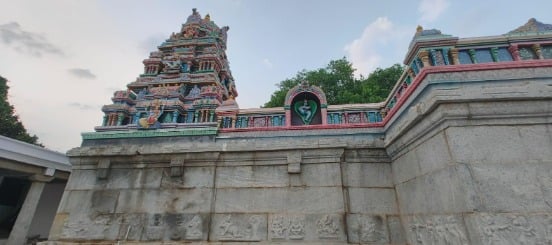
Within the historic precincts of Devanahalli Fort stands the Sri Rukmini–Satyabhama Sametha Venugopalaswamy Temple, one of the most important sacred and architectural sites in the town. The temple is dedicated to Lord Krishna in his Venugopala form, the divine flute-player, accompanied by Rukmini and Satyabhama. Its location within the fortified settlement is crucial. It shows that the center of Devanapura was not defined only by defense or administration, but also by ritual order and Vaishnavite devotion.
The temple presents a layered architectural vocabulary. Its iconography is associated with the Vijayanagara style, while the shikhara reflects the Dravidian idiom. Local accounts and visual features also invite comparison with Hoysala workmanship, especially in the attention given to carved pillars, sculptural detailing, and ornamental surfaces. Although smaller than the grand complexes of Belur and Halebidu, the temple demonstrates a similar commitment to narrative sculpture and devotional refinement.
The Rayagopuram forms one of the temple’s most striking features. Near it are two statues of Lord Vishnu, traditionally believed to belong to an older artistic layer, sometimes associated locally with the Ganga period. Their differing postures, expressions, and attributes invite careful iconographic study. Such features remind visitors that temple complexes often grow over centuries. Earlier images may be preserved, reinstalled, reinterpreted, or ritually integrated into later structures, creating a cumulative sacred archive.
The temple plan follows familiar South Indian principles. It includes an inner prakara, a navaranga, a mukhamantapa, and a comparatively small garbhagriha. The mukhamantapa pillars are especially valuable for understanding the aesthetic discipline of the site. Their relief work is not merely decorative. It marks the temple as a space where artisans translated theology, royal patronage, local skill, and inherited craft traditions into stone.
The exterior stone walls carry narrative friezes from the Ramayana, with the northern and southern walls particularly associated with scenes from the Balakanda. Such sculptural sequences played an important role in temple pedagogy. They allowed sacred stories to circulate visually among devotees, including those who may not have accessed textual traditions directly. In this sense, the Venugopalaswamy Temple functioned as a devotional, artistic, and educational institution.
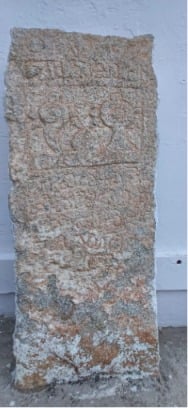
Figure 1: Sri Rukmini–Satyabhama Sametha Venugopalaswamy temple architecture.
The temple remains active as a place of worship. During Chaitra Poornima, an annual Utsav is conducted, and the temple is cleaned and maintained with community participation. This ritual maintenance matters historically. It demonstrates that heritage is not preserved only through official recognition, but also through the regular devotion of local communities who continue to treat the temple as a living spiritual center.
A Donation Inscription That Preserves Devanapura
Inside the Sri Rukmini–Satyabhama Sametha Venugopalaswamy Temple, a donation inscription, or Dana Shasana, preserves an important record of Devanapura, the earlier name of present-day Devanahalli. Inscriptions such as this are vital sources for South Indian history because they record more than dates and names. They reveal systems of governance, patterns of landholding, temple finance, ritual obligation, social organization, and the ethical expectations attached to public endowments.
The inscription states that the governance of the Devanapura kingdom began with Sannabairegowda of the Avati Nadaprabhus in 1501 CE. His lineage is described as continuing in authority until the period of Chikkappagowda in 1749 CE. This genealogical record situates the temple within the political history of local chieftains who mediated between imperial structures, regional authority, agrarian society, and religious institutions.
The inscription further records that Gopalagowda of the Kashyapa Gotra, son of Immadi Sonnabhairegowda and his dharmapatni Kempamma, and grandson of Muddubhairegowda, was ruling when the grant was issued. During his governance, a donation charter was established for the worship, rituals, and maintenance of Sri Madanagopalaswamy with Sri Rukmini and Satyabhama, the deity now worshipped as Sri Venugopalaswamy. The text notes that the temple had been founded by the ruler’s ancestors at the center of the fortified town.
Chronologically, the grant is assigned to Shaka 1619, in the Ishwara Nama Samvatsara, on Magha Shuddha 15, a Saturday. The purpose of the endowment was clearly defined: to support Nityotsava, Pakshotsava, Masotsava, Samvatsarotsava, and Rathotsava. These terms indicate a complete ritual calendar that moved from daily worship to fortnightly observances, monthly celebrations, annual festivals, and chariot processions.
The economic structure described in the inscription is particularly important. The villages of Moluru and Madduru in Vadigenahalli Hobli were allocated as endowments for temple activities. Additional grants were made for the archakas, including Somattanahalli Hobli, Arahalli village, Hosakere, and the garden belonging to Kempamma. Savakanahalli was assigned to the Chatripalakiyaru, the female attendants who carried ceremonial umbrellas during temple processions. Such details show that temple service was a complex social ecosystem involving priests, attendants, cultivators, administrators, donors, and devotees.
The inscription also directs that agricultural produce from the Baichapura villages and their two administrative divisions be given to the temple. Surplus revenue, after ritual and administrative needs were met, was to be used to create ornaments for the deity. This indicates a sophisticated model of religious endowment in which land, produce, ritual service, ornamentation, and public welfare were connected through written authority.
The charter further states that oil for temple lamps should come from royal storehouses, and if the storehouses failed to supply enough, the oil should be provided from the royal palace. It also mandates the daily distribution of Annaprasada to devotees. This provision is especially revealing because it demonstrates that the temple was not merely a site of worship. It was also a social institution concerned with hospitality, sustenance, and the ethical redistribution of resources.
The concluding warning in the inscription reflects a familiar feature of medieval South Indian epigraphy. It cautions that anyone, whether Brahmin, Kshatriya, Vaishya, or Shudra, who violates or obstructs the charitable endowment will incur spiritual consequences and lose connection with ancestral customs and lineage traditions. Such clauses were meant to protect religious grants across generations and to bind social authority to dharmic responsibility.
Figure 2: The donation inscription of Sri Rukmini–Satyabhama Sametha Venugopalaswamy Temple, preserving evidence of royal patronage and religious endowment in Devanahalli.
More than a record of donation, the inscription is a compact archive of Devanahalli’s past. It preserves genealogy, revenue arrangements, ritual schedules, gendered service roles, village networks, temple finance, public feeding, and the relationship between kingship and devotion. For historians of Karnataka, such inscriptions are indispensable because they provide local evidence for the wider civilizational pattern through which temples served as centers of worship, administration, memory, and welfare.
Nanjundeshwara Temple and the Shaiva Presence
To the right of the Venugopalaswamy Temple stands the Nanjundeshwara Temple, revered locally as one of the oldest temples in Devanahalli and possibly older than the Venugopalaswamy shrine. Recent rejuvenation and restoration efforts have sought to preserve this significant part of the town’s religious landscape. Its presence beside a major Vaishnavite temple is important because it reflects the shared sacred geography of Hindu traditions, where Shaiva and Vaishnava worship often coexist within the same settlement.
According to local temple tradition, the Nanjundeshwara Temple may have origins in the Vijayanagara period, though some details cannot presently be verified through inscriptional evidence. The presiding deity, Sri Nanjundeshwara Swamy, is worshipped in the form of a Shiva Linga. A distinctive belief associated with the shrine holds that the yoni pedestal of the Shiva Linga once rotated. This feature no longer functions, possibly because of age, structural change, or long-term neglect. Even when such claims remain difficult to confirm historically, they are valuable as records of living devotional memory.
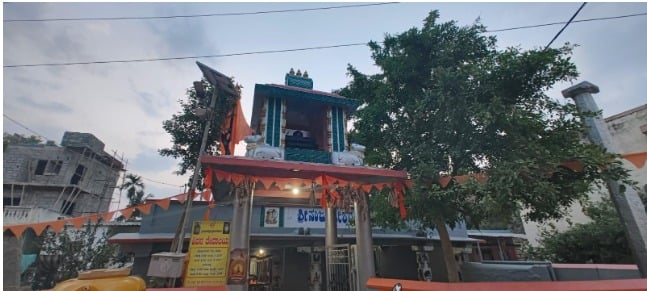
Adjacent to the Shiva Linga is a standing form of Goddess Parvathi. Devotees attribute great spiritual power to this image, and local belief holds that placing a hand near the goddess’s nose allows one to sense her breath. Academic caution requires distinguishing between verifiable history and faith-based tradition. Yet both are relevant to understanding a living temple. Historical evidence explains chronology and patronage; devotional experience explains why a community continues to care for a shrine across generations.
Figure 3: Sri Nanjundeshwara Swamy Temple in the sacred cluster around Devanahalli Fort.
The Nanjundeshwara Temple is part of a broader sacred cluster that includes the Marigudi Temple dedicated to the village deity, the Raghavendra Swamy Matha, the Siddhalingeshwara Swamy Temple, and the Chandramoulishwara Swamy Temple. Together, these sites create a network of worship that spans Shaiva, Vaishnava, Shakta, and saint-centered devotional traditions. This interconnectedness supports the broader dharmic principle that different modes of worship can coexist without erasing one another.
Hanuman Shrines, Kalyani, and Sacred Water Memory
Behind the fort, another layer of Devanahalli’s sacred landscape becomes visible through its Hanuman temples and water structures. One Hanuman shrine stands near a calm lake, where boating is sometimes available. Further along the road behind the fort, another Hanuman temple appears with a large kalyani, or temple tank. This shrine, identified as the Sarovara Kalyani Anjaneya Swamy Temple, is especially memorable because the tank remains architecturally impressive even when dry.
The absence of water in the kalyani during the visit does not reduce its historical value. Temple tanks in South India were integral to ritual practice, urban planning, water management, and community life. They supported ceremonial bathing, festival processions, seasonal water storage, and the symbolic relationship between purity, ecology, and sacred space. A dry kalyani can therefore be read as both a heritage structure and a reminder of the need to reconnect water conservation with temple preservation.
The repeated presence of Hanuman shrines in and around Devanahalli Fort invites further historical study. Hanuman worship is often linked with strength, protection, courage, service, and martial discipline. In fortified settlements, such shrines may have carried special meaning for warriors, guards, administrators, and residents seeking protection. While direct conclusions require more evidence, the pattern suggests that Devanahalli’s religious geography was closely tied to its strategic and military character.
The birthplace of Tipu Sultan lies only a short distance from this sacred zone, adding another historical layer to the area. The proximity of temples, fort walls, tanks, and a major Mysorean historical memory makes the site unusually dense. It is not possible to reduce Devanahalli to a single narrative, whether devotional, military, royal, or colonial. Its significance lies precisely in the way these histories overlap.
Devanahalli as a Living Archive of Karnataka
Devanahalli’s importance lies in the convergence of several historical systems. The fort points to regional defense and state formation. The Venugopalaswamy Temple preserves Vaishnavite devotion, Vijayanagara-style iconography, Dravidian architectural forms, Ramayana narrative sculpture, and inscriptional evidence of temple endowment. The Nanjundeshwara Temple and associated shrines preserve Shaiva and local devotional traditions. The kalyani and lake recall the ecological and ritual importance of water. The nearby birthplace of Tipu Sultan connects the town to Mysore’s eighteenth-century political history and the Anglo-Mysore Wars.
This layered heritage challenges the common assumption that places on the edge of large cities are culturally secondary. Devanahalli is not simply an extension of Bengaluru’s airport corridor or real-estate expansion. It is a historically complex settlement shaped by the Vijayanagara Empire, local chieftains, the Kingdom of Mysore, devotional communities, artisans, temple servants, and ordinary residents who continue to inhabit its older spaces.
The emotional force of Devanahalli comes from this unexpected discovery. A place initially described as uneventful reveals itself as a dense civilizational landscape. The vegetable market, the school, the residences, the fort wall, the Krishna temple, the Shiva shrine, the Hanuman temples, the dry kalyani, and the inscription together create a powerful impression: history is not always hidden in distant ruins. Sometimes it survives in streets that people cross every day without noticing their depth.
For heritage studies, Devanahalli offers an important methodological lesson. Monuments should not be studied only as architectural objects. They must also be read through movement, memory, ritual, inscription, local speech, craft, ecology, and social use. The town’s temples are not merely remnants of the past; they continue to shape community identity. Its fort is not only a military shell; it remains part of a living neighborhood. Its inscription is not only a text on stone; it is evidence of a worldview in which worship, welfare, land, and governance were interdependent.
Devanahalli therefore deserves closer attention from historians, conservationists, pilgrims, students, and travelers interested in Karnataka’s cultural heritage. Its sacred geography demonstrates continuity across dharmic traditions within Hindu worship, especially through the coexistence of Vaishnava, Shaiva, Shakta, Hanuman, and matha-based devotional spaces. Its fort and temples show how power and piety often occupied the same urban frame. Its inscriptions preserve the administrative intelligence through which temple life was sustained.
In the end, Devanahalli is best understood not as a forgotten outskirts town, but as a living repository of South Indian history. Its fort walls remember political change; its temples preserve devotion; its inscription records public endowment; its kalyani recalls sacred water systems; and its streets continue to hold the intimacy of an older Karnataka town. What first appeared to be a peripheral locality becomes, on closer attention, a profound confluence of fort, temple, memory, and continuing worship.
Inspired by this post on Indica Today.
