-
Unshakable Safety in Saranagati: Why Krishna’s Protection Surpasses All Obstacles

This essay examines the Vaishnava doctrine of saranagati—surrender to Krishna—as an intellectually rigorous and ethically disciplined path to unshakable protection. Anchored in Bhagavad Gita assurances (4.11, 9.22, 18.66) and illuminated by case studies such as Gajendra, Draupadi, Prahlada, and Govardhana, it shows how divine shelter operates within, not outside, responsible agency. The six limbs of…
-
Seeing the Divine Clearly: Krishna’s Form, Shastra, and Unity Across Dharmic Paths

A precise, sastra-grounded portrait of the Divine emerges in the Krishna-bhakti tradition without negating other dharmic pathways. Drawing on descriptions such as Syamasundara Krishna as Muralidhara—venum kvanantam, with lotus eyes and Barhavatamsa—the article explains how iconography encodes theology and cultivates transformative devotion. It outlines the epistemic triad of sastra, reason, and realized experience, and shows…
-
Why Balarama Wears Blue: Profound Symbolism of Strength, Serenity, and Seva Revealed

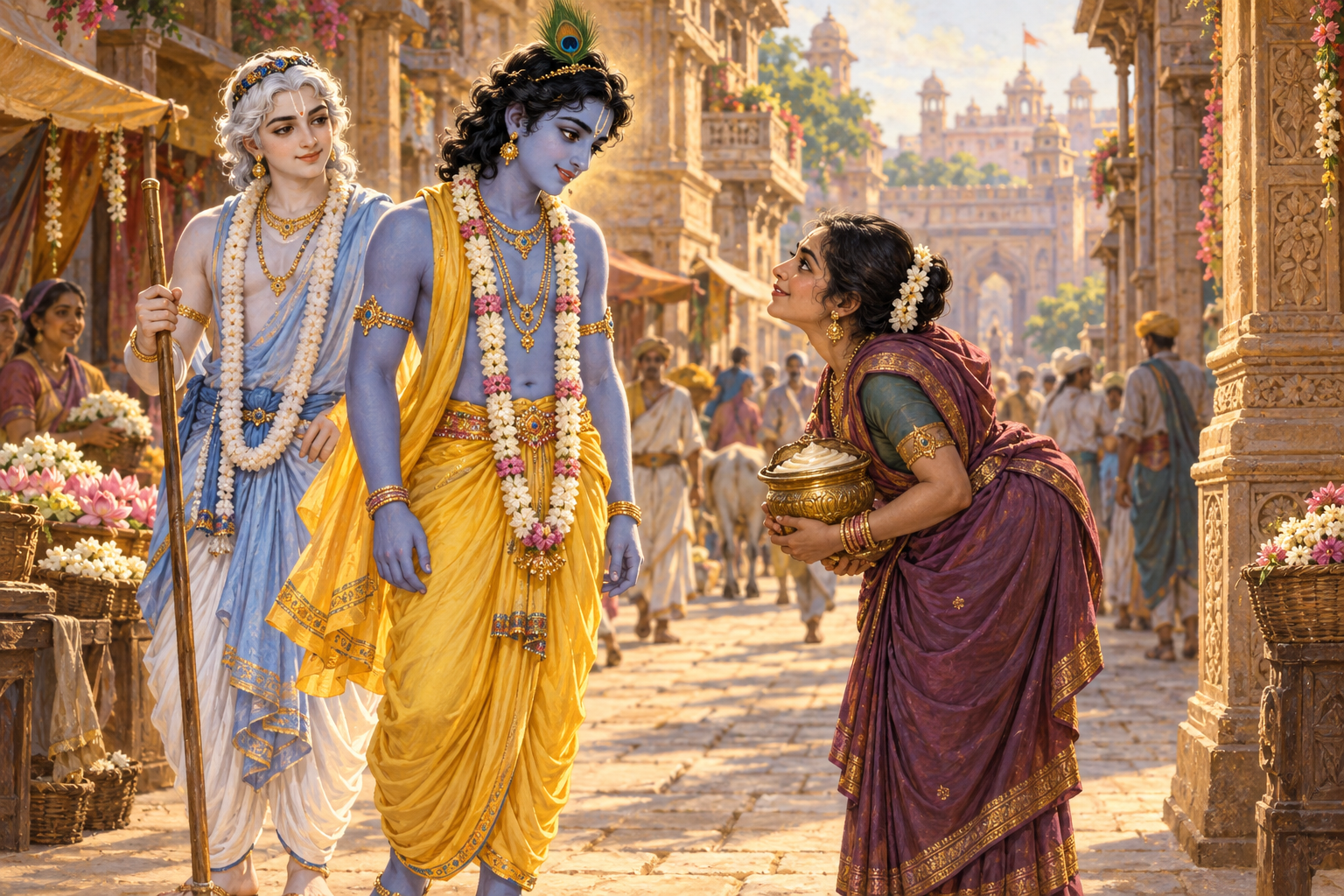
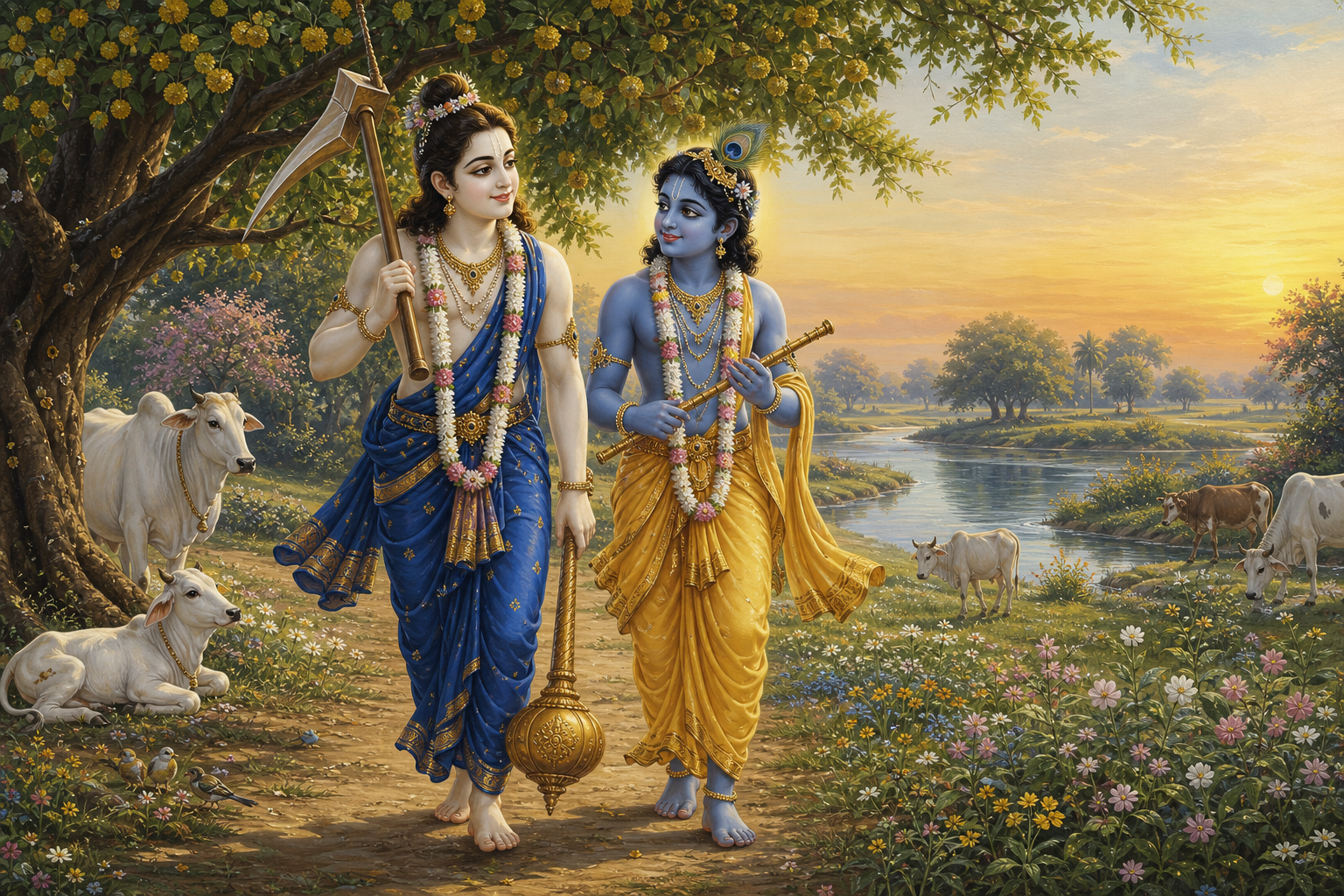
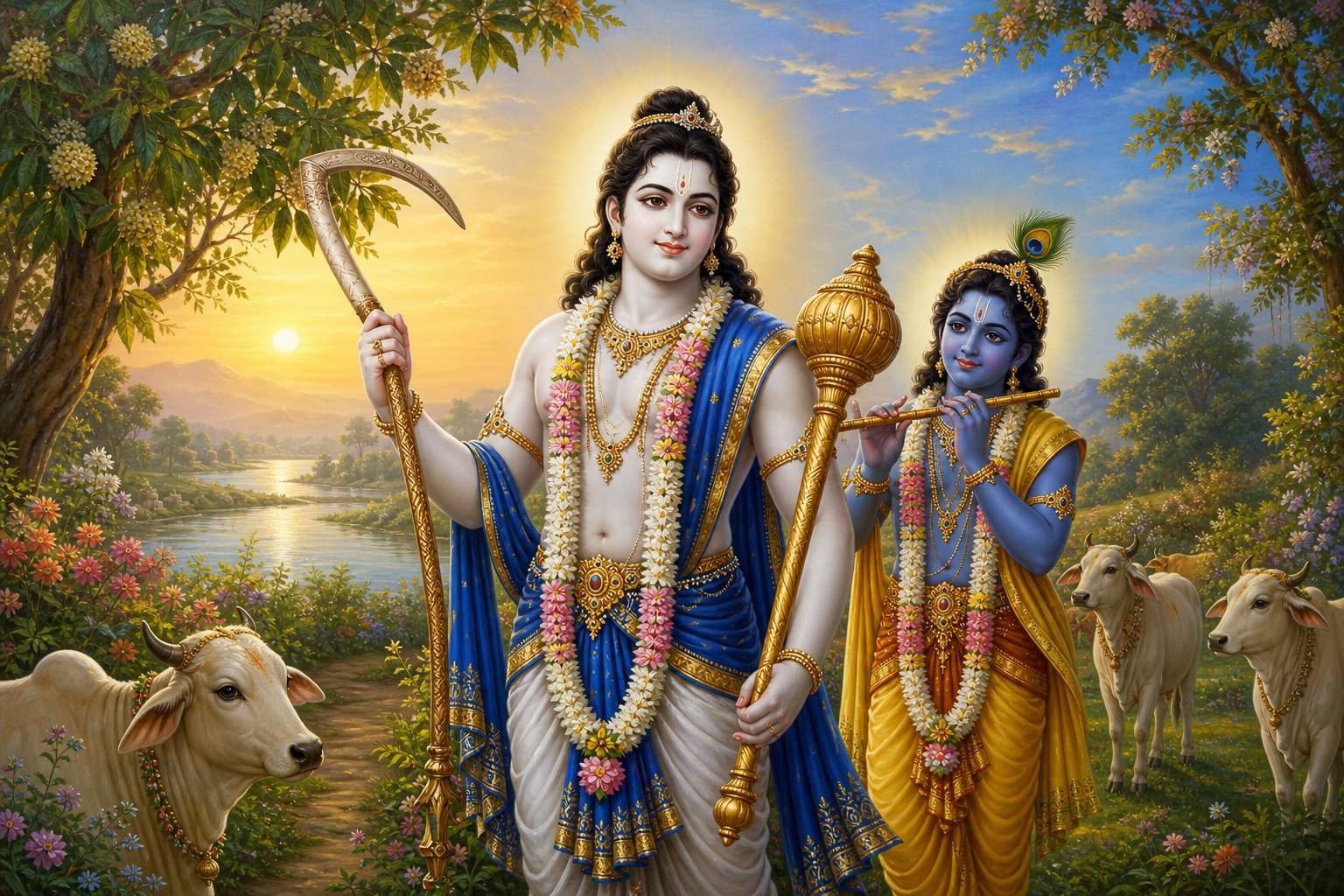
Balarama’s fair form and blue garment, described in the Bhagavata tradition, operate as a visual theology encoding strength, serenity, and selfless service. The Sanskrit color terms nīla, śyāma, and pīta clarify the chromatic contrast with Krishna and convey deeper cosmological moods. Vaishnava exegesis links Balarama’s blue attire to his identities as ādi-guru, Ananta Śeṣa, and…
-
Inside Bhakti Bhavan, Kolkata—Awe-Inspiring Darshan of Srila Bhaktivinoda Thakur’s Living Legacy

Bhakti Bhavan in Kolkata, the historic home of Srila Bhaktivinoda Thakura, preserves the living heart of Gaudiya Vaishnavism through the Madhava deity, Giriraja Sila, the Salagrama Sila manifest as Jagannatha, and the Kurma Sila. A recent visit demonstrates how careful heritage conservation and daily archana deepen understanding of scripture, lineage, and practice. The site powerfully…
-
The Peril of Vaishnava Aparādha: SB 11.1.13–15 and the Yadu Dynasty’s Devastating Fall

Srimad Bhagavatam 11.1.13–15 warns that mocking saintly persons—illustrated by the Yadu youths disguising Samba as a pregnant woman—carries devastating karmic and social consequences. Drawing on HH Guru Prasad Swami Maharaj’s insights, this analysis clarifies the doctrine of Vaishnava aparādha and shows how even technical fixes cannot undo moral causes. Readers gain precise context for the…
-
Dolai Kannan Unveiled: The Sacred Swing of Krishna and the Transformative Joy of Bhakti

Dolai Kannan—Krishna enthroned on a flower-decked swing—embodies the tenderness of vatsalya-bhava and the theological richness of Sri Vaishnava liturgy in South Indian temples and homes. Rooted in the Bhagavata Purana and guided by Vaikhanasa and Pancharatra Agamas, the rite integrates abhishekam, alankara, Divya Prabandham, and gentle oonjal seva into a unified contemplative experience. The swing’s…
-
“I Feel No Fear”: How the Hare Krishna Maha-mantra Builds Abhaya Across Dharmic Paths

A memorable exchange crystallizes a core promise of mantra meditation: asked what chanting the Hare Krishna maha-mantra feels like, Srila Prabhupada replied, “I feel no fear.” This article unpacks that claim in an academic yet accessible way, explaining how abhaya (fearlessness) emerges at the intersection of Bhakti theology, rhythmic sound, and breath regulation. It clarifies…
-
Golden Grace and Neem-born Humility: Decoding ‘Gauranga’ and ‘Nimai’ of Chaitanya Mahaprabhu

This article decodes the dual symbolism embedded in Chaitanya Mahaprabhu’s epithets “Nimai” and “Gauranga.” It explains how “Nimai,” rooted in neem’s purificatory aura and Bengal’s domestic piety, conveys protection, intimacy, and inner cleansing. It then unpacks “Gauranga” as a theological epithet signifying Krishna’s golden, compassion-filled form, central to Gaudiya Vaishnavism’s mission of Nama Sankirtana. Drawing…
-
Decode Shyam–Shyama: Baul Mysticism’s Bold Union of Krishna and Kali as One

Baul spirituality in Bengal contemplates Krishna (Shyam) and Kali (Shyama) as expressions of one luminous Reality, using their shared dark hue as a theological bridge between bhakti and tantra. This essay explains how Bauls integrate Vaishnava love, Shakta insight, yogic embodiment, and Sufi interiority to honor moner manush—the innermost Beloved. It unpacks the symbolism of…
-
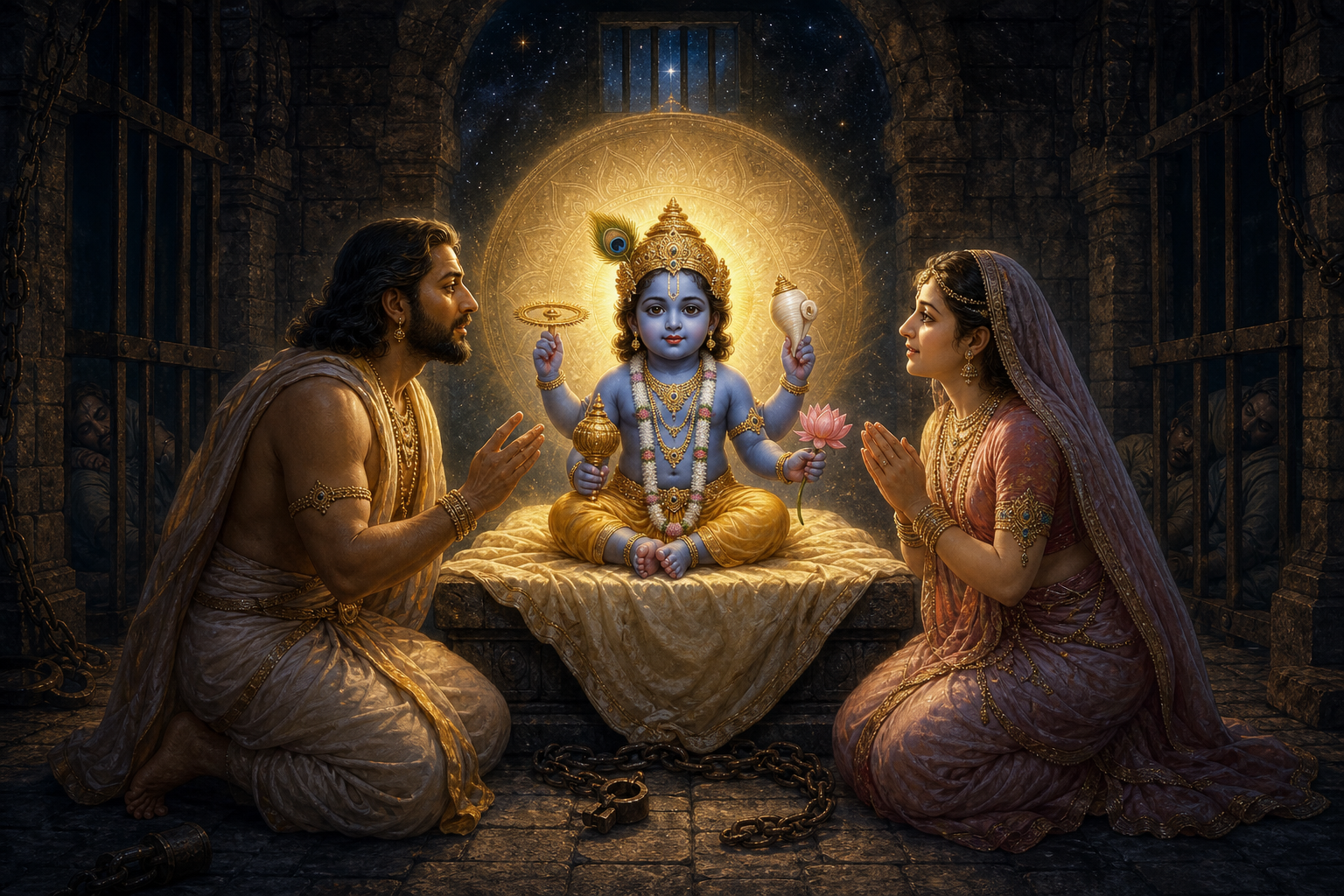
Nandagopa, Krishna’s Foster-Father: A Powerful Study in Dharma, Adoption, and Love Beyond Blood

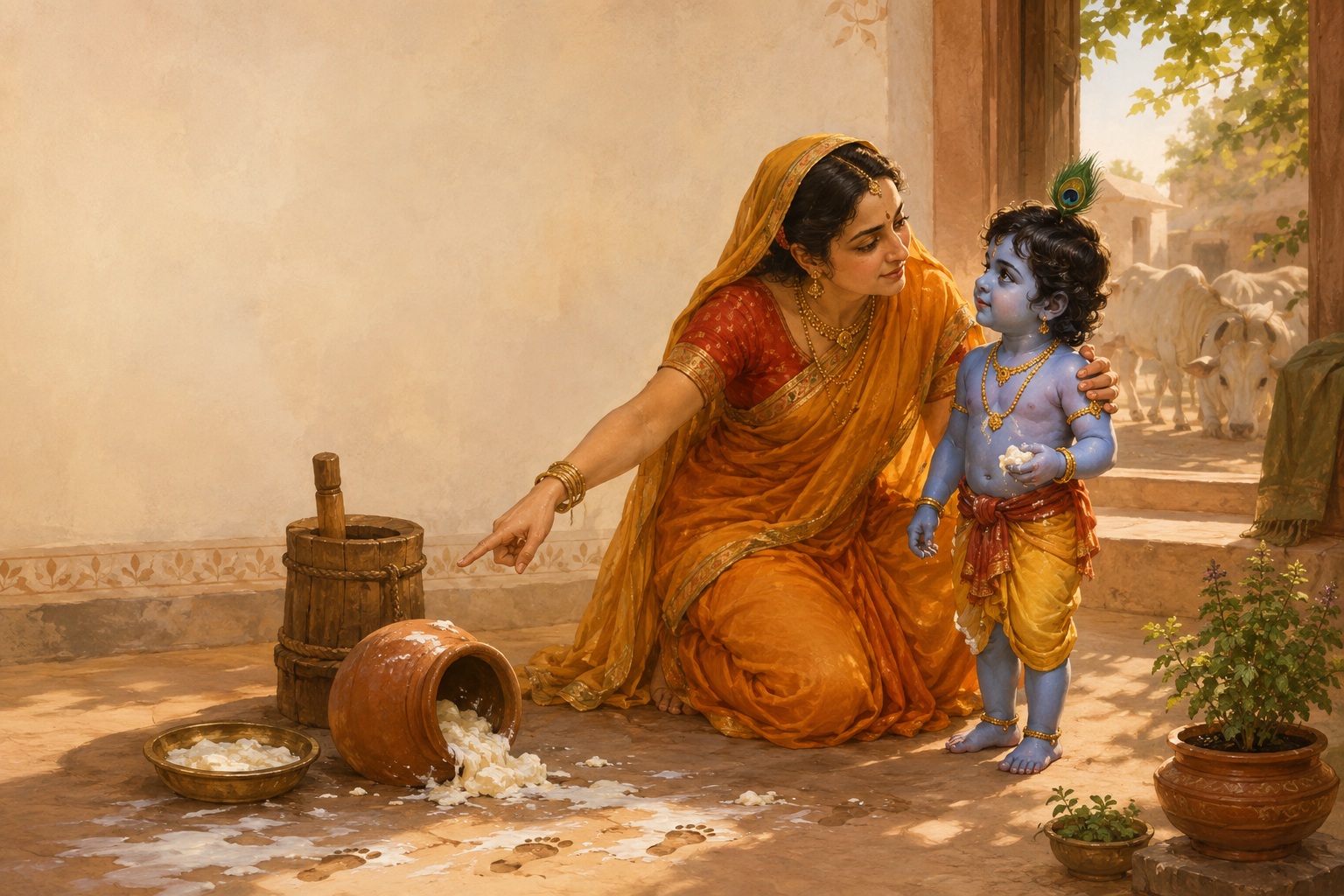
Nandagopa—Nanda Maharaja of Vraja—embodies a dharmic model of fatherhood defined by nurture rather than blood. Drawing on the Bhagavata Purana and allied traditions, this analysis situates him as Krishna’s foster-father who performs samskaras, protects the child, and leads the Gopa community with ethical clarity. The study explores adoption and kinship in Dharmashastra, shows how bhakti…
-
SB 4.9.37–53 Decoded: Dhruva’s Unshakable Devotion, Cosmic Boons, and Inner Renewal

Srimad-Bhagavatam Canto 4, Chapter 9, verses 37–53 narrate how Dhruva Maharaja’s devotion matures from personal austerity to public responsibility. The passage culminates in Dhruvaloka—symbolizing unwavering devotion—and a restored social order that validates rajadharma as service. Drawing on themes often highlighted by Kalakantha Prabhu, the analysis explains how bhakti integrates knowledge and action while transmuting anger…
-
Nirjala Ekadashi 2026: Ultimate Waterless Vrat Guide—Date, Vidhi, Parana, and Profound Blessings

Nirjala Ekadashi—also called Pandava Ekadasi and Bhimsen Ekadashi—falls on 25 June 2026 (Jyeshtha Shukla Ekadashi) and is observed as a traditional waterless fast dedicated to Sri Vishnu. Rooted in the Brahma Vaivarta Purana, the vrat katha links this austere observance to Bhima and extols its transformative merit when performed with devotion and correct Parana. The…
-
Lilasuka (Bilvamangala): The Enigmatic Poet‑Saint behind the Timeless Krishna Karnamrita

Lilasuka (Bilvamangala) stands as an enigmatic poet-saint whose Krishna Karnamrita shaped the language of devotion across centuries. This long-form exploration situates the work within Sanskrit poetics, Bhagavata Purana theology, and Gaudiya transmission, while noting manuscript variants and dating debates. Readers gain a technical view of meters, imagery, and alaṅkāra that make the text a model…
-
Varsana Parikrama: Ascending Srimati Radharani’s Hill via Jaipur Mandir and Dan garh

This guided overview of the Varsana (Barsana) parikrama presents a clear, research-based orientation to ascending the hilltop temple of Srimati Radharani and visiting Jaipur Mandir and Dan garh. It situates these landmarks within Braj’s sacred geography and explains how architecture, ritual movement, and sound cohere into a contemplative experience. Readers gain architectural insights into North…
-
Across the Waters: Divine Protection, Tirtha Symbolism, and Rebirth in Dharmic Traditions

Sacred river crossings in Dharmic traditions encode a shared grammar of divine protection, purification, and rebirth. From Krishna’s midnight passage over the Yamuna in the Bhagavata Purana to the Jain ideal of the Tirthankara as a “ford-maker,” from Buddhism’s raft simile to Sikh teachings on crossing the bhavsagar through the Guru’s Naam, each tradition converges…
-
Adhika Masa (Purushottama) 2026: A Deep Guide to Calendar Science, Bhakti Sadhana, and Unity

This long-form guide situates Adhika Masa (Purushottama Masa) within precise Hindu calendar science while presenting a practical, compassionate framework for intensified bhakti in 2026. It explains how the intercalary month is determined by the absence of a solar saṅkrānti within a lunar month and why many panchangs identify the 2026 occurrence as Adhik Jyeṣṭha. Drawing…
-
Kapi Dhvaja Unveiled: How Hanuman on Arjuna’s Banner Powered Dharma at Kurukshetra

Arjuna’s Kapi Dhvaja—the “ape-banner” of Hanuman—anchors the Bhagavad Gita’s battlefield in a powerful blend of scripture, strategy, and spirituality. The term kapidhvajaḥ in Gita 1.20 is not decorative; it signals divine sanction, morale-building semiotics, and an ethic of service above strength. Traditional lore explains Hanuman’s presence as a boon following Arjuna’s humility before Krishna, binding…
-
Narayaneeyam: A Soul-Stirring, Scholarly Guide to the Bhagavata Purana in 100 Dasakas

Nārāyaṇīyam (Narayaneeyam) condenses the Srimad Bhagavatham into 100 daśakas and just over a thousand ślokas, uniting poetry, philosophy, and devotion. Composed in 16th‑century Kerala by Melpathur Nārāyaṇa Bhaṭṭathiri at Guruvayur, it offers a structured path from cosmology and avatāras to Krishna’s intimate līlās and a culminating meditative vision. This guide clarifies its history, architecture, meters,…
-
Tasting the Whole Krishna: Beyond One‑Dish Devotion to the Complete Vishvarupa Experience

A Kerala Sadhya on a banana leaf offers the perfect metaphor for understanding Sri Krishna: tasting only the sweet payasam is not the same as experiencing the complete meal. This long-form reflection shows how the Bhagavad Gita, the Bhagavata Purana, and Vaishnava theology present a whole vision—Vishvarupa, six divine opulences, multiple rasas, and the vyūha…