
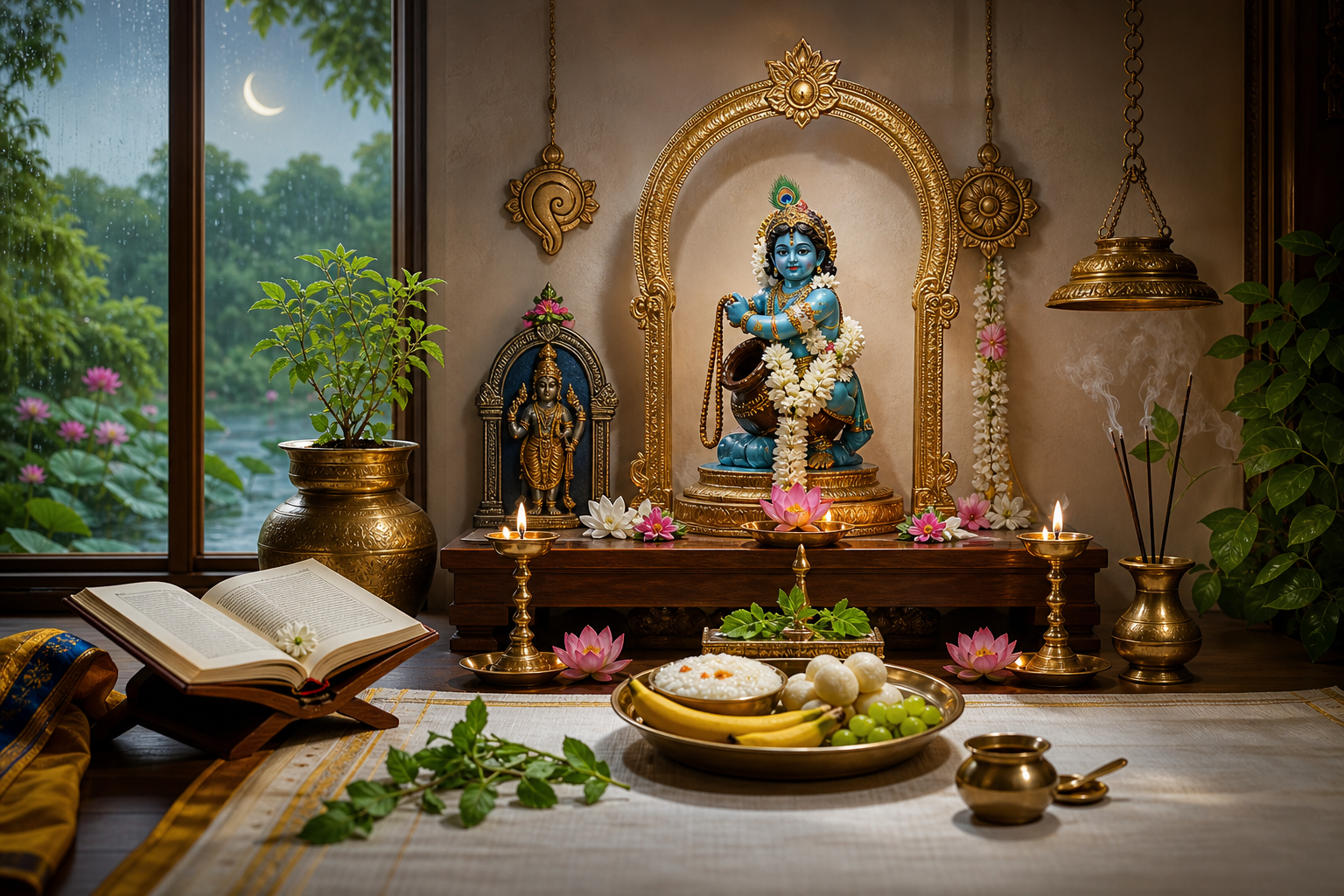
Damodara Dwadashi, also written as Damodar Dwadasi or Damodara Dvadasi, is a sacred observance associated with Lord Damodara, a beloved name of Lord Krishna and Lord Vishnu. In the Hindu calendar, it falls on the Dwadashi tithi, the twelfth lunar day, during the Shukla Paksha of Shravana month. In 2026, Damodara Dwadashi is observed on August 24, immediately after Shravana Putrada Ekadashi.
The observance belongs to the wider Vaishnava rhythm of Ekadashi and Dwadashi discipline. Putrada Ekadashi, also known in many traditions as Pavitra Ekadashi or Pavitropana Ekadashi, is marked by fasting, worship, restraint, and remembrance of Lord Vishnu. Damodara Dwadashi then becomes the day on which the previous day’s vrata is completed through parana, the prescribed breaking of the fast, along with continued devotion to Vishnu.
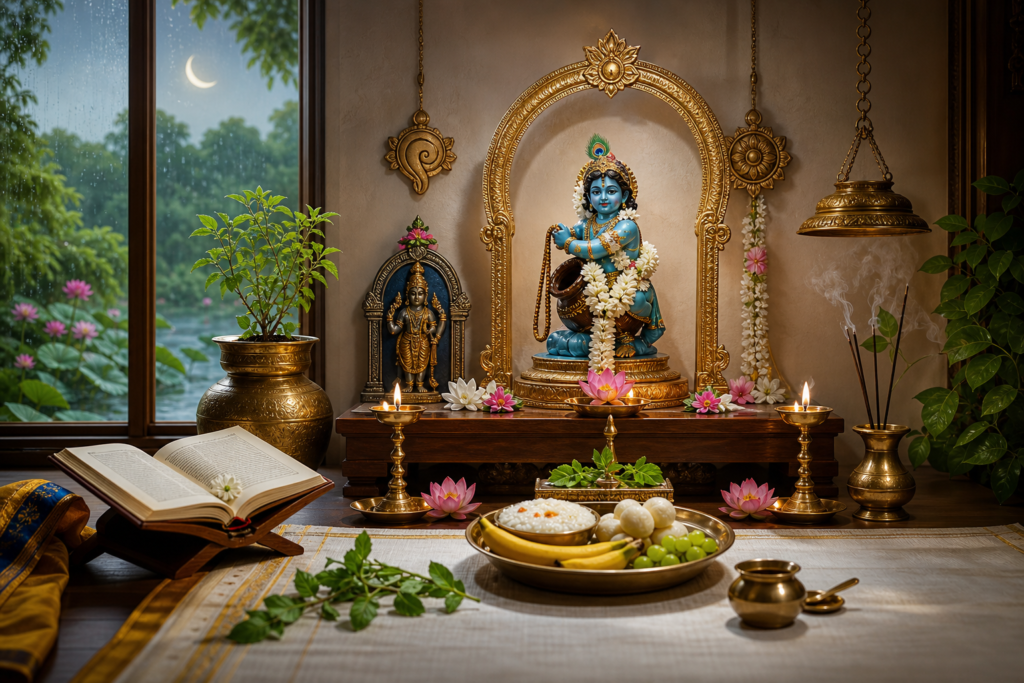
The name Damodara carries deep theological meaning in Krishna devotion. It is commonly interpreted as “the one whose belly was bound with a rope,” recalling the famous childhood episode in which Yashoda ties Krishna after his playful mischief. Yet the name also points beyond narrative charm. It expresses the paradox of bhakti: the Supreme Being, worshiped as Vishnu and Krishna, becomes accessible through love, discipline, and intimate devotion.
Shravana itself is a spiritually charged month in many Hindu traditions. It is associated with fasting, pilgrimage, japa, puja, scriptural listening, and intensified worship of deities such as Shiva and Vishnu. Within this sacred calendar, Shravana Shukla Dwadashi is not treated merely as the day after Ekadashi; it is understood as a continuation and completion of a devotional process that begins with inner restraint and ends with gratitude, offering, and renewal.
In traditional practice, devotees who observe Putrada Ekadashi may fast fully, partially, or according to family custom, health, age, and capacity. Some abstain from grains, rice, beans, and certain heavy foods; others maintain a simpler diet while focusing on prayer and ethical self-control. The source tradition notes that abstaining from rice and food salt for two days is considered highly meritorious, though such discipline is best approached with sincerity, moderation, and respect for individual circumstances.
Damodara Dwadashi is especially significant because it emphasizes proper completion. In many vrata traditions, the fast is not considered complete simply because the night has passed. The parana, or formal conclusion of the fast, is part of the discipline. It reminds devotees that renunciation and nourishment both have sacred value when performed with awareness, humility, and remembrance of the Divine.
The ritual focus of the day is Vishnu worship. Devotees may offer water, flowers, tulasi leaves, incense, lamp, naivedya, and prayers to Lord Vishnu or Lord Krishna. The presence of tulasi is especially meaningful in Vaishnava worship, as tulasi is traditionally regarded as dear to Vishnu. Even a simple home puja, performed with steadiness and reverence, can embody the devotional spirit of the day.
For many households, the emotional power of Damodara Dwadashi lies in its quietness. It is not always a large public festival with elaborate processions, yet it enters domestic life through small acts: preparing sattvic food after fasting, lighting a lamp, reciting Vishnu Sahasranama or Krishna names, and sharing prasadam with family. Such practices make the Hindu calendar tangible, turning time itself into a medium of spiritual education.
Putrada Ekadashi is traditionally connected with prayers for children, family continuity, and household welfare. A contemporary academic reading can preserve this traditional meaning while also recognizing a broader ethical aspiration: the desire that future generations grow with dharma, compassion, steadiness, and reverence for life. In that sense, the vrata is not only about obtaining blessings but also about becoming worthy custodians of those blessings.
Dwadashi, as the twelfth tithi, has an important place in Hindu ritual structure. It follows Ekadashi, a day widely associated with self-regulation and devotion to Vishnu. This sequence gives the observance a practical spiritual grammar: restraint on Ekadashi, completion on Dwadashi, and integration afterward. The devotee is invited not only to fast but also to return to ordinary life with greater clarity.
The phrase Shravana Shukla Dwadashi identifies the timing with precision. “Shravana” refers to the lunar month, “Shukla” to the bright fortnight of the waxing moon, and “Dwadashi” to the twelfth lunar day. This technical language reflects the sophistication of the Hindu calendar, where sacred time is calculated through tithi, paksha, masa, nakshatra, and regional panchang traditions rather than only through the solar civil date.
Because lunar observances are determined by local sunrise, tithi duration, and regional panchang rules, devotees often confirm the exact parana timing with a reliable local panchang or temple calendar. The Gregorian date of August 24, 2026 is useful for planning, but the ritual details of fasting and breaking the fast may vary by location. This is especially relevant for devotees living outside India, where time zones can shift observance windows.
In Vaishnava theology, fasting is not merely physical abstinence. It is a disciplined redirection of attention. By reducing ordinary consumption, the devotee creates space for nama japa, scriptural reflection, seva, and remembrance of Vishnu. Damodara Dwadashi then completes that discipline by transforming food back into prasadam, a gift received with gratitude rather than consumed with distraction.
The observance also carries a unifying significance within dharmic traditions. Hinduism, Buddhism, Jainism, and Sikhism all preserve, in different ways, the value of restraint, remembrance, compassion, and disciplined living. Damodara Dwadashi belongs specifically to Hindu and Vaishnava practice, yet its ethical lessons can be appreciated across the wider dharmic landscape: self-control should soften the heart, not harden identity.
A meaningful observance of Damodara Dwadashi may include early morning prayer, Vishnu or Krishna puja, offering tulasi, reading from the Bhagavad Gita or Srimad Bhagavatam, chanting the names of Krishna, feeding guests or those in need, and breaking the fast with sattvic food. The external form may vary, but the inner orientation remains consistent: devotion, gratitude, purity, and alignment with dharma.
There is also a subtle psychological dimension to the day. Fasting exposes habits; prayer steadies attention; parana teaches balance. A devotee who moves through Ekadashi and Dwadashi consciously may notice how easily desire becomes automatic and how powerfully ritual can restore awareness. This is why traditional observances remain relevant even in modern life: they train attention in a world that constantly fragments it.
Damodara Dwadashi 2026 therefore offers more than a date on the Hindu calendar. It is a carefully structured devotional moment rooted in Shravana, linked to Putrada Ekadashi, and dedicated to Lord Damodara as Krishna and Vishnu. Its observance brings together fasting, parana, puja, family prayer, and the remembrance that divine love can be approached through disciplined, humble, and joyful practice.
Inspired by this post on Hindu Pad.




Leave a Reply
You must be logged in to post a comment.