-
At Bhojshala After MP High Court Order: Uninterrupted Hindu Worship and a Call for Harmony

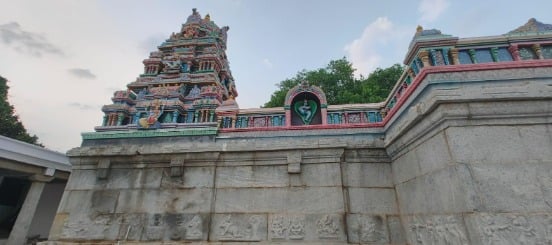
Following the Madhya Pradesh High Court’s directives, Bhojshala in Dhar hosted uninterrupted Hindu worship on the first Friday after the order, while Friday namaz did not occur at the monument that day, according to official reports. This analysis explains why the moment is significant, distinguishing symbolic claims (such as “700 years”) from verifiable chronology. It…
-
Konark Sun Temple: A Radiant Masterpiece of Kalinga Architecture, Astronomy, and Dharma

Konark Sun Temple in Odisha, a 13th-century UNESCO World Heritage Site, unites Kalinga architecture, astronomy, and living ritual in a single monumental vision. Commissioned by Narasimhadeva I of the Eastern Ganga Dynasty, the complex was conceived as Surya’s celestial chariot, complete with functional stone sundials. The surviving jagamohana, masterful masonry, and encyclopedic iconography make the…
-
Konark Sun Temple: Awe-Inspiring Kalinga Masterpiece, Cosmic Timekeeper, and Living Heritage

Konark Sun Temple in Odisha—commissioned by Eastern Ganga ruler Narasimhadeva I around 1250 CE—unites Kalinga architecture, sculpture, and ancient Indian astronomy in a breathtaking chariot-of-the-sun design. The twenty-four carved stone wheels and seven horses encode a lived experience of time and celestial geometry, while Surya’s triadic images track the diurnal path of light. As a…
-
Bhojshala at a crossroads: Saraswati idol reportedly installed; entry rules tighten after court

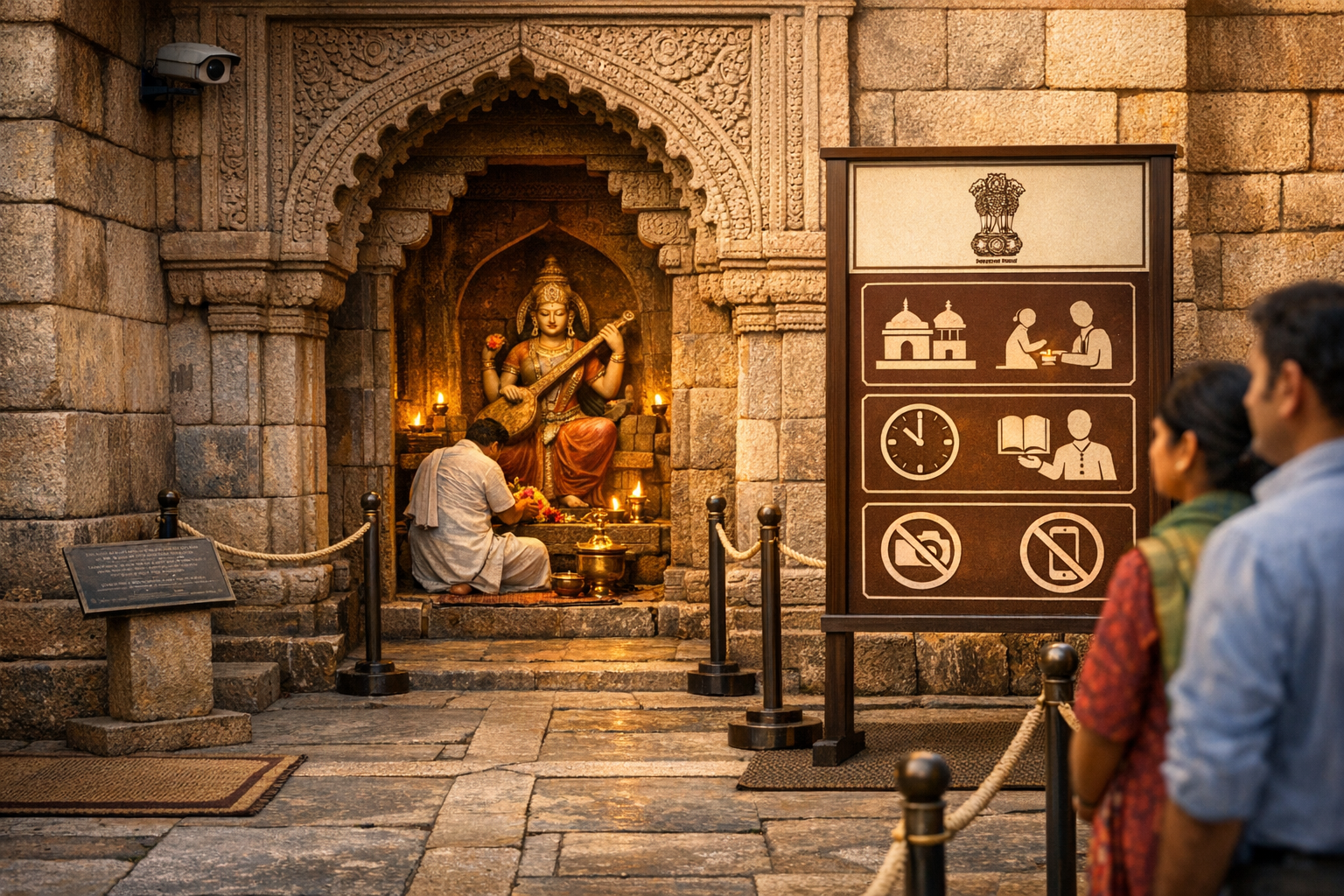
Reports from Dhar, Madhya Pradesh suggest that a consecrated idol of Mata Saraswati has been installed at Bhojshala with daily worship commencing, and that entry protocols have tightened following a court directive. This analysis explains the legal frameworks (Articles 25–26, AMASR Act, and the Places of Worship Act) that shape permissible action. It outlines how…
-
Historic MP High Court Verdict Affirms Bhojshala as Saraswati Temple: Devotees Pray Peacefully

A day after the Madhya Pradesh High Court affirmed Bhojshala as the Mata Saraswati temple, Hindu devotees in Dhar offered prayers peacefully under a robust security plan. The verdict clarifies the site’s religious character while embedding worship within heritage protection norms and public-order protocols. Historical and archaeological evidence—documented by the Archaeological Survey of India—underpins the…
-
MP High Court Declares Bhojshala a Hindu Temple: Landmark Ruling, Ayodhya Principles, ASI Proof

The Madhya Pradesh High Court has declared the disputed precinct within the Bhojshala complex a Hindu temple, expressly invoking the Supreme Court’s Ayodhya principles. This long-form analysis explains what the ruling means in constitutional and heritage law, how courts distinguish historical “religious character” from mere possession, and why archaeology and epigraphy matter. It unpacks the…
-
Haridra Dam to Vijayanagara: Field Evidence, Inscriptions, and Karnataka’s Fading Shrines

A field-based reading of Devarabelakere, near Davanagere in Karnataka, reveals how a modern check dam overlays the footprint of the medieval Haridra Dam attributed to the early Vijayanagara era under Devaraya I. Inscriptions documented by the ASI at Harihara in 1902, along with a 2003 survey by Dr. Jagadisha, help relocate the lost basin of…
-
Historic Opening After 48 Years: Puri Ratna Bhandar Inventory to Protect Sacred Heritage

After 48 years, the Ratna Bhandar inventory at Puri Jagannath Temple begins as a carefully choreographed effort to protect sacred heritage while honoring ritual sanctity. The process integrates SJTA administration, ASI conservation practice, servitor participation, and multi-agency oversight to ensure chain-of-custody and transparency. High-resolution imaging, meticulous metadata, and read-only digital ledgers anchor the documentation, while…
-
Sitakund and Monghyr Fort: Shah Shuja’s Turmoil and a Sacred City’s Resilience

This long-form analysis reconstructs the layered history of Munger (Monghyr) from Gupta-era epigraphy and regional dynasties to Mughal turbulence and East India Company conquest. It clarifies Monghyr’s form as a classical Kaṭaka—fortified capital and garrison—while situating the city’s beauty on a bend of the Ganges documented by Viscount Valentia. It explains the ritual ecology of…
-
Unlocking Susunia’s Sudarshana Secret: Chakrasvamin, Gupta Power, and Bengal’s Living Dharma

Susunia Hill’s fourth-century rock inscription offers a compact yet sweeping window into Bengal’s Vaishnava heritage under the Gupta Empire. Three Sanskrit lines in northern Brahmi, carved beneath a blazing Sudarshana Chakra, identify Maharaja Chandravarman as dāsāgreṇa of Cakrasvāmin and connect Vanga-deśa directly to Āryāvarta through the Prayaga Prasasti. This essay traces the Cakrasvāmin sect’s spread…
-
Landmark ASI survey at Dhar Bhojshala reveals extensive temple spolia in Kamal Maula Masjid

The Archaeological Survey of India informed the Indore Bench of the Madhya Pradesh High Court that Kamal Maula Masjid at Dhar Bhojshala incorporates reused temple materials—architectural members, sculptural fragments, and inscriptions—revealing a stratified building history. This evidence of spolia, identified through standard archaeological methods including architectural typology and epigraphic analysis, places the complex within well-known…
-
ASI survey reveals temple-era spolia at Bhojshala–Kamal Maula, renewing shared heritage

An ASI survey at the protected Bhojshala–Kamal Maula monument in Dhar, Madhya Pradesh, has renewed attention to the site’s layered history by documenting temple-era spolia reused within the present complex. This analysis explains, in clear archaeological terms, what ‘pre-existing structure’ and ‘spolia’ mean and why such findings are common across India’s syncretic monuments. It situates…
-
Illegal Encroachments at Panhala Fort Expose Stark Lapses in Heritage Protection
A formal memorandum has urged the district administration to remove illegal encroachments at the UNESCO-listed Panhala Fort, highlighting serious enforcement lapses at a protected heritage site. The post explains why this matters, connecting legal safeguards to the shared cultural values of Hinduism, Buddhism, Jainism, and Sikhism. It outlines specific, time-bound steps—survey, demarcation, lawful removal, and…
-
Taj Mahal tricolour incident triggers CISF–ASI probe and renewed call for unity

Members of the All India Hindu Mahasabha reportedly hoisted the Tricolour inside the Taj Mahal on Republic Day, chanting “Bharat Mata ki Jai,” prompting a probe by the CISF and ASI. The inquiry focuses on whether protocols for protected monuments were followed. This coverage clarifies how heritage-site regulations safeguard both security and preservation without diminishing…