-
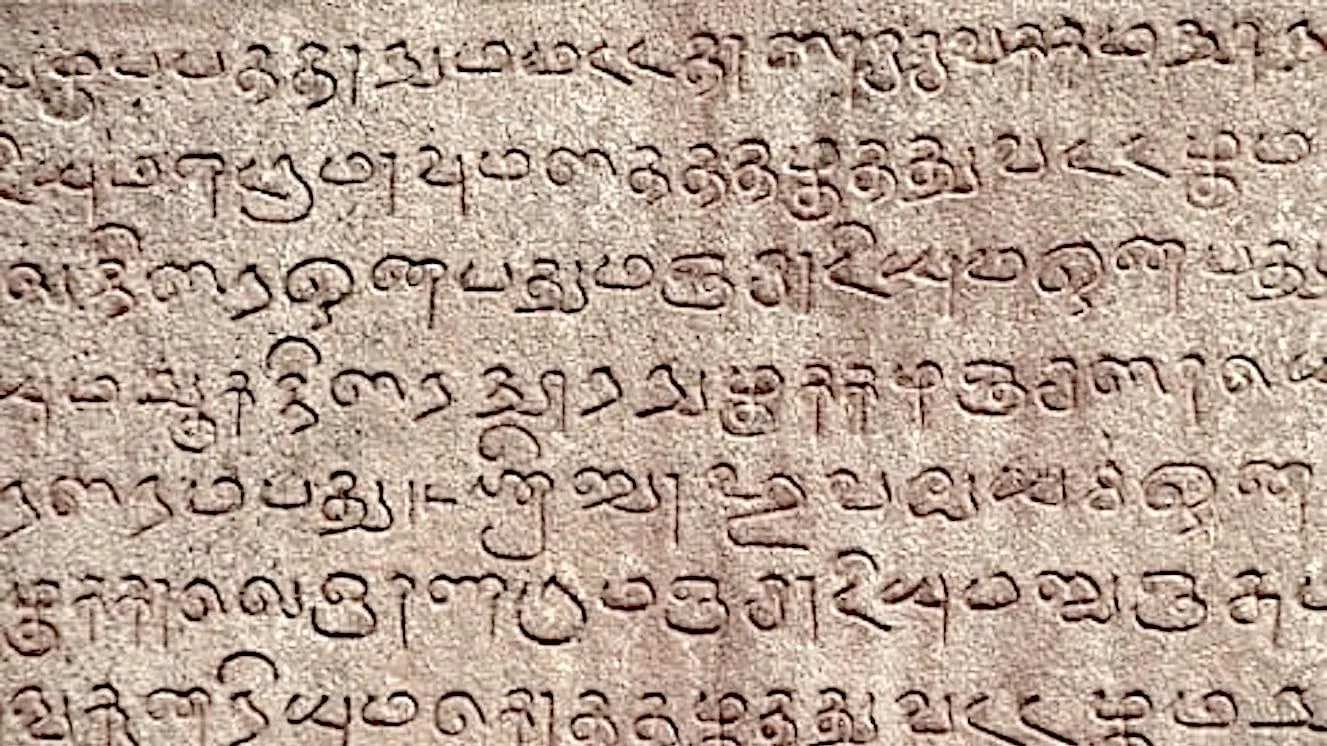
The Architect Who Cracked Linear B—and the Clues That Could Unlock the Indus Script

The decipherment of Linear B was not a solitary miracle but the result of Arthur Evans’s observations, Alice Kober’s rigorous structural analysis, Michael Ventris’s testable insight and John Chadwick’s linguistic verification. This account explains how Kober’s inflectional patterns and Ventris’s syllabic grid transformed mysterious signs into readable Mycenaean Greek. It also corrects the misconception that…
-
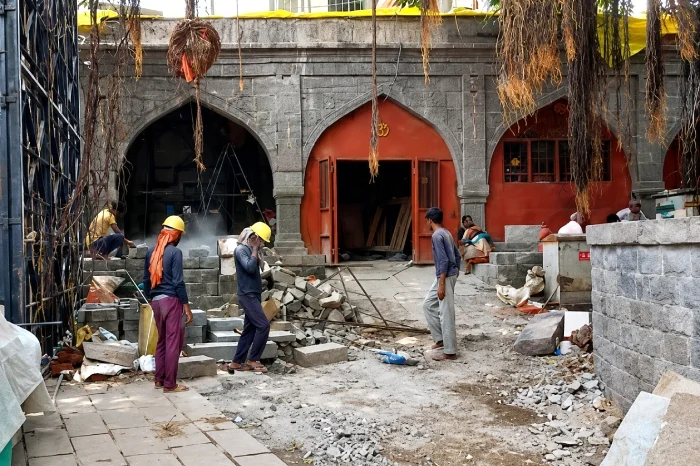
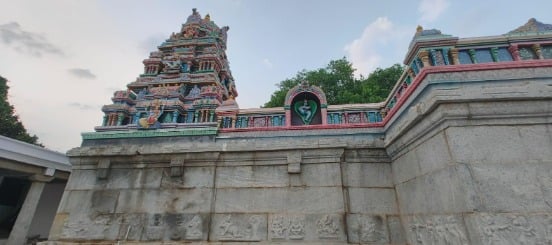
Devanahalli’s Hidden Heritage: Forts, Temples and Sacred Memory Near Bengaluru

Devanahalli near Bengaluru is far more than an airport-side town or a peripheral urban settlement. Its fort, temples, inscriptions, sacred tanks, and living worship traditions preserve more than five centuries of Karnataka’s cultural heritage. The Sri Rukmini–Satyabhama Sametha Venugopalaswamy Temple reveals the depth of Vaishnavite devotion, Vijayanagara-era artistic influence, Dravidian architecture, and Ramayana narrative sculpture.…
-
Dhamlej’s Vanished Surya Temple: Powerful Clues to Gujarat’s Sacred Past

Dhamlej in Gujarat’s Saurashtra region was once remembered as MŪLA-GAYĀ, a sacred Surya Kshetra near Sri Somanatha Kshetra. The 1380 CE Dhamleja Inscription preserves evidence of a restored Surya Mandira, the Vishnu Gaya Kunda, and a wider sacred landscape connected with Prabhāsa and Somanatha. The account highlights the role of Karma Simha, a devout Porwal…
-
Garikapati Annam Bhaṭṭu: The Powerful Copper-Plate Legacy of Nyāya

Garikapati Annam Bhaṭṭu emerges from this account as a major figure in Nyāya, Vyākaraṇa, and Indian Scholarship. The 1560 CE Garikapāḍu Dāna Śāsana provides crucial inscriptional evidence for placing him within the Vijayanagara Empire’s world of dharma, learning, and agrahāra institutions. His journey from Mamillapalli to Kāśī and back to Garikapāḍu reflects the pan-Indian movement…
-
Dhamlej’s Forgotten Sun Temple: Powerful Evidence from the 1380 CE Inscription

Dhamlej in Gujarat, once remembered as MŪla-Gayā, was associated with a significant Surya Kshetra near Sri Somanatha Kshetra. The 1380 CE Dhamleja Inscription records the restoration of a ruined Surya Mandira, the rejuvenation of Vishnu Gaya Kunda, and the public works of Karma Simha, a devout Porwal Jaina minister serving Raja Bharma. This history reveals…
-
After the 1397 Bahmani Raid: How Gunda Dandanatha Raised Belur’s Seven‑Storeyed Gopuram

The 1397 Belur inscription records how Gunda Dandanatha, under Harihara II of the Vijayanagara Empire, rebuilt the Chennakeshava Temple’s gateway into a seven‑storeyed gopuram after an attack from Kalaburagi. Placing this event in the wider political and cultural context, the analysis explains how Vijayanagara’s ethos of Pūrvada maryādecontinuity of ancient customsguided practical restoration and renewed…
-
Beyond Dates and Dynasties: Why Dharmic India Chose Timeless Truth over History

Ancient India developed a distinct historiography that privileged timeless truth over exhaustive chronologies. Rather than ignoring the past, Hinduism, Buddhism, Jainism, and Sikhism embedded history in genres like Itihāsa, Purāṇa, and Śāstra to illuminate Dharma and guide conduct. Epigraphy, coins, and temple records demonstrate rigorous documentation when it served justice, patronage, and community welfare. Examples…
-
Belur 1397 CE: Vijayanagara Resilience and Gunda Dandanatha’s Restoration of Chennakeshava

The Belur Inscription of 1397 CE stands with India’s most consequential epigraphs and captures a decisive moment in the Vijayanagara Sāmrājya’s protection of the Dakshināpatha. It documents how Gunda Dandanāyaka led a rigorous architectural and ritual restoration of the Chennakeshava Temple after severe damage. Readers gain a clear sense of the inscription’s structure, dating, and…
-
Gunda Daṇḍanātha under Harihara II: Vijayanagara’s Shield and Belur Chennakeshava’s Restoration

This study profiles Gunda Daṇḍanātha, a Vijayanagara commander under Harihara II, using two key inscriptions (1395–1397 CE) to reconstruct how battlefield merit, civil administration, and heritage stewardship converged in late-medieval South India. Readers gain a clear view of the Daṇḍanāyaka’s role within the empire’s mixed civil–military hierarchy and the policy logic that paired frontier defense…
-
Reclaiming India’s Dharmic Sense of History: Evidence, Empathy, and Method

This essay offers a rigorous, empathetic roadmap to reclaim India’s Dharmic sense of history. It dismantles the colonial trope that Hindus lacked historical consciousness by surveying Itihasa, Puranas, caritras, inscriptions, and temple records across Ancient India and Medieval India. It explains why certain indigenous archives thinned during the medieval era and shows how to read…
-
Haridra Dam to Vijayanagara: Field Evidence, Inscriptions, and Karnataka’s Fading Shrines

A field-based reading of Devarabelakere, near Davanagere in Karnataka, reveals how a modern check dam overlays the footprint of the medieval Haridra Dam attributed to the early Vijayanagara era under Devaraya I. Inscriptions documented by the ASI at Harihara in 1902, along with a 2003 survey by Dr. Jagadisha, help relocate the lost basin of…
-
Unlocking Susunia’s Sudarshana Secret: Chakrasvamin, Gupta Power, and Bengal’s Living Dharma

Susunia Hill’s fourth-century rock inscription offers a compact yet sweeping window into Bengal’s Vaishnava heritage under the Gupta Empire. Three Sanskrit lines in northern Brahmi, carved beneath a blazing Sudarshana Chakra, identify Maharaja Chandravarman as dāsāgreṇa of Cakrasvāmin and connect Vanga-deśa directly to Āryāvarta through the Prayaga Prasasti. This essay traces the Cakrasvāmin sect’s spread…
-
Kokamukha Unveiled: The Jackal-Faced Mahakali in Texts, Temple Inscriptions, and Tantra

Kokamukha, remembered as the jackal-faced manifestation of Mahakali, emerges in the Shakta landscape at the intersection of Hindu scriptures, temple traditions, and Tantric iconography. The article clarifies the name’s philological roots and situates the form within cremation-ground theology, where fierce imagery communicates protection, fearlessness, and ethical clarity. It connects Kokamukha with Yogini traditions and early-medieval…
-
Landmark ASI survey at Dhar Bhojshala reveals extensive temple spolia in Kamal Maula Masjid

The Archaeological Survey of India informed the Indore Bench of the Madhya Pradesh High Court that Kamal Maula Masjid at Dhar Bhojshala incorporates reused temple materialsarchitectural members, sculptural fragments, and inscriptionsrevealing a stratified building history. This evidence of spolia, identified through standard archaeological methods including architectural typology and epigraphic analysis, places the complex within well-known…
-
Timeless Tirumala Tirupati: History, Architecture, Ritual Science, and Venkateswara’s Grace

Tirumala’s Sri Venkateswara Temple is revered as Kaliyuga Vaikuntha and celebrated for its unbroken lineage of worship in Andhra Pradesh’s Seshachalam Hills. Historical inscriptions document centuries of royal patronage by Pallava, Chola, Pandya, and Vijayanagara rulers, including queens, who endowed land, lamps, and resources for ritual continuity. Architecturally Dravidian, the temple centers on the gold-crowned…
-
Ummatturu’s Temples Unveiled: Awe-Inspiring Heritage, Living Festivals, and Vijayanagara Legacy

Temples in Karnataka have long served as cultural nuclei that preserve prosperity, art, and spirituality for Hindu and Jaina communities. This exploration of Ummatturu highlights the Sri Bhujangeshwara Temple’s deep ties to the Vijayanagara Empire and the enduring legacy of Sri Krishnadevaraya. Readers discover the region’s distinctive artistry at the bale-devalaya in Yelanduru, the rich…
-
Navakandam in Medieval Tamil Nadu: Ritual Devotion, Cultural Memory, and Dharmic Lessons Today

Navakandam, documented in Tamil Nadu between the 11th and 13th centuries, is a historical ritual of self-sacrifice associated with the goddess Kotravai and recorded in temple inscriptions and texts like Silappadhikaram, Kalingathup Bharani, and Takkayakap Bharani. Exploring this practice academically clarifies its medieval social and ritual context without endorsing it. The discussion highlights how dharmic…
-
Best of 2025: Unmissable Indian History, Dharmic Heritage, and Spiritual Insights

This best-of-2025 collection curates ten most-read essays spanning Indian history, cultural heritage, and spiritual insight. Readers encounter a Vijayanagara inscription that documents dam-building and temple ecology in the 14th century. A cultural analysis of Dhurandhar maps a shift toward a more assured Indian cinematic voice. Historical studies revisit Parāvartana, a Lampsacos engraving of Bharata Mata,…