-
Kishkindha Kanda Unveiled: Hampi’s Sacred Landscape, Dharma Debates, and Hanuman’s Rise

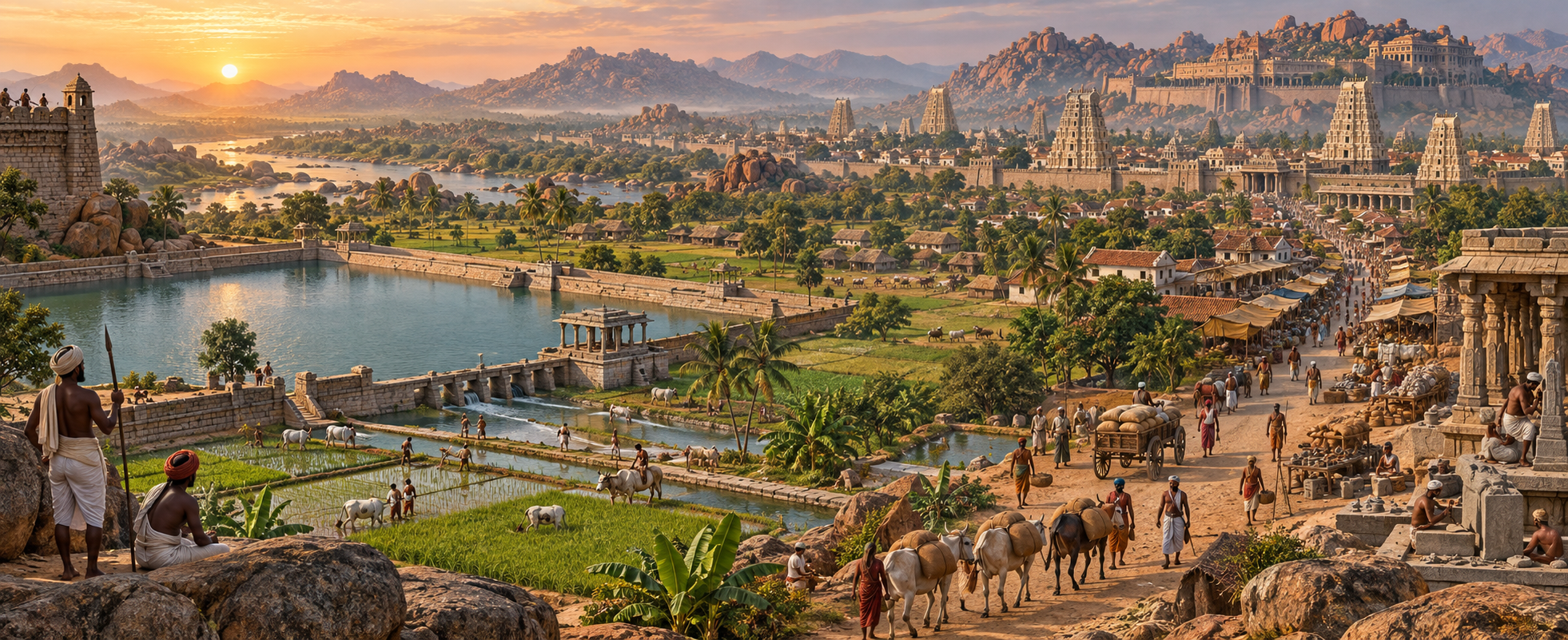
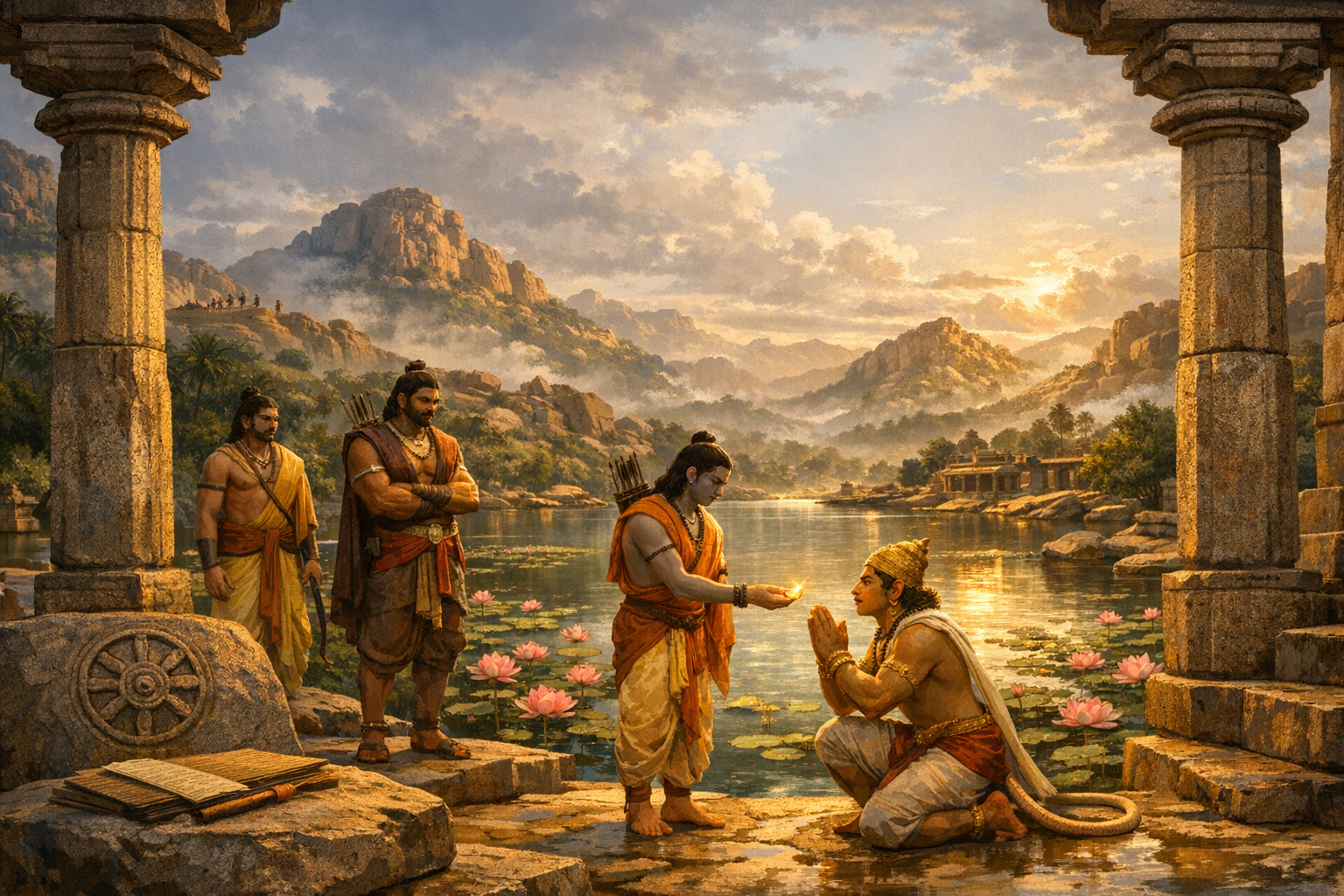
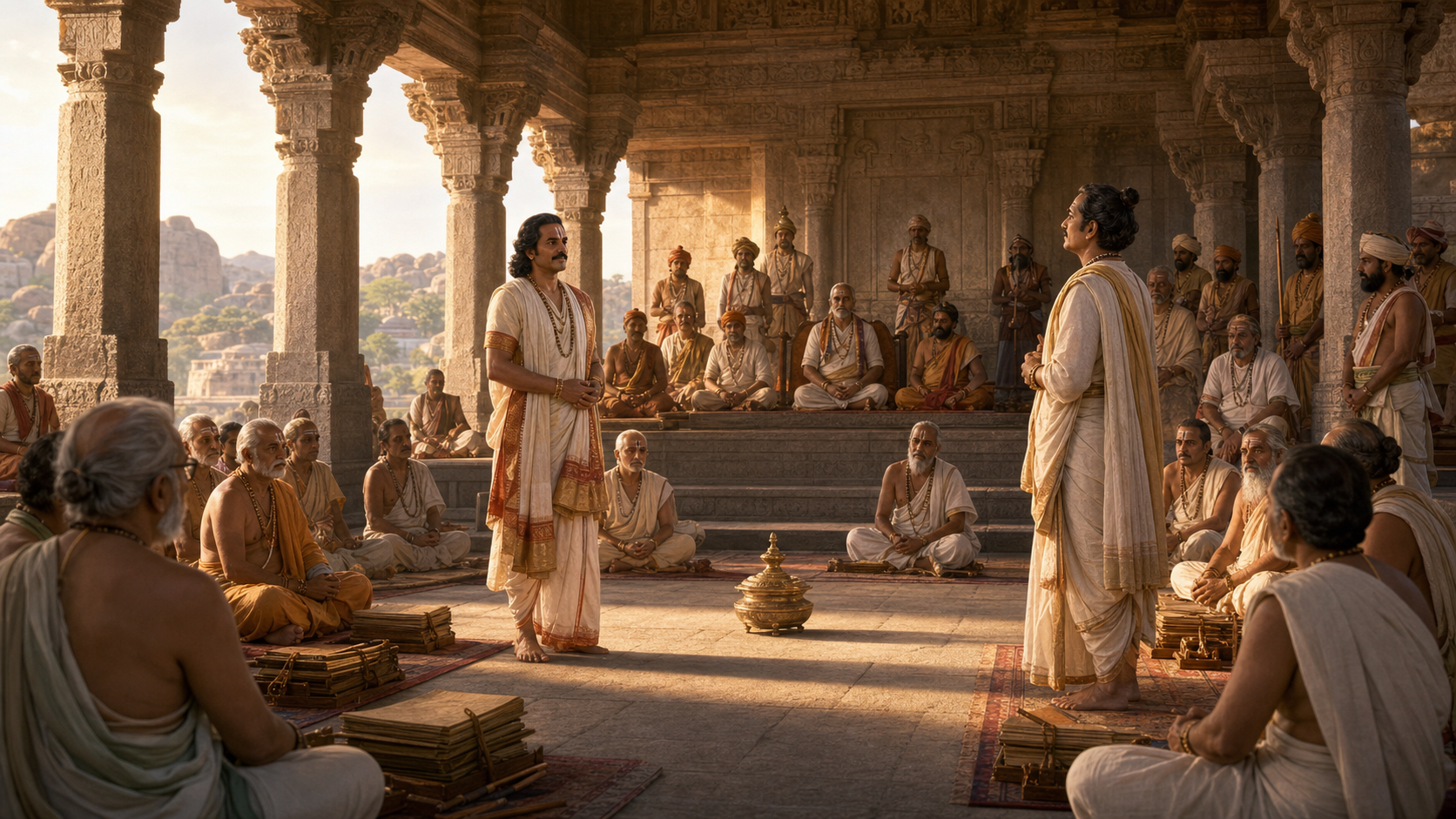
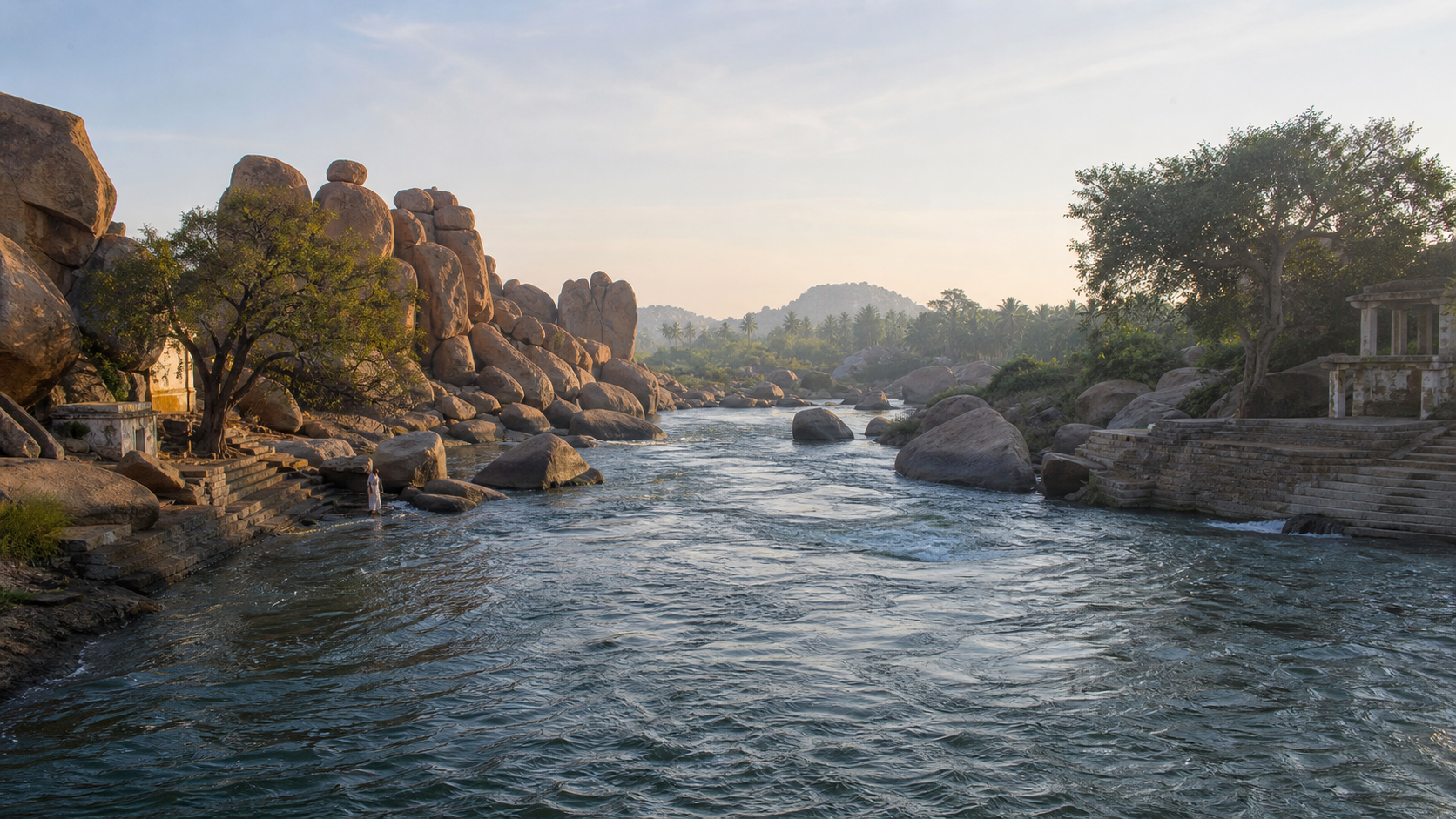
Kishkindha Kanda (Book IV of the Valmiki Ramayana) forges the Rama–vanara alliance, situates the narrative in the sacred Hampi–Anegundi landscape, and prepares the ground for Hanuman’s mission. Readers gain a clear map of key episodes—the pact with Sugriva, Vali-vadha’s dharma debate, Sugriva’s coronation, the monsoon interlude, and the strategic dispatch of search parties. The analysis…
-
Kishkindha Kanda Unveiled: Rama–Hanuman Alliance, Vali’s Fall, and Hampi’s Sacred Landscapes

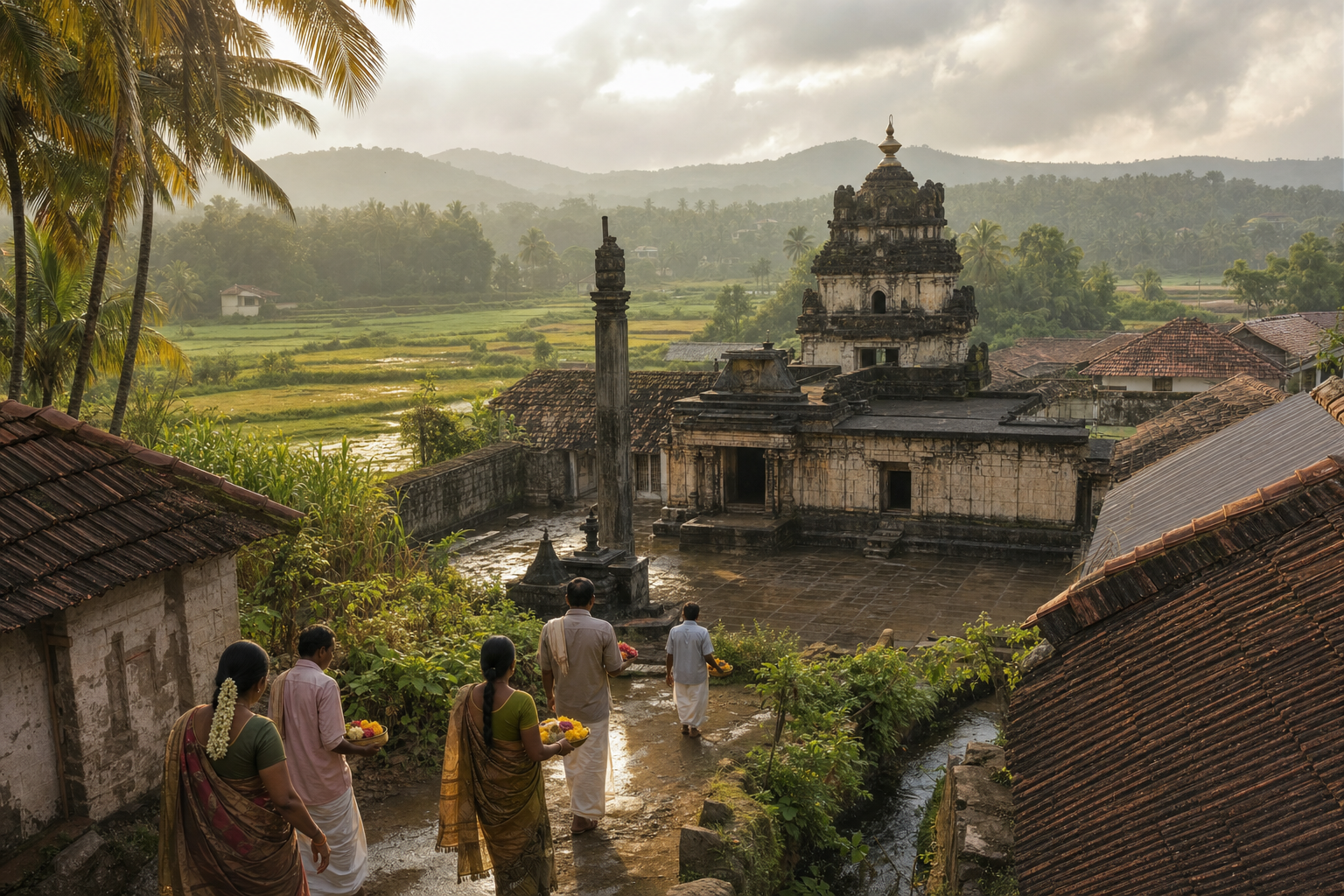
Kishkindha Kanda, the fourth book of the Valmiki Ramayana, turns grief into disciplined action as Rama allies with Sugriva, brings down Vali, and launches a continent-spanning search for Sita. Set against the sacred landscapes around Hampi–Anegundi in Karnataka, it blends political acumen, ethical debate, and ecological poetics. The kanda highlights exemplary speech and statesmanship through…
-
Reclaiming India’s Dharmic Sense of History: Evidence, Empathy, and Method

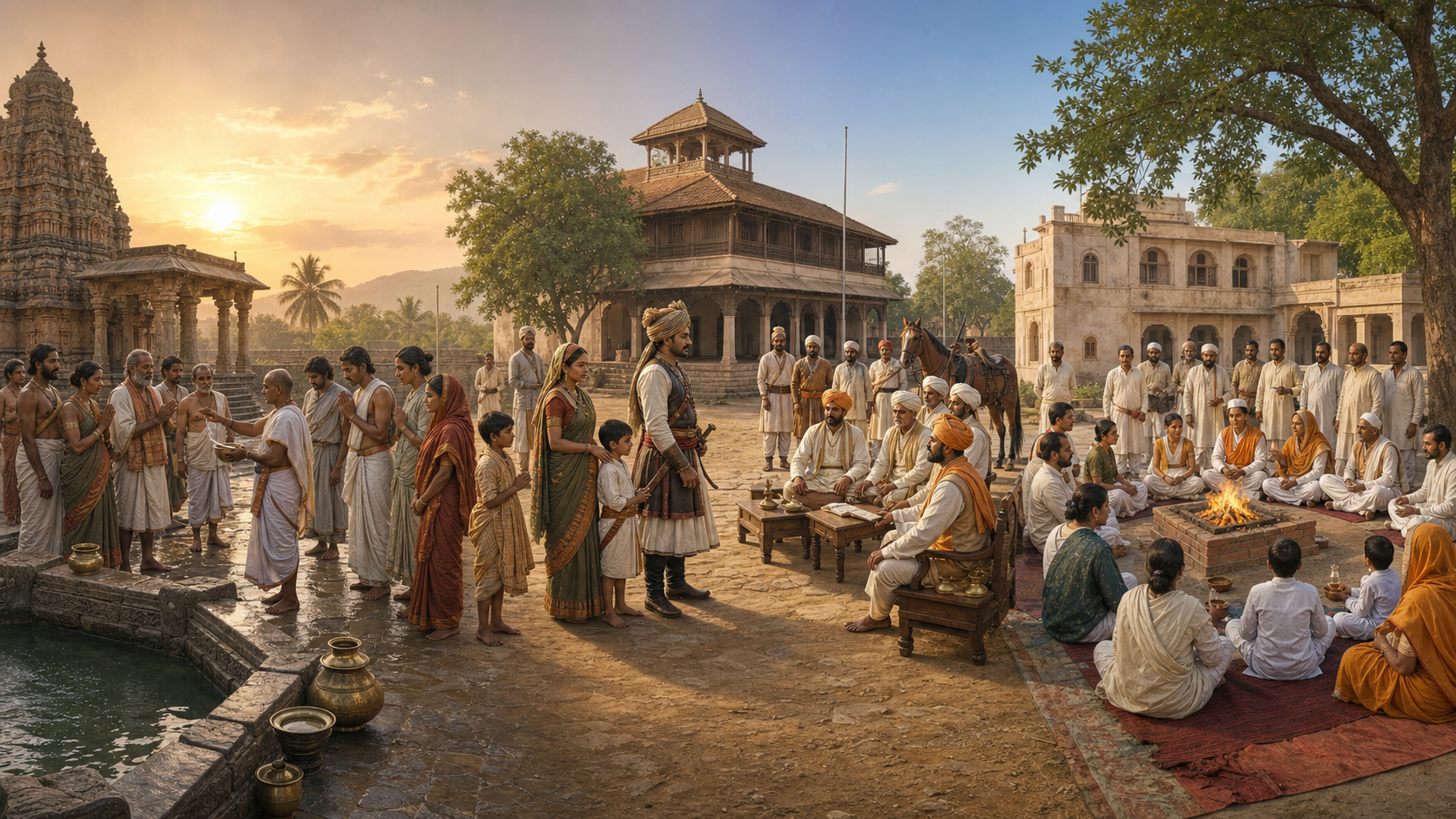
This essay offers a rigorous, empathetic roadmap to reclaim India’s Dharmic sense of history. It dismantles the colonial trope that Hindus lacked historical consciousness by surveying Itihasa, Puranas, caritras, inscriptions, and temple records across Ancient India and Medieval India. It explains why certain indigenous archives thinned during the medieval era and shows how to read…
-
From Vijayanagara’s Malenadu Revolt to Bengal Ballots: Lessons in Statecraft and Security

A 15th-century crisis in the Vijayanagara Empire—Praudha Devaraya’s rapid suppression of the Araga-Rajya revolt—offers enduring lessons in governance. The episode highlights the value of swift decision-making, district-level institutions such as the Kampana, and locally informed leadership. These principles illuminate contemporary electoral security in West Bengal, where high turnout and large-scale deployments by the Election Commission…
-
Vidyaranya Jayanti 2026: Date, Puja Guide, and the Timeless Legacy of Vijayanagara’s Sage

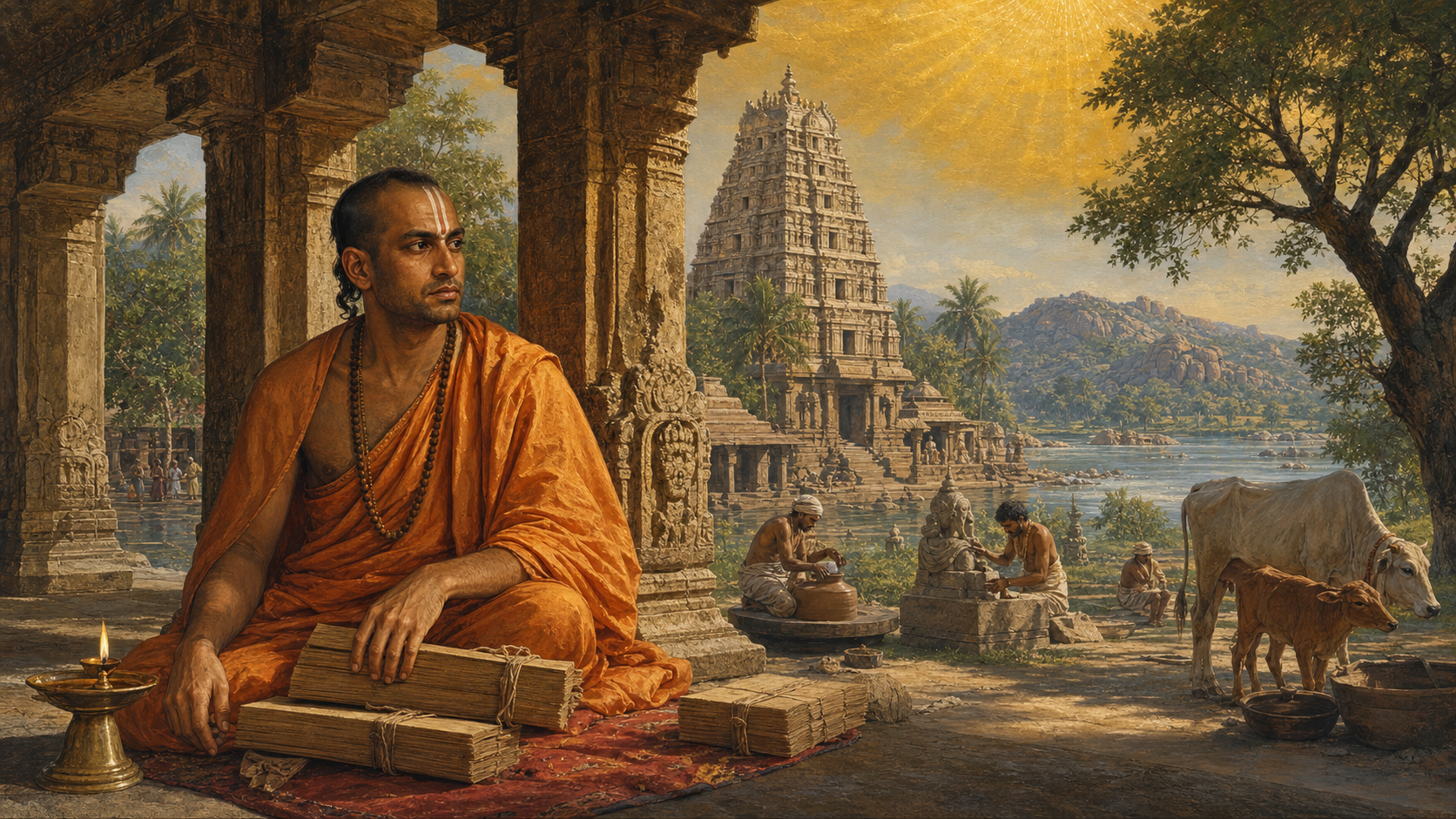
Vidyaranya Jayanti 2026 will be observed on April 23 (Vaishakha Shukla Saptami), honoring Swami Vidyaranya—Madhavacharya (Madhava Vidyaranya)—the Advaita luminary and rajaguru of the early Vijayanagara Empire. This long-form guide outlines historical context, key texts (Panchadasi, Jivanmuktiviveka, Sarvadarśanasaṅgraha), and his association with Sringeri Sharada Peetham. Readers gain a practical puja framework for home observance, guidance on…
-
Vidyaranya Jayanti 2026: Date, Puja Guide, and the Timeless Legacy of Vijayanagara’s Sage

Vidyaranya Jayanti 2026 will be observed on April 23 (Vaishakha Shukla Saptami), honoring Swami Vidyaranya—Madhavacharya (Madhava Vidyaranya)—the Advaita luminary and rajaguru of the early Vijayanagara Empire. This long-form guide outlines historical context, key texts (Panchadasi, Jivanmuktiviveka, Sarvadarśanasaṅgraha), and his association with Sringeri Sharada Peetham. Readers gain a practical puja framework for home observance, guidance on…
-
Haridra Dam to Vijayanagara: Field Evidence, Inscriptions, and Karnataka’s Fading Shrines

A field-based reading of Devarabelakere, near Davanagere in Karnataka, reveals how a modern check dam overlays the footprint of the medieval Haridra Dam attributed to the early Vijayanagara era under Devaraya I. Inscriptions documented by the ASI at Harihara in 1902, along with a 2003 survey by Dr. Jagadisha, help relocate the lost basin of…
-
Matsya Jayanti 2026 at Nagalapuram Vedanarayana Swamy: Sacred Sevas and Equinox Sun Miracle

Matsya Jayanti 2026 at Sri Vedanarayana Swamy Temple, Nagalapuram (Andhra Pradesh), will be observed on 21 March with early-morning Suprabhata Seva, Tomala Seva, and Archana, followed by public darshan. The festival, set in the Chaitra Month, honors Vishnu’s first Avataar and the safeguarding of the Vedas during the cosmic deluge. Nagalapuram’s famed equinoctial Surya Puja—when…
-
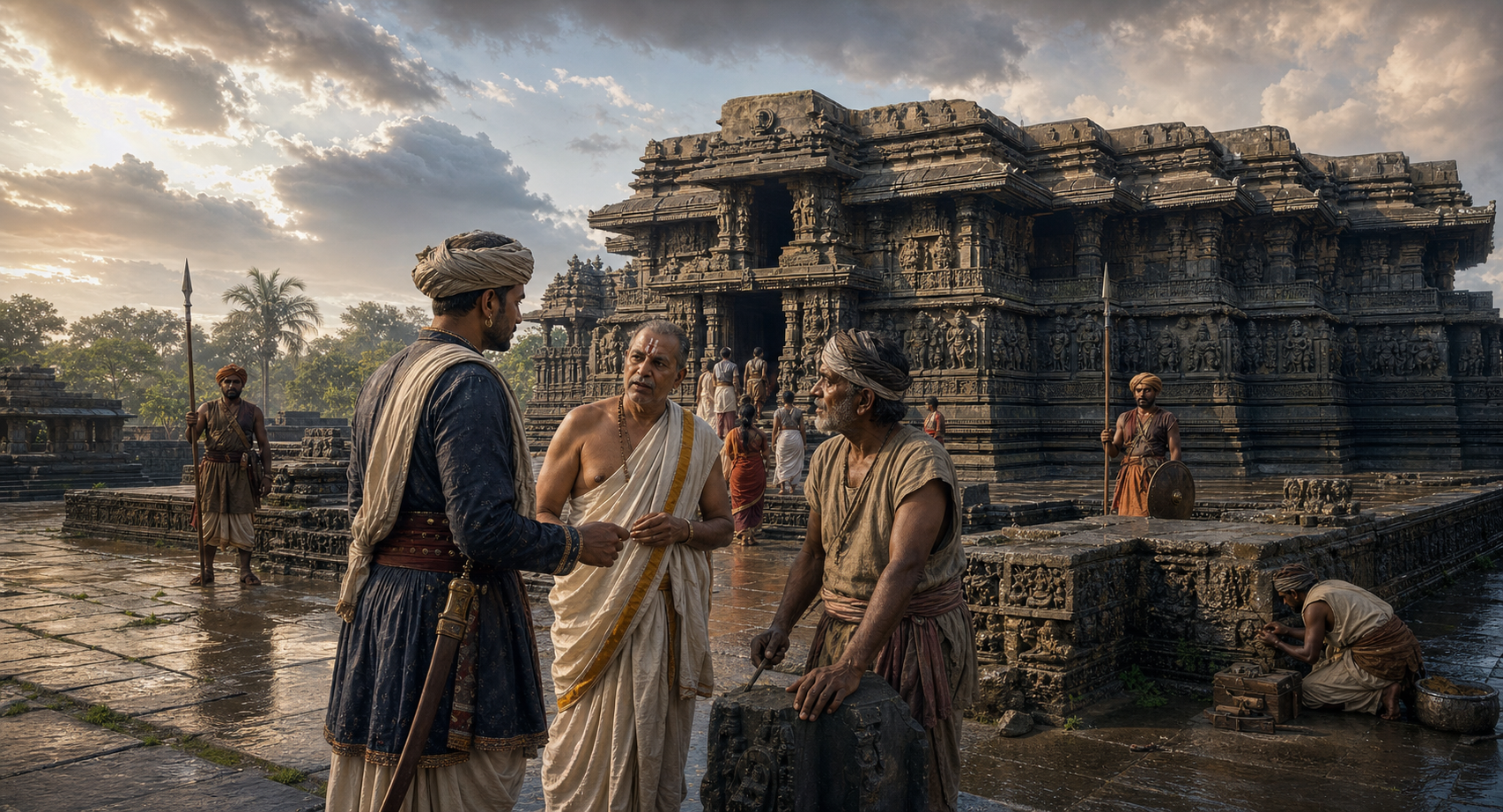
Inside Vijayanagara’s Golden Age: Kavi Sarvabhauma Srinatha’s Daring Challenge to Arunagirinatha

Set during the golden age of the Vijayanagara Empire, this episode from Kavisārvabhaomuḍu reconstructs how Kavi Sarvabhauma Srinatha strategically challenged the Vidyādhikāri Arunagirinatha in a high-stakes courtly contest. Readers discover how a subtle Sanskrit device—apaśabdābhāsa—can invert a debate by disguising correctness as error. The narrative explains why grammar (anchored in Panini, Vararuchi, and Patañjali) is…
-
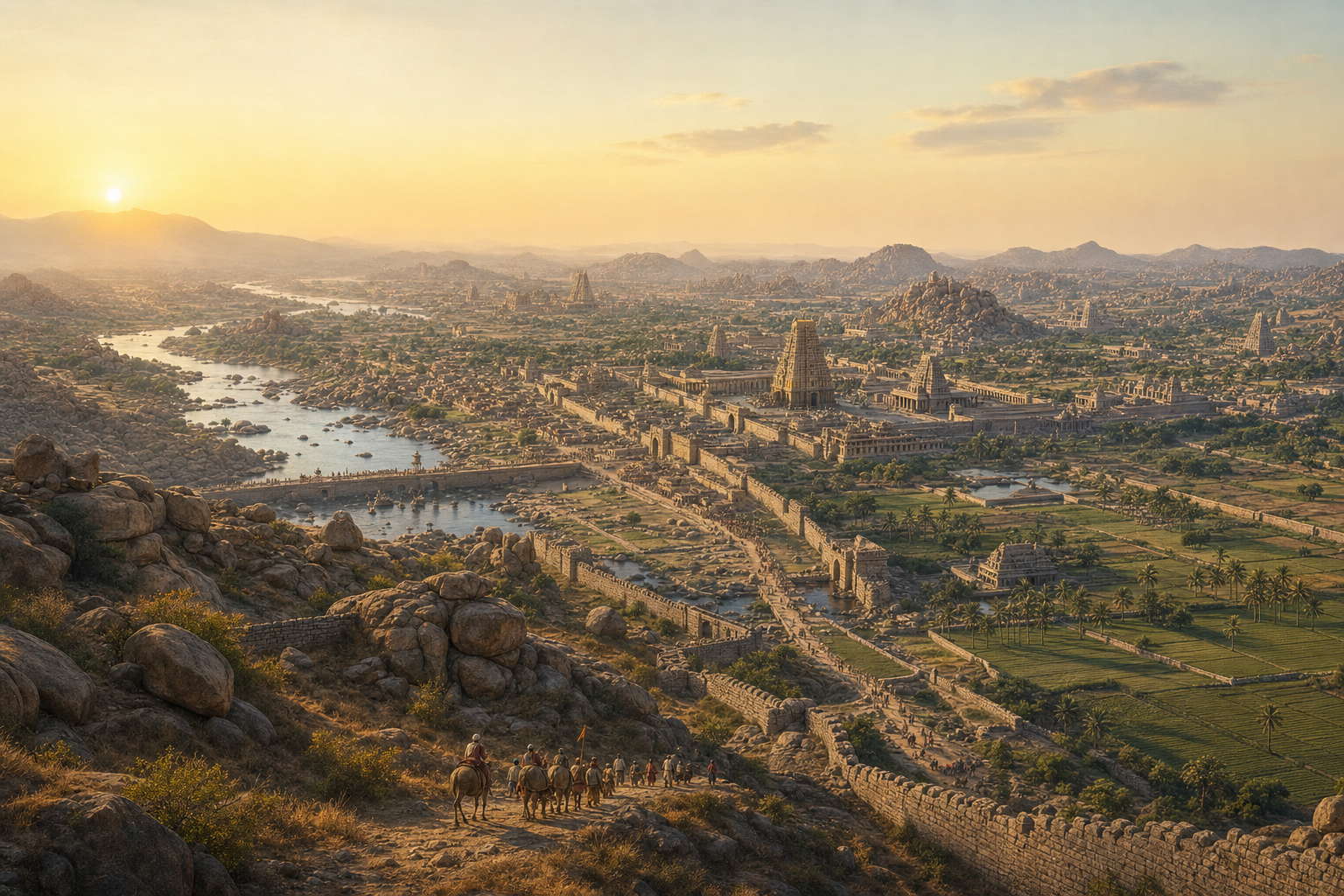
Kishkinda to Vijayanagara: Sacred Geography, Imperial Brilliance, and a Breach of Sanctity

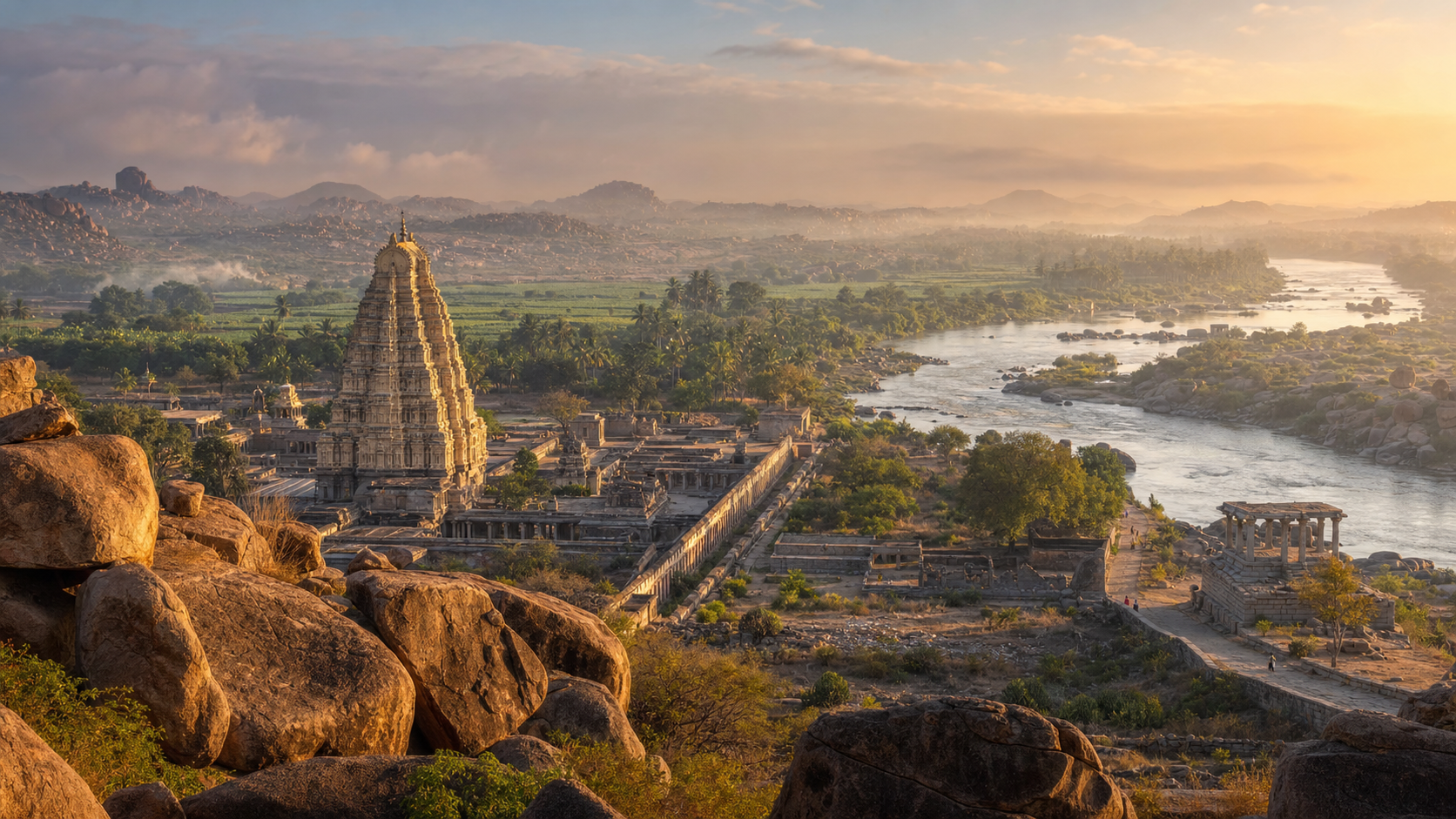
This essay situates Hampi within the Ramayana’s sacred geography and the Vijayanagara Empire’s statecraft, tracing how Kishkinda’s mythic landscape informed an imperial capital of dazzling scale. Drawing on Valmiki’s lyrical account of Pampa, historical records of Vijayanagara’s global magnetism, and the catastrophe of Talikota, it examines why the material loss was matched by an erosion…
-
Timeless Tirumala Tirupati: History, Architecture, Ritual Science, and Venkateswara’s Grace

Tirumala’s Sri Venkateswara Temple is revered as Kaliyuga Vaikuntha and celebrated for its unbroken lineage of worship in Andhra Pradesh’s Seshachalam Hills. Historical inscriptions document centuries of royal patronage by Pallava, Chola, Pandya, and Vijayanagara rulers, including queens, who endowed land, lamps, and resources for ritual continuity. Architecturally Dravidian, the temple centers on the gold-crowned…
-
Ugra Narasimha of Maddur: Fierce Divinity, Temple History and Arjuna’s Living Legend

Maddur’s ancient Ugra Narasimha Murty in Karnataka presents Vishnu’s half-man, half-lion avatar at the very instant of protecting Prahlada and ending Hiranyakashipu’s tyranny. This in-depth study situates the shrine within regional temple history, explains the murti’s technical iconography through Puranic and Pancharatra lenses, and evaluates the local oral tradition linking Arjuna of the Mahabharata to…
-
Chakratirtha, Hampi: Vyasaraja’s Divine Vision of Mukhyaprana and Vijayanagara’s Sacred Legacy

Chakratirtha in Hampi, Karnataka, fuses sacred geography with Vijayanagara history, centering on Sri Vyasarajaru’s revered vision of Mukhyaprana (Hanuman/Vayu Deva). This long-form study explains how the riverine “ford” (tirtha) becomes a lived crossing through disciplined snana, japa, and meditation, reflecting the Dvaita Vedanta ethos Vyasaraja advanced. It situates the site within Vijayanagara’s inclusive sacred landscape…
-
Ummatturu’s Temples Unveiled: Awe-Inspiring Heritage, Living Festivals, and Vijayanagara Legacy

Temples in Karnataka have long served as cultural nuclei that preserve prosperity, art, and spirituality for Hindu and Jaina communities. This exploration of Ummatturu highlights the Sri Bhujangeshwara Temple’s deep ties to the Vijayanagara Empire and the enduring legacy of Sri Krishnadevaraya. Readers discover the region’s distinctive artistry at the bale-devalaya in Yelanduru, the rich…
-
Shivaji to Vijayanagara: An Evidence-Based Chronicle of Dharmic Resilience and Unity

This essay presents an evidence-based narrative of Indian history from the rise of Chhatrapati Shivaji through the Vijayanagara Empire, emphasizing civilizational resilience and unity across dharmic traditions. It highlights how Rajputs, Marathas, Bundelas, and Sikhs aligned in moments of shared duty, while earlier lineages from the Mauryas to the Guptas modeled statecraft and frontier defense.…
-
Purandaradasa’s Radical Renunciation: A Moving Lesson in Devotion, Detachment, and Seva

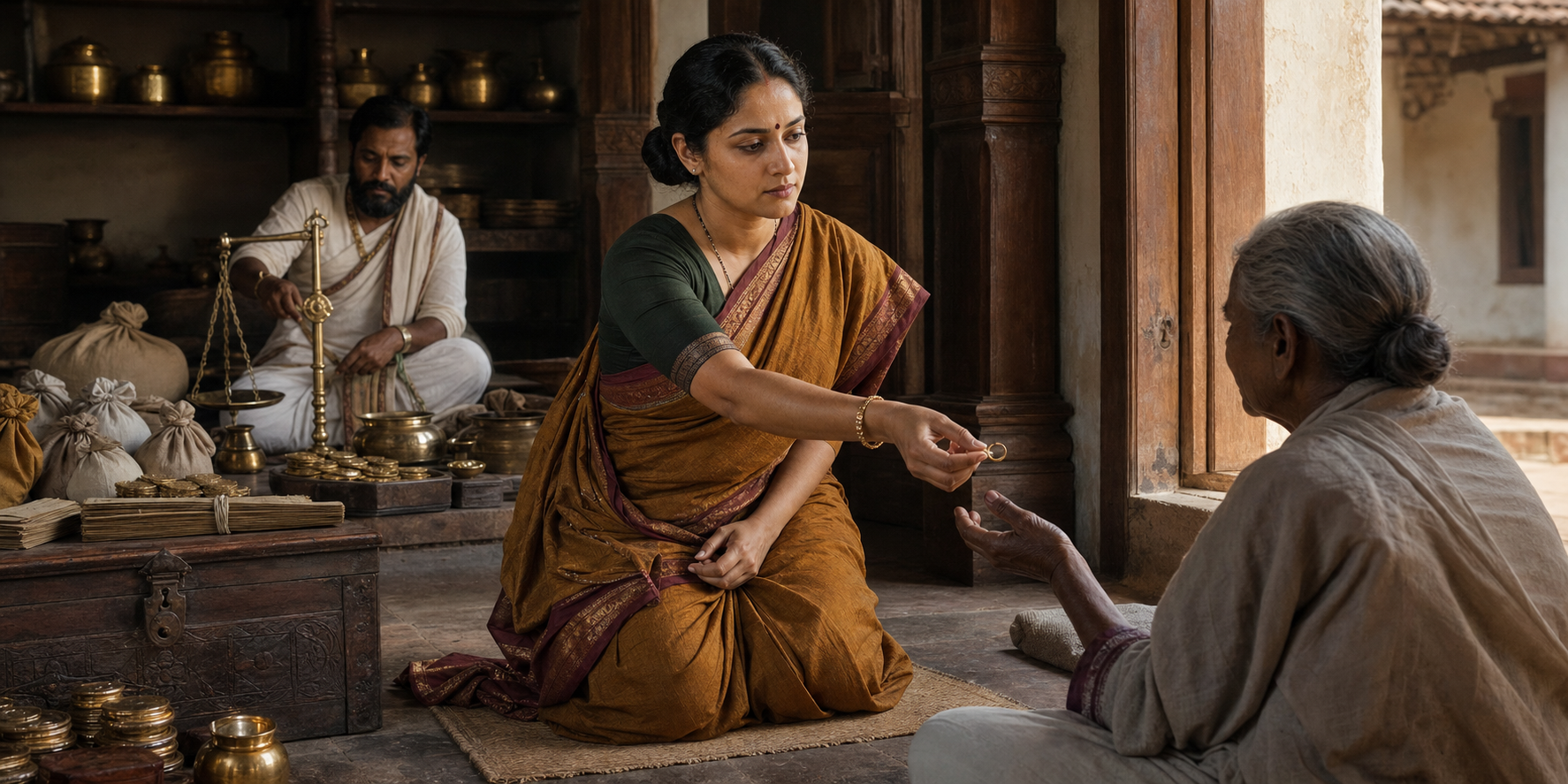
This reflection highlights Purandaradasa’s renunciation as a powerful illustration of wealth rededicated to the Divine and society. It emphasizes the difficulty of detachment while showing how devotion and seva can reorder priorities. The narrative connects shared Dharmic ideals—aparigraha, dana, tyaga, and seva—across Hinduism, Buddhism, Jainism, and Sikhism. Readers gain practical guidance: dedicate money, time, and…
-
Beyond the ‘Muslim Era’ Myth: India’s Dharmic Resistance and Civilizational Resilience

This article challenges the simplistic label of a singular ‘Muslim era’ in India and presents a more rigorous, dharmic-centered account of medieval and early modern history. It highlights how Indian polities—Hindu, Jain, Buddhist, and later Sikh—checked, accommodated, and ultimately reshaped external and transregional powers over centuries. Readers gain a clearer timeline of key resistances, from…