
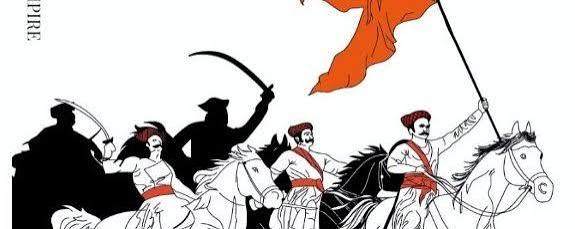
The rise of the Sikh Empire under Maharaja Ranjit Singh did not occur in an empty political landscape. It emerged from a long and violent reordering of northern India in the eighteenth century, when the Mughal Empire lost its administrative grip, the Maratha Confederacy pushed aggressively into the north, and Ahmad Shah Abdali’s Durrani Empire fought repeated campaigns across Punjab and the Indo-Gangetic plain.
Within that wider transformation, the Marathas played a decisive but often under-examined role. Their campaigns did not create the Sikh Misls, nor did they determine Sikh political destiny by themselves. Yet their pressure on the Mughals, their confrontation with Afghan power, and their later return to North India helped produce the strategic conditions in which the Sikh confederacies could expand, consolidate, and eventually be unified under Ranjit Singh.
The eighteenth-century crisis of imperial authority
By the early 1700s, Mughal authority was no longer the stable force it had been under emperors such as Akbar, Jahangir, Shah Jahan, and Aurangzeb. The empire still possessed prestige, ceremonial legitimacy, and important urban centers, but its provincial structure was fraying. Revenue extraction became harder, governors became more autonomous, and regional powers began to behave less like subordinates and more like sovereign actors.
The Maratha Empire became the most powerful disruptor of that system. From the Deccan, Maratha armies and administrators expanded into Malwa, Gujarat, Bundelkhand, Rajasthan, and eventually Delhi and Punjab. This was not merely a matter of cavalry raids. It was a systematic challenge to Mughal fiscal and political control, especially in regions that supplied revenue, military access, and symbolic legitimacy.
When Maratha influence reached Delhi, the Mughal emperor increasingly became a figure whose imperial seal mattered more than his practical power. The empire’s ability to command armies, collect revenue, or impose order in distant provinces such as Punjab had already been severely reduced. This weakening of Mughal state capacity was one of the essential preconditions for the later rise of Sikh power.
The Maratha movement into Punjab
The Maratha advance into Punjab in 1758 marked one of the most dramatic moments in the decline of Mughal-Afghan influence in the region. Maratha forces, working with local allies, entered Lahore and pushed as far as Attock on the Indus. For a power that had risen from the western Deccan, this northern reach was extraordinary.
The strategic meaning of this campaign was larger than the temporary occupation of territory. It showed that neither the Mughal court nor the Durrani rulers of Afghanistan could take Punjab for granted. Lahore, Sirhind, Multan, and the routes toward the Indus were no longer secure imperial possessions. They had become contested zones where local Sikh forces, Maratha expeditions, Afghan governors, and Mughal-aligned elites all competed for advantage.
For the Sikh Misls, this weakening of older imperial structures mattered deeply. The Misls had grown out of a tradition of armed resistance, religious community defense, and mobile warfare. Their strength lay not in controlling one centralized capital at first, but in surviving pressure, striking supply lines, protecting sacred and local centers, and building authority village by village and district by district.
Panipat as a geopolitical turning point
The Third Battle of Panipat, fought on 14 January 1761, is often remembered primarily as a catastrophic Maratha defeat. That memory is not wrong. The Maratha losses were immense, the human suffering was severe, and the political shock was felt across the subcontinent. Yet a broader geopolitical reading shows that Ahmad Shah Abdali’s victory was also limited and costly.
Abdali defeated the Marathas on the battlefield, but he did not convert that victory into a durable Afghan empire over North India. His army had suffered heavily, his campaign had stretched supply lines, and his hold over the plains depended on allies whose interests were not identical to Kabul’s. The Durrani victory broke the immediate Maratha advance, but it did not restore Mughal strength or create stable Afghan governance from Delhi to Punjab.
This distinction is crucial. A battlefield victory and a functioning imperial order are not the same thing. Panipat removed one claimant to northern dominance for a time, but it did not leave another claimant strong enough to govern the whole region. The result was not a settled order; it was a vast political vacuum.
The Mughals remained symbolically important but administratively weak. The Marathas withdrew southward to recover from their losses. The Afghans retained influence, especially through governors and allies, but they lacked the settled machinery required to rule Punjab continuously. In that space, the Sikh Misls gained room to maneuver.
The Sikh Misls and the art of survival
The Sikh Misls did not depend on conventional imperial methods. Their political culture was decentralized, mobile, and rooted in local legitimacy. They could assemble, disperse, raid, defend, and regroup in ways that frustrated larger armies. This mattered especially against Afghan campaigns, which relied on movement through Punjab, cooperation from local allies, and uninterrupted supply lines.
When Afghan forces entered Punjab, Sikh groups often avoided destructive pitched battles unless circumstances favored them. They struck at detachments, supplies, and vulnerable routes. They used geography, local networks, and disciplined mobility to remain politically alive even after severe reverses. This mode of resistance made the Sikh confederacies difficult to eliminate.
The emotional force of this history lies in its pattern of endurance. Punjab was repeatedly invaded, taxed, punished, and contested, yet Sikh institutions continued to adapt. The Misls were not merely bands of fighters; they were carriers of community authority in a time when older empires could no longer guarantee security or justice.
Maratha recovery after Panipat
Panipat did not end Maratha power. Within a decade, the Marathas returned to North India with remarkable speed. Under leaders such as Mahadji Shinde, they reasserted influence in Delhi, restored Shah Alam II to the Mughal throne in 1771, and once again became major arbiters of northern politics.
This Maratha recovery is essential to understanding the longer consequences of 1761. The battle damaged Maratha power, but it did not destroy it. Instead, the post-Panipat decades saw the Marathas resume pressure on the same forces that had supported Abdali, including Rohilla chiefs and Afghan-aligned networks in the Gangetic plain.
Rohilkhand became a major theater in this renewed struggle. The Rohillas, many of whom were Pashtun or Afghan-origin military elites settled in North India, had played an important role in the anti-Maratha coalition at Panipat. Maratha campaigns against them in the 1770s weakened one of the local support systems that had helped Afghan intervention in the first place.
The consequences for Punjab were indirect but significant. Afghan invasions of North India depended not only on soldiers from beyond the Indus, but also on alliances, intelligence, provisions, and political sympathy within the subcontinent. When Maratha pressure disrupted these networks, the Durrani ability to project power eastward became more fragile.
Why the weakening of support networks mattered
Large invading armies rarely succeed through battlefield strength alone. They require food, transport, guides, credit, intelligence, and local political cover. In eighteenth-century North India, these needs made regional alliances decisive. The Rohillas, sections of the Mughal nobility, and other power holders could either enable or obstruct external intervention.
By challenging these groups after Panipat, the Marathas reduced the reliability of the political corridor that connected Kabul’s ambitions to Delhi’s politics. This did not mean that Afghan influence vanished overnight. It did mean that any future Afghan intervention faced a more fragmented and less dependable environment.
That fragmentation benefited the Sikh Misls. A strong Mughal center would have constrained them. A stable Afghan provincial order would also have constrained them. A coordinated coalition of Afghan-aligned chiefs in the plains might have posed a still greater threat. Instead, the Misls faced adversaries who were dangerous but increasingly stretched, divided, and reactive.
Punjab as a contested frontier, not a passive province
Punjab in the late eighteenth century should not be imagined as a passive space waiting to be claimed by outsiders. It was an active frontier of state formation. Sikh sardars, Afghan governors, Muslim chiefs, Hindu trading groups, landed elites, and urban communities all negotiated power in a changing environment.
The Sikh Misls gained strength because they combined martial organization with local legitimacy. They collected revenue, protected settlements, occupied forts, defended religious centers, and built alliances. Their authority developed through repeated interaction with the people and geography of Punjab rather than through distant imperial appointment.
This is where the Maratha role must be assessed carefully. The Marathas did not hand Punjab to the Sikhs. The Sikhs earned their position through sacrifice, organization, and military skill. Yet Maratha actions weakened the larger imperial and regional forces that might otherwise have crushed or contained Sikh expansion for much longer.
From confederacy to unification under Ranjit Singh
By the time Ranjit Singh inherited leadership within the Sukerchakia Misl in 1792, Punjab had already undergone decades of political decentralization. The great imperial structures were weakened, but no single Sikh authority yet ruled the region. The Misls were powerful, but they were also divided by local interests, rivalries, revenue claims, and shifting alliances.
Ranjit Singh’s genius lay in turning this fractured Misl landscape into a durable kingdom. He captured Lahore in 1799, assumed the title of Maharaja in 1801, and gradually built a state that balanced Sikh sovereignty with administrative pragmatism. His empire employed Sikhs, Hindus, Muslims, Europeans, Dogras, and Punjabis of different backgrounds in military and civil roles.
The Sikh Empire was therefore not simply the product of a vacuum. It was the product of leadership acting within a vacuum. Ranjit Singh inherited a world in which Mughal authority had faded, Afghan power was no longer secure, Maratha influence had shifted elsewhere, and British power was rising from the east. His achievement was to consolidate Punjab before others could do so.
A Dharmic reading of political cooperation and consequence
This history also carries a wider civilizational lesson. Maratha and Sikh power arose from distinct regions, languages, institutions, and traditions. Yet both represented resilient Indian responses to imperial decline, military violence, and political disorder. Their histories should not be forced into rivalry when the larger pattern reveals complementary struggles for autonomy and dignity.
For a blog committed to unity among Dharmic traditions, the Maratha-Sikh relationship is best understood through historical interdependence rather than sectarian comparison. The Marathas weakened old imperial formations in the north. The Sikh Misls transformed local resistance into political sovereignty. Together, their experiences show how Hindu and Sikh historical trajectories intersected within the larger defense and renewal of Indian civilizational space.
This does not require romantic simplification. The eighteenth century was harsh, and every major power made strategic decisions shaped by survival, ambition, vengeance, and opportunity. A mature historical analysis can acknowledge violence and political calculation while still recognizing the broader pattern of resistance to collapsing imperial systems.
The historical verdict
The Marathas cleared a substantial part of the political ground on which the Sikh Empire later rose. They shattered Mughal confidence, challenged Afghan ambitions, forced North India into a new balance of power, and weakened several support networks that had enabled external intervention. Their defeat at Panipat was real, but so was the exhaustion imposed on Abdali’s project.
The Sikh Misls then used that opening with extraordinary discipline. They survived repeated invasions, expanded local authority, defended sacred centers, and preserved the political energy that Ranjit Singh would later consolidate. The Sikh Empire was not an accident of history; it was the result of courage meeting opportunity.
In that sense, the Marathas acted as both disruptors and inadvertent enablers. They did not build the Sikh Empire, but their struggle against Mughal decline and Afghan intervention helped create the conditions in which it could breathe, organize, and rise. The story is ultimately one of interconnected Indian resistance, where the heavy sacrifices of one power helped open the path for another to shape the destiny of Punjab.
Inspired by this post on Hindu Post.









Leave a Reply
You must be logged in to post a comment.