-
Unmasking Medieval Indo-Persian Chronicles: How Propaganda and Piety Shaped India’s Memory

Medieval Arabic and Persian court chronicles in India did more than list battles and dates—they engineered collective memory by merging piety, patronage, and propaganda. This analysis maps their genres (Sirah, Tabaqat, Tarikh, Malfuzat, Maghazi, Maktubat), clarifies how narratives framed Darul Harb and the Ghazi ideal, and explains why panegyric conventions celebrated conquest as sanctity. It…
-
The War They Could Not Win: Dharmic Unity vs. Empire’s Cultural Offensive (Part 1)

This long-form analysis reframes the nineteenth century as a hybrid struggle—military, legal, economic, educational, and narrative—between an expanding empire and a resilient, plural civilization. It situates the 1857 War of Independence within deeper structural transformations led by the British East India Company and subsequent Crown rule. The discussion explains how revenue settlements, legal codification, and…
-
When Indore’s Bureaucracy Burned History: The Lost Holkar Archives and Parasnis’s Crusade

The near-total loss of the Holkar Archives at Indore, following years of official obstruction and a fire in a substandard repository, remains a defining lesson in how bureaucratic negligence can erase civilizational memory. This narrative situates D. B. Parasnis within that tragedy and highlights his lifelong effort to rescue, professionalize, and open Indian historical records…
-
Unsung Guardian of Maratha Archives: D.B. Parasnis and Acharya Jadunath Sarkar’s Salute

This essay examines Acharya Jadunath Sarkar’s tribute to D. B. Parasnis, highlighting the latter’s pivotal role in preserving primary sources central to Maratha history. It traces Parasnis’s early literary ventures, his collaborations around the Peshwas’ Daftar in Poona, and his Marathi publications that made crucial documents—sanads, kaifiyats, yadis, diaries, and despatches—available to scholars. The discussion…
-
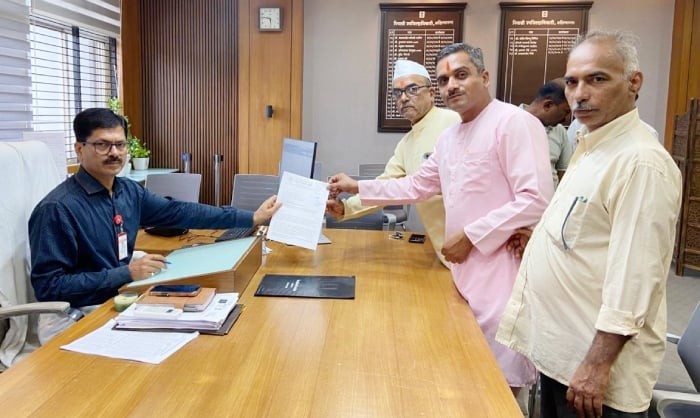
Restore Historical Clarity: HJS urges NCERT to reinstate Maratha Empire map in Class 8 textbook

Hindu Janajagruti Samiti (HJS) has requested that NCERT reinstate the Maratha Empire expansion map in the Class 8 history textbook to improve historical accuracy and learning outcomes. Maps help Class 8 learners anchor timelines in geography, making complex eighteenth-century political formations intelligible. A carefully annotated Maratha map would depict core territories, confederal expansions, and key…
-
Unmasking Mental Colonialism: English Publishing vs Sanskrit and Bharatiya Bhasha Heritage

This essay examines how social media has disrupted legacy gatekeeping and why that disruption matters for English-language publishing in India. It argues that a prestige hierarchy—English over non-English—has long shaped acquisitions, prizes, and curricula, producing a deracinated sensibility often mislabeled as cosmopolitan. Drawing on Hartosh Singh Bal’s analysis of the “Literary Raj,” it highlights the…
-
Michel Danino: quiet giant of Indian history, NCERT reformer, facing Supreme Court censure

Michel Danino emerges here as a quiet giant of Indian historiography—unassuming yet formidable in method and integrity. His research spans the Sarasvati–Ghaggar–Hakra palaeochannels, Harappan urbanism, critiques of the Aryan Invasion Theory, and readings of the Puranas and epics, all undergirded by cross-disciplinary evidence. Professional roles at IIT Gandhinagar and leadership within NCERT’s textbook development reflect…
-
Sardar Baghel Singh: The Visionary Who Etched Sikh Heritage on Delhi’s Sacred Map (1783)

Sardar Baghel Singh (c. 1730–1802) transformed Delhi’s sacred geography in March 1783 through a negotiated accord with the Mughal court that authorized, secured, and funded the construction of Sikh shrines at historic sites. Rather than a mere military episode, his intervention institutionalized Sikh memory—most notably at Sees Ganj Sahib and Rakab Ganj Sahib—through a sustainable…
-
Sardar Baghel Singh: The Visionary Who Etched Sikh Heritage on Delhi’s Sacred Map (1783)

Sardar Baghel Singh (c. 1730–1802) transformed Delhi’s sacred geography in March 1783 through a negotiated accord with the Mughal court that authorized, secured, and funded the construction of Sikh shrines at historic sites. Rather than a mere military episode, his intervention institutionalized Sikh memory—most notably at Sees Ganj Sahib and Rakab Ganj Sahib—through a sustainable…
-
Rajaji versus Nehru: Recovering Political Decency in Post-Independence India

Rajagopalachari (Rajaji) embodied the rare scholar-statesman who coupled statecraft with civilisational wisdom. Drawing on contemporaneous reports and editorials from 1947–1952, this analysis maps how scarcity, discretionary controls, and weak accountability enabled a new political class and normalised black money in politics. It highlights internal voices of conscience—Konda Venkatappaiah, K.G. Mashruwala—and external critics like Sarat Chandra…
-
What D.V. Gundappa’s 1959 Letters Reveal: Protocol, Federalism, and Public Decency

Archival letters written by D.V. Gundappa in January 1959, following the death of Sir Mirza Ismail, open a window into the administrative culture of post-Independence India. The correspondence probes how states should register public sentiment, the extent of central guidance on official holidays, and the federal balance between Delhi and state capitals. By foregrounding courtesy…
-
Ummatturu’s Temples Unveiled: Awe-Inspiring Heritage, Living Festivals, and Vijayanagara Legacy

Temples in Karnataka have long served as cultural nuclei that preserve prosperity, art, and spirituality for Hindu and Jaina communities. This exploration of Ummatturu highlights the Sri Bhujangeshwara Temple’s deep ties to the Vijayanagara Empire and the enduring legacy of Sri Krishnadevaraya. Readers discover the region’s distinctive artistry at the bale-devalaya in Yelanduru, the rich…
-
Chhatrapati Shivaji Maharaj Jayanti 2026: Tithi, Legacy, and How to Celebrate

Chhatrapati Shivaji Maharaj Jayanti 2026 commemorates the birth of a visionary leader whose legacy blends historical insight with contemporary relevance. Tithi anusar, the Jayanti aligns with Phalgun Krishna Paksha Tritiya, while many communities also observe 19 February 2026 as the civic date. Readers will find clarity on date and tithi, guidance to consult local Panchang…
-
Princess Bamba Duleep Singh: The Enigmatic Heiress Who Guarded the Sikh Empire’s Legacy

Princess Bamba Duleep Singh emerges as an enigmatic heiress who safeguarded the Sikh Empire’s legacy across the British Raj and postcolonial transitions. As the eldest daughter of Maharaja Duleep Singh and granddaughter of Maharaja Ranjit Singh, she balanced lineage with responsibility. Her stewardship—often referenced through the Princess Bamba Collection—anchors a tangible, scholarly pathway to Sikh…
-
Bhai Vir Singh: The Sixth River of Punjab and a Bridge Uniting India’s Dharmic Traditions

Bhai Vir Singh stands as the “sixth river” of Punjab—a poet and thinker whose work renews Punjabi literature and deepens ethical life. His celebrated writings, including Rana Surat Singh, Sundari, and Satwant Kaur, weave devotion with courage and civic responsibility. Grounded in Sikh spirituality, his vision resonates with shared dharmic values across Hinduism, Buddhism, and…
-
Shakti-Putra Shivaji: Strategic Genius, Dharmic Virtue, and a Timeless Blueprint for Just Power

Chhatrapati Shivaji’s legacy emerges as a rare fusion of strategic brilliance and dharmic virtue. Positioned alongside Chandragupta Maurya and Skandagupta, he exemplifies the Shakti-putra ideal—uniting shakti (force) and yukti (strategy) to redirect history. His conduct in victory—protecting civilians, honoring women, and respecting places of worship—shows a plural, ethical framework consonant with Sanatana Dharma and shared…
-
Jassa Singh Ahluwalia’s Rise: Forging Kapurthala State and Sikh Unity in 18th-Century Punjab

In an age of upheaval following the Mughal decline and Afghan incursions, Jassa Singh Ahluwalia unified Sikh forces and laid the institutional foundations for the Kapurthala State. His leadership in the Ahluwalia misl and Dal Khalsa fused defense with public welfare, echoing the Khalsa principle “Deg Tegh Fateh.” The result was safer routes, protected communities,…
-
Shaheedi Asthan of Baba Banda Singh Bahadur: A Moving Tribute to Courage and Dharma
The Shaheedi Asthan of Baba Banda Singh Bahadur offers a powerful encounter with Indian history and Sikh heritage. It commemorates a principled leader whose life exemplified dharma, courage, and service. The memorial contextualizes Mughal–Sikh interactions while honoring Indian martyrs. Visitors experience a contemplative environment shaped by shabad kirtan, ardas, and living heritage. The site models…
-
Inside Nehru’s Marxist Lens: Indo-Islamic Art, Mughal Decline, and India’s Enduring Vitality

This essay reassesses Jawaharlal Nehru’s Marxist interpretation of medieval India, including his claim that “Islam shook India to its very foundations” and his use of Indo-Islamic architecture as a marker of social renewal. It explains how Nehru links aesthetic change to broader historical progress and why critics caution against drawing civilizational conclusions from art alone.…
-
Malegaon 1921: Untold Lessons from the Khilafat Unrest, Gandhi’s Strategy, and Communal Healing

This historically grounded analysis re-examines the Malegaon riots of April 1921 in the context of the Khilafat Movement and British colonial rule. It explores Gandhi’s strategic alignment with Khilafat leaders, the public stature of the Ali Brothers, and claims about a fatwa attributed to Mohammad Ali and several hundred ulema. Readers gain a nuanced perspective…