-
When Indore’s Bureaucracy Burned History: The Lost Holkar Archives and Parasnis’s Crusade

The near-total loss of the Holkar Archives at Indore, following years of official obstruction and a fire in a substandard repository, remains a defining lesson in how bureaucratic negligence can erase civilizational memory. This narrative situates D. B. Parasnis within that tragedy and highlights his lifelong effort to rescue, professionalize, and open Indian historical records…
-
Unsung Guardian of Maratha Archives: D.B. Parasnis and Acharya Jadunath Sarkar’s Salute

This essay examines Acharya Jadunath Sarkar’s tribute to D. B. Parasnis, highlighting the latter’s pivotal role in preserving primary sources central to Maratha history. It traces Parasnis’s early literary ventures, his collaborations around the Peshwas’ Daftar in Poona, and his Marathi publications that made crucial documents—sanads, kaifiyats, yadis, diaries, and despatches—available to scholars. The discussion…
-
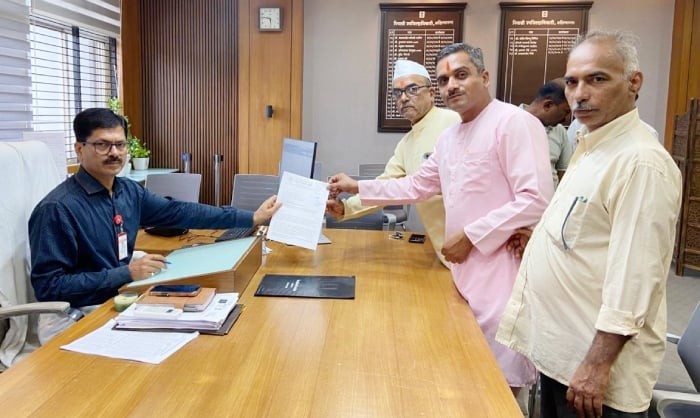
Restore Historical Clarity: HJS urges NCERT to reinstate Maratha Empire map in Class 8 textbook

Hindu Janajagruti Samiti (HJS) has requested that NCERT reinstate the Maratha Empire expansion map in the Class 8 history textbook to improve historical accuracy and learning outcomes. Maps help Class 8 learners anchor timelines in geography, making complex eighteenth-century political formations intelligible. A carefully annotated Maratha map would depict core territories, confederal expansions, and key…
-
Ahilyabai Holkar Jayanti 2026: Punyashlok Ahilyadevi’s Legacy of Temples and Dharma

Ahilyabai Holkar Jayanti 2026 (31 May 2026) commemorates Punyashlok Ahilyadevi Holkar, the visionary Maratha sovereign whose governance and temple-building reshaped India’s sacred geography. The observance highlights her reconstruction of Kashi Vishwanath (1780) and Somnath (1783), the development of Maheshwar as a capital, and a justice-centered administrative ethos. Readers gain a historically grounded understanding of her…
-
Ahilyabai Holkar Jayanti 2026: Punyashlok Ahilyadevi’s Legacy of Temples and Dharma

Ahilyabai Holkar Jayanti 2026 (31 May 2026) commemorates Punyashlok Ahilyadevi Holkar, the visionary Maratha sovereign whose governance and temple-building reshaped India’s sacred geography. The observance highlights her reconstruction of Kashi Vishwanath (1780) and Somnath (1783), the development of Maheshwar as a capital, and a justice-centered administrative ethos. Readers gain a historically grounded understanding of her…
-
Beyond the ‘Muslim Era’ Myth: India’s Dharmic Resistance and Civilizational Resilience

This article challenges the simplistic label of a singular ‘Muslim era’ in India and presents a more rigorous, dharmic-centered account of medieval and early modern history. It highlights how Indian polities—Hindu, Jain, Buddhist, and later Sikh—checked, accommodated, and ultimately reshaped external and transregional powers over centuries. Readers gain a clearer timeline of key resistances, from…
-
Gopal Ganapati Temple, Farmagudi: Tracing a Timeless Maratha-Era Legacy in Goa

Gopal Ganapati Temple in Bandivade (Bandiwade), Ponda, Goa, preserves a serene devotional atmosphere while carrying a distinctive seventeenth-century Maratha-era legacy. Historical references link the site to Chhatrapati Sambhaji, whose forces camped nearby and erected a Gudi on a hill, shaping the area’s sacred identity. The temple’s setting illustrates how political history and sacred geography intersect…
-
Inside Nehru’s Marxist Lens: Indo-Islamic Art, Mughal Decline, and India’s Enduring Vitality

This essay reassesses Jawaharlal Nehru’s Marxist interpretation of medieval India, including his claim that “Islam shook India to its very foundations” and his use of Indo-Islamic architecture as a marker of social renewal. It explains how Nehru links aesthetic change to broader historical progress and why critics caution against drawing civilizational conclusions from art alone.…
-
CBSE’s landmark revamp of NCERT Class 8: Shivaji Maharaj’s history expands to 22 pages, 2,200 words

CBSE has expanded the coverage of Chhatrapati Shivaji Maharaj in the Class 8 NCERT textbook from 68 words to over 2,200 words across 22 pages. The revised chapter, ‘Rise of the Marathas’, provides clearer historical context and a more structured narrative for middle-school learners. This depth strengthens analytical skills by foregrounding chronology, causation, and balanced…
-
Shah Alam II and the Mughal Collapse: The Complete, Source-Backed History You Must Discover

This source-backed history of Shah Alam II explains how courtly indulgence, fiscal crisis, and regional realignments converged to bring the Mughal Empire to its twilight. Readers discover the Maratha role at Delhi, the British East India Company’s decisive entry in 1803, and archival details on opium use and palace finances. European observers like John Shore,…
-
How Operation Polo Aborted a Pakistan in South India

The article explores the historical intricacies behind the liberation of Hyderabad, shedding light on the oppressive regime of the Nizams and the atrocities committed by the Razakars against the Hindu populace. It discusses the missed opportunity of the Marathas to dismantle the Nizam’s rule, attributing it to historical factors that allowed the Nizams’ sustained dominance.…