
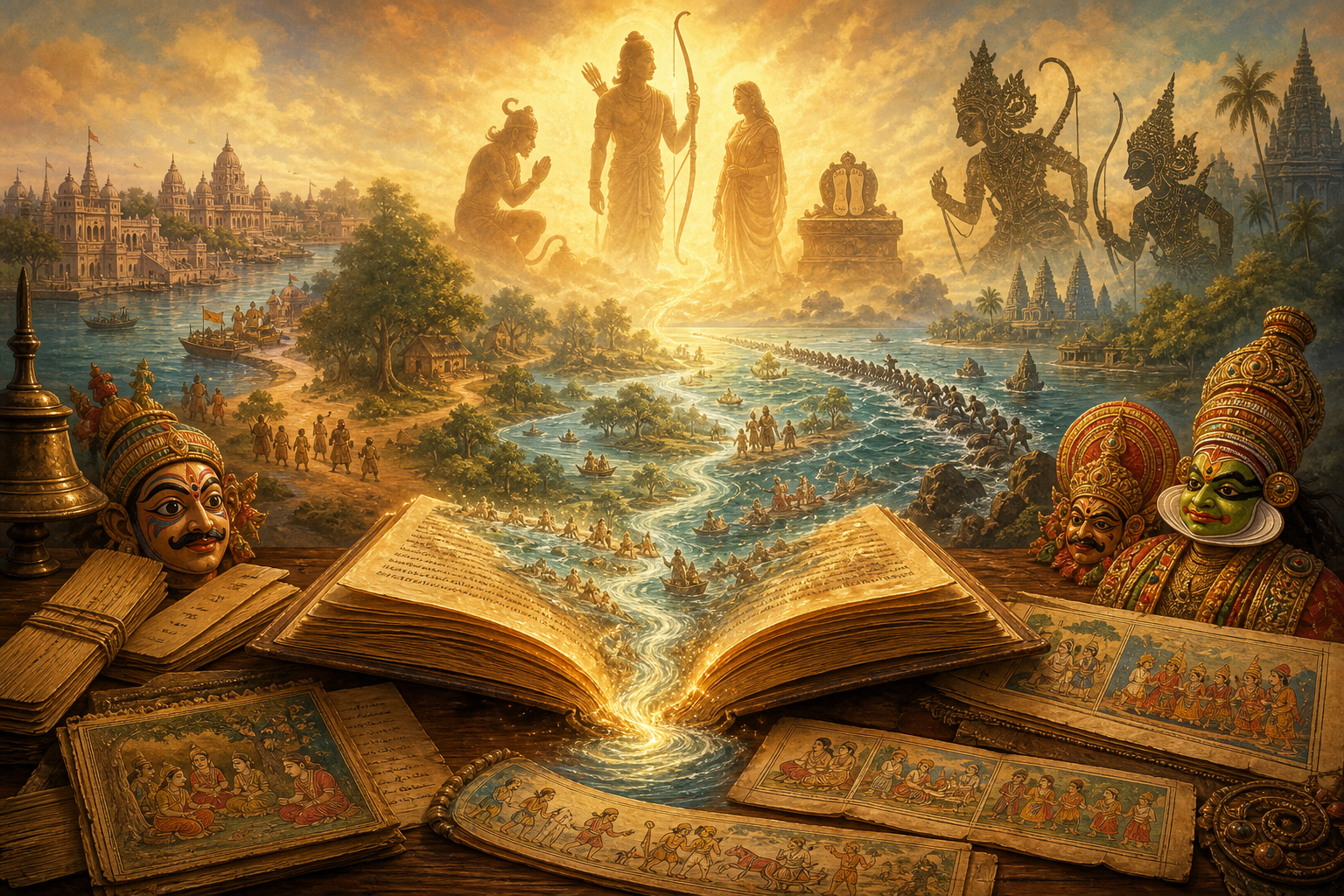
The Ramayana that most people think they know is usually one doorway into a much larger civilisational archive. For some, that doorway is Valmiki’s Sanskrit Ramayana. For others, it is Tulsidas’s Ramcharitmanas, Kamban’s Tamil Iramavataram, the Adhyatma Ramayana, temple recitation, Harikatha, Yakshagana, Kathakali, folk theatre, television serials, illustrated children’s books, family storytelling, or songs heard during Ram Navami. Each doorway is real, meaningful, and spiritually powerful. Yet none of them exhausts the whole Rama Katha.
To say that the Ramayana is incomplete does not mean that the sacred tradition is defective. It means that no single version can contain the full cultural, theological, poetic, ethical, and regional life of the story. The Ramayana is not merely a fixed text preserved in one manuscript. It is a living tradition that has moved through Sanskrit, Prakrit, Tamil, Awadhi, Bengali, Assamese, Malayalam, Telugu, Kannada, Marathi, Odia, Nepali, Thai, Khmer, Lao, Javanese, Balinese, Tibetan, Jain, Buddhist, Sikh, and many other intellectual and devotional worlds.
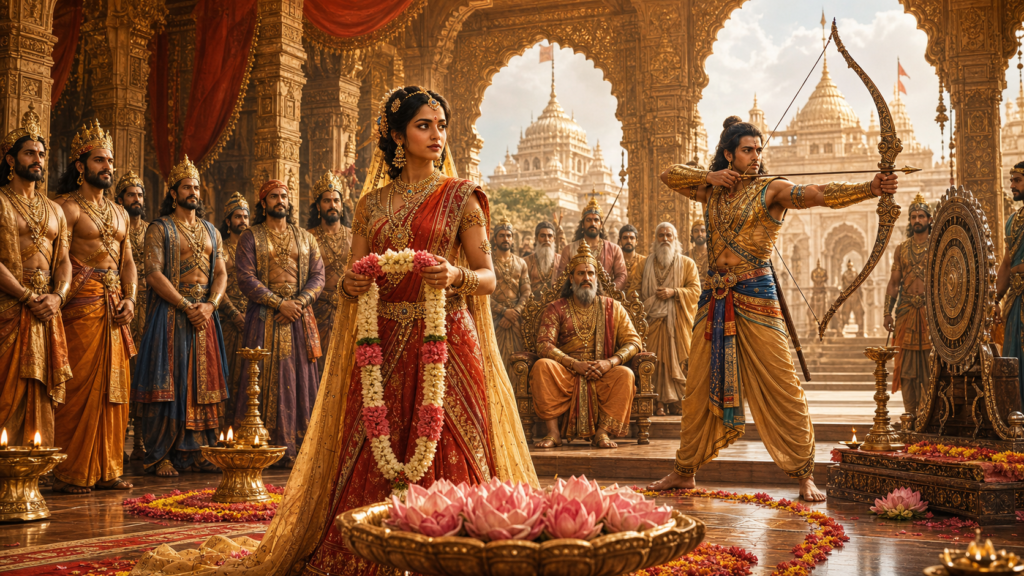
This is why the Ramayana must be approached with humility. A person may know the broad plot: Rama is born in Ayodhya, wins Sita’s hand, goes into exile, loses Sita to Ravana, builds an alliance with Hanuman and the Vanaras, crosses the ocean, defeats Ravana, returns to Ayodhya, and establishes Rama Rajya. That sequence is familiar, but the inner world of the epic is far wider. Every tradition asks different questions: What is dharma when duties conflict? What is kingship when personal happiness must bow before public responsibility? What is devotion when the divine appears in human form? What is loyalty, restraint, sacrifice, memory, grief, and moral courage?
The Ramayana is therefore best understood as an expansive family of narratives rather than a single literary object. Valmiki’s Ramayana holds a foundational place and remains the great classical source for Rama’s story in Sanskrit. It gives the epic its deeply human tone: Rama grieves, Sita speaks with dignity, Lakshmana struggles with duty, Bharata embodies renunciation, Hanuman unites strength with humility, and Ravana stands as a learned but morally fallen ruler. Yet even this foundational text belongs to a wider history of transmission, commentary, performance, translation, and retelling.
The Ramcharitmanas of Tulsidas, composed in Awadhi, transformed the experience of the Ramayana for millions across North India. Its emphasis on bhakti, Rama Nama, and the accessible sweetness of devotion gave the epic a domestic and communal life. It could be recited in homes, sung in satsangs, performed in Ramlila, and remembered by ordinary people who might never study Sanskrit formally. In this tradition, Rama is not only an epic hero or ideal king. He is the compassionate Lord who enters the heart through devotion.
In South India, Kamban’s Tamil Ramayana brings another poetic universe into view. Kamban does not simply translate Valmiki; he reimagines the story through Tamil literary genius, Srivaishnava devotion, classical aesthetics, and regional sensibility. The emotional textures are different, the metaphors are different, and the theological emphasis is different. Yet the core reverence for Sri Rama, Sita, Lakshmana, Hanuman, and dharma remains intact. This is not contradiction. It is the natural abundance of a living civilisation.
Other Ramayana traditions deepen the picture further. The Adhyatma Ramayana interprets Rama through a more explicitly Vedantic lens, presenting the story as an inward journey toward knowledge of the Supreme Consciousness. The Ananda Ramayana expands devotional episodes and ritual themes. Regional and oral traditions often preserve local memories, temple legends, forest geographies, folk ethics, and community identities. In many villages, the Ramayana is not treated as a distant ancient text; it is woven into marriage customs, festival rhythms, pilgrimage routes, lullabies, household vows, and moral instruction.
The Jain Ramayanas offer another important dimension. Jain tellings, such as those associated with Vimalasuri’s Paumacariya, retell the Rama story through Jain ethical and philosophical categories. They often reinterpret violence, kingship, renunciation, and liberation in ways that reflect Jain commitments to ahimsa and spiritual discipline. These versions do not erase the broader Rama tradition. They show how deeply the story entered multiple Dharmic streams, each preserving its own metaphysics while engaging a shared narrative world.
Buddhist traditions also received and reshaped Rama Katha. The Dasaratha Jataka presents a Rama narrative within the moral universe of the Jataka literature, where stories illuminate virtues such as patience, restraint, compassion, and renunciation. Such retellings demonstrate that the Ramayana was not confined to one sectarian boundary. It became a language through which many Dharmic communities reflected on ethical conduct, impermanence, kingship, self-mastery, and the disciplined life.
This shared inheritance matters today because Hinduism, Buddhism, Jainism, and Sikhism have often preserved distinct paths while speaking to common civilisational concerns: dharma, compassion, truthfulness, self-control, seva, liberation, remembrance, and the struggle against ego. The Ramayana, when read generously, strengthens unity among Dharmic traditions rather than narrowing it. Its plurality is not a weakness. It is evidence of cultural confidence, philosophical hospitality, and the capacity to hold many levels of meaning without reducing them into one rigid formula.
The Southeast Asian Ramayanas reveal the same civilisational reach. In Thailand, the Ramakien became part of royal, artistic, and theatrical culture. In Cambodia, the Reamker entered temple art and classical performance. In Indonesia, especially Java and Bali, Rama’s story moved through shadow theatre, court poetry, and local religious imagination. These traditions are not mere copies of an Indian original. They are sophisticated cultural adaptations that show how the Ramayana crossed seas, languages, and political worlds while retaining its central moral force.
This wide transmission makes one point unavoidable: every Ramayana is both complete within its own devotional or literary purpose and incomplete in relation to the whole. A temple singer does not need every manuscript tradition to awaken bhakti. A scholar cannot responsibly ignore textual diversity. A child listening to Hanuman’s leap across the ocean receives a complete moral impression. A philosopher reading the Adhyatma Ramayana sees an inward metaphysical map. A performer staging Ramlila participates in a communal sacred memory. Each experience is whole at its own level, but none is the entire ocean.
The idea of incompleteness also helps correct a modern misunderstanding. Modern readers often expect an epic to behave like a printed novel, with one final author, one authorised edition, one fixed plot, and one definitive interpretation. Ancient Indian narrative traditions worked differently. They were transmitted orally, ritually, pedagogically, poetically, and regionally. A story could be preserved with reverence and still be retold creatively. Fidelity did not always mean verbal sameness; it often meant preserving dharmic insight while allowing language, emphasis, and setting to respond to the community receiving it.
This does not mean that anything can be called Ramayana without discipline. Traditional retellings are not random inventions. They usually operate within recognisable boundaries: Rama’s commitment to dharma, Sita’s spiritual dignity, Hanuman’s devotion, Lakshmana’s service, Bharata’s renunciation, Ravana’s tragic arrogance, and the moral weight of exile, struggle, and return. Creative freedom exists, but it is not rootless. The strongest Ramayana traditions renew the story while remaining accountable to its sacred grammar.
For this reason, the Ramayana should be read at multiple levels. At the narrative level, it is an epic of exile, abduction, alliance, war, and restoration. At the ethical level, it examines dharma under pressure. At the political level, it reflects on kingship, legitimacy, social trust, and the burdens of rule. At the psychological level, it explores grief, temptation, courage, jealousy, longing, and restraint. At the spiritual level, it becomes a path of bhakti, surrender, self-knowledge, and the victory of order over inner disorder.
Rama’s greatness lies partly in the fact that he is not presented merely as a conqueror. He is Maryada Purushottama, the supreme exemplar of righteous conduct within limits. His life is marked by restraint even when power is available. He honours his father’s word, protects sages, forms alliances across social and geographic boundaries, accepts counsel, grieves openly, and carries the loneliness of duty. This complexity is one reason the Ramayana has survived for millennia. It does not offer shallow perfection. It offers a demanding vision of moral life.
Sita’s role is equally central and often misunderstood when the epic is reduced to a simplistic plot summary. Across many Ramayana traditions, Sita is not a passive figure. She is the moral centre of the narrative, the embodiment of dignity, endurance, truth, and sacred strength. Her words in the forest, her refusal to submit to Ravana, her inner steadiness in Ashoka Vatika, and her final assertion of purity and selfhood all demand serious attention. Any Ramayana that neglects Sita’s voice remains profoundly incomplete.
Hanuman represents another reason the epic cannot be exhausted by plot. His leap to Lanka is not only a physical feat; it is a symbol of awakened capacity. He forgets his own strength until reminded, then acts with courage, intelligence, humility, and devotion. This episode speaks to a deeply relatable human experience: people often carry strength they have not yet recognised. Hanuman’s journey teaches that remembrance, service, and surrender can reveal power without producing arrogance.
Bharata’s renunciation also deserves more attention than many popular summaries allow. He refuses to enjoy a kingdom gained through injustice, places Rama’s sandals on the throne, and governs as a trustee rather than an owner. In an age when power is often treated as possession, Bharata’s conduct remains politically and ethically radical. He shows that loyalty to dharma can be stronger than ambition, and that legitimacy depends on moral order rather than mere control.
Ravana, too, must be read carefully. He is not portrayed as ignorant or weak. He is learned, powerful, disciplined in certain respects, and capable of great statecraft. His fall is therefore more instructive. Knowledge without humility becomes dangerous. Power without self-control becomes destructive. Devotion mixed with ego becomes distorted. Ravana’s tragedy is the tragedy of brilliance severed from dharma. This is why his defeat is not simply a military event; it is the collapse of a civilisation built around appetite, pride, and domination.
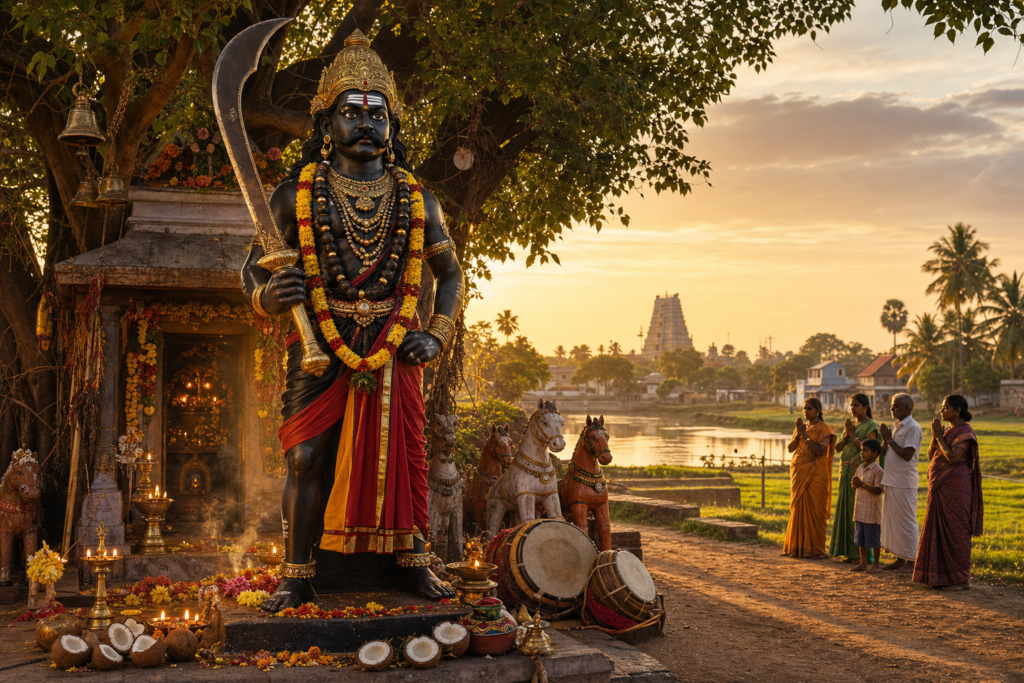
The Ramayana is also incomplete when it is separated from geography. Ayodhya, Chitrakoot, Dandakaranya, Kishkindha, Rameswaram, Lanka, and countless regional sacred sites are not merely locations on a map. They are memory-fields where pilgrimage, temple worship, local legends, and embodied devotion keep the epic alive. Sacred geography transforms the story from literature into lived experience. A pilgrim standing before a river, hill, shrine, or forest associated with Rama enters a relationship with the epic that no printed summary can reproduce.
The performance traditions of the Ramayana add another layer of completeness and incompleteness. Ramlila, Kathakali, Yakshagana, Burrakatha, shadow puppetry, bhajan mandalis, and temple recitations do not merely repeat the story. They interpret it through gesture, music, costume, rhythm, audience participation, and seasonal time. The same scene can feel different when sung in a village square, enacted in a temple courtyard, studied in a university, or recited before a family altar. Performance makes the Ramayana communal, emotional, and embodied.
Manuscript history further complicates the idea of a single Ramayana. Scholars have identified northern, southern, and other textual recensions of Valmiki’s Ramayana, along with variations in episodes, verses, and arrangement. This should not be treated as a scandal. It is normal for ancient texts transmitted across centuries and regions. The existence of variation shows the intensity with which communities preserved, copied, recited, and engaged the text. The task is not to flatten this history, but to understand it responsibly.
At the same time, academic study alone cannot capture why the Ramayana matters. The epic lives because it answers human needs that recur across generations. Families turn to Rama and Sita during difficulty. Devotees remember Hanuman in moments of fear. Communities stage Ramlila to renew moral memory. Children learn that promises matter, that courage requires discipline, and that good conduct may demand sacrifice. The Ramayana survives because it speaks to the mind, the heart, the household, the temple, and the public square.
The phrase “the Ramayana we know is incomplete” should therefore be understood as an invitation rather than a dismissal. It invites readers to go beyond one television serial, one childhood summary, one ideological reading, or one regional habit. It invites comparison without contempt, devotion without narrowness, scholarship without arrogance, and reverence without fear of complexity. The more one studies the Ramayana, the more one sees that its greatness lies not in being small enough to master quickly, but in being vast enough to accompany civilisation for centuries.
This approach is especially important in the present age, when sacred narratives are often pulled into shallow arguments. Some reduce the Ramayana to politics. Some reduce it to mythology in the dismissive sense. Some reduce it to moral slogans. Some reduce it to entertainment. A serious reading resists all these reductions. The Ramayana is literature, scripture, philosophy, cultural memory, devotional practice, ethical debate, and civilisational inheritance. It deserves a reading spacious enough to hold all these dimensions.
Such spaciousness also protects unity among Dharmic traditions. Hindu, Buddhist, Jain, and Sikh communities need not erase their differences to recognise shared ethical concerns. The Ramayana can be studied as a Hindu sacred epic while also acknowledging its wider Dharmic reception. Jain and Buddhist adaptations can be respected without weakening Hindu devotion to Sri Rama. Sikh reverence for dharma, courage, remembrance, and righteous action can be placed in conversation with the epic’s ethical concerns. Unity does not require sameness; it requires mutual dignity and truthful understanding.
The most useful way to approach the Ramayana is therefore layered reading. First, one may read Valmiki to encounter the classical Sanskrit foundation. Then Tulsidas can reveal the devotional power of Rama Nama and bhakti. Kamban can open the Tamil poetic imagination. Jain and Buddhist tellings can broaden the ethical horizon. Southeast Asian versions can demonstrate the epic’s cultural mobility. Folk performances can show how the story breathes among ordinary people. No single layer cancels the others. Together, they form a fuller understanding.
In this sense, the Ramayana is not incomplete because something is missing from Rama. It is incomplete because human reception is always partial. Every generation receives only as much as it is prepared to hear. A child may first love Hanuman’s courage. A young adult may wrestle with exile and duty. A parent may understand Dasaratha’s grief. A ruler may study Rama Rajya. A seeker may turn toward the inner Rama as the light of consciousness. The same epic keeps unfolding because human life keeps unfolding.
The infinite quality of Rama Katha is captured in the way the story continually returns without becoming exhausted. It returns in festivals, in temple bells, in poetry, in household recitation, in scholarship, in music, in pilgrimage, in moral debate, and in private prayer. Its repetition is not mechanical. Each return reveals something new because the listener has changed. That is the mark of a living scripture and a living civilisation.
To know the Ramayana, then, is not merely to know what happened next in the plot. It is to enter a discipline of attention. It requires listening to Valmiki’s sorrow-born poetry, Tulsidas’s devotion, Kamban’s grandeur, Sita’s dignity, Hanuman’s humility, Bharata’s restraint, Lakshmana’s service, and Rama’s commitment to dharma. It also requires listening to the many communities that carried this story across languages and centuries. Only then does the phrase “Ramayana” begin to recover its true scale.
The Ramayana known through one source may be precious, but it is not the whole. The whole is the ever-expanding sacred conversation around Rama, Sita, dharma, devotion, suffering, power, and liberation. Every Ramayana ever told is a fragment of that vast conversation. The fragment should be honoured, not mistaken for the entirety. The more responsibly one studies these fragments, the more clearly the larger truth appears: Rama Katha is not a closed book from the past, but a living ocean of Indian and Dharmic wisdom.
Inspired by this post on Hindu Blog.




Leave a Reply
You must be logged in to post a comment.