The Hindu understanding of spiritual life begins with a paradox: the most consequential journey involves no geographical motion and culminates in no new acquisition. Rather than going somewhere or becoming someone, the seeker discovers what already is. This insightcentral to Hindu philosophy (darshana)reframes spirituality as a process of unveiling, not as a race toward a distant goal.
Worldly pursuits define success by arrival and possession. The spiritual journey, by contrast, refines perception. When the Upanishads declare “Tat tvam asi” and “Aham Brahmasmi,” they point to a recognition that cannot be shipped, bartered, or conferred. It is disclosed through insight (jnana), stabilized through practice (sadhana), and embodied as character (dharma).
This paradoxprogress without travelinghas profound psychological import. It releases seekers from the anxiety of milestones and redirects attention to clarity, stillness, and compassion. In the Bhagavad Gita, the emphasis falls not on where the traveler lands, but on how the traveler stands: with steadiness, discernment, and non-attachment amidst change (2.14–2.15; 2.70; 6.20–23).
In Advaita Vedanta (advait), teaching proceeds by adhyaropa-apavadasuperimposition followed by negationuntil only the Self (atman) remains self-evident. “Neti, neti” (not this, not this) is not nihilism; it is a method of discarding the non-essential so the essential can shine. The rope-snake illustration, Rajjusarpa Nyaya, captures this shift: ignorance projects a snake where there is only a rope; knowledge does not create a rope, it simply reveals it.
The Yoga Sutra of Patanjali defines yoga as “citta-vritti-nirodha,” the quieting of mental fluctuations. Two leversabhyasa (steady practice) and vairagya (dispassion)operate together. Abhyasa without vairagya binds one to achievement; vairagya without abhyasa risks indifference. Integrated, they mature into one-pointedness, a hallmark of inner stability.
Traditional pedagogy outlines sadhana-chatushtaya (fourfold qualifications): viveka (discernment), vairagya (non-attachment), shat-sampat (six virtues such as śama and dama), and mumukshutva (longing for liberation). On this foundation sit shravana (receptive listening to wisdom), manana (critical reflection), and nididhyasana (deep contemplative assimilation). The path is cumulative, not competitive.
Pancha Kosha Viveka, the discernment of five sheaths, clarifies the terrain of practice. The person is seen as layeredannamaya (physical), pranamaya (vital), manomaya (mental-emotional), vijnanamaya (discriminative-intellectual), and anandamaya (causal-bliss)with awareness as the witnessing light across them. Spiritual maturation proceeds from gross to subtle (sthula to sukshma), relaxing identification with each sheath without rejecting embodied life.
This inward refinement further maps to the three bodies: sthula sharira (gross body), sukshma sharira (subtle body of mind and prana), and karana sharira (causal body of latent impressions). The witness (sakshi) pervades yet remains untouched. Realization is not disembodiment; it is lucid embodimentaction flowing from clarity rather than compulsion.
Hindu wisdom honors multiple, mutually reinforcing paths. Jnana Yoga sharpens inquiry: Who is the ‘I’ that knows change yet is not altered by it? Bhakti Tradition softens the heart: devotion to Ishta dissolves separation through love, kirtan, and nama-japa. Karma Yoga purifies intention: acting without clinging to outcomes (Gita 2.47; 4.18) aligns conduct with dharma. Raja Yoga trains attention through asana, pranayama, pratyahara, dharana, and dhyana, preparing the mind for abidance in the Self.
Each path addresses a distinct facet of human experiencecognition, affection, volition, and attentionso that realization may become integral. The choice of emphasis is guided by temperament and context, yet the end is shared: freedom from compulsion (bandhana), freedom in action (jivanmukti), and compassion in relationship (daya and ahimsa).
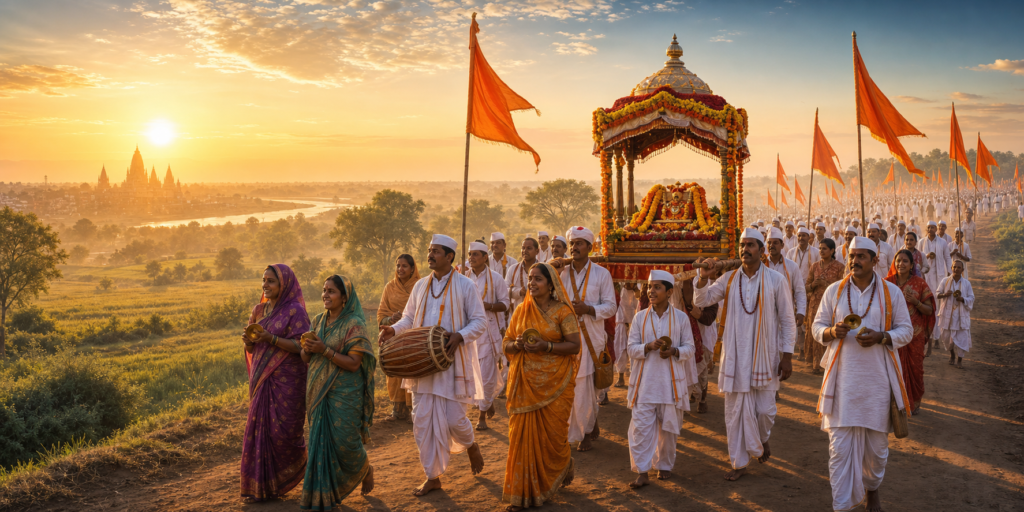
Consider three relatable scenes. A pilgrim quietly watches the sunrise on the Ganga, noticing breath fold into stillness. A parent soothes a child at midnight, meeting fatigue with softness rather than irritation. A professional pauses between messages, sensing the gap between thoughts. None “arrived” anywhere, yet a qualitative difference appearsless reactivity, more presence. The journey is happening, destination-free.
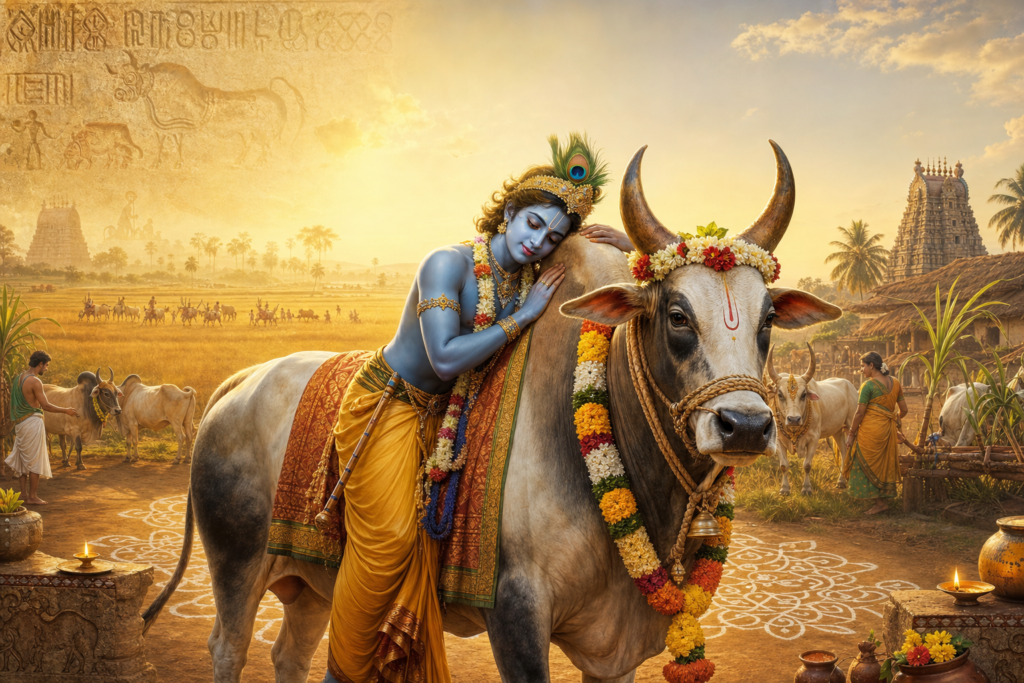
Bhakti offers a powerful hermeneutic for “no destination”: when love recognizes its source as ever-present, the search for completion ends. Devotion does not deny the world; it sanctifies ordinary lifecooking as seva, listening as worship, and forgiveness as courage. The Gita’s twelfth chapter preserves this intimacy while teaching resilience amid uncertainty.
Karma Yoga resolves a frequent confusion: if there is no destination, why act? The Gita answers by separating right from result“Karmanye vadhikaraste”thus dissolving the tyranny of outcomes. Action remains, obsession fades. Work becomes worship when freed from the anxieties of acquisition and the theater of comparison.
Raja Yoga refines the instrument. Breath regulation (pranayama) steadies the autonomic nervous system; mindful turning inward (pratyahara) reclaims attention from the senses; sustained focus (dharana) flowers into meditation (dhyana). Traditional maps also speak of sushumna nadi and the awakening of latent potential (kundalini), not as spectacle but as a deepening capacity for clarity, compassion, and equipoise. Practice is safety-first, principle-driven, and teacher-guided.
The dharmic familyHinduism, Buddhism, Jainism, and Sikhismconverges in this insight of presence over destination while honoring distinct vocabularies. Buddhism emphasizes anatta (non-self) and nirvana as the end of craving; Jainism speaks of kevala jñana (perfect knowledge) and foregrounds ahimsa as a universal discipline; Sikhism centers on Naam Simran and the Shabad Guru, guiding householders to live awake amid duty. These perspectives complement one another, nurturing unity in spiritual diversity without erasing difference.
Unity, then, is neither homogenization nor rivalry. It is the recognition that diverse methods cultivate similar virtuesclarity, compassion, courageand loosen the knots of fear and grasping. The civilizational ethic “Vasudhaiva Kutumbakam” frames this inclusivity: a shared human family where many paths are welcomed and wisdom traditions cross-enrich practice.
How is maturation recognized when there is “nowhere to go”? Texts emphasize qualities rather than achievements: a mind less perturbed by gain or loss, a heart quicker to forgive, speech that heals more than it harms, and a spontaneous orientation toward service. The Ashtavakra and Katha Upanishads remind that realization is known by serenity, not by spectacle.
The role of the Guru and the Guru–Shishya Tradition is pedagogical and catalytic. A true guide removes obstacles to seeing, calibrates methods to temperament, and keeps the seeker oriented to principles rather than personalities. Reverence (shraddha) is not credulity; it is the disciplined willingness to test teachings in life.
Obstacles (antarayas) cluster into distraction, doubt, inertia, and dissipation. Yogic texts pair each with remedies: steadiness of routine, satsanga (noble company), ethical clarity (yama–niyama), and restorative rest. Vairagya is strengthened not by suppression, but by wiser enjoyments and deeper satisfactionsbhakti, beauty, and quiet joy that make compulsive stimulation less appealing.
A practical, integrative framework is helpful. Morning: a brief pranayama sequence followed by mantra or quiet dhyana establishes equanimity. Daytime: Karma Yoga in actionconscientious work, transparent ethics, and helpful speechtransforms relationships. Evening: self-inquiry (atma-vichara) or reflective journaling consolidates insight. Weekly participation in satsanga stabilizes inspiration with accountability.
Ethics are central, not optional. Ahimsa (non-harm), satya (truthfulness), asteya (non-stealing), brahmacharya (wise energy management), and aparigraha (non-hoarding) are ecological for the mind; they reduce turbulence and protect attention. Niyamassuch as santosha (contentment) and svadhyaya (study)internalize learning so that insight becomes habit.
Common pitfalls deserve foresight. “Spiritual bypassing” uses concepts to avoid honest emotion. “Experience chasing” confuses transient states with abiding traits. “Marketplace spirituality” substitutes acquisition for transformation. Traditional counsel is steady and undramatic: fewer claims, more kindness; fewer slogans, more silence.
Contemporary research on meditation and contemplative breathing observes benefits such as improved attentional control and stress regulation. While promising, such findings describe correlates, not the metaphysical realization that traditions name Moksha, Nirvana, or Kevala Jñana. The sciences of consciousness and contemplative practice can converse fruitfully when each honors the other’s scope and method.
The question “What changes when nothing new is added?” receives a precise answer: the felt sense of separation softens, compulsions release, and agency is reinterpreted as transparent service. The person remains distinct yet unburdenedfully engaged, scarcely entangled. The journey reveals wholeness by relaxing the pressure to become.
In this light, “no destination” is neither passivity nor fatalism. It is the courage to live truthfully, the discipline to practice steadily, and the tenderness to love widely. Whether one prays in a temple, meditates in silence, serves one’s community, or reflects within scripture, the flowering is the same: clarity within, compassion without.
Hindu philosophy thus reframes spiritual success as presence rather than arrival. Advait highlights identity with the Self, Bhakti sings intimacy with the Divine, Karma embodies dharma in duty, and Raja polishes attention to a mirror-like shine. Across the dharmic traditions, the family resemblance is unmistakable: a life less driven by fear and more animated by wisdom.
The journey ends where it beginshereyet nothing is the same. The mind knows its master, the heart finds its home, and the hands learn their work. What remains is simple and sufficient: being awake within, beneficial without.
In summary, the spiritual path in Hinduism and its dharmic kin is a movement from confusion to clarity rather than from point A to point B. It is a science of subjectivity, a pedagogy of the heart, and a civilizational invitation to unity in spiritual diversity. There is no destination to reach; there is only the perennial awakening to what has always been real.
Inspired by this post on Hindu Blog.