
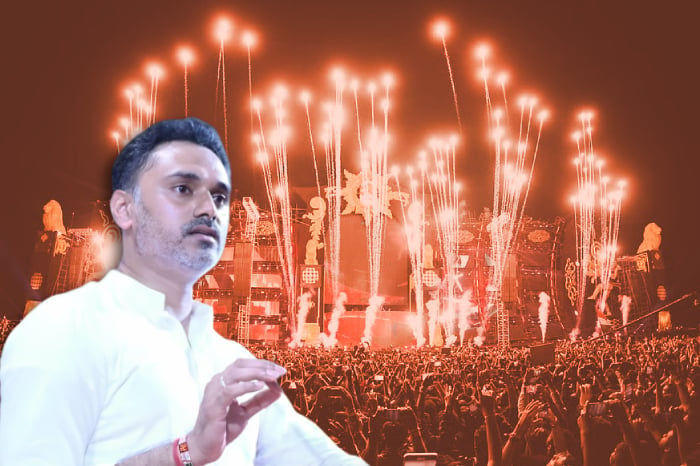
The Maharashtra Government’s decision to ban alcohol at all music concerts and order a detailed probe into the Sunburn Festival marks a significant shift in the regulation of large entertainment gatherings in the state. The immediate trigger is a series of recent concert-related tragedies in Mumbai, including deaths reported after events in Goregaon and Worli. While the final medical and forensic findings in some cases remain essential for determining precise causes, the policy response reflects a broader concern: high-density music events can no longer be treated merely as private entertainment transactions. They are public safety environments requiring rigorous governance, transparent accountability, and preventive planning.
According to available public reporting, the Goregaon incident involved two MBA students who died after allegedly consuming ecstasy pills at a music concert in April 2026, while another attendee reportedly became seriously ill. Police later made multiple arrests and examined how unauthorized access, alleged drug circulation, and event security gaps may have contributed to the tragedy. In a separate Worli incident in June 2026, a 28-year-old law graduate died and a woman was hospitalized after reportedly falling ill following suspected excessive alcohol consumption at a music event at NSCI Dome. These incidents created a pattern that demanded closer scrutiny from the state, the police, excise authorities, venue operators, and event organizers.
The alcohol ban at music concerts must therefore be understood as a risk-control measure rather than a symbolic gesture. Alcohol at large concerts is not only a matter of individual consumption; it changes the operating conditions of the entire venue. It affects crowd movement, medical response patterns, behavioral volatility, dehydration risk, heat stress, emergency evacuation, and policing requirements. When combined with loud music, lighting effects, long queues, dense crowds, and extended standing periods, alcohol can amplify vulnerabilities that are already present in large-scale event environments.
The ordered probe into the Sunburn Festival also has wider significance because Sunburn is among India’s most visible electronic dance music brands. Events of this scale are not ordinary gatherings. They typically involve layered permissions, ticketing systems, private security, artist management, venue logistics, crowd-control barriers, emergency medical infrastructure, excise approvals, police deployment, fire safety compliance, and coordination with local authorities. A probe into such an event can reveal whether existing systems are adequate, whether permissions were granted with sufficient caution, and whether accountability mechanisms are strong enough to protect young attendees.
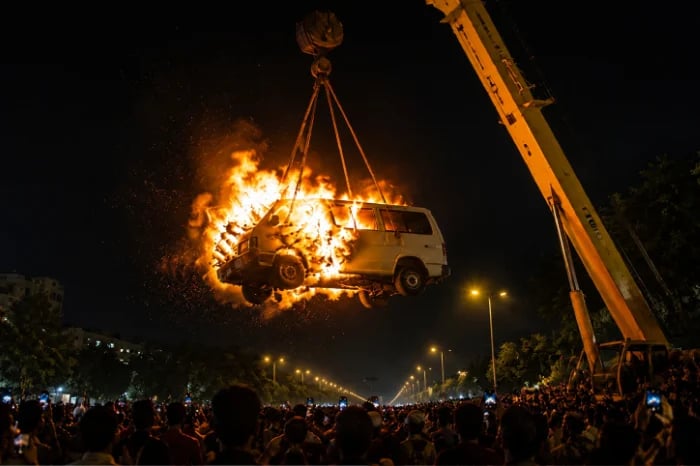
Earlier concerns around alcohol permissions at major music festivals had already entered judicial and public discussion. The Bombay High Court had questioned the Maharashtra Government’s decision to permit liquor at the Sunburn Festival in Mumbai in December 2025 and urged a rethink of liquor policy for such large gatherings. That context matters because it shows that the latest decision did not emerge in isolation. It follows a sequence of warnings about intoxication, crowd safety, open-air venues, and the state’s duty to prevent foreseeable harm before tragedy occurs.
From a governance perspective, the central issue is not whether music concerts should be discouraged. Maharashtra has a vibrant cultural and entertainment economy, and Mumbai remains one of India’s most important venues for live performance, youth culture, and global music events. The question is whether entertainment can be organized without allowing preventable harm to become an accepted cost of doing business. A society that values cultural life must also value the safety of those who participate in it.
The technical challenge begins with event licensing. Large concerts usually require permissions from multiple authorities, including police, traffic police, fire services, municipal bodies, excise departments, and venue administrators. If these permissions are treated as routine paperwork, crucial risk indicators can be missed. A more serious framework would require organizers to submit detailed crowd-capacity plans, entry and exit maps, medical deployment charts, security staffing rosters, CCTV coverage plans, alcohol-control protocols, anti-narcotics measures, and emergency evacuation procedures well before the event date.
The Goregaon case, as reported, raised concerns about unauthorized access through a rear entrance and alleged failures in security screening. This detail is important because event safety often fails at the weakest access point, not at the most visible gate. A venue may have metal detectors, ticket scanners, and visible police at the main entrance, but if a service gate, backstage path, or shuttered entry is poorly monitored, the entire security architecture becomes vulnerable. Forensic policy analysis must therefore examine not only what rules existed on paper, but how they operated at every physical access point.
Alcohol controls also require more than simply denying a liquor counter inside a venue. Authorities must consider whether attendees are arriving intoxicated, whether nearby establishments are enabling pre-event binge drinking, whether private lounges or VIP areas are treated differently, and whether organizers have incentives to underreport alcohol-related risks. A meaningful ban should therefore be accompanied by entry screening, trained medical observation, clear refusal-of-entry standards, and protocols for safely assisting intoxicated attendees rather than pushing them into unmanaged spaces outside the venue.
The public health dimension is equally important. Concert attendees, especially younger audiences, may underestimate the effects of alcohol, dehydration, stimulants, sleep deprivation, crowd heat, and prolonged dancing or standing. Electronic dance music festivals and high-energy concerts often create environments where bodily warning signs are ignored. A person may feel faint, confused, overheated, or distressed, but hesitate to seek help because of peer pressure, fear of police action, or the assumption that discomfort is normal in a crowded concert setting.
This is where policy must distinguish between punishment and prevention. Strict policing of narcotics and illegal alcohol is necessary, but fear-based enforcement alone can discourage distressed attendees from seeking medical assistance early. A mature safety model should include amnesty-style medical reporting practices, visible first-aid stations, trained volunteers, hydration points, rest zones, and rapid referral to hospitals. The objective should be to prevent death, not merely to record violations after harm has occurred.
For families, the issue is deeply emotional. Many parents accept that young adults will attend concerts, travel with friends, and participate in modern urban culture. Their expectation is not that the state should eliminate all risk from life, but that licensed public events should meet a reasonable threshold of safety. When a student or young professional leaves home for a night of music and does not return, the debate moves beyond entertainment regulation. It becomes a question of trust between citizens, businesses, and the state.
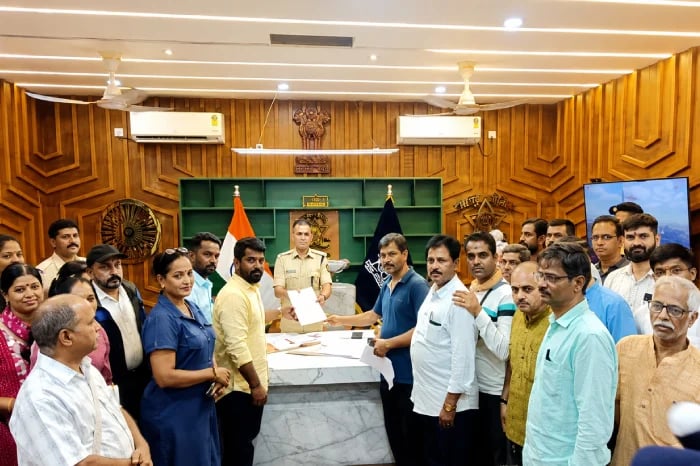
The Maharashtra Government’s response therefore has to be evaluated on three levels: immediate prohibition, investigative accountability, and long-term regulatory reform. The alcohol ban may reduce one category of risk in the short term. The probe into Sunburn Festival may identify event-specific failures or policy weaknesses. But the larger test will be whether Maharashtra develops a durable standard operating procedure for concerts, festivals, and other large youth-oriented gatherings.
A strong standard operating procedure should define responsibilities with precision. Organizers must not be able to shift blame entirely to private security. Private security must not be allowed to operate without police verification and training. Venue owners must not be passive landlords. Medical teams must not be symbolic placements. Excise permissions must not be issued without integrated safety review. Police deployment must not be limited to traffic management outside the venue while the real risks unfold inside the crowd.
One technical reform worth considering is a mandatory event risk matrix. Such a matrix would classify concerts based on expected attendance, venue type, alcohol availability, age profile, past incidents, artist category, event duration, entry complexity, weather conditions, and proximity to hospitals. A low-risk classical music program in a seated auditorium and a high-density electronic music event in an open ground should not be regulated in the same way. Risk-based governance allows the state to be firm without being arbitrary.
Another necessary reform is real-time crowd monitoring. CCTV coverage, drone restrictions, emergency lighting, entry counters, and crowd-density sensors can help authorities detect stress points before they become stampedes or medical emergencies. However, technology cannot replace accountability. Cameras are useful only when someone is watching, escalation channels are clear, and organizers cannot ignore warning signs because the show must continue.
The probe into Sunburn Festival should also examine commercial incentives. Alcohol sales, VIP packages, sponsorship structures, and premium hospitality zones can create pressure to maximize consumption and attendance. If revenue models depend heavily on alcohol or overcrowded premium areas, safety commitments may become secondary. A serious inquiry should therefore review not only permissions and crowd arrangements, but also the economic design of the event.
At the same time, public discussion must avoid simplistic moral panic. Music concerts are not inherently unsafe, and young people are not inherently irresponsible. The problem lies in weak systems, inadequate supervision, illegal substances, poor emergency preparedness, and commercial negligence where it exists. A factual approach protects both public safety and cultural freedom. It allows Maharashtra to remain open to music, tourism, and youth culture while refusing to normalize avoidable deaths.
There is also a legal dimension. If an event is licensed by the state, attendees reasonably assume that baseline safety checks have been completed. When deaths occur, investigators must examine whether there was negligence, breach of licensing conditions, failure of duty of care, illegal sale or distribution of substances, or inadequate medical response. The law must be capable of distinguishing between personal misconduct, criminal supply networks, organizer negligence, and regulatory failure.
The role of forensic evidence remains crucial. Public anger after a tragedy is understandable, but policy should be grounded in verified facts. Post-mortem reports, toxicology findings, CCTV footage, witness statements, ticketing data, medical logs, and communication records between organizers and authorities should guide conclusions. This is especially important in cases involving suspected alcohol excess, drug overdose, dehydration, cardiac stress, or mixed-substance consumption, where superficial assumptions can lead to incomplete policy responses.
Maharashtra’s decision also raises questions for other Indian states. Live events are expanding rapidly across urban India, with concerts, stand-up shows, devotional gatherings, college festivals, sports celebrations, and commercial festivals drawing large crowds. The regulatory framework has not always kept pace with the scale and complexity of these gatherings. A tragedy in Mumbai should therefore be studied as a national governance lesson, not merely a local controversy.
In Indian civilizational thought, public life has never been separated from responsibility. The idea of dharma includes order, restraint, duty, and protection of the vulnerable. Applied to modern governance, this does not mean rejecting contemporary cultural forms. It means ensuring that celebration does not lose its ethical center. Music, dance, community, and joy have a rightful place in society, but they must be organized in a way that respects life, dignity, and collective responsibility.
This perspective is especially relevant for a plural society that seeks unity among dharmic traditions such as Hinduism, Buddhism, Jainism, and Sikhism. Each tradition, in its own language, places value on self-control, compassion, non-harm, and community welfare. A public safety policy around concerts need not be framed as cultural restriction. It can be framed as a civic expression of these deeper values: protect life, reduce harm, and prevent negligence from hiding behind entertainment.
The most constructive path forward is not prohibition alone, but disciplined reform. Maharashtra should publish clear rules for music concerts, define consequences for violations, require pre-event safety audits, mandate independent medical teams, verify private security staff, ensure full CCTV coverage of all access points, regulate crowd capacity strictly, and require post-event incident reporting. These measures would help build public trust while allowing responsible organizers to continue operating.
Organizers, too, must recognize that safety is not an obstacle to business; it is the foundation of legitimacy. A concert brand that invests in hydration, emergency response, trained staff, safe exits, transparent compliance, and strict anti-drug protocols is not merely satisfying regulators. It is protecting its audience and its own future. In the long run, the public will trust events that treat attendees as human beings rather than ticket numbers.
The ban on alcohol at Maharashtra music concerts and the probe into Sunburn Festival should therefore be viewed as the beginning of a larger institutional correction. If the investigation is thorough and reforms are implemented sincerely, the state can create a model for safer live entertainment in India. If the response remains limited to temporary outrage, the same risks may reappear under a different event name, at a different venue, with another grieving family at the center of the story.
The essential lesson is clear: public celebration requires public responsibility. Maharashtra’s music culture can thrive, but it must do so within a framework that places safety before profit, prevention before reaction, and human life above spectacle. That is the standard by which the alcohol ban, the Sunburn probe, and future concert regulations should ultimately be judged.
Sources consulted for factual context include public reports from The Times of India on the Goregaon overdose investigation, The Times of India on the Worli concert death, and The Times of India on Bombay High Court concerns over liquor permission at Sunburn Festival.
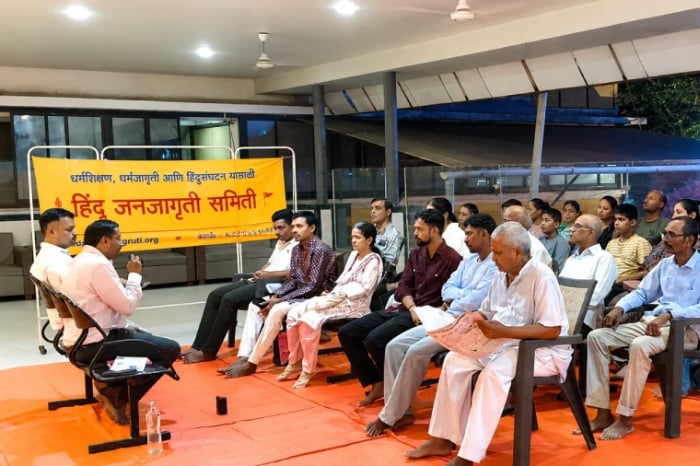
Inspired by this post on Hindu Jagruti Samiti.



Leave a Reply
You must be logged in to post a comment.